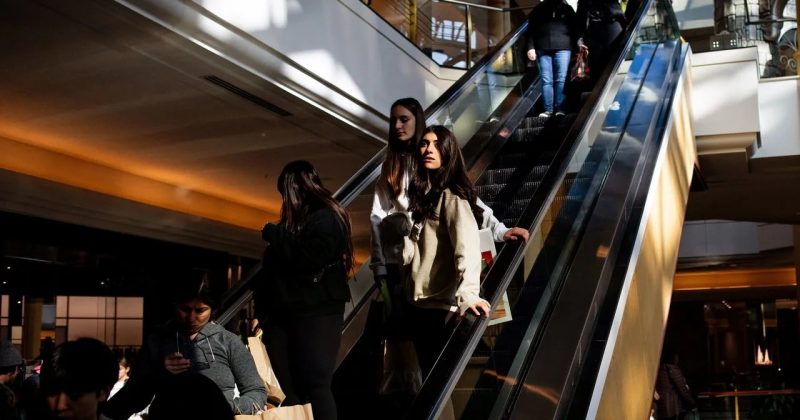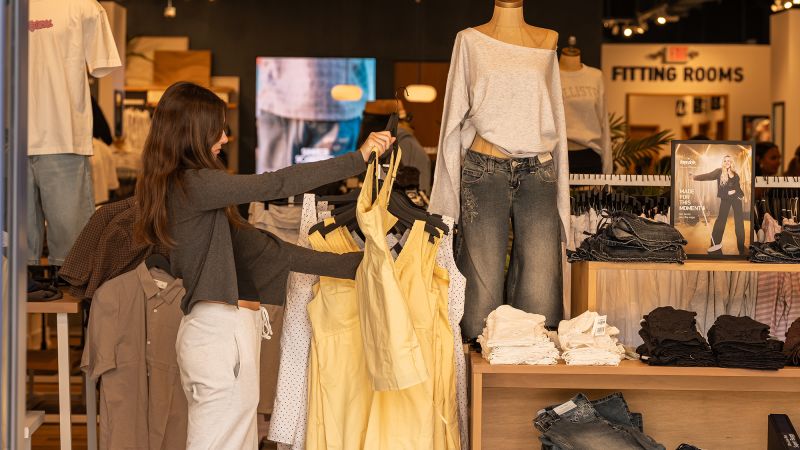
A funny thing happened on the way to the store in July. American consumers spent less — quite a bit less — making for a stinker of a retail sales report for last month.Sales at stores of all kinds, plus gas stations and online retailers, were down 0.6%, according to the Commerce Department. That’s a big turnaround from June’s 0.2% uptick. If you exclude the volatile motor vehicle category, sales were still down in July, though not quite as much. No one saw this coming, really — a modest increase in sales was expected. First off, this wasn’t an entirely typical July, statistically, for retail.“There were definitely one-time factors holding down retail sales — we had the shifting timing of Amazon Prime Day,” said Bill Adams, chief U.S. economist at Fifth Third Commercial Bank. Prime Day was a month earlier than last year, he said, meaning all those Amazon clicks were logged back in June.“We had lower gas prices which translated into lower spending at the pump, which — good news for consumers,” Adams said. “But even after you account for all of that, we just had a quite ‘off-month’ for consumer spending.”And it could extend to August and beyond, as consumers’ mood sours. The University of Michigan’s sentiment index is down sharply this month with the recent spike in gas prices.“The picture from sentiment, from retail sales, the Fed’s Beige Book — consumers have been concerned about household finances and the state of the economy,” Adams said.Kiara Barrett, who tracks consumer trends at market research firm Circana, said there’s “absolutely a bit of tightening.”“People are being much more in-moment in what they’re purchasing, versus bigger baskets,” she said.Barrett has been tracking back-to-school spending — electronics, apparel, footwear, office supplies — where prices are up 5% over last year and parents are buying less to try not to end up in the hole.“‘Yes, I need to get the supplies, I’m going to limit to the list, I’m not necessarily gonna’ go and buy all the things for Picture Day,’” she said.Now, some retail sectors did pretty well in July, Adams said. “Spending was solid at restaurants,” he said. “Consumers were watching the World Cup and socializing.” Other discretionary categories were up as well, Barrett said — like clothing, health, personal care and beauty.“People wanting maybe a little bit of joy,” she said. “It’s a manifestation of the lipstick effect.”That’s the idea that when times are tough, consumers are more inclined to splurge on cheaper indulgences that make them feel good, or pretty, but don’t bust the family budget.
Retail sales dropped sharply in July as consumers tighten spending
Retail sales fell 0.6% in July, a bigger drop than expected and a sharp reversal from June's modest uptick.
428 words~2 min read