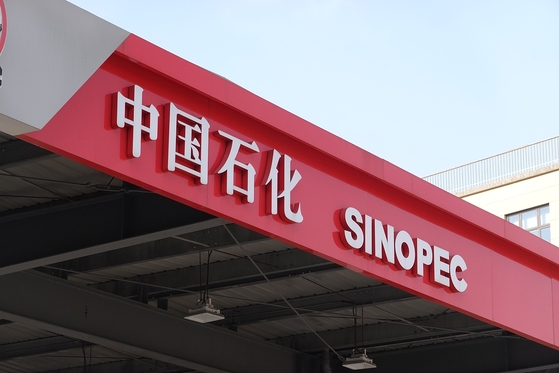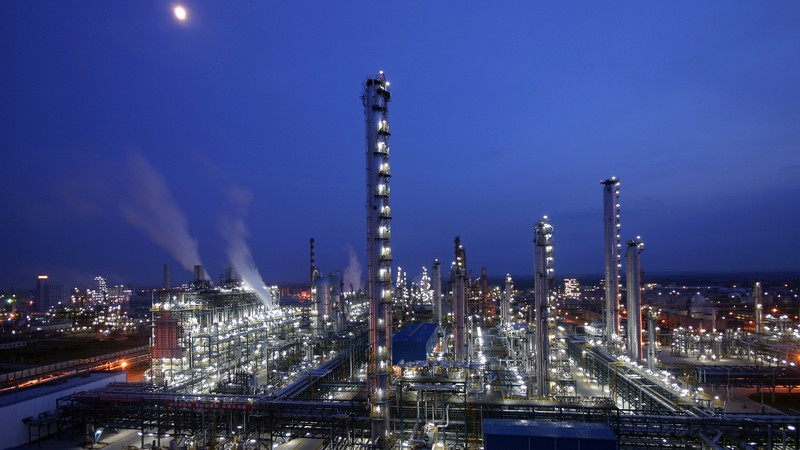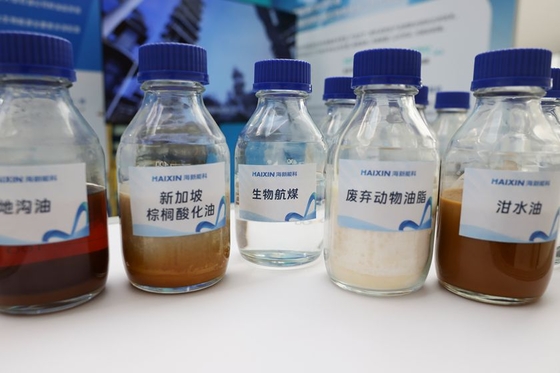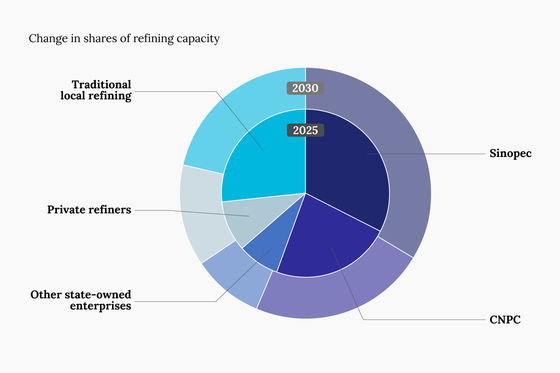
1. China is undertaking a major reform of its aviation-fuel sector by merging China National Aviation Fuel Group Ltd. (CNAF), the country's longstanding jet-fuel monopoly, into China Petrochemical Corp. (Sinopec), the nation’s largest refiner. This restructuring effort, approved by the State Council, aims to create a globally competitive, vertically integrated energy company by aligning refining, logistics, and airport refueling operations, thus bringing the entire jet-fuel supply chain under one roof. The overhaul tightens Beijing’s control over a strategically important growth sector within the broader context of shifting energy demands.[para. 1][para. 2]2. The merger responds to evolving market realities where demand for gasoline and diesel is expected to plateau or decline due to rising electric vehicle adoption, positioning jet fuel as the primary growth product among China’s refined fuels. Officials hope the integration will not only shore up jet-fuel supply and profits but also accelerate the development and adoption of sustainable aviation fuel (SAF), a lower-carbon alternative crucial to global decarbonization and China’s energy security.[para. 3][para. 4]3. Sinopec, as the world’s largest refiner with over 300 million tons of annual processing capacity, and CNAF, Asia’s largest aviation-fuel services provider with operations at more than 95% of China’s airports, both dominate their respective spheres. The tie-up gives Sinopec a direct pipeline to the robust, high-frequency airport fuel market and, through vertical integration, streamlines operations from refinery to terminal. Sinopec’s 2024 revenue was 3.14 trillion yuan ($451 billion), while CNAF’s revenue was $33.45 billion; notably, CNAF’s 2024 profits soared 286.5%, thanks to its monopoly status insulating it from crude price swings.[para. 5][para. 6][para. 7]4. Forecasts indicate that, from 2026 to 2030, gasoline and diesel consumption in China will fall by 4%-5% and about 4% annually, respectively, while jet-fuel demand will increase by approximately 4% per year. China, already the world’s second-largest civil aviation and jet-fuel market, is expected to see jet-fuel demand grow 7% in 2025 to 42.1 million tons—over 10% of total refined product consumption. The World Economic Forum projects that China will become the world's largest aviation market by 2043, with SAF central to this future.[para. 8]5. A critical motivation for the merger is to strengthen China’s SAF industry. SAF, derived from renewable sources, can slash lifecycle emissions by up to 80%. Yet, global SAF production remains modest, expected to hit just 2.4 million tons in 2026—only 0.6% of total aviation-fuel use—due to high costs (two to five times that of traditional fuel) and limited policy support. Sinopec has led domestic SAF efforts, producing the country’s first batch in 2012, but actual output lags behind China’s installed capacity.[para. 9][para. 10][para. 11][para. 12]6. Analysts believe the merger aims to overcome barriers to scaling commercial SAF production by leveraging Sinopec’s research, industrial, and logistical assets. While some fear that a giant like Sinopec could stifle competition and dictate market conditions for alternative fuels at airport terminals, others suggest that the industry is still watching to gauge the full impact on market dynamics as new SAF capacity is developed.[para. 13][para. 14][para. 15]7. The end of CNAF’s standalone monopoly could also spur competition, potentially enabling other state energy giants and foreign firms to enter China’s jet-fuel market. Experts suggest that further liberalization should facilitate transparent access to refueling infrastructure and encourage diversified supply—from both conventional and sustainable sources—to safeguard supply and foster competition.[para. 16][para. 17][para. 18]8. For airlines, which spend about 30% of operating costs on jet fuel, the restructuring may have mixed implications. While lower prices resulting from increased competition would benefit the sector, some industry participants worry that Sinopec’s commercial orientation might eventually drive costs higher. Despite initial expectations of minimal immediate change, airline executives note that even a 5% price fluctuation could impact major carriers by over 1 billion yuan, highlighting the high stakes and ongoing concerns during the industry’s post-pandemic recovery.[para. 19][para. 20][para. 21][para. 22][para. 23]AI generated, for reference only
In Depth: China Bets on a Refinery-to-Tarmac Champion for Aviation Fuel
By folding CNAF into Sinopec, Beijing aims to speed up development of sustainable aviation fuel, though critics warn that control over airport refueling could give the company too much pricing power
639 words~3 min read