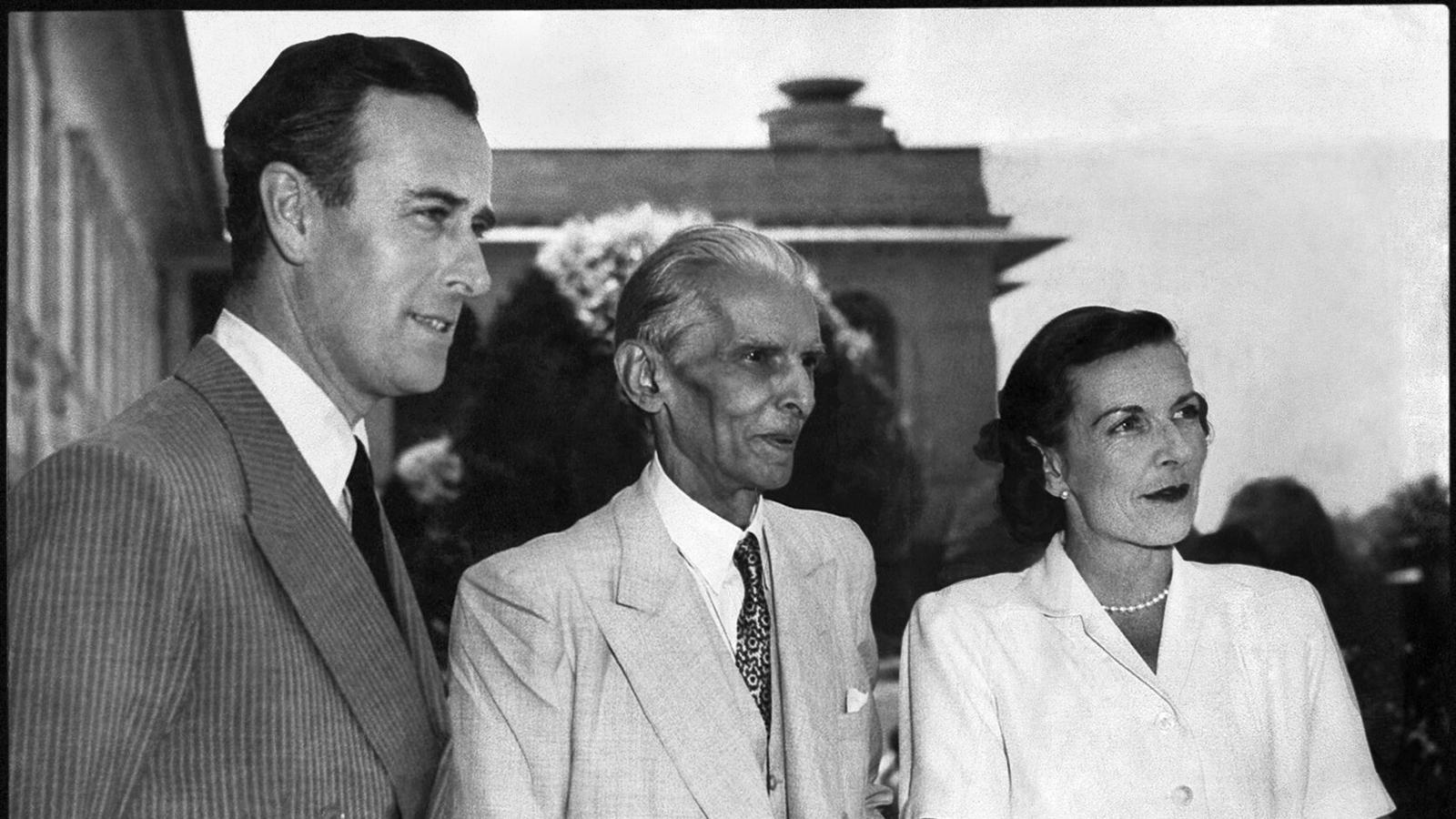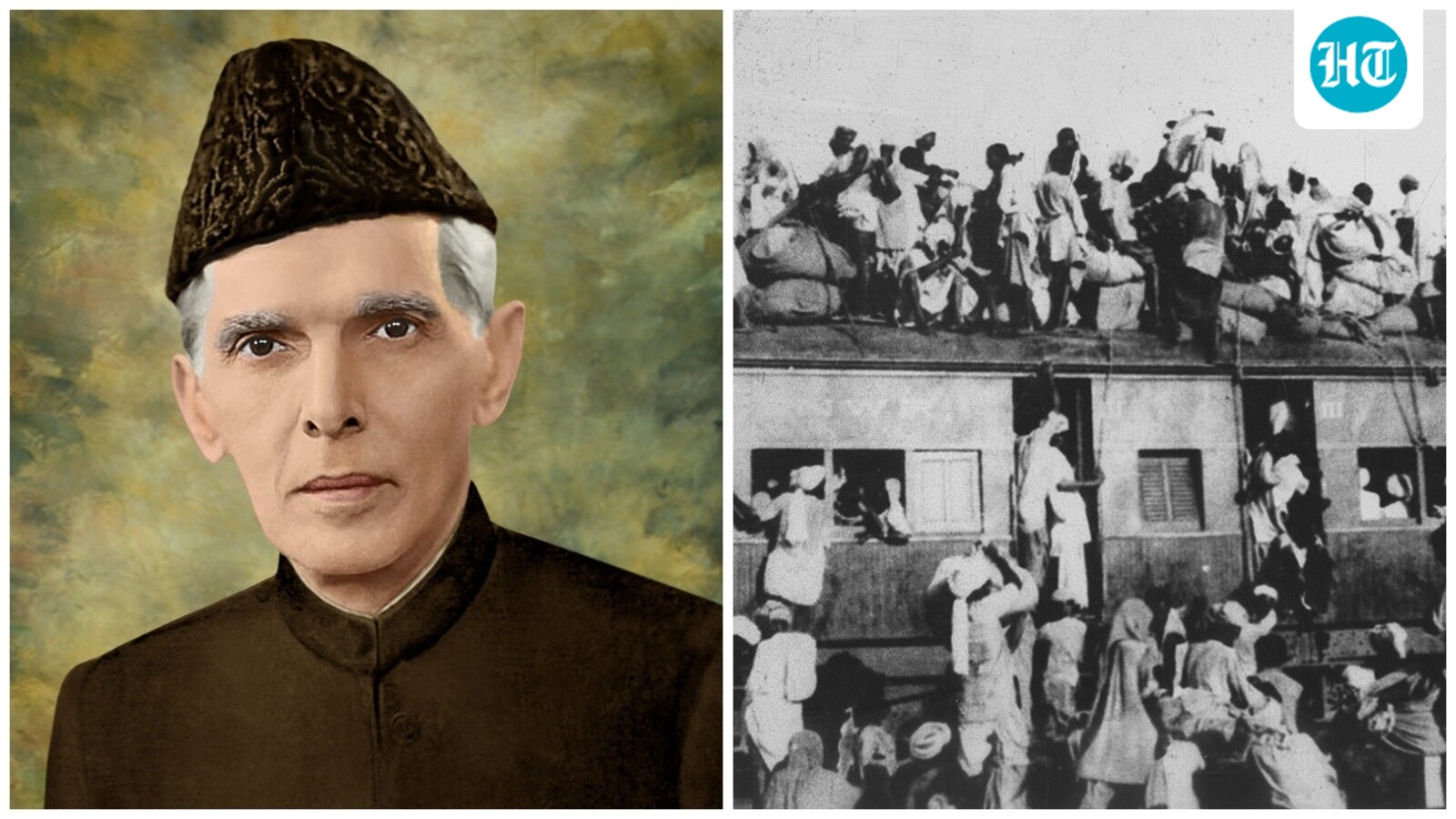
As India marks its 80th Independence Day, the story of Partition remains inseparable from the birth of India & Pakistan -- and the crores displaced by violence. From thousands of feet above the fractured landscape of Punjab, Muhammad Ali Jinnah saw the human cost of Partition unfold beneath him. In August 1947, from the window of a Dakota aircraft, he reportedly watched endless columns of men, women and children making their way along dusty roads. Some were fleeing west, others east. Along the routes lay unburied bodies, abandoned trunks, broken carts and the remains of homes destroyed in communal violence.Muhammad Ali Jinnah reportedly witnessed the devastation and violence of the Partition from a Dakota aircraft. (pid.gov.pk//HT)The sight deeply affected Jinnah, according to an account recorded by veteran journalist and author Kuldip Nayar in his autobiography Beyond the Lines. “What have I done?” the Pakistan founder reportedly struck his forehead and said in despair as he looked down at the streams of displaced people.Nayar wrote that Jinnah was flown over divided Punjab by Pakistan's rehabilitation minister Iftikhar-ud-din and Pakistan Times editor Mazhar Ali Khan. Both reportedly decided not to repeat Jinnah's words. Mazhar later told his wife, Tahira, who eventually shared the account with Nayar.“When he saw streams of people pouring into Pakistan or fleeing it, he struck his hand on the forehead and said despairingly: 'What have I done?'” Nayar wrote.Estimates of those killed during Partition range from several lakh to around 10 lakh, while more than 1.5 crore people were displaced in one of the largest mass migrations in modern history.‘There was nervousness’Nayar himself was among those caught in the upheaval. Travelling from his ancestral home in Sialkot towards Delhi, he recalled seeing corpses along the road and abandoned luggage left behind after looting.“I saw corpses lying on both sides of the road and empty suitcases and bags which bore testimony to the looting that had taken place either before or after the killing,” he wrote. “There was nervousness as we neared Wagah.”The 1947 Partition (The 1947 Partition Archive/HT file photo)How British-India broke into twoThe Partition of British India was not caused by one decision or one leader. It followed decades of political disagreements, British policies, communal tensions and the growing rivalry between the Indian National Congress and the All-India Muslim League.At the centre of the demand for Pakistan stood Jinnah, the leader of the Muslim League. But Jinnah had not always demanded a separate country. Jinnah initially supported Hindu-Muslim cooperation and worked with both Congress and the Muslim League.The political environment, though, changed considerably during the first half of the 20th century. British constitutional reforms introduced separate electorates for different communities, helping institutionalise communal political representation. The Muslim League, founded in 1906, increasingly presented itself as the principal political organisation representing Muslim interests.There were also periods of cooperation. The 1916 Lucknow Pact brought Congress and the Muslim League together on constitutional demands.That did not last. The provincial elections of 1937 became an important turning point. Congress was the dominant political force in several provinces, while the Muslim League did not perform as strongly as Jinnah expected.Jinnah increasingly feared that Muslims could become politically vulnerable in a united India dominated by a strong central government. By the 1940s, he moved towards the demand that Muslims be treated as a separate political nation.The Pakistan demandAt its Lahore session in March 1940, the Muslim League adopted the Lahore Resolution, calling for independent political units in Muslim-majority areas of north-western and eastern India.The resolution did not use the word “Pakistan”, but it turned the idea of a separate Muslim homeland into the League's central political demand.The 1945-46 elections then gave support Jinnah's position. The Muslim League won most of the Muslim seats, allowing Jinnah to claim that the League had a mandate to speak for Muslim voters.The constitution was framed over a period of three years, during the tumult of the Partition. (HT archieve)The last attempt to keep India unitedBritain's Cabinet Mission arrived in 1946 with a plan to keep India united while giving provinces considerable autonomy.Congress and the Muslim League initially accepted the proposal but disagreed over how the provinces would be grouped and how much power the central government would have.The compromise collapsed and the political crisis soon spilled into the streets.The Muslim League called August 16, 1946, Direct Action Day. Calcutta witnessed days of communal violence, followed by violence in Noakhali, Bihar and Punjab.By 1947, the political dispute had become inseparable from communal violence.Britain chooses PartitionWhen Lord Louis Mountbatten became Viceroy in 1947, Britain decided to accelerate its withdrawal.On June 3, Mountbatten announced a plan to transfer power to two new Dominions - India and Pakistan.Punjab and Bengal, both divided between large Muslim and non-Muslim populations, would themselves be partitioned.British lawyer Sir Cyril Radcliffe was given only weeks to draw the new boundaries. The Radcliffe Line divided Punjab and Bengal, but the borders were publicly announced only on August 17, two days after India's independence. For many people, independence came before they knew which country their homes would belong to.August 1947Pakistan became independent on August 14, 1947, with Jinnah as its first Governor-General.India became independent on August 15, with Jawaharlal Nehru as its first Prime Minister.But independence came with a massive humanitarian crisis. Millions of Hindus and Sikhs moved from areas that became Pakistan towards India, while millions of Muslims moved in the opposite direction. Villages were emptied, homes were abandoned and families were separated.The violence included killings, looting, abductions and sexual violence. Estimates of the death toll vary, with some historical estimates reaching around one million. The number of displaced people ran into the millions.Punjab suffered some of the worst violence. Refugee trains crossed the new border as people fled in search of safety.Jinnah got Pakistan, but not the Pakistan he wantedJinnah achieved his central political objective: Pakistan was created. But the country was not formed exactly as he had envisioned.Punjab and Bengal were divided, despite Jinnah's opposition to their partition. Pakistan also then sorted itself into two geographically separate wings -- West Pakistan and East Pakistan, with over 2,000 km of Indian territory between them.East Pakistan later became Bangladesh in 1971.Anita Goswami is a Senior Content Producer at Hindustan Times, where she primarily covers Indian and international news. With four years of industry experience, she has led coverage of Indian General elections, Assembly elections, and national polls in the United States, Canada, Bangladesh, and Nepal. Her reporting covers global wars and major events, including Operation Sindoor, Sheikh Hasina's ouster and the Mahakumbh Mela. She verifies facts and uses clear sources to ensure accurate reporting. As former Chief Copy Editor at Storytailors, she managed teams to produce top-quality content for networks like NDTV, Profit, CNBC-TV18, Upstox and News18. Her work is featured in NDTV, Meaww, and Global Pulse. Throughout her tenure, Anita has collaborated with and been mentored by top industry experts. When not reading, Anita can be found outdoors or at a bakery. Fields of interest: Indian political history, international elections, historical policy analysis, global conflicts, cultural events, Formula 1, art, media ethics and reporting on socio-political change over time.Read MoreIndia At 79Independence DayGet the latest India News, breaking headlines and real-time updates from across the country. Stay informed about politics, government policies, crime, weather major national developments and Karnataka Bandh LIVE.See Less
‘What have I done?’: When Jinnah confronted Partition’s horrors from the skies over Punjab
As India marks its 80th Independence Day, the story of Partition remains inseparable from the birth of India & Pakistan -- and the crores displaced by violence. | India News
1,216 words~6 min read