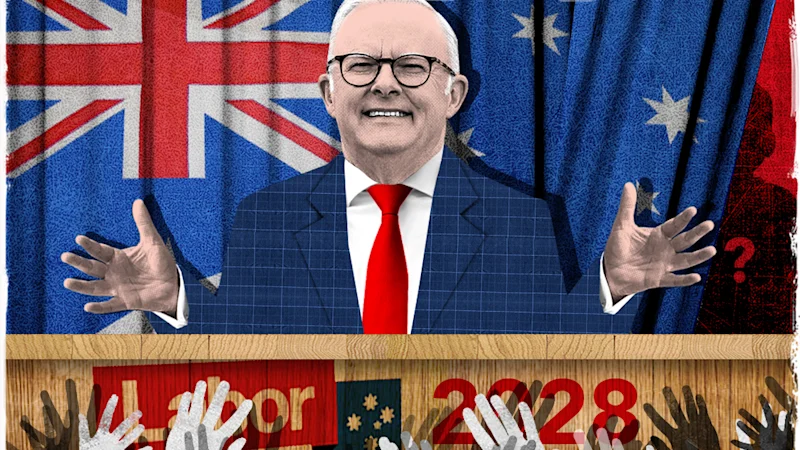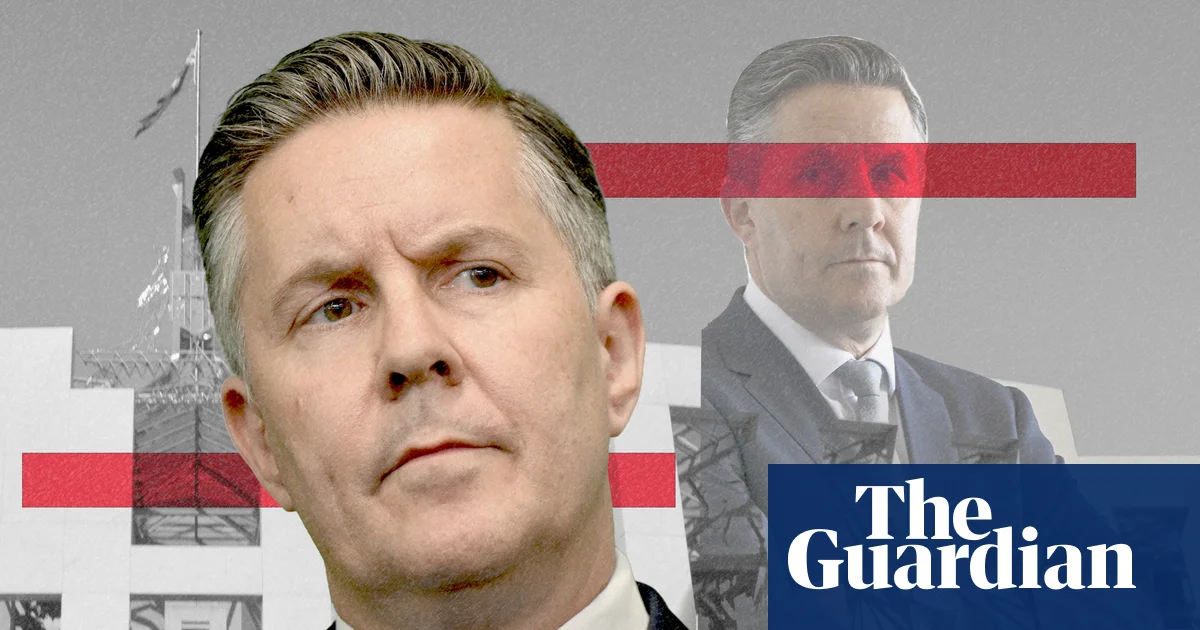
On the day the health minister, Mark Butler, revealed plans for an overhaul of the National Disability Insurance scheme in Canberra in April, his cabinet colleague, Katy Gallagher, witnessed a major shift.Outlining some $40bn in cuts to the NDIS – a policy the Labor faithful consider a core achievement of the Rudd-Gillard years – Butler sparked a huge backlash from the disability community and risked anger from the party’s rank and file.But despite this, Butler’s hard-headedness fuelled talk about him as a possible contender to succeed Anthony Albanese and become the next Labor prime minister.“I was at the [National] Press Club on the day he talked about the NDIS savings,” Gallagher told Guardian Australia last week. “I could almost see around the table people going ‘Why have we not noticed this guy before?’“I am not surprised people are paying attention now.”A factional force and key ally of Albanese, Butler is at the centre of the Labor government and has carriage of some of its thorniest political priorities. But why, after nearly 20 years in politics, is he attracting so much attention now?Anthony Albanese and Butler in 2025. Photograph: Mick Tsikas/AAPLightning rodButler has politics in his blood. His great-great-grandfather was Sir Richard Butler, who briefly served as premier of South Australia in 1905. Sir Richard Butler’s son, Richard Layton Butler was premier twice, in the 1920s and 1930s.Despite that lineage, Butler’s own politics are inherited from someone much closer. His mum, Lindsay, is a former journalist and a lawyer, who later worked on Labor party communications for Bob Hawke’s campaigns in the 1980s.Born in Canberra in 1970, Butler and his brother moved to Adelaide when their parents divorced. He attended Unley High, a few years behind future Labor leader Julia Gillard, and later studied law at Adelaide University, part of a circle that would go on to have an outsized role in Australian politics and media.Australian PoliticsDisability minister Mark Butler on the ‘necessary’ cuts to an NDIS ‘under pressure’Sorry your browser does not support audio - but you can download here and listen $https://audio.guim.co.uk/2026/04/23-09769-ap_markbutler_20260423_ds.mp300:00:0000:28:49Friends and contemporaries included Penny Wong, his now cabinet colleague, and future state premier Jay Weatherill. They knew journalists including Samantha Maiden and Annabel Crabb as well as future Australian Democrats leader Natasha Stott-Despoja.Butler was drawn to Labor politics, in part through his friendship with Patrick Conlon, a future state government minister and member of “the Miscos” - the Liquor, Hospitality and Miscellaneous Workers Union. Nick Bolkus, the Hawke and Keating government minister, was an early mentor. Butler later said many Labor members learned about politics “if not quite at the knee of Nick Bolkus then at the barbecues of Nick Bolkus.”By the mid-1990s, Butler and Conlon agreed to enter state politics together, but Butler ended up as the secretary of the union instead, and, in 1997 became the Labor state president. Attending meetings of the national executive, he encountered a NSW Labor operative named Anthony Albanese for the first time.By 2007, as Kevin Rudd won power, Butler was elected to federal parliament, representing the seat of Port Adelaide. Two years later he became a parliamentary secretary and in 2010 he was made minister for mental health and ageing, joining cabinet in 2011. Colleagues say he quickly impressed then prime minister Julia Gillard and sees his current role as a continuation of that work.Butler in 2025. Photograph: Lukas Coch/AAPBut after a stint as Labor’s national president, colleagues say Butler became “a lightning rod” for internal contests as the shadow minister for climate change. Eventually, Albanese, as opposition leader, moved him out of the portfolio in 2021. A ministerial colleague described the frontbench fight as a “bruising” time for Butler and the party.He then became Labor’s health spokesman ahead of the 2022 election.The home affairs minister, Tony Burke, told Guardian Australia Butler’s reputation had long preceded him in Canberra.“I remember as a young union organiser when we had to go to ACTU organisers training, Mark Butler was one of the examples that was given of someone who was really good at community organising, from a completely different union. That was the first time I ever heard his name.”Burke wanted Butler to be his deputy as Labor’s leader of the House, due to his fast judgement and knowledge of parliamentary procedure.“He is an exceptional drummer and singer but has always refused to join my band,” Burke said. “It remains my only objection to him.”Anthony Albanese, Tony Burke (R) and Mark Butler (L) in 2019. Photograph: Mike Bowers/The GuardianAs well as influence and seniority within parliament, Butler is an experienced factional player and one of the senior figures in the Labor left. In the 1990s, he and Don Farrell, now the trade minister and a leading right faction powerbroker, formed an alliance dubbed the Machine, purging enemies and running things together.After Albanese became opposition leader in 2019, replacing his rival Bill Shorten, he exerted influence to build the left’s power, including through captain’s picks on key preselections and putting pressure on opponents.The result is the left now has the numbers in Labor’s caucus, with Albanese and his inner circle in complete control: that circle includes Butler, Wong and Gallagher. One Labor MP said it was “difficult to overstate the importance” of the relationship between Albanese and Butler, as well as their control over the party.‘Heart, head and hands’Butler and the NDIS minister, Jenny McAllister, have been negotiating with the Coalition on major reforms they say are necessary to make the $50bn scheme sustainable. Designed to cut annual growth from more than 10% to about 2%, the savings are key to the Albanese government’s budget. Legislation for the plan could be rushed through Parliament this week.skip past newsletter promotionafter newsletter promotionCuts to funding for community participation are particularly controversial, after Labor agreed to Greens demands to extend a lengthy inquiry over the winter parliamentary break.One former Labor MP said they did not believe Butler was as effective as Bill Shorten on NDIS reform, arguing the former Labor leader dealt with financial pressures “without alienating” disability groups.But Butler’s role as health minister makes him popular among colleagues, both in cabinet and the backbench, who regard him as a deep thinker with sharp political judgement.In the leadup to the 2025 election, Labor MPs across the country started organising petitions to get Butler to fund Medicare urgent care clinics for their electorates, knowing the centres were a vote-winner with a public concerned about cost-of-living and healthcare access.One minister observed that Butler in the health role “probably does more talking on behalf of the government than anyone who’s not the prime minister”.Wong, who has known Butler the longest, praised his collective approach in public and behind closed doors.Butler holds his youngest son Charlie Dominic during a swearing-in ceremony in 2025. Photograph: Lukas Coch/AAPMark Butler (R) with his partner, Daniela Ritorto, with Jim Chalmers (L) and his partner, Laura Chalmers at the 2025 Midwinter Ball. Photograph: Lukas Coch/AAP“He’s heart, head and hands,” she told Guardian Australia. “That is: what motivates you, the policy work you have to do, but also implementation. He understands you actually have to land outcomes.”Wong was the MC at Butler’s 2021 wedding to journalist Daniela Ritorto, where the health minister broke out into a surprisingly convincing Elvis impersonation. The couple have a four-year-old son; Butler’s two children from his first marriage are in their 20s.SuccessionButler’s success in difficult portfolios, matched with his factional power, has led to discussion about him as a possible successor to Albanese sometime in the future. Right faction figures including the treasurer, Jim Chalmers, the defence minister, Richard Marles, the energy minister, Chris Bowen, and Burke are also possible contenders.Chalmers is often considered a frontrunner, but one observer said the internal numbers might make that outcome difficult: “Why would Albanese spend years building the left’s factional power, only to hand over to someone on the right?”A former Labor MP and critic of Albanese said Butler would “continue the regime of centralisation and control” the prime minister has created, noting Butler comes from a culture in South Australia that “does not welcome dissenting opinion”. Another colleague said he is firm during cabinet discussions and “not afraid to confront someone he disagrees with”.Mark Butler and Penny Wong, along with his other South Australian parliamentary colleagues, in 2015. Photograph: Mike Bowers/The GuardianButler has brushed off speculation about his future in recent months, even if he never entirely rules out moving up. He tells interviewers he remains “privileged to support” Albanese in the health portfolio, and finds the speculation a “bit befuddling”.But colleagues are not surprised Butler is being discussed as a future prime minister.They point to his collaborative style, including on health equity and access. “He has done more for women’s health in this country than every previous health minister combined,” one colleague said.Others believe Butler easily bridges the gap between Labor’s factions, as someone more “pragmatic than rigidly ideological”.Wong says she’s not surprised her old friend is getting renewed attention in Canberra.“He’s a very decent person,” she said. “I trust him absolutely and he’s very collective in how he operates. I think that demonstrates why he has been such an outstanding minister in all his portfolios.”
Heart, smarts and pragmatism: why health minister Mark Butler is suddenly a contender as a future PM
Cabinet colleagues say the veteran politician’s carriage of the NDIS firestorm shows his political judgement and collaborative style
1,525 words~7 min read