A drone that loses a motor does not glide.
It drops, and whatever is underneath it- a road, a warehouse yard, a crowd at an event- is where it lands.
That single fact is behind much of why regulators are cautious about letting drones fly over people, and why insurers price the risk the way they do.
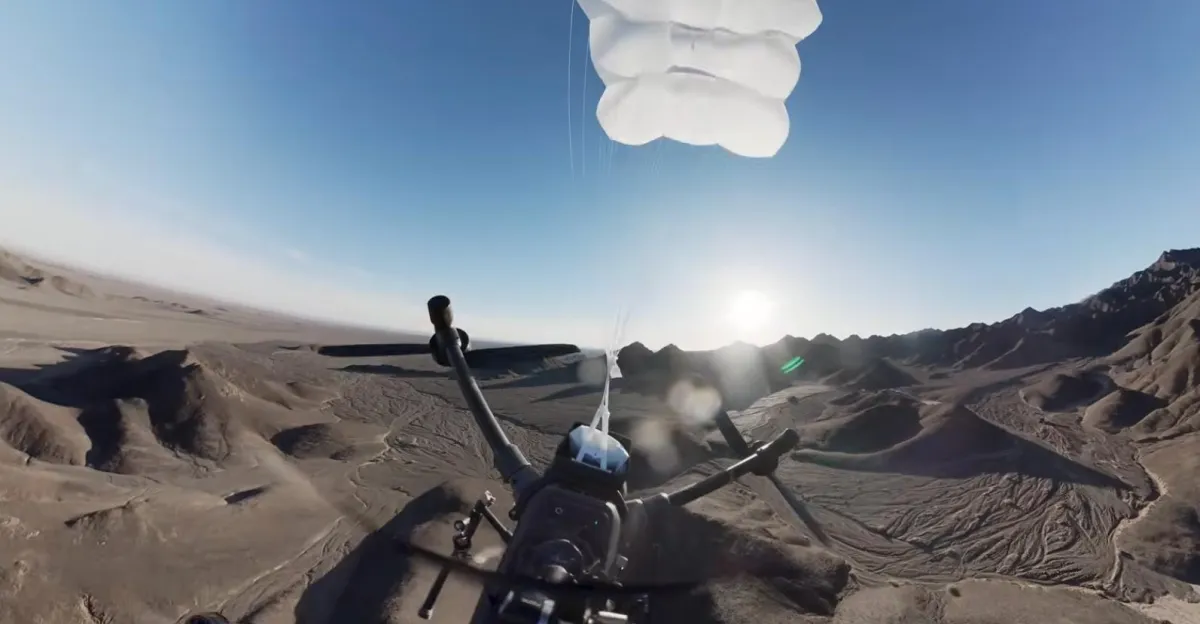
The answer that aviation settled on long ago is a parachute, and the difficulty in a drone is not the canopy but the timing.
A drone that fails at 60 metres has a couple of seconds before impact, which is not enough for a human operator to act.