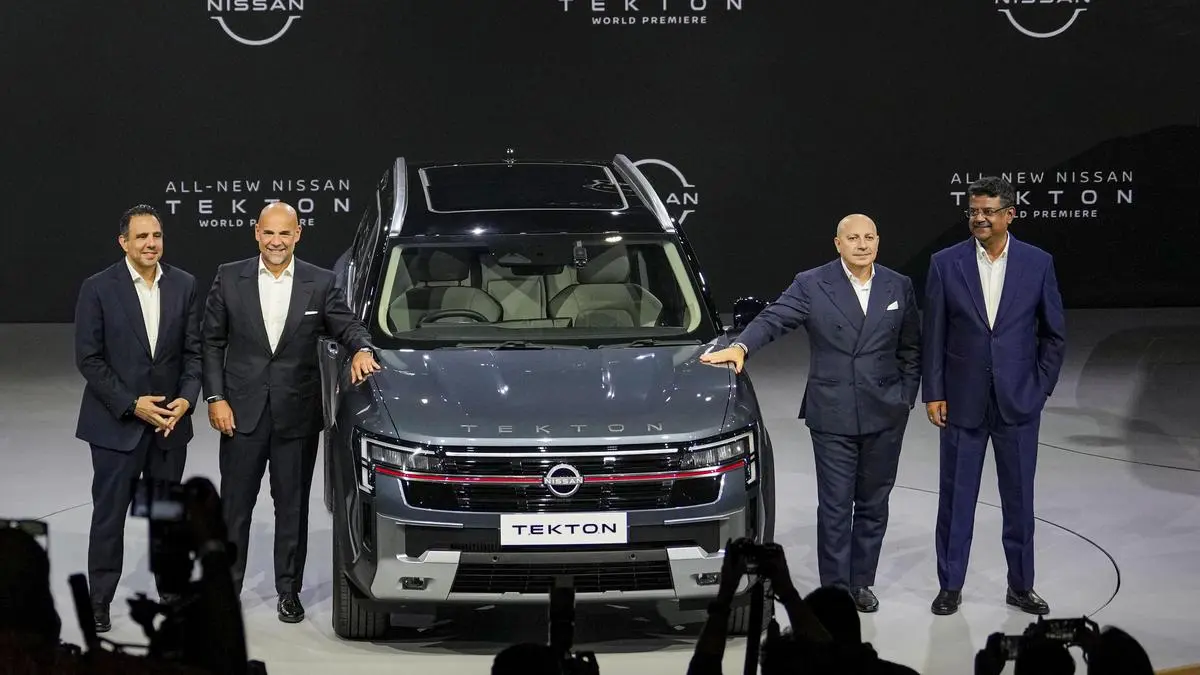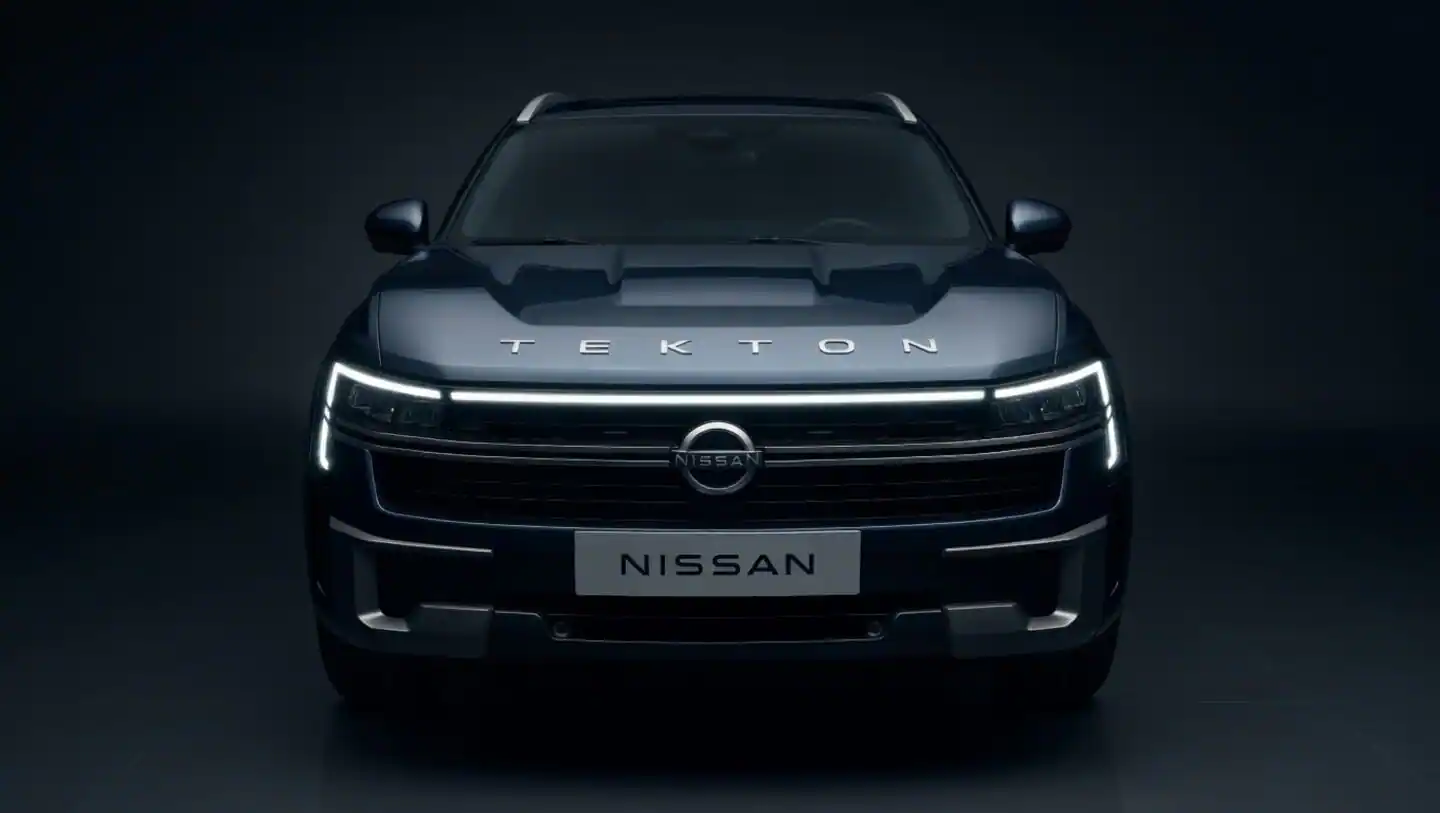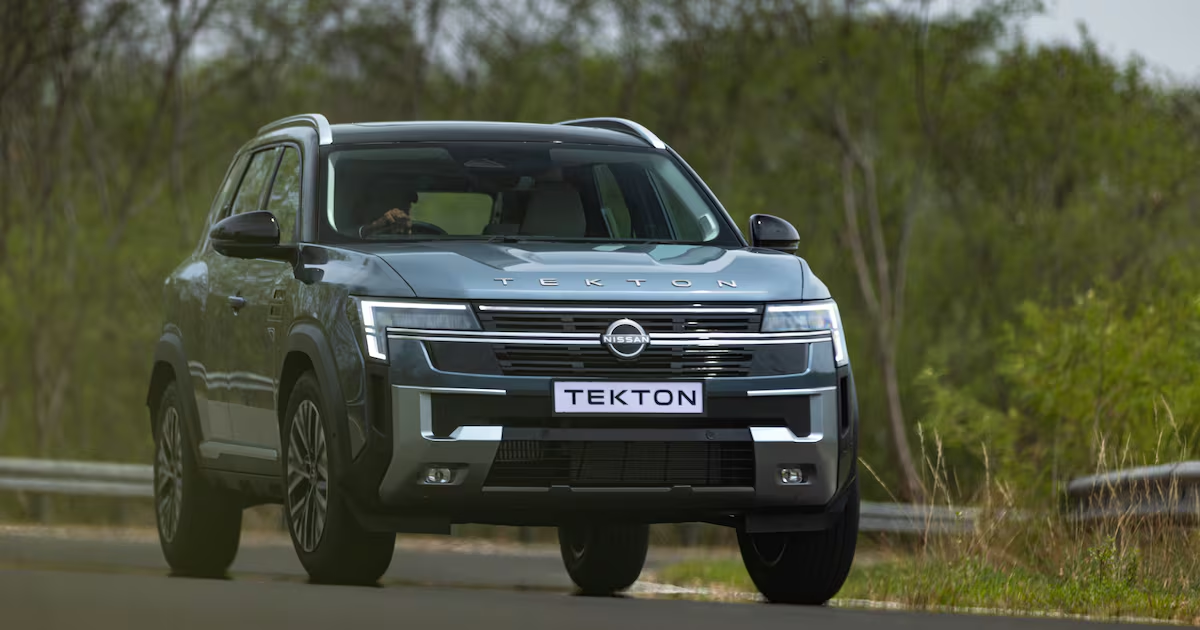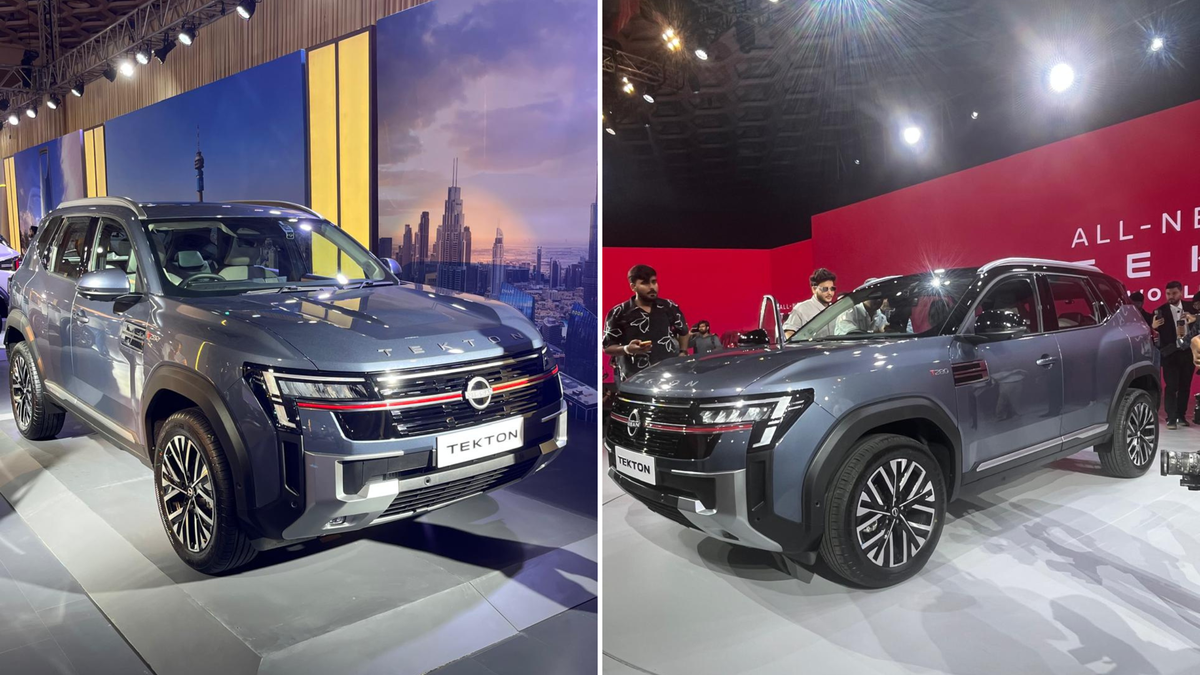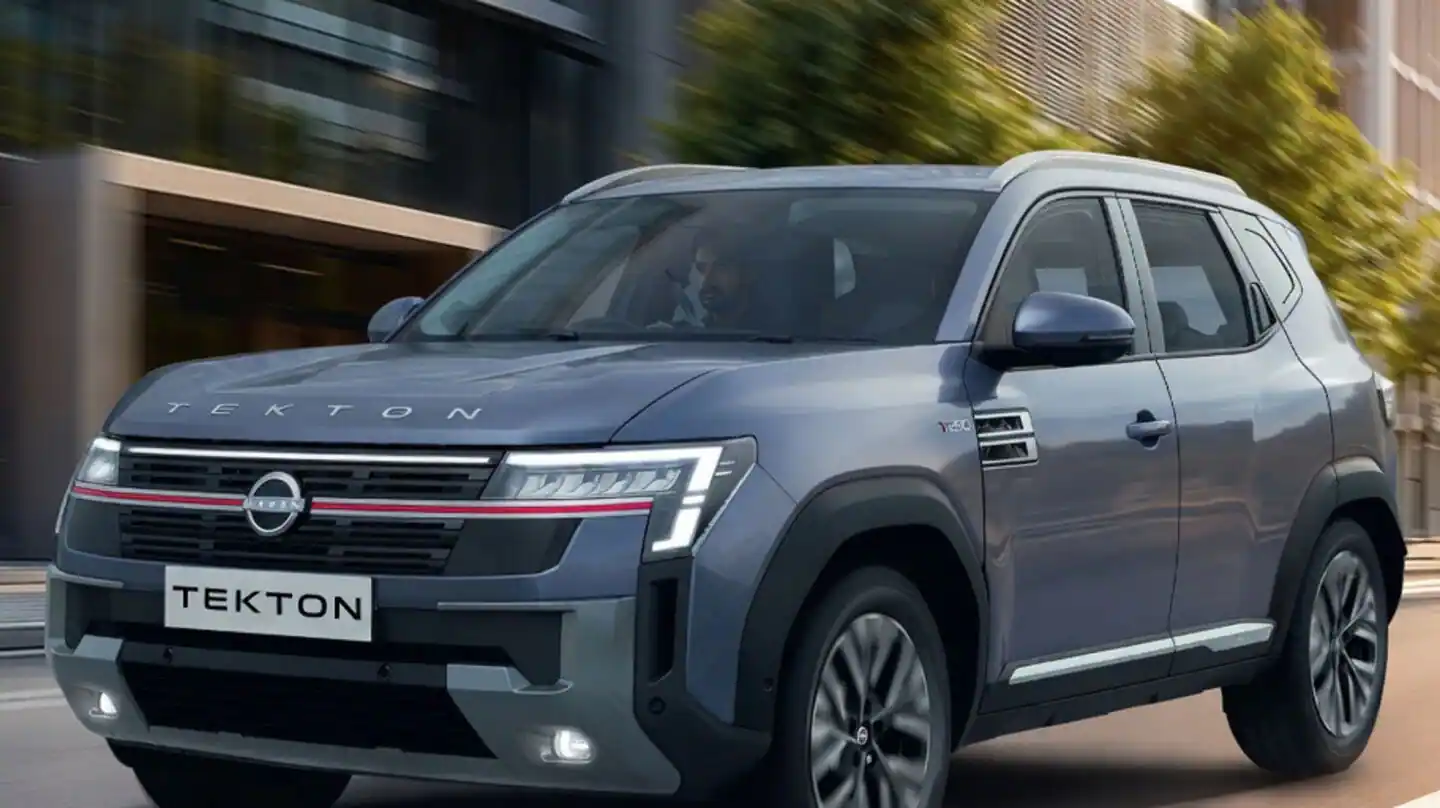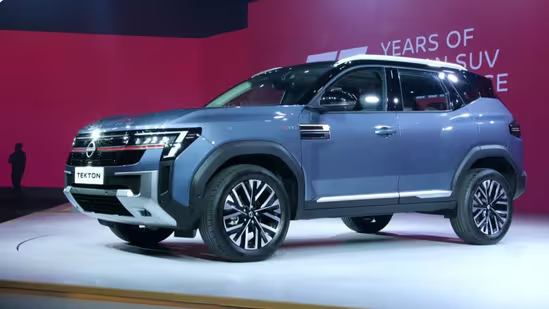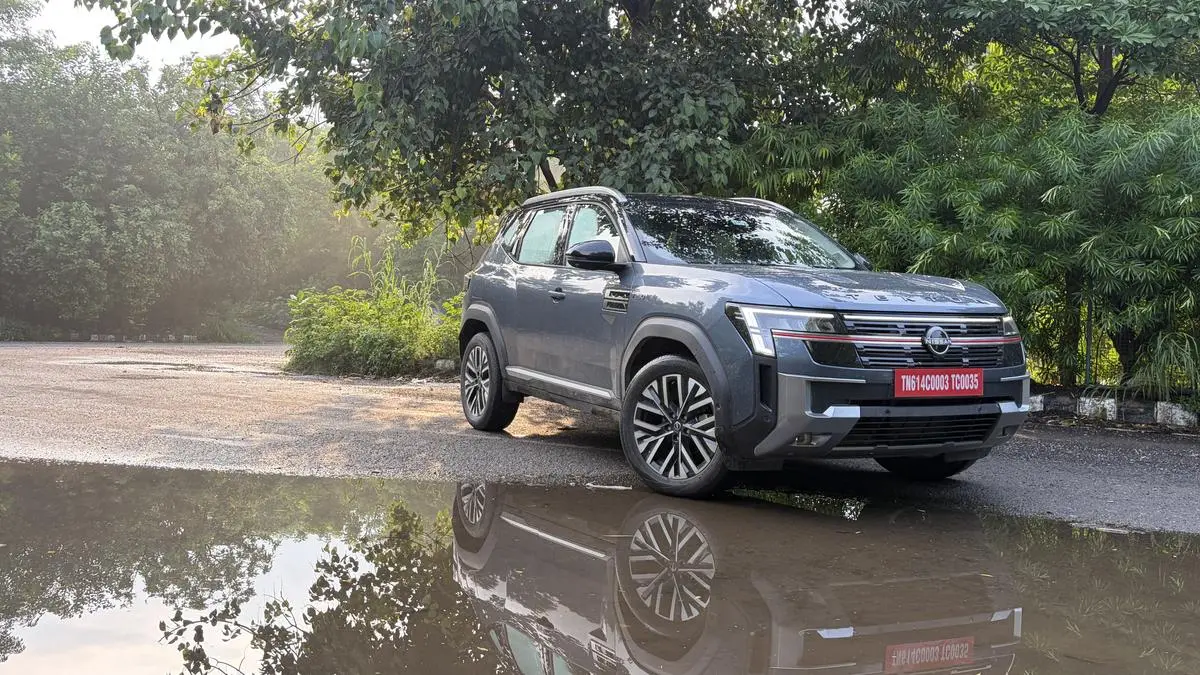
Nissan has been, effectively, a one-car company in India for six years. The Magnite kept the lights on, while everything else was either imported in small numbers or quietly discontinued. The Tekton is the first model since then that Nissan genuinely needs to sell in volume, and it arrives in the most crowded, most fought-over segment in the market. FAMILY GENES Nissan, and everyone with a phone, has used the word ‘Patrol’ liberally since the Tekton was revealed. It is quite the leap, if you have ever driven a Patrol, but hey, I understand the pride Nissan has in the big SUV and the obvious marketing benefits from that lineage. The family resemblance is there, and it is strong — the full-width chrome-accent grille, the flat and upright face, and the sense that the car was drawn with a ruler rather than a French curve. The signature C-shaped LED headlamps connect across the grille, a contrasting double-C skid plate sits below, and the tail-lamps repeat the same C-shaped motif across the width of the tailgate. A bit too busy for my liking, but striking to look at nevertheless. The Himalayan Crest badge in piano black on the front fender is a nice touch. The Tekton lettering across the bonnet is confident, if a bit shouty. The 18-inch diamond-cut five-petal alloys fill the arches properly, and they do more for the SUV stance than any amount of cladding ever could. At 4349 mm long and 1674 mm tall on a wheelbase of 2657 mm, with 212 mm of unladen ground clearance, the Tekton is dimensionally where the segment lives. It takes its platform and both its engines from the Renault Duster, though the overall approach here is Japanese rather than French, even if a fair number of buyers will not register the difference. SKIN DEEP Open the door and the Tekton makes its case all over again. The tri-tone cabin — burgundy, beige and rose gold on the Tekna+ — is unlike anything else at this price, and the rose gold Nissan insignia set into the dashboard as a horizontal double-bar finisher is the kind of detail that usually costs considerably more. Two screens dominate — a 10.1-inch touchscreen and a 10.25-inch digital cockpit — both angled towards the driver in a layout that will feel familiar to anyone who has sat in a Duster. I found the plastics to be harder than the design deserves, and there are little things which throw you off. For example, there isn’t enough foam in the door pads, and you register that every time you rest an elbow on them. The height-adjust button on the driver’s seat is too close to the back-adjust button. The volume stalk is probably the only visible carry over from the previous-gen Duster/Terrano. The purple upholstery photographs better than it looks in person, though, and while the cabin looks premium, it doesn’t always feel it. Space all around is sensible rather than generous. The rear bench is comfortable for two adults with room to spare. The boot is big and genuinely usable; Nissan cleverly quotes 700 litres, measured to the roof, whereas to the parcel shelf it’s 518 litres, which is the figure most rivals publish. Fold the 60:40 split bench and you get 1789 litres. And to cap it off, I was thrilled to see a full-size 17-inch steel spare under the floor! MUSCLED MOVE Similar to the Duster, the Tekton also comes with two petrol engine options, the 1.0-litre 99-bhp inline-three and the 1.3-litre 160-bhp inline-four. We drove the latter which also makes 28.5kgm, the highest torque figure in the segment. In the Tekna+ it comes paired to a 6-speed DCT with paddle shifters and an e-shifter on the raised centre console. Nissan claims 0-100 kph in 9.89 seconds and 18.5 kpl on the ARAI cycle, neither of which we could test, but the first figure does seem believable. Driven the way this car will actually be driven — part throttle, city speeds, middle gears — it does everything asked of it. The torque arrives early and the gearbox stays out of the way. Push harder and the engine gets a bit loud past the middle of the rev range, throttle response becomes a step rougher than the segment norm, and upshifts aren’t as smooth as you expect in a DCT. It is a different driving experience to what most buyers expect in the C-segment SUV space, and some will read that as character, while others might find it a bit coarse. The steering is light, adjustable between two modes and gives you nothing much to complain about or praise. The suspension is the behind-the-scenes highlight; MacPherson struts up front, a twist beam at the rear, anti-roll bars at both ends and 18-inch wheels on 225/55 rubber — a combination that usually costs you comfort, but it works well on the Tekton. Broken tarmac, which the monsoon has left us with in Delhi and Gurgaon, is absorbed rather than transmitted. COVERED AND CONNECTED Safety and tech is where Nissan has gone all out; five stars at Bharat NCAP, with 30.49 for adult occupant protection and 45.00 for child occupant protection, six airbags as standard across every variant, and a shell built from 62 per cent high-strength steel with ultra-high-strength steel in the A and B pillars. Electronic stability control, traction control, hill start assist and ISOFIX mounts are standard from the base car up. The top variant, the Tekna+, gets 17 ADAS functions — autonomous emergency braking for vehicles, pedestrians and cyclists, adaptive cruise control with stop and go, lane-keep assist, lane-departure warning, blind-spot warning, traffic-sign recognition, driver-drowsiness monitoring, and a 3D around-view monitor. I’ll be honest, most of it was switched off for me within the first hour, which is a completely personal preference and not a comment on the features themselves. The Tekton runs Google built-in on its 10.1-inch touchscreen, with Maps, Assistant, the Play Store and over-the-air updates, alongside the 10.25-inch digital cockpit that can display the full navigation map. There is a panoramic sunroof, ventilated front seats, a six-speaker Arkamys 3D system, dual-zone climate with a Plasmacluster ionizer and AQI readout, and a powered tailgate. FIGHTING FIT At ₹10.49 lakh to ₹18.59 lakh, ex-showroom, the Tekton undercuts both the Creta and the Seltos at the entry point, and the Tekna+ T280 DCT tested here sits more than ₹1.5 lakh below their fully loaded versions. For six years the problem with Nissan in India was that there was nothing to take to the fight — there is now. The Tekton looks like nothing else at the price, is properly safe, rides well, and drives with a directness the segment has spent a decade avoiding. Nissan has turned up to the fight with something that actually has a chance to win it. ©TheMotorGramPublished on August 14, 2026
The Nissan Tekton review: Back in the fight
Discover if the Nissan Tekton can compete in India's crowded SUV market with its standout design and advanced features.
1,142 words~5 min read