Chinese chip giant SMIC’s Q2 net profit jumps nearly 262% on AI demand surge
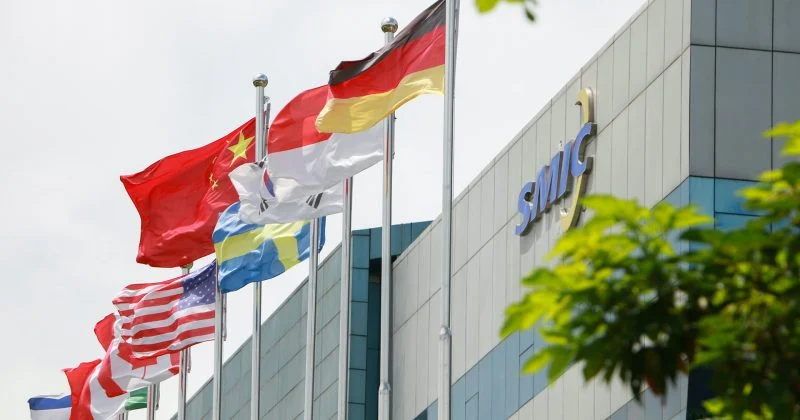
SMIC Photo:VCGTwo Chinese leading chipmakers have reported record-high revenue in the second quarter of 2026, with both citing soaring artificial intelligence (AI)-powered demand as the core driver, while executives and industry experts said on Friday that China's chip industry is expected to see strong growth in the second half of the year. Semiconductor Manufacturing International Corp (SMIC) reported a jump of 261.7 percent in its second-quarter net profit, with revenue topping $3 billion. Meanwhile, Hua Hong Grace Semiconductor reported higher-than-expected revenue in the second quarter, with profit soaring 385.9 percent year-on-year.SMIC co-CEO Zhao Haijun on Friday attributed the sharp growth to surging demand for AI-related supporting chips. SMIC will increase wafer prices in the third quarter and expects to boost its gross profit rate, as AI chip demand is expected to increase 40 percent, with wafer shipments set to grow, said Zhao.Hua Hong President Bai Peng also attributed the company's record-high revenue in the second quarter to AI-driven semiconductor demand. "The company's business has clearly benefited from the positive impact of the artificial intelligence wave," Bai said. There are three other notable factors in the financial reports of the two companies - growth in volume and prices, continuously rising gross margins, and high-capacity utilization rates - which analysts said point to one conclusion: China's wafer foundry industry has entered a new upward cycle of prosperity.SMIC released its 2026 second-quarter results on the Hong Kong stock market on Thursday, with multiple key metrics hitting record highs. Revenue for the second quarter reached $3.006 billion, up 36.1 percent year-on-year, marking the first time quarterly revenue surpassed the $3 billion threshold. Net profit attributable to shareholders came in at $479 million, soaring 261.7 percent year-on-year. "By region, China, the US, and Eurasia accounted for 90 percent, 8 percent, and 2 percent of revenue in the second quarter. China recorded the largest growth at 22 percent, mainly thanks to robust demand for AI supporting chips, the return of overseas orders, and the continued strengthening of localized manufacturing," Zhao said.The financial results also beat market expectations significantly. Goldman Sachs noted in a report that SMIC's second-quarter revenue and gross margin both came in above the bank's and the market's forecasts, as well as management's earlier guidance. Goldman Sachs maintained its "buy" rating and set a target price of HK$135 ($17.2) for the Hong Kong-listed shares.SMIC shares closed 4.81 percent higher at HK$70.8 on Friday, having risen as much as 6 percent during trading.As for Hua Hong, the second-quarter revenue reached an all-time high of $717.5 million, up 26.8 percent year-on-year. Net profit attributable to shareholders of the parent company was $38.6 million, up 385.9 percent. "As a specialty-process foundry serving a broad range of end markets, we have clearly benefited from the positive impact of the AI wave," said Bai.AI systems require a large number of supporting chips, including power management integrated circuits, interface chips, memory chips, and many other types of chips. These chips primarily use mature process nodes - 28 nanometers and above - which are exactly the core process ranges of SMIC and Hua Hong, Zhang Xiaorong, director of the Beijing-based Cutting-Edge Technology Research Institute, told the Global Times.According to the latest statistics from tech industry research institution TrendForce, the average capacity utilization rate for 8-inch wafers (typically used for mature chip manufacturing processes ranging from 250 to 28 nanometers) at the world's top 10 foundries recovered to 88 percent in the first half of the year and is expected to climb to 90 percent in the second half.However, the financial results of SMIC and Hua Hong showed that they both operated at elevated utilization levels in the second quarter, approaching 94 percent and nearly 103 percent, respectively, higher than the global average."Over the past two years, China has achieved many technological breakthroughs in chips and semiconductors, computing power and algorithms, AI large models, and humanoid robots. International capital is tilting more toward emerging industries when investing in Chinese equities," Yang Delong, chief economist at Shenzhen-based First Seafront Fund, told the Global Times on Friday.Looking ahead to the third quarter, the company expects shipments to continue growing and prices to remain stable. Industrial momentum and spillover effects from the AI boom will continue in the second half of the year, generating broad demand for integrated-circuit manufacturing. "The company remains optimistic about the industry outlook and its own development," said Zhao.