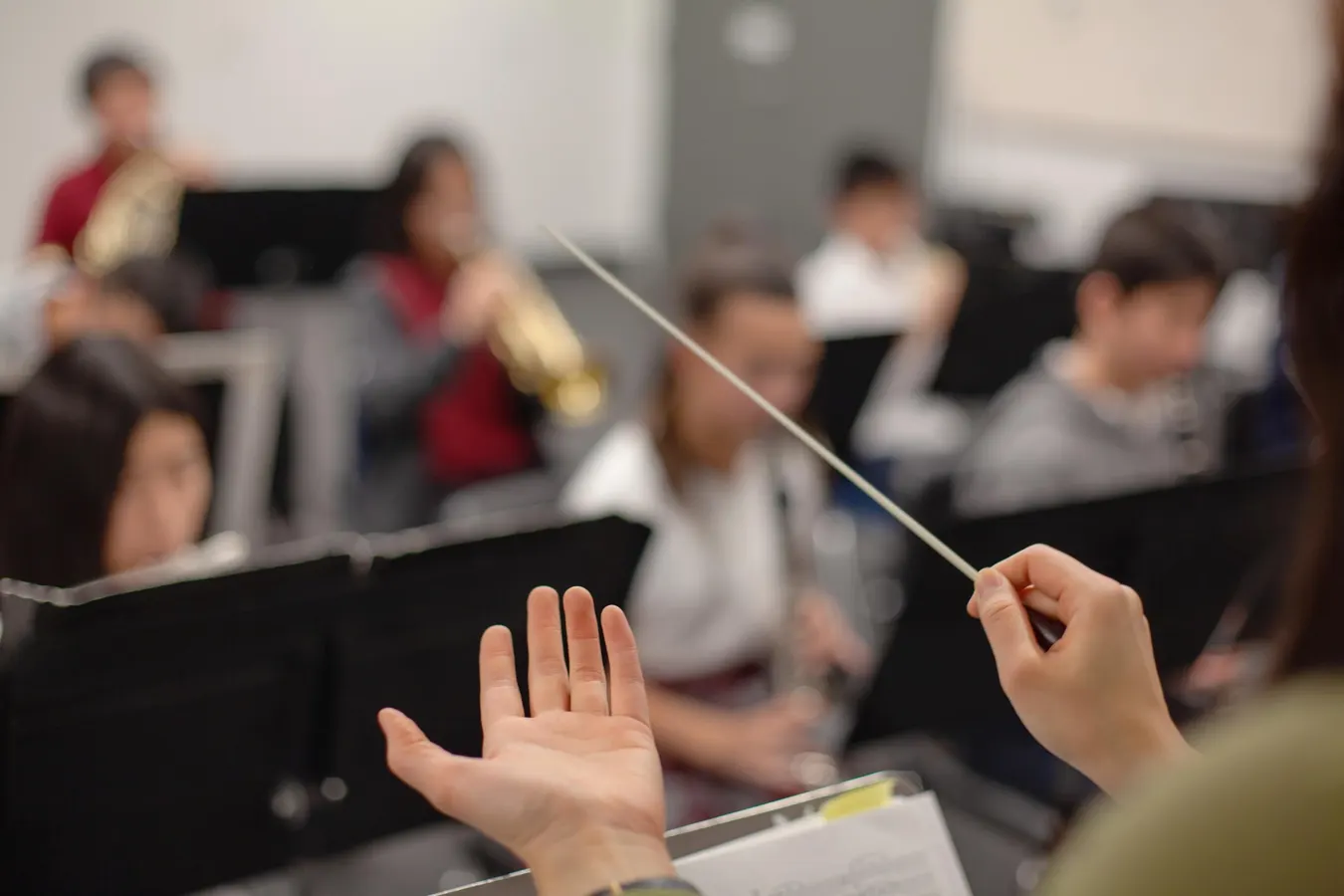
Brendan Hooft, CEO & Managing Partner of ESPER.gettyWe keep asking what AI will take from us. The better question is what it gives back. For the first time, machines can carry what we merely do, freeing us to become what we never had the time to be. This isn't replacement but return. It's a homecoming to the fuller selves that work has long crowded out.That's not yet how it feels. At the Museum of the Future in Dubai, one projection stopped me: By 2030, the World Health Organization (WHO) expects depression to be among the heaviest burdens on human health. It sounds like a claim about medicine, but it's a claim about us. A 2026 Gallup report found that workplace engagement had fallen to its lowest level since 2020, a 2025 WHO report emphasized that loneliness had deepened behind our screens, and a 2025 World Economic Forum survey projected that nearly 40% of workers' skills would be obsolete by 2030.The fear is real, but fear is a poor architect. The future is ours to compose, and the question isn't whether we can keep pace with the machines but who we choose to become beside them.That choice is already rewriting what makes a person valuable. For a century, we hired for what people could do. Skill was scarce, and the résumé was its ledger. AI changed that overnight, making capability abundant and nearly free. When any skill can be summoned on demand, value shifts to whoever can orchestrate it toward what matters. This is the rise of the conductor. She plays no instrument and makes no sound yet draws a hundred players (here, a hundred machines) into one intention. Not the most skilled in the room but the one who can hear the whole and hold it.What makes her irreplaceable is character. Character has always separated those who perform from those who lead. What's new is the stakes. A machine can play every note correctly and still fail to make music because it can't feel how a phrase should land or when silence says more than sound. Skills expire, but character compounds.In our work, character resolves into behavioral competencies: systems thinking to read the whole score, augmented judgment to know when to overrule the machine, radical agency to own what your agents produce and the adaptability to keep becoming someone new. These are the hardest skills to build and the last skills to fade.Amplification is indifferent to virtue. Hand a hundred agents to someone who has surrendered judgment, and you scale the surrender. Confident errors at machine speed compound faster than anyone can catch. The same leverage that makes character decisive makes its absence catastrophic. The danger was never that machines replace us but that they faithfully amplify whoever we already are.Picture the conductor at work. She hands the routine to her agents and spends her hours on what she alone can, and loves to, do: framing the right problem and imagining what doesn't yet exist. She reaches further than a whole team could yet feels more herself. The machine took the mechanical and left her the meaning. A larger life, not a smaller one. More creative, more connected, more human.None of this is hypothetical. The people building these systems bet openly on the first one-person billion-dollar company, but that was never the point. The truer proof is closer to home. My 13-year-old son, in two days, built a working home management and reward system with tools that a few years ago would've taken a small team. What AI hands back isn't scale but self-authorship, the room to pursue what the Japanese call ikigai: what you love, what you do well and what the world needs.What This Asks Of UsFor nations and institutions, this can begin now.Publishing The Standard Name the behavioral competencies and AI skills that predict performance, and govern them with the rigor of an accounting framework, not a slogan. For one GCC nation, we recently did exactly this: a live baseline of 150 AI skills and 18 behavioral competencies drawn from 31 international, national and industry frameworks.Redesigning The System Around Capability, Not The Org Chart Skills still matter. Hiring for them doesn't because they're what expires fastest. Rebuild the talent life cycle from education to leadership development, mapped to everyone regardless of role.Wiring It Into A Living Platform Not a document on a shelf but an intelligence system that measures readiness, surfaces the gaps that matter and guides where to invest next.This is the discipline I've called the Human-AI Symphony, a capability operating system for an AI-native enterprise in which the conductor is the person and the symphony is the system that builds them at scale.For each of us, the guidance is quieter but no less demanding. Guard your judgment; never hand it to a machine. Build from your strengths, and let the machine carry the rest. Above all, protect what this age erodes: real connection, the people who depend on us and our children, whom we must raise less to know than to become.This is, finally, less of a forecast and more of an invitation to become a vision of our future rather than a victim of our past and to meet change with courage.The machines can play every note. Only a human can make it a symphony. The podium is waiting, and the baton is already in your hand.Forbes Technology Council is an invitation-only community for world-class CIOs, CTOs and technology executives. Do I qualify?
The Rise Of The Conductor: Inside The Human-AI Symphony
AI can play every note we ever learned, but it still can't make music. Its gift is to let us scale not only what we do but who we are.
TL;DRAI
Hooft argues AI's value lies in orchestration, not skill automation—the 'conductor' frames problems while machines handle routine work. For tech leaders, hire character and judgment over skills; these competencies determine whether AI leverage serves strategy or amplifies errors.
909 words~4 min read