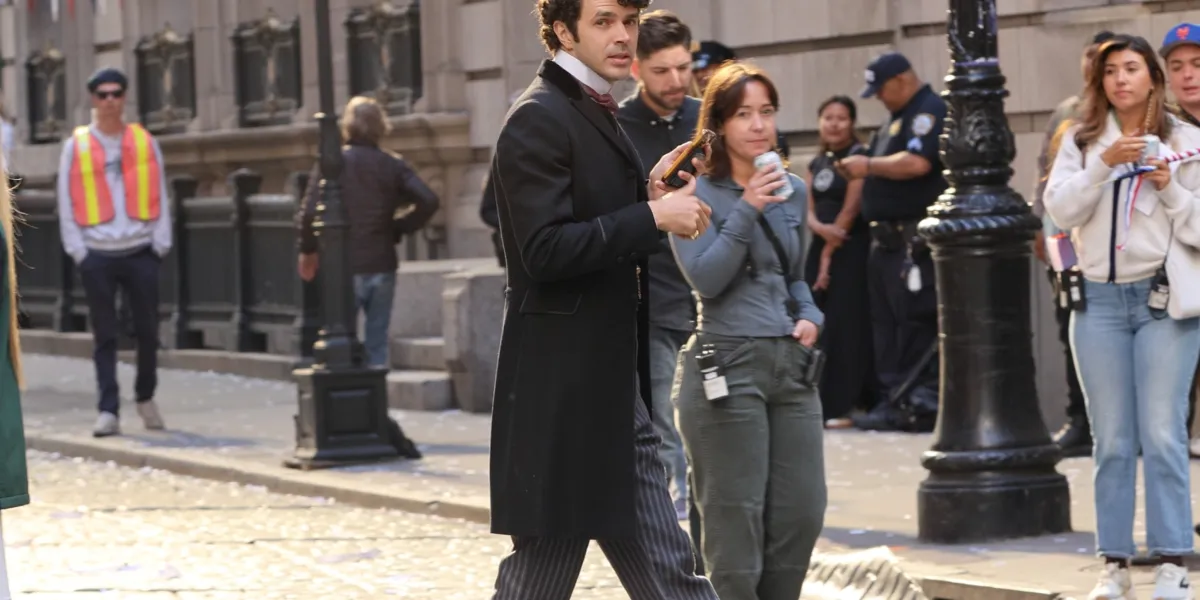
The generation that writes TikTok manifestos about billionaire greed and the widening wealth gap has somehow, simultaneously, made the aesthetics of extreme wealth concentration its dominant cultural fantasy.
Billions of views accumulate under #OldMoney—polo whites, tweed, country-club stillness, even loafers displacing sneakers—has become one of Gen Z’s most visible style movements, alongside Regencycore ballgowns popularized by shows like Bridgerton and HBO’s The Gilded Age, prairie dresses, and homesteading vlogs. Gen Z has built its escape from modern chaos inside the last era that looked exactly like modern chaos.
But the period they’ve chosen to romanticize was defined by the same runaway inequality, technological disruption, and political combustibility driving them to escape in the first place.
What they’re actually feeling
The psychological term for this is anemoia—coined by coined by writer John Koenig in his Dictionary of Obscure Sorrows, defined simply as “nostalgia for a time you’ve never known.” It’s distinct from ordinary nostalgia, which is rooted in real memory: a genuine callback to something personally experienced. Anemoia is essentially an imagined memory, a longing built from movies, photographs, and secondhand stories rather than lived experience. Researchers describe it as a blend of memory and imagination, where the “past” being missed is really a mental simulation constructed from cultural artifacts rather than personal history.