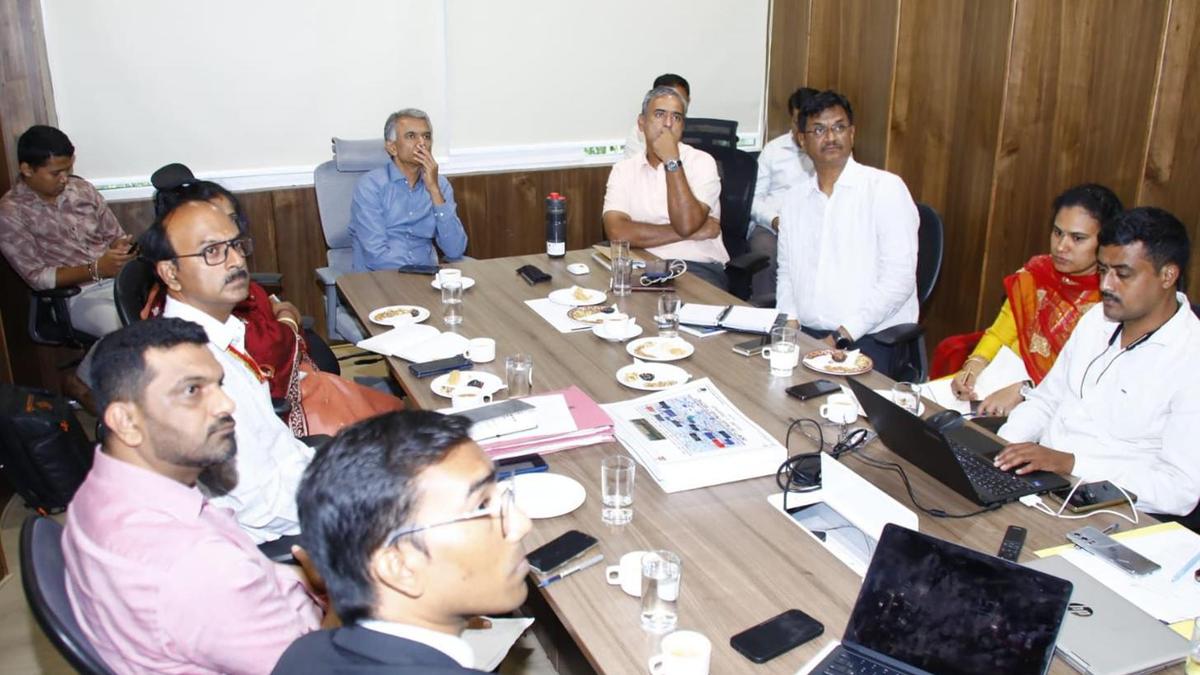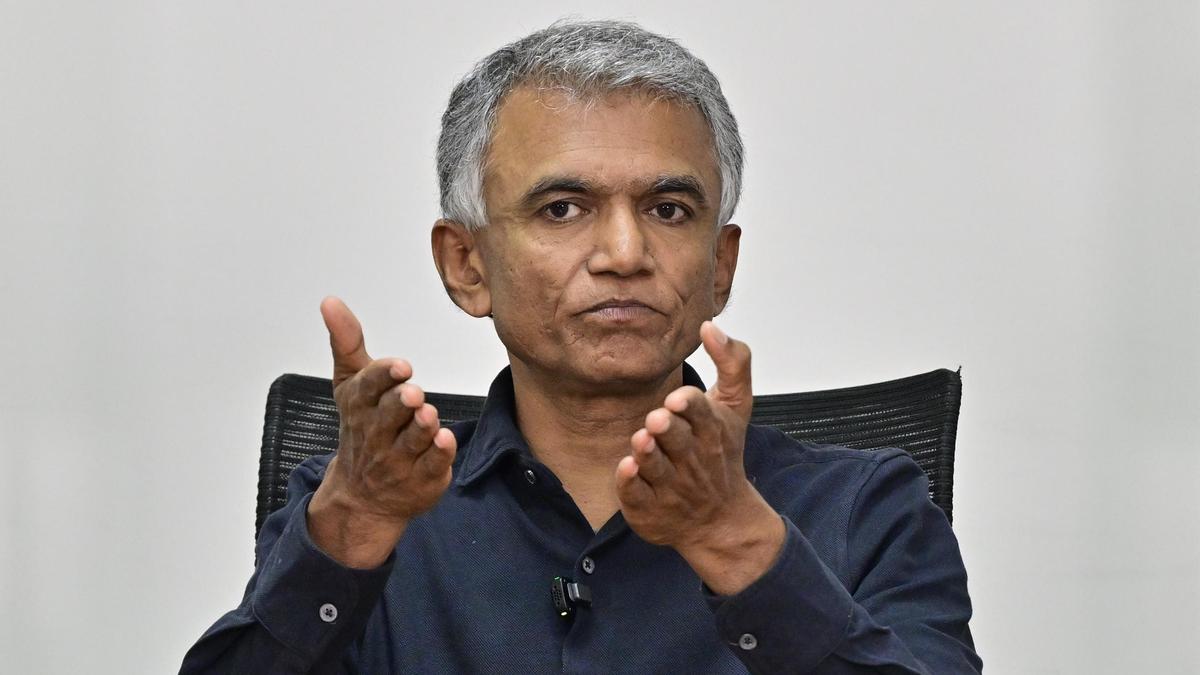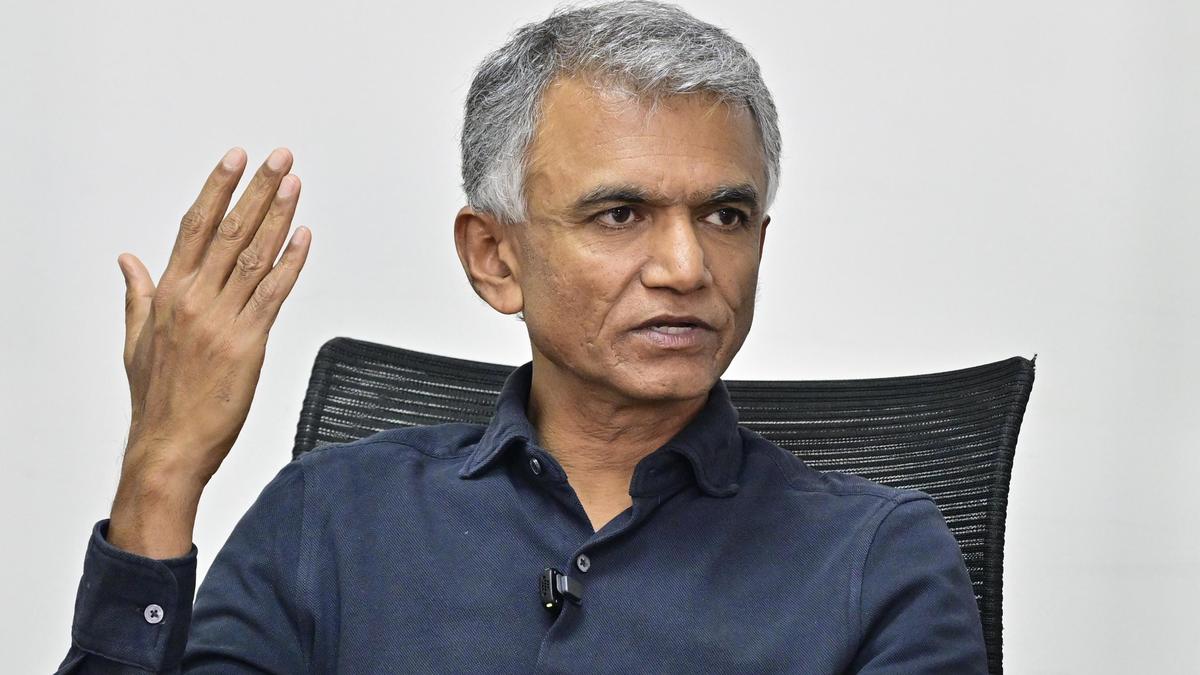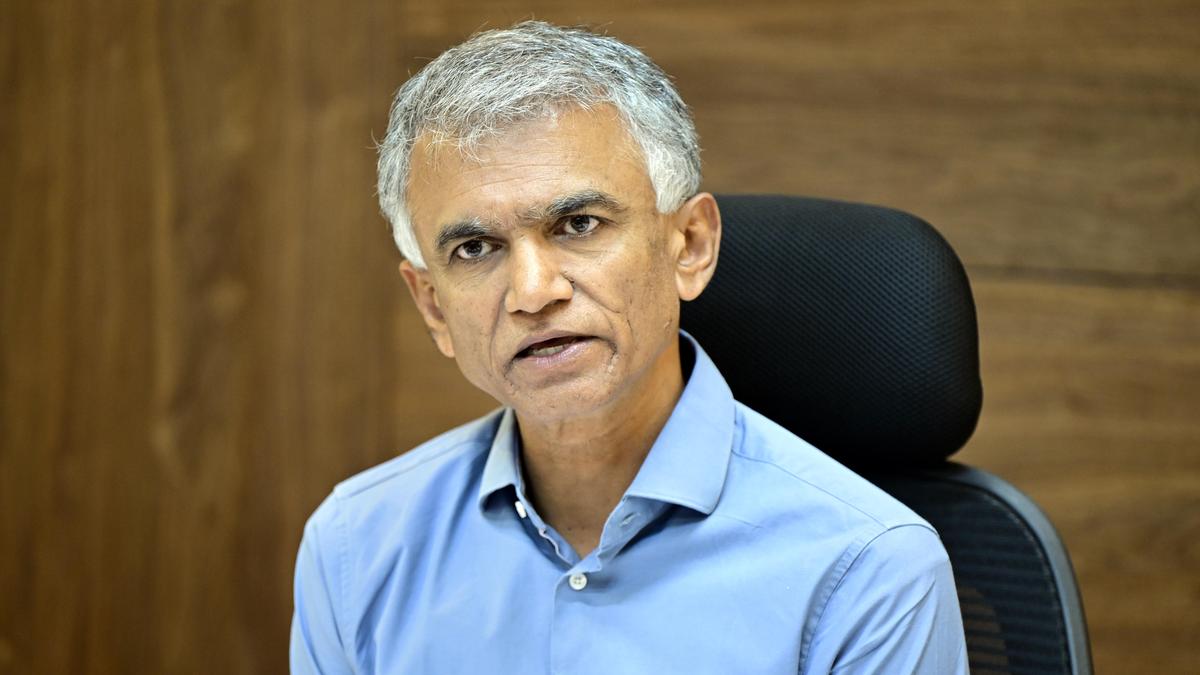
Greater Bengaluru Development Minister Krishna Byre Gowda during The Hindu’s #THTalksBengaluru interaction, in Bengaluru on August 13, 2026.
| Photo Credit: MURALI KUMAR K
Defending the controversial north-south tunnel road and elevated road projects amid mounting opposition, Greater Bengaluru Development Minister Krishna Byre Gowda has argued that the roads in Bengaluru do not have enough space to accommodate its growing traffic due to poor “road-to-land” ratio and that large-scale widening is no longer a realistic option. He was speaking at #THTalksBengaluru, The Hindu’s interactive programme, through which he addressed questions from readers on Thursday (August 13, 2026).“Bengaluru currently has a road-to-land ratio of about 13%, while it should ideally be 17-18%, and this differs significantly area-wise. The shortfall is particularly acute in newer parts of the city where decades of illegal layout formation has left inadequate space for roads,” he said. Boosting road capacity inevitableWith the city having around 1.5 crore vehicles, he said increasing the road capacity would be unavoidable, even as the city expands its Metro, suburban rail and bus services. “Since road widening at a mass scale is not possible, we have to think about going under or above,” Mr. Gowda said. “I too wish we didn’t have to build tunnels and elevated roads. But how do you cater to a city of 1.5 crore population with 1.5 crore vehicles?” he asked. His defence of the projects came while responding to concerns over poor and narrow roads in several parts of Bengaluru, including the Varthur Kodi-Dommasandra, ITPL Main Road and Bannerghatta Road stretches, where residents have also raised concerns about the impact on school children, senior citizens and daily commuters. Mr. Gowda acknowledged that where roads already exist but are in poor condition, the government has to fix them. But, distinguishing between a bad road and a city that simply does not have enough road space, Mr. Gowda said the latter posed a much bigger challenge. The minister argued that the government stopped illegal layout formation in 2024, but the damage created by decades of such development remains. It is this historic shortage of road space that makes elevated roads and tunnels necessary on at least some heavily congested corridors, he said. Public transport no substitute for more roadsResponding to the argument that Bengaluru should address congestion primarily by expanding public transport, Mr. Gowda pointed to the government’s plans to increase the Metro network to 170 km by the end of 2027, develop 148 km of suburban rail by 2030 and add 4,500 buses to BMTC. He said all of these were necessary but argued that they could “not substitute” for additional road capacity given Bengaluru’s vehicle population. “We are going to invest heavily in Metro. We want to add 4,500 buses to BMTC. But despite all that, with the highest vehicular population in the country being in Bengaluru, there is no choice but to increase the road capacity,” he said. Mr. Gowda said large-scale road widening was also constrained by the fact that Bengaluru’s existing corridors are surrounded by homes and other built-up properties. He further pointed to the resistance that road-widening projects face when private properties are affected, arguing that there was a contradiction between demanding wider roads and opposing acquisition of individual properties. For that reason, he said, Bengaluru would have to look at adding road capacity “vertically” rather than only horizontally. Published - August 14, 2026 07:03 pm IST