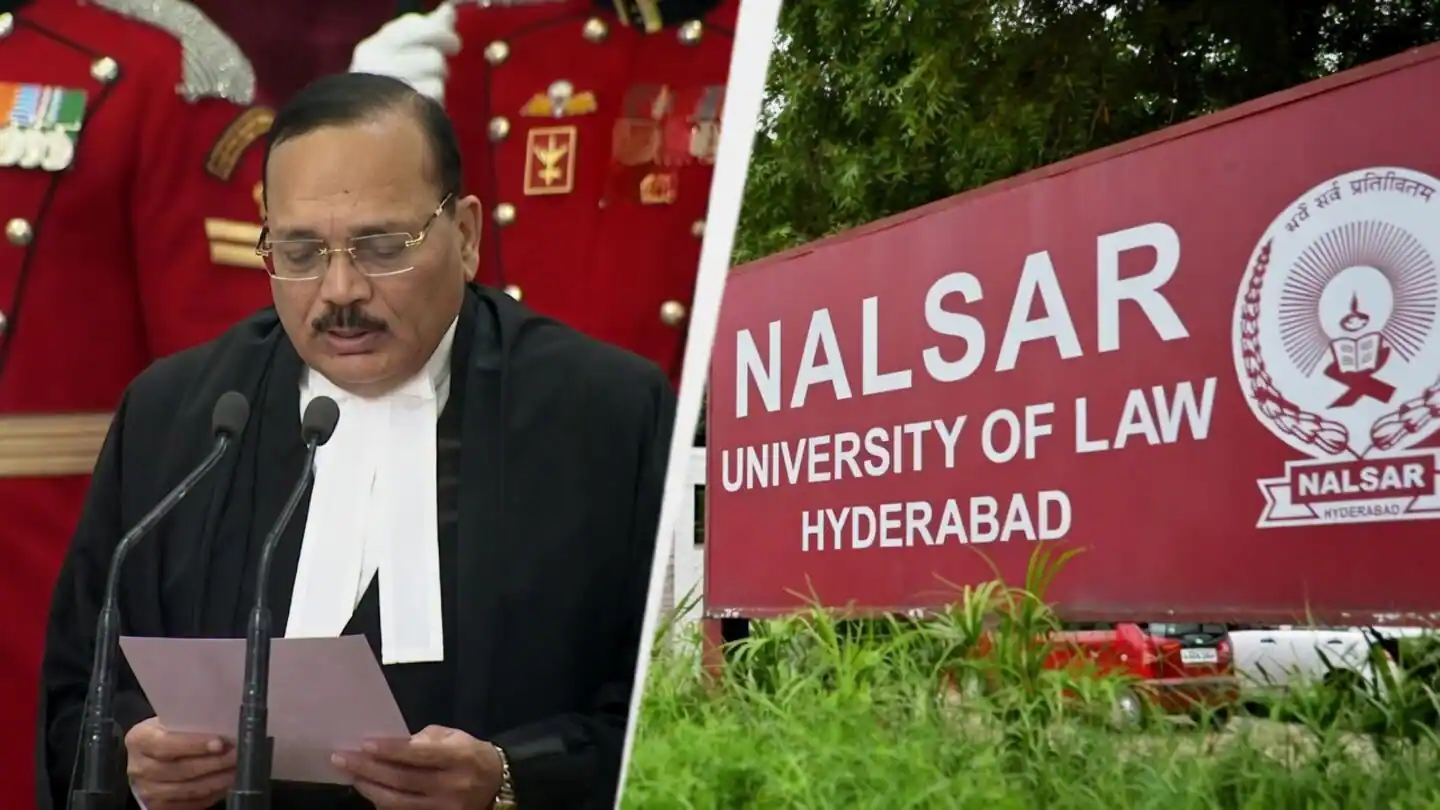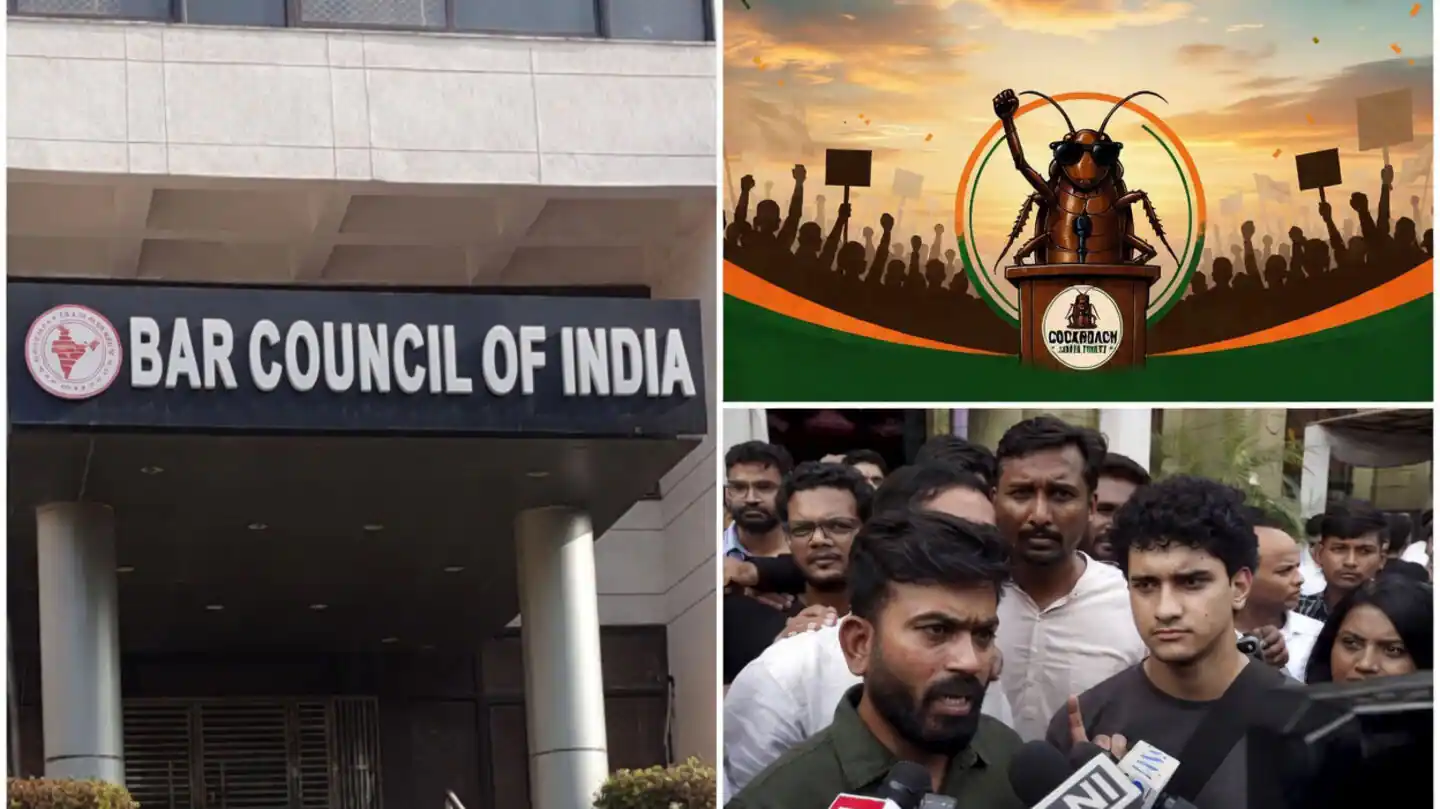
The story so far: On 13 August, Bar Council of India (BCI) Chairman Manan Kumar Mishra issued a direction to all State Bar Councils not to enrol any NALSAR (National Academy of Legal Studies and Research) 2026 graduate until further orders. The direction came amid an inquiry into a campaign by some students opposing Chief Justice of India (CJI) Surya Kant’s participation in NALSAR’s convocation. The Chairman sought a factual report from NALSAR identifying those who initiated, organised, coordinated or mobilised the campaign.“A student of Law, having no regard or respect for the highest Judicial Office of the country, is not expected to be a responsible or sensible advocate, teacher or a judge. Such persons shall always be a liability on the profession...Our experience is that such people are always indulged in strikes and boycotts and tarnish the image of the Legal Profession.” the letter said.Subsequently, the BCI modified the direction and said all NALSAR 2026 graduates could enrol with the State Bar Council of their choice, while the inquiry would continue.This raises several questions about the statutory powers of the BCI, the authority of its Chairman and the legality of imposing a batch-wide restriction when individual responsibility has not yet been established.What powers does the BCI have over State Bar Councils?The Bar Council of India is a statutory body constituted under the Advocates Act, 1961. Section 7(1)(b) entrusts the BCI with laying down standards of professional conduct and etiquette for advocates, while Section 7(1)(g) entrusts it with general supervision and control over State Bar Councils. Sections 7(1)(h) and 7(1)(i) concern the promotion and standards of legal education and recognition and inspection of universities whose law degrees qualify for enrolment, respectively. Section 49 empowers the BCI to frame Rules concerning, inter alia, professional conduct and etiquette and standards of legal education.Section 48B is the power to give directions. It states, “For the proper and efficient discharge of the functions of a State Bar Council or any committee thereof, the Bar Council of India may, in the exercise of its powers of general supervision and control, give such directions to the State Bar Council or any committee thereof as may appear to it to be necessary, and the State Bar Council or the committee shall comply with such directions.”Rule 15 of the Bar Council of India Rules provides that, subject to the resolutions of the Council, the Chairman shall exercise general control and supervision over the affairs of the Council. Rule 18 further provides that the Chairman has the power to pass interim orders in revisional and other matters arising out of the supervisory jurisdiction of the Council.“The blanket direction stopping the entire 2026 NALSAR batch from enrolling has no statutory basis. Enrolment is primarily the statutory function of the State Bar Councils under the Advocates Act, and there appears to be no specific provision empowering the BCI Chairman, acting individually, to suspend the enrolment of an entire batch.” said advocate N. Manoj Kumar, BCI and Bar Council of Kerala member.What does the law say about enrolment?Section 6(1)(a) entrusts the State Bar Councils with admitting persons as advocates on their rolls. Section 24 of the Advocates Act sets out the qualifications for admission to a State roll, while Section 24A provides for certain disqualifications for enrolment. Sections 25 and 26 deal with the authority and procedure for admission as an advocate, while Section 26A empowers a State Bar Council to remove a name from its roll.“No blanket restrictions can be imposed by the BCI. Every application has to be dealt with independently and if they meet the statutory requirements, they are entitled to be enrolled,” said advocate Yeshwanth Shenoy, member of Bar Council of Kerala.“The conduct of a person has nothing to do with his eligibility to be enrolled as an advocate. The Bar Council can only regulate the conduct of advocates, which means that they have to be enrolled with any of the bar councils.” said Mr. Shenoy. He also said the BCI had no authority to direct NALSAR to conduct an inquiry into students’ conduct, arguing that neither the BCI nor State Bar Councils could initiate disciplinary action against students before they were enrolled as advocates.Mr. Kumar said that at the most, the BCI may inquire into the conduct of individual students, but collective punishment cannot ordinarily be imposed on an entire batch for the alleged acts of a few. Pre-enrolment conduct may become relevant where it attracts a statutory disqualification or otherwise legally affects eligibility, but mere expression of an opinion or peaceful protest cannot by itself justify denial of enrolment.What have courts said on BCI’s powers over enrolment?In the case of Indian Council Of Legal Aid & Advice vs Bar Council Of India & Anr on 17 January, 1995, The Supreme Court of India dealt with a challenge to a Bar Council of India rule barring persons above 45 years of age from enrolment as advocates. The Court held that the BCI could not use its rule-making powers under Section 49 of the Advocates Act to introduce an additional disqualification for enrolment that was not provided for under the Act. It also held that enrolment of advocates falls within the domain of the State Bar Councils and struck down the rule as ultra vires the Advocates Act and violative of Article 14.In the judgment, the court observed that, “It seems Parliament, while enacting the Act, created agencies at the State level as well as at the Central level in the form of State Bar Council of India and invested them with rule making powers on diverse matters touching the legal profession, presumably because it must have realised that matter pertaining to the profession are best left to informed bodies comprising members of the said profession. However, while doing so it provided for basic substantive matters, e.g., eligibility for entry into the profession (Section 24) disqualification for enrolment (Section 24A), authority entitled to grant admission (Sections 25 and 26), the authority which can remove any name from the roll (Section 26A), etc., and placed them within the domain of a State Bar Council. Thus it is the State Bar Council which alone must decide on the question of enrolment of an applicant on its roll.”The Court also noted that “It is, therefore, within the exclusive domain of the State Bar Councils to admit persons as advocates on their rolls or to remove their names from the rolls.”What’s the status now?The BCI Council subsequently modified the Chairman’s order and said that all NALSAR 2026 graduates would be entitled to enrol with the State Bar Council of their choice.“With the blanket restriction now withdrawn, NALSAR’s 2026 graduates are presently entitled to seek enrolment in the ordinary course. Even the so called inquiry have been withdrawn. So no further action against them is possible. To debar a law graduate from enrolment, there should be some pre-existing disqualification as provided in the Advocates Act and Rules governing enrolment.” said Mr. Kumar.
NALSAR row: Can BCI freeze enrolment of an entire graduating batch?
The BCI's controversial decision to freeze NALSAR's 2026 graduates' enrolment raises questions about its authority and legality.
1,159 words~5 min read