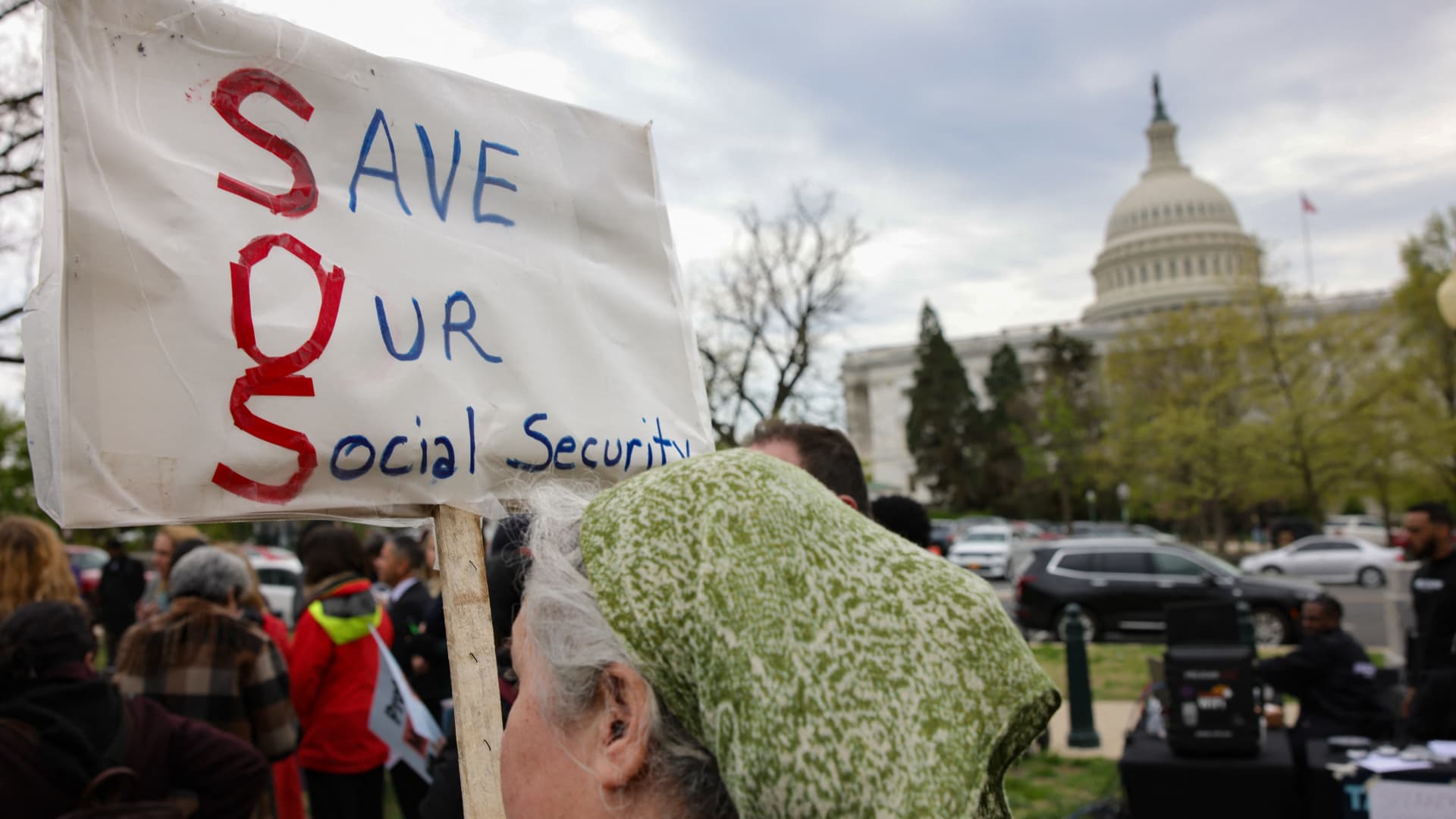
Social Security is celebrating its 91st birthday Friday—yet a prominent fiscal watchdog is warning that, without congressional action, the program in its current form may not survive to its centennial.
The Committee for a Responsible Federal Budget marked the occasion by noting that the retirement program’s trust fund is projected to be depleted in six years, triggering an automatic benefit reduction of about 22% under current law. For the average beneficiary, the group estimates, that would amount to roughly $500 less a month—a cut larger than the average retired household’s monthly grocery spending.
“As policymakers blow out the candles on Social Security’s 91st birthday,” CRFB President Maya Macguineas said, “they are doing far too little to ensure its continued longevity. Social Security won’t make it past age 97 as things currently stand – at least not in its current form.”
The best birthday gift for Social Security would be a solvency package, she said, to ensure that its 70 million beneficiaries and 237 million contributors know they’ll still have benefits, six years from now.
The warning underscores the narrowing political window for an issue Washington has repeatedly deferred. Social Security is financed primarily through payroll taxes, but aging demographics and a comparatively smaller working-age population have left the system paying out more than it takes in. Once the retirement trust fund is exhausted, the program would still collect payroll-tax revenue—but it could not legally borrow to cover the difference, requiring payments to be cut to match incoming funds.