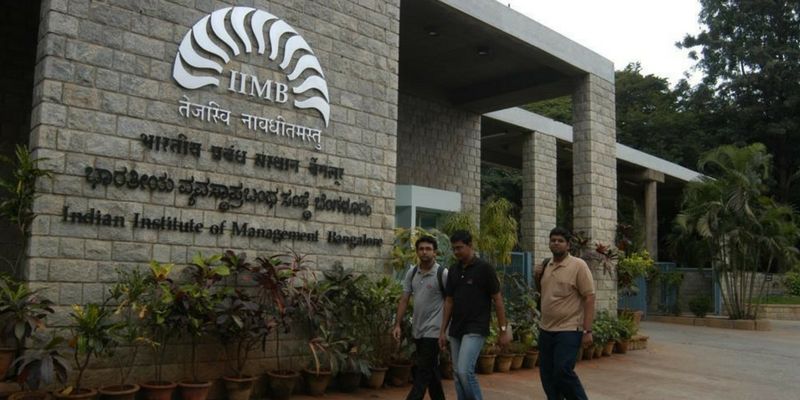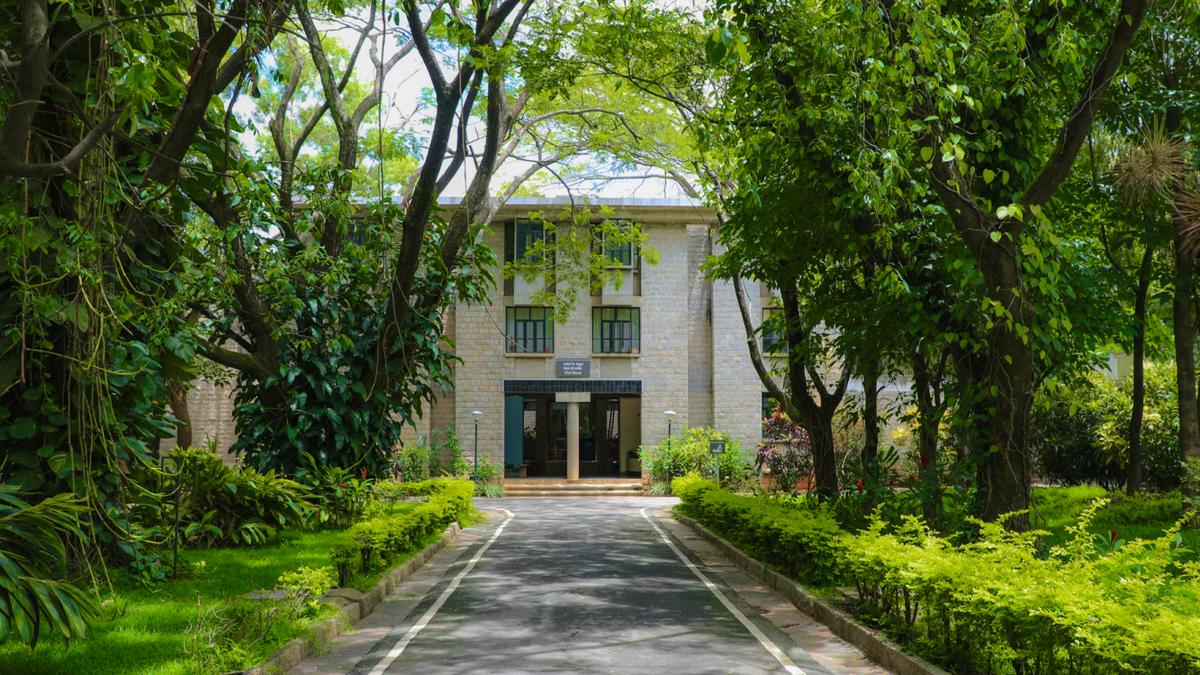
A quiet but dramatic shift is underway in Indian business education.In June 2026, the Indian Institute of Management Bangalore (IIMB) announced the establishment of a brand-new campus dedicated exclusively to Undergraduate (UG) studies. Located at Jigani 27 kilometres from its historic main campus. Backed by landmark endowment funds from Tata Trusts, the new campus welcomes its inaugural batch for an interdisciplinary B.Sc (Honours) in Economics, Management and Data Science in August 2026. The curriculum integrates economics, data science, management, philosophy, communication and ethics to nurture the next generation of future-ready problem solvers.This is not an isolated experiment. Demonstrating an innovative enterprise-academic framework IIM Jammu recently launched a four-year, full-time eBBA (Hons.) degree in partnership with global consulting giant Accenture. Combining 60% academic rigour with 40% industry-led experiential learning, the programme grants high-performing students direct entry into an eMBA after their third year.Meanwhile, IIM Bodh Gaya signed a Memorandum of Understanding (MoU) with IIT Patna to offer a five-year dual degree (B.Tech + MBA), admitting students purely via JEE Advanced ranks with no requirement to take the Common Admission Test (CAT).While the primary mandate of the IIMs was historically to nurture postgraduate management talent, why are they expanding into undergraduate education? Why are they diversifying admission channels beyond CAT? More importantly, do these developments signal a fundamental paradigm shift sweeping across Indian business education?65 Years of IIMs: Disruptions in the historical trendsThe journey of the IIMs began in 1961 with the establishment of campuses in Calcutta and Ahmedabad. Over six decades, the network expanded to 22 institutes across 21 states, with the flagship two-year MBA selection through CAT-serving as the undisputed gold standard.The first disruption in this single-track model occurred in 2011, when IIM Indore launched its five-year Integrated Program in Management (IPM). Six other IIMs — Amritsar, Bodh Gaya, Jammu, Ranchi, Rohtak and Sirmaur — subsequently adopted the IPM model via the IPMAT/JIPMAT entrance exams.IIMs at Lucknow, Mumbai and Sambalpur offer four-year B.S. programmes in AI, Business Analytics, Digital Science for which students are selected on the basis of JEE. For admissions to BMS (Bachelor of Management Studies) programme, IIM Kozhikode uses its own BMS Aptitude Test. The admission to IIMB’s BSc (Honours) is through its own Undergraduate Admission Test (UG-AT). IIM Amritsar accepts SAT scores for international IPM applicants.Now 11 out of the 22 IIMs (50%) offer UG programmes in management, with 7 of them using IPMAT/JIPMAT, 3 using JEE and one its own entrance test. CAT ceases to be the single entry gate to IIMs.Last five years trend in registrations to the top gateway examinations
Why are IIMs rushing into UG courses?
Explore the shift in Indian business education as IIMs embrace undergraduate courses to meet evolving industry demands.
1,523 words~7 min read