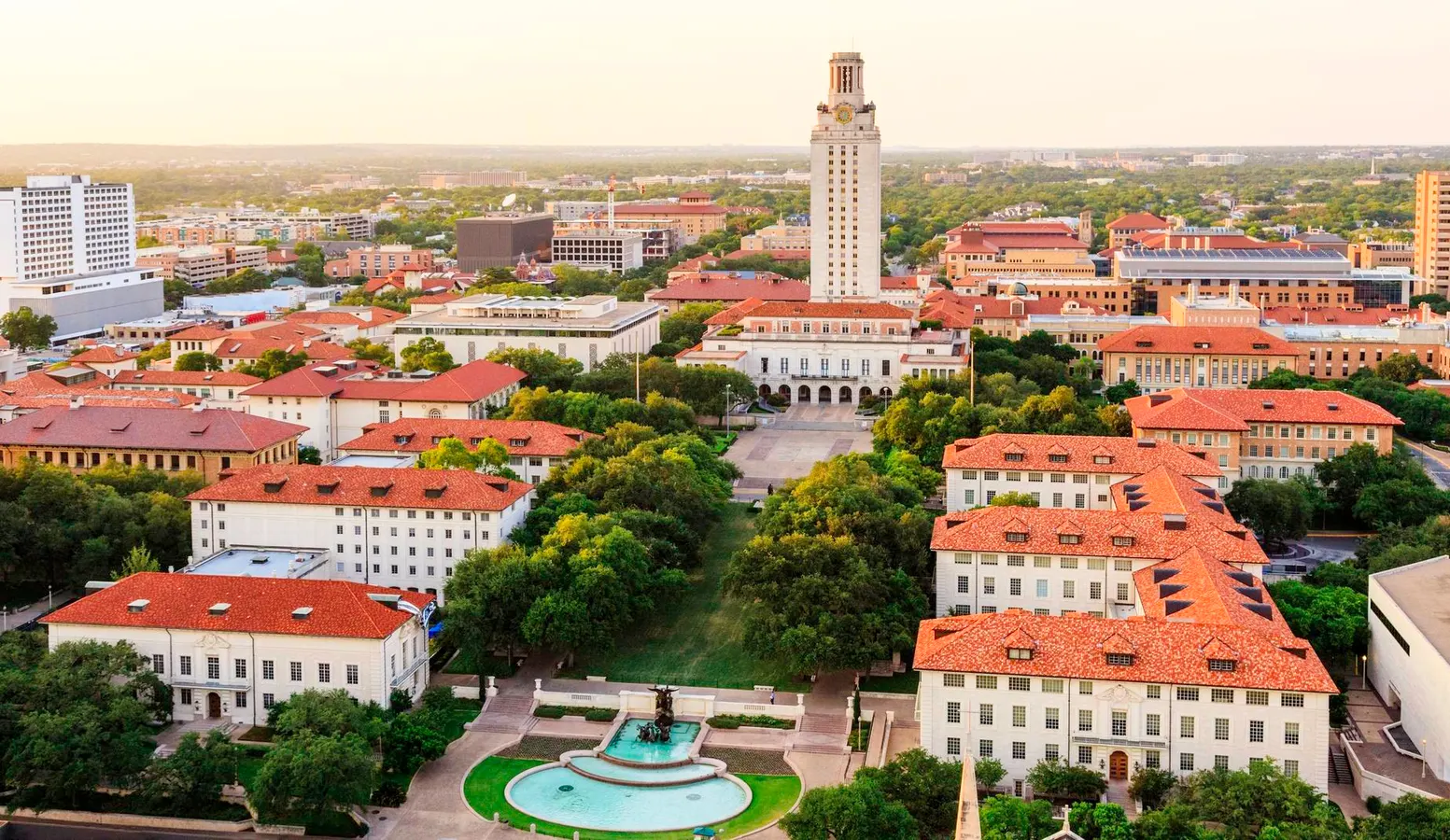
The University of Texas Austin has unveiled its plan for a completely revamped undergraduate core curriculum.gettyThe University of Texas-Austin revealed its new plan for its undergraduate core curriculum Thursday. Under the proposal, the university would replace its current sprawling array of more than 600 courses with a more limited set that will provide students with a broad education based on foundational instruction in the arts and humanities, the social sciences, and STEM.The proposal, described by President Jim Davis during yesterday’s meeting of the university’s Board of Regents, introduces a seeping overhaul of the current core curriculum, which Davis described as a “haphazard grab bag of classes.” The recommendations were developed by a 22 member, faculty task force appointed by Davis last year.The plan would reduce the number of required credits in the core from 42 to 36, and while the requirements could still be fulfilled by multiple courses, the number of options from which students could choose would be narrowed. “All courses must be genuine core courses, that is, broad courses on fundamental questions and themes,” reads the report. “Faculty from all departments should be invited to develop courses for the new core, and no department should have a monopoly on any of its parts.”The structure of the recommended core curriculum consists of three pillars: arts and humanities, social sciences, and STEM, under which are organized a total of 12 subject matter requirements. The arts and humanities pillar would consist of 15 credits and include courses in Culture and the Arts, Great Questions of Human Life, Masterworks of Literature, U.S. History, and Western Civilization.The social sciences would require nine credits in courses covering Principles of American Politics, World Politics and Cultures, and Foundations of Social Science.The STEM pillar would involve 12 credits distributed across four courses — Great Ideas in Science; Natural Science & Engineering; Math, Statistics, & Data Science; and Computer Science & AI.Four courses would enjoy special status — Great Questions of Human Life, Principles of American Politics, Great Ideas in Science, and Computer Science & AI. “Together, they reflect the spirit of the new core by offering students the chance to discuss enduring questions and great ideas, prepare themselves for thoughtful citizenship, and work with cutting-edge technology,” according to the task force report. As a result, “students should be required to fulfill them at UT Austin,” rather than through alternative means like dual enrollment or transferring in the credits from other institutions. The task force also recommended that the core courses be taught in as many small classes as possible, offered in person rather than on-line, and emphasize the development of writing skills. MORE FOR YOUThe curriculum review occurs in a special context in Texas, which passed a 2025 state law requing the governing boards of its public universities to review an institution’s undergraduate courses to be sure they are adequately preparing students for life and the workforce. SB 37 also contained several controversial component, including overhauling public university governance in Texas and demoting faculty senates to strictly an advisory, rather than policy-making, role.However, UT-Austin’s curriculum review preceded that law. The Board of Regents has yet to vote on UT-Austin’s proposed changes. Plans call for faculty to now begin working on new courses, with the full curriculum set to be implemented in fall 2028. UT-Austin’s plan is likely to be a trend-setter. Either because of legislative mandates or through their own initiative, look for more universities to begin reviewing and revamping their core curricula.
University Of Texas Unveils Complete Overhaul Of Its Core Curriculum
The University of Texas-Austin will redo its core curriculum, focusing on foundational courses in arts and humanities, social sciences, and STEM.
577 words~3 min read