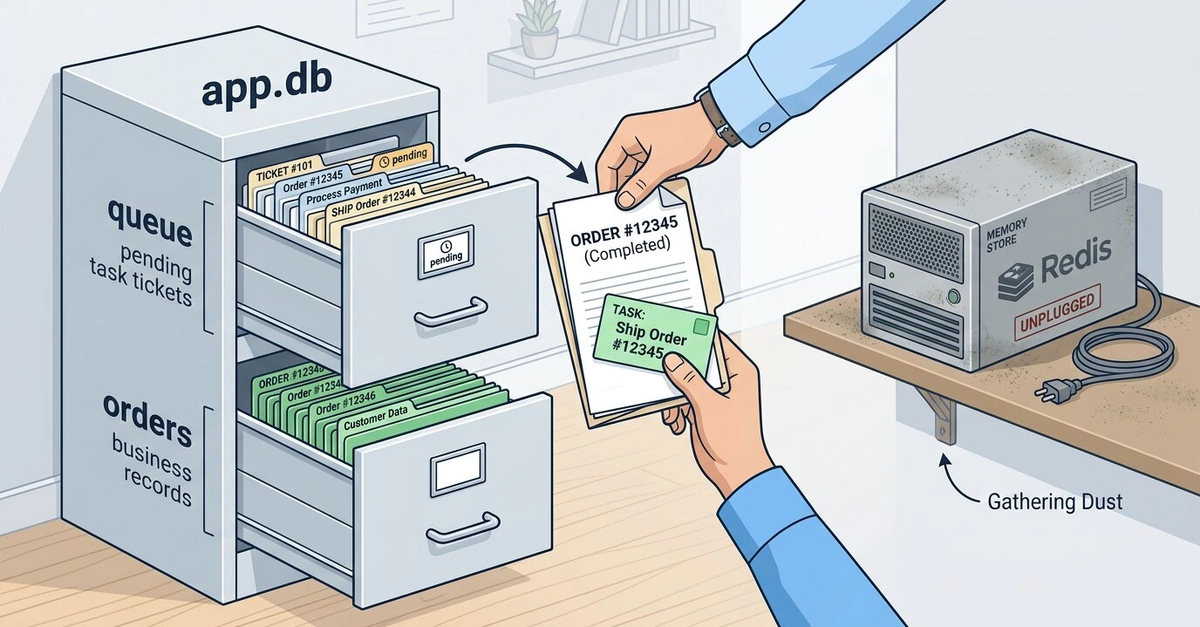
If your app needs to push live updates to connected clients — a job progress bar, a balance that changes when a background worker finishes, a "this record was deleted elsewhere" toast — the reflex is to reach for Redis Pub/Sub or a message broker. But if you already run PostgreSQL, it ships with a pub/sub primitive built in: LISTEN / NOTIFY. No extra infrastructure, no extra failure domain.
What is Postgres LISTEN/NOTIFY? It's a built-in pub/sub mechanism: one session runs pg_notify(channel, payload) inside a transaction, and any other session that has issued LISTEN <channel> on a persistent connection receives the payload once that transaction commits. There's no persistence and no delivery guarantee — it's a live signal, not a queue — so it fits best as a "something changed, go re-check" nudge rather than a system of record.
This post walks through the implementation we actually run in production: a single shared LISTEN connection multiplexing many logical channels, wired into per-client Server-Sent Events (SSE) streams. Along the way: the reconnect logic and the race conditions that come with it.
How Postgres LISTEN/NOTIFY works
Postgres gives you two SQL-level building blocks: