Show Caption
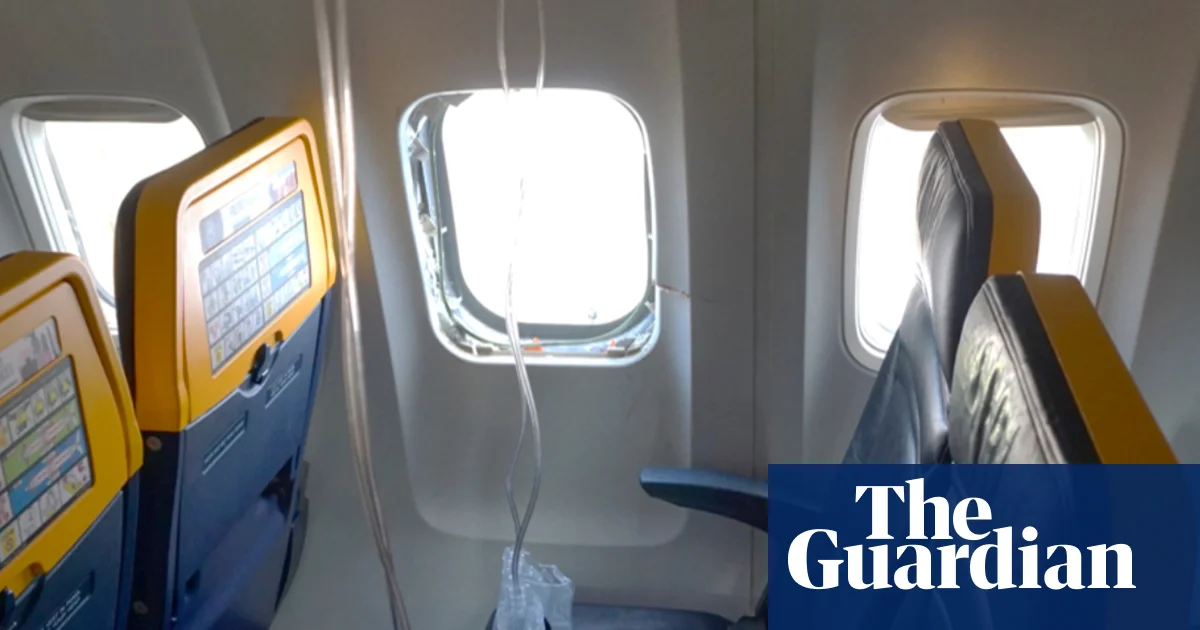
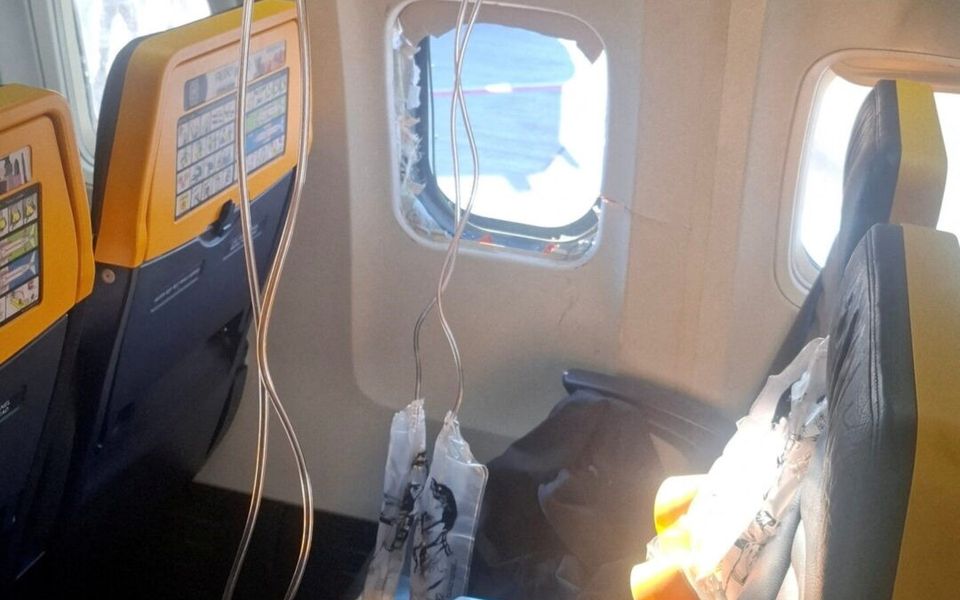
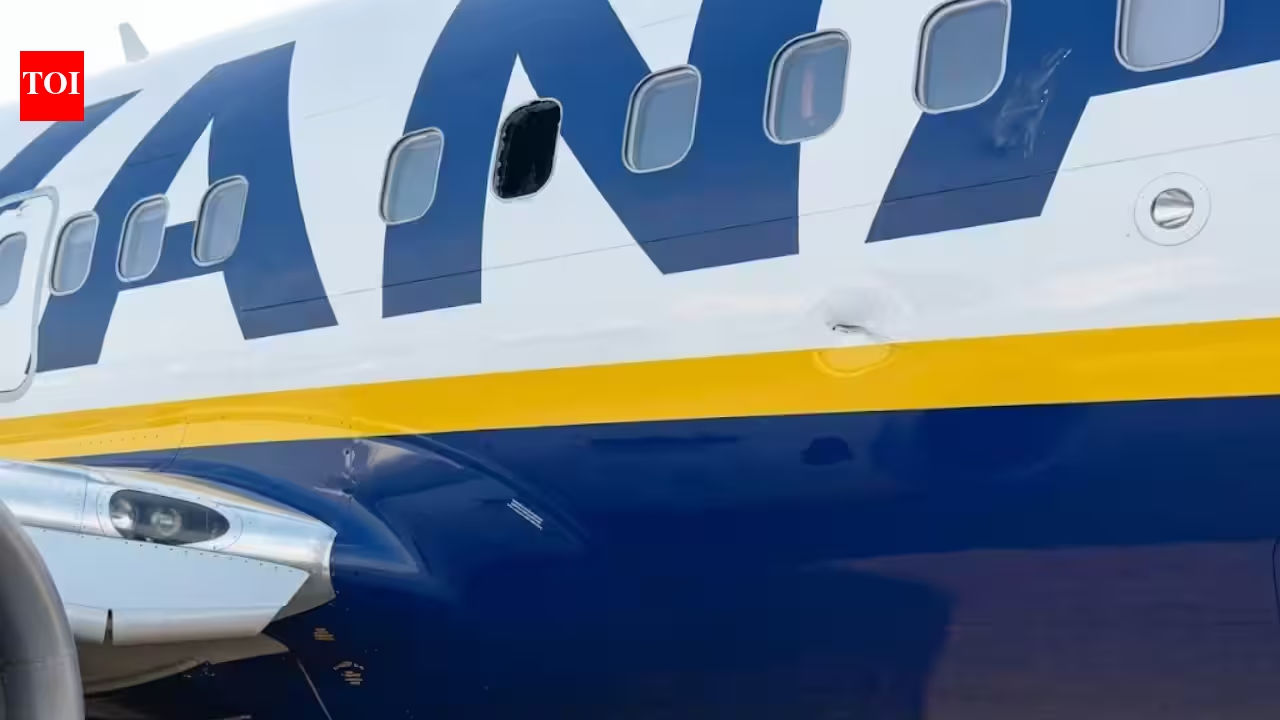
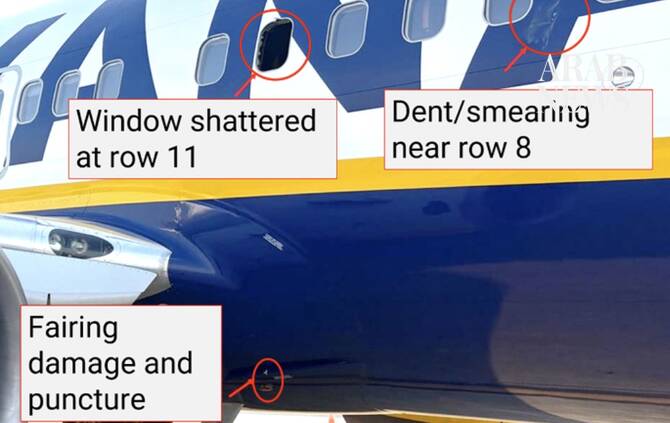
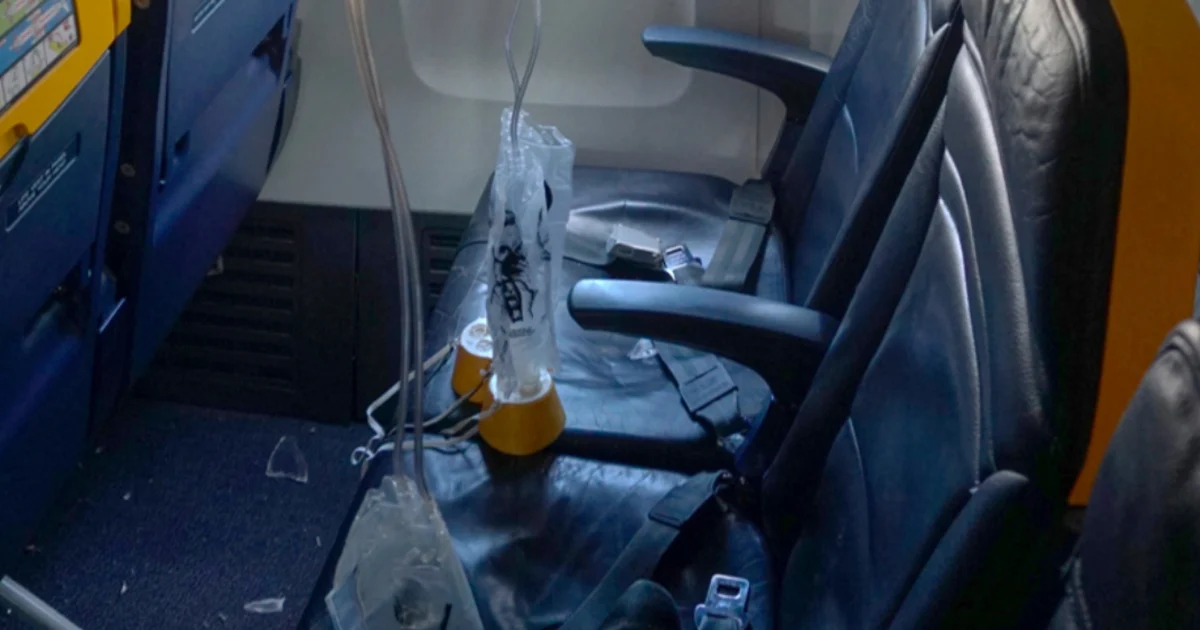
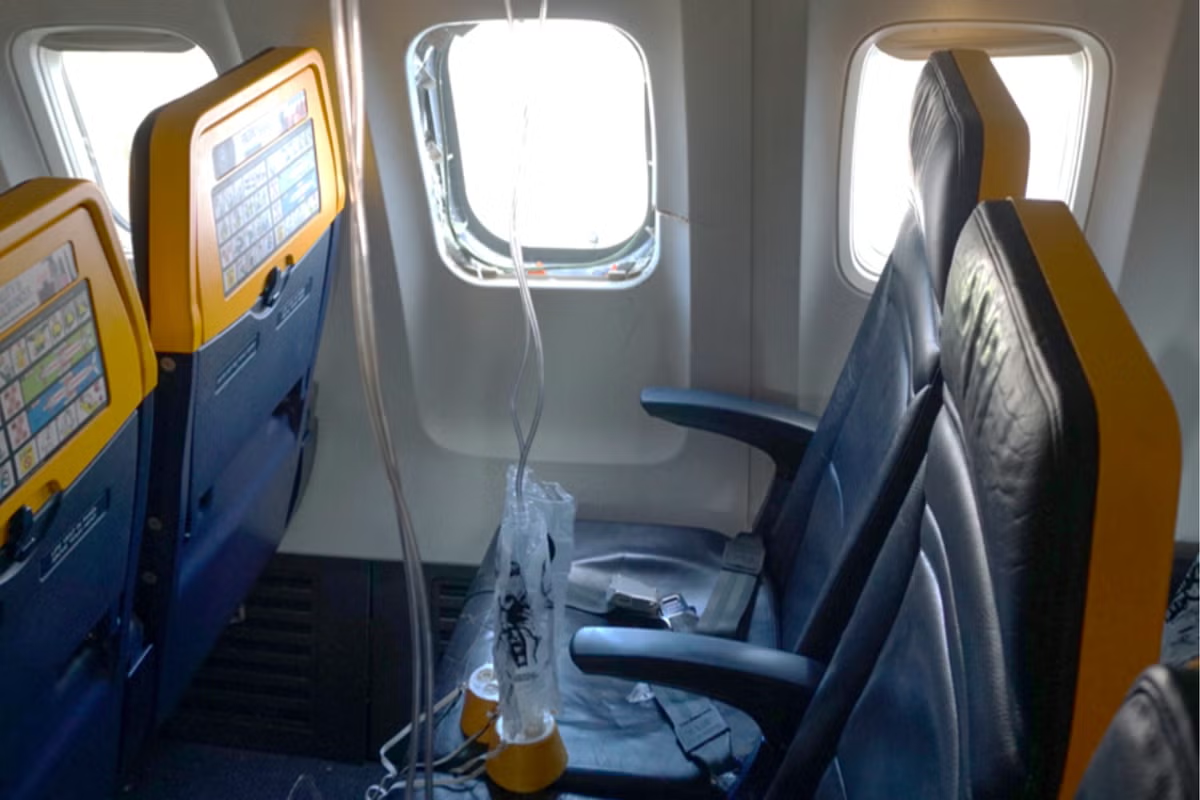
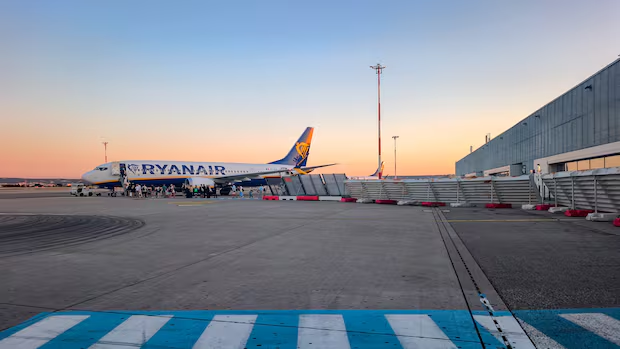
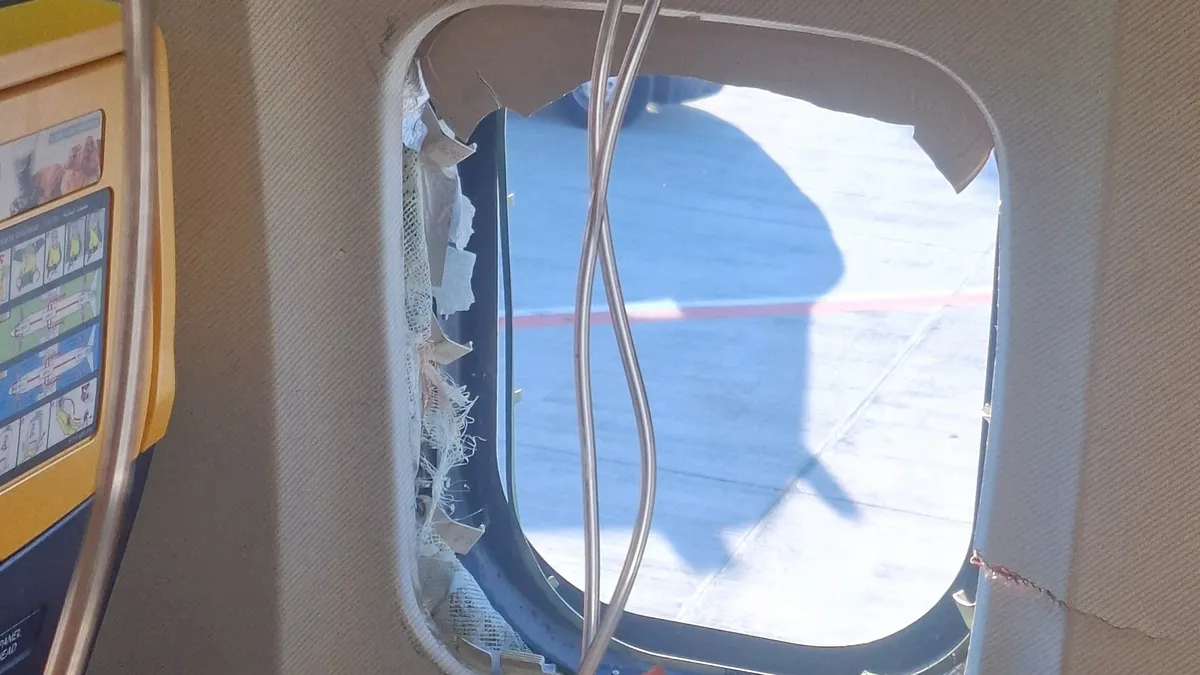
A Ryanair passenger was partially sucked through a shattered cabin window after broken engine parts struck the side of the aircraft shortly after takeoff from Greece last month, the National Transportation Safety Board said on Aug. 13.The accident occurred on July 10 aboard Malta Air Flight 1879, a Boeing 737-800 operating for Ryanair, during a flight from Thessaloniki, Greece, to Memmingen, Germany, according to a preliminary NTSB report. The NTSB, an independent U.S. government agency, took over the investigation from Greek authorities.Investigators said a fan blade broke apart in the aircraft's right engine, sending fragments into the fuselage and smashing the cabin window. Pilots received a warning that the engine was vibrating abnormally as the plane climbed to about 16,000 feet, according to the report.The crew reduced the engine power, and the vibrations briefly eased before increasing significantly, investigators said. Pilots then heard a "loud bang" before the plane's autopilot shut off and a warning signaled a loss of cabin pressure, prompting the crew to declare an emergency and turn back toward Thessaloniki, the report states.Flight attendants said they felt intense shaking and saw a small amount of smoke or fog in the cabin before oxygen masks dropped from the ceiling, according to the report. When crew members responded to passengers calling for help, they found a man seated next to a blown-out window partially pulled through the opening.Other passengers helped pull the man back inside the aircraft, the report states. The incident left the 61-year-old passenger with serious injuries, including injuries to his head, neck and right arm, USA TODAY previously reported.The aircraft landed safely back in Thessaloniki and later taxied to the gate, where emergency responders were waiting, according to the report. There were 149 passengers, including one lap child, and six crew members aboard the plane at the time of the incident.NTSB: Bird remains found in damaged engineThe NTSB's investigation found evidence suggesting birds may have played a role in the incident, though investigators have not determined a cause.According to the report, bird remains and feathers were discovered in several locations on the damaged engine, including the oil cooler, thrust reverser components, and fan case. Samples were sent to the Smithsonian Institution's Feather Identification Lab in Washington, DC, for analysis.The report also noted that flight crews had reported four suspected bird strikes involving the same engine during the 12 months before the accident."Bird remains were reportedly found in two of the cases," though no damage was located during subsequent maintenance, according to the report.An examination of the engine revealed cases of fractured fan blades, while three loose fan blade fragments were recovered from the engine, the report states.Similarities to past engine failures remain under reviewThe NTSB said it is still looking at whether the incident is similar to other cases, such as an April 2018 engine failure on a Southwest Airlines flight that killed a passenger who was partially sucked through the window.USA TODAY previously reported that shrapnel from a blown jet engine crashed through a window of the aircraft and caused a drop in air pressure. The flight, traveling from New York to Dallas, made an emergency landing in Philadelphia."The investigative team is aware of previous ... events with similar engine models that resulted in damage to engine inlets or cowlings and fuselage structures," the report states. "Determination of any relevant similarities or details between this accident and previous events remains under investigation."Bryan Bedford, the administrator of the Federal Aviation Administration, told Reuters in July that he did not "think the early indications are that (the recent Ryanair problem) mimics what the Southwest incident was," referring to the 2018 Southwest Airlines engine failure.Contributing: John Bacon, USA TODAY; Reuters