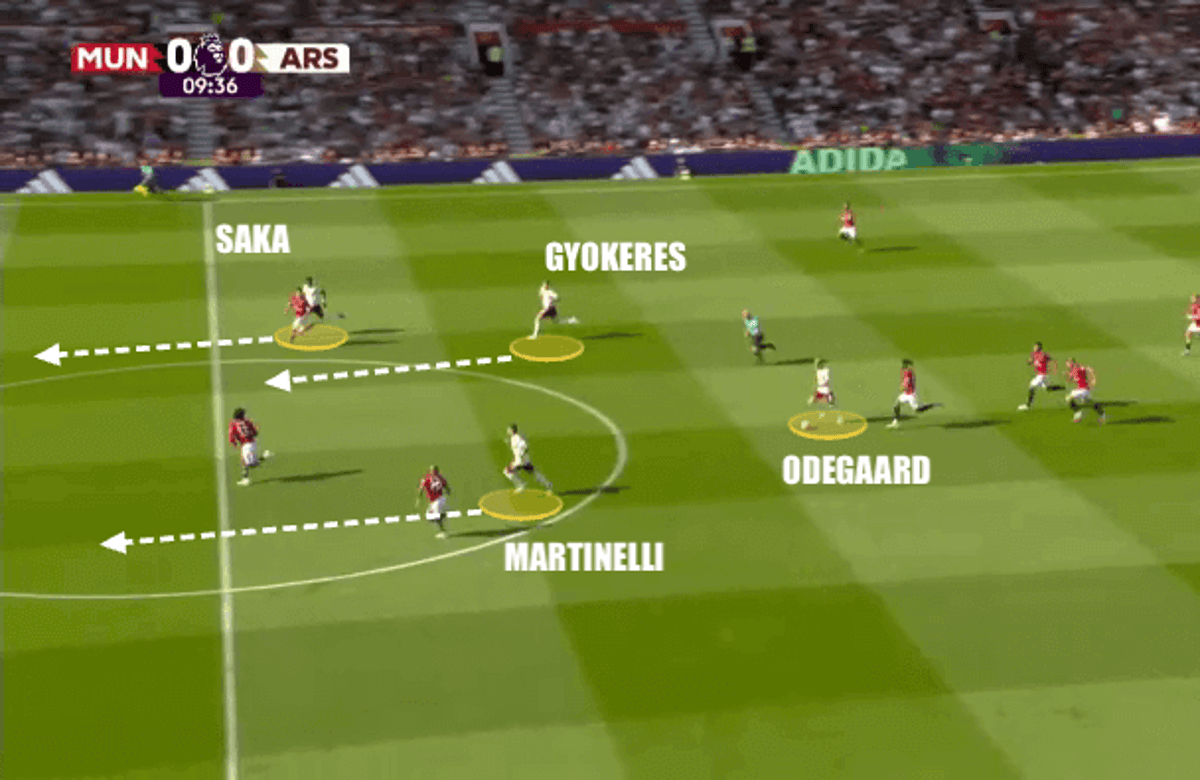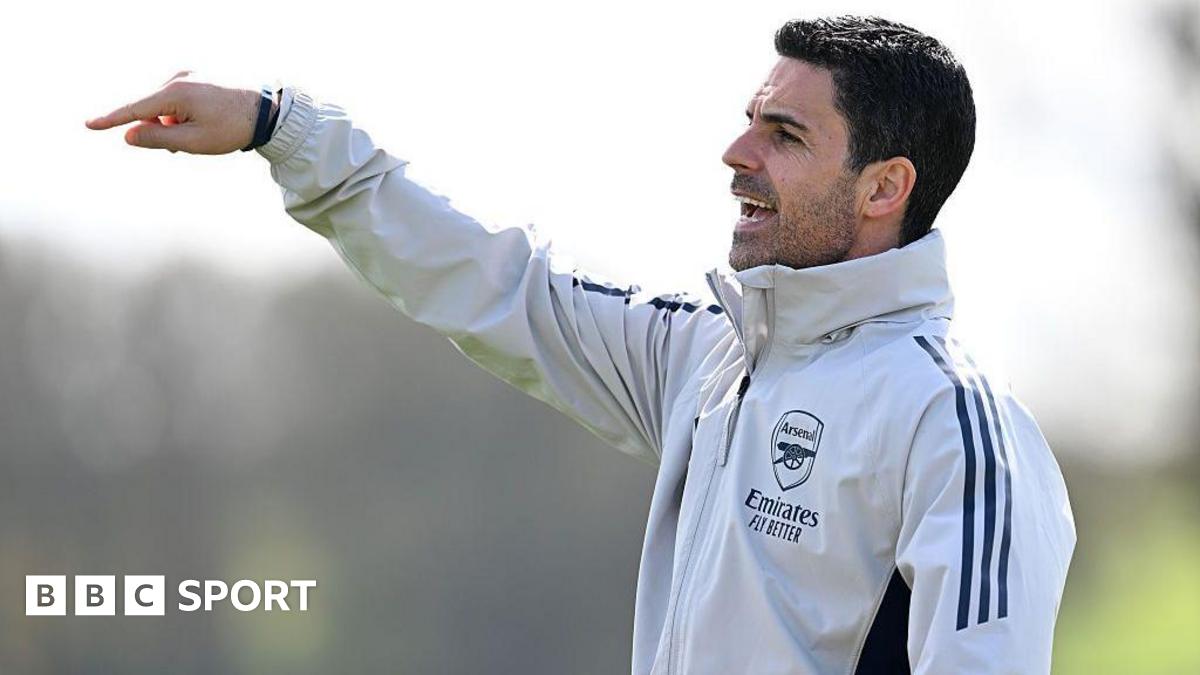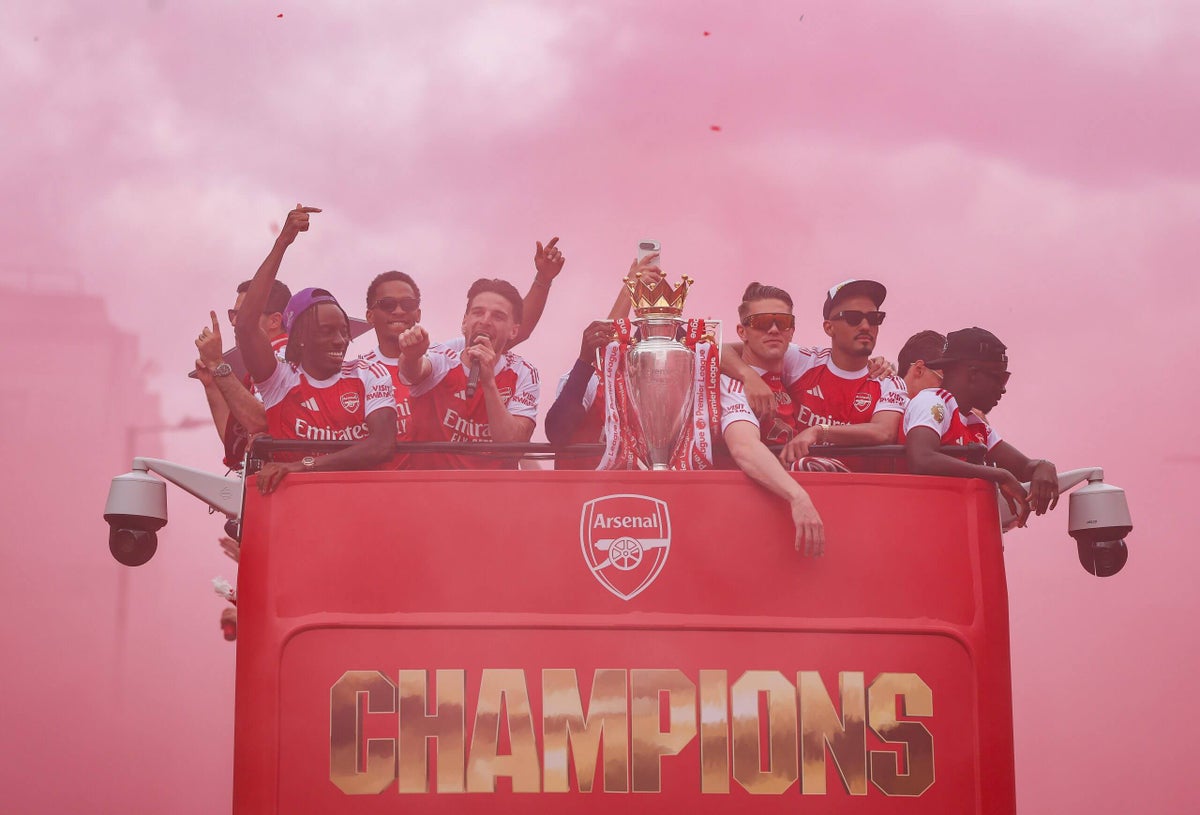
It’s in the eyes. Every summer during Manchester United’s golden era, Sir Alex Ferguson used to say he looked into his players’ eyes, searching for tell-tale signs, trying to gauge whether they were still hungry for success or if success had sated them.Pep Guardiola did similar at Barcelona, Bayern Munich and Manchester City. “You look into your players’ eyes, and it’s a bit like looking at a lover,” he told reporters while in charge of Bayern in 2014. “Either you see passion and a willingness to be seduced, or you watch as the passion ebbs away.”It has been no surprise to hear Mikel Arteta using the same terms as Arsenal prepare to launch their defence of the Premier League title a week today (August 21). He has spoken about “the energy in their bodies, in their eyes, how they look” and wanting to “feel that energy and that spirit right from the beginning”.Delivering the club’s first Premier League since 2004 was a quest that consumed Arteta, his staff and his players — if not from the moment he took charge in December 2019, when such success seemed implausible, then certainly from an early stage in the 2022-23 season, which brought the first of three consecutive runners-up finishes. He said during their title campaign that they were “obsessed” by the challenge of winning the Premier League. It showed.And now it starts again.In an interview with Arsenal’s official website, Arteta has spoken of a “responsibility” to build on May’s triumph, of wanting “to take this club to a different level”, of a need for “a better squad, better individuals” and of having identified areas for improvement “and what’s going to be needed to achieve that”.There is no great mystery about the most obvious area for improvement. Arsenal’s total of 71 Premier League goals last season was, by some distance, the lowest for a Premier League-winning team since Leicester City in 2015-16.Within that, their number of set-piece goals (25) was the highest by any champions in the 34-year Premier League era — and their number of goals from open play (42) was by far the lowest in the past decade.The next-lowest total of open-play goals by a title-winning team in that period was 61, by Chelsea in 2016-17. To put that in context, every other side to lift the trophy in the past decade scored at least 45 per cent more goals from open play than Arsenal did last season. In the case of Manchester City in 2018-19, it was almost double.ChampionsGoals from set playsGoals from open play2016-17Chelsea22612017-18Manchester City15852018-19Manchester City12802019-20Liverpool17632020-21Manchester City13652021-22Manchester City22702022-23Manchester City14712023-24Manchester City17702024-25Liverpool10672025-26Arsenal2542That can be seen as part of a wider trend; last season’s Premier League featured only 2.75 goals per game (a sharp drop from 2.93 the previous season and 3.28 the year before that) and only 1.8 per match from open play (from 2.15 in the prior campaign and 2.38 in 2023-24). But it is fair to say Arsenal have been among the teams at the vanguard of that movement rather than swept along by it.The output from their attacking players last season was remarkably low for a title-winning team. When it came to goal contributions in the Premier League, Viktor Gyokeres led the way on 15 (14 scored, one assist), then Leandro Trossard (six and six) and Bukayo Saka (seven and five) with 12 each and Eberechi Eze’s nine (seven and two). Beyond that, it was midfielder Declan Rice with nine, full-back Jurrien Timber on eight and midfielders Martin Odegaard and Mikel Merino and centre-back Gabriel at seven apiece.To put that in context, Mohamed Salah contributed 47 Premier League goal contributions (29 scored, 18 assists) to Liverpool’s title success the previous season, while Luis Diaz (13 and five), Cody Gakpo (10 and four), Dominik Szoboszlai (six and six), Alexis Mac Allister (five and five), Trent Alexander-Arnold (three and six) and Diogo Jota (six and three) all weighed in.The season before that, Erling Haaland led the way for eventual champions City with 32 top-flight goal contributions (27 scored, five assists), followed by Phil Foden (19 and eight), Julian Alvarez (11 and nine), Rodri (eight and nine), Bernardo Silva (six and nine), Kevin De Bruyne (four and 10) and Jeremy Doku (three and eight).These figures look damning for Arsenal.But such an obvious shortcoming in a title-winning team, particularly in open play, can also be seen as an opportunity. The previous two defending champions suffered a huge drop-off in the number of goals scored — Liverpool from 86 in 2024-25 to just 63 last term, City from 96 in 2023-24 to 72.The glass-half-full perspective would be to say that Arsenal should be able to find ways to improve on their 71.The obvious way to do that, beyond ensuring Saka and Kai Havertz are injury-free throughout, is via the transfer market. Arsenal have made one real headline-grabbing move this summer, buying Brazil midfielder Bruno Guimaraes from Newcastle United in a £75million ($101m) deal, as well as signing Ecuador defender Piero Hincapie from Bayer Leverkusen (after his successful spell on loan last season), Greece winger Christos Tzolis from Club Brugge and former Leeds United first-choice goalkeeper Illan Meslier as a backup for David Raya.Guimaraes represents a further upgrade in a midfield department that was already, with Rice, Odegaard, Merino, Eze, Martin Zubimendi and Myles Lewis-Skelly, a source of considerable strength.Who's on my head? - Marc Guehi or Mikel MerinoTifo FootballWhen it came to the “better individuals” Arteta talked about, Vinicius Junior was top of the list. Getting that over the line was always a long shot, and so it has proved, with the Brazil international signing a new six-year contract at Real Madrid last week. But trying for him gives an impression of the type of player Arteta would ideally have liked to add to his title-winning squad, a world-class winger who, at the age of 26, is around the peak of his powers.That part is easier said than done, especially at a time when so many of the best attacking players in the game are concentrated at a handful of clubs.This was illustrated in the Champions League last season, long before Barcelona, Madrid, Bayern and Paris Saint-Germain added Anthony Gordon, Yan Diomande, Ismael Saibari and Maghnes Akliouche respectively. Even if Arsenal were to sign PSG winger Bradley Barcola or now Atletico Madrid forward Alvarez, for example, it would be hard to regard their attacking options as equal to those at Barcelona, Real Madrid, Bayern or PSG.The left-wing focus is understandable, given Trossard’s departure to Besiktas and the uncertainty surrounding Gabriel Martinelli, who has struggled to build on his early promise. But if Vinicius Jr was Plan A, there is not an obvious Plan B.Of the various left-sided attackers who were potentially available at the start of the summer, Gordon and Morgan Rogers have joined Barca and Chelsea respectively. Diomande, who can play on either flank, is now a team-mate of Vinicius Jr in Madrid.Arsenal had an enquiry about Kenan Yildiz rebuffed by Juventus earlier in the summer. Barcola, the subject of firm interest from Liverpool, is a captivating talent but does not come with the same guarantees that a player such as Vinicius Jr, in Arteta’s ideal world, would have done.Vinicius Junior was top of Mikel Arteta’s summer transfer wishlist (David Balogh/Getty Images)You could make a case for any of Arsenal’s forwards to have a more impactful season this time. Again, Havertz and Saka would need to stay free of injury, while summer 2025 signings Gyokeres and Eze will be more integrated and teenage academy graduates Ethan Nwaneri and Max Dowman are a year older and more experienced.The decision to sell Trossard, 31, might have been surprising after the contribution he made to last season’s title success, but there is a logic to the decision to replace him with Tzolis, who is seven years his junior. Tzolis has already shown glimpses of his potential during Arsenal’s pre-season matches.But you would want more in Arteta’s situation, wouldn’t you?He has already bolstered what was arguably the strongest midfield department in the Premier League. It stands to reason that, after that audacious but unsuccessful bid for Vinicius Jr, he would want to do everything possible to upgrade his attacking options if, as he says, “we have the right player in the market to make us much better”.There is no hard-and-fast rule where reinforcing a title-winning squad is concerned.During City’s run of six Premier League titles in seven seasons, there were summers when they made only one or two major signings (Riyad Mahrez in 2018, Rodri and Joao Cancelo in 2019, Jack Grealish in 2021), but they made four (Josko Gvardiol, Matheus Nunes, Mateo Kovacic and Doku) in 2023. A year later, after their fourth consecutive championship, they signed only two players for the first-team squad (20-year-old winger Savinho from Troyes and their former captain Ilkay Gundogan returning from Barcelona after one season at age 33 on a free transfer). They have been markedly busier in the four transfer windows since.Nobody could accuse Liverpool of resting on their laurels last summer. If anything, they could be accused of doing too much in their eagerness to capitalise on a position of strength.There was great excitement about the players they bought in (almost £450million spent on nine additions, including Florian Wirtz, Alexander Isak and Hugo Ekitike) but important figures were sold, balance was lost and they ended up looking weaker in several areas than the season before. On top of that was the unquantifiable impact of losing Diogo Jota in such tragic circumstances. What followed was a year of grim struggle in which scraping Champions League qualification, by finishing fifth, was not enough to save Arne Slot’s job as coach.Arsenal’s foundations look stronger.The only over-thirties in the title-winning squad were reserve goalkeeper Kepa Arrizabalaga, midfielder Christian Norgaard (who has now been sold to Everton) and Trossard. The core group are aged between 23 and 29, which is why signing Guimaraes, who will be 29 in November, looks like a safe move rather than short-termism. This is a squad which, despite the odd nagging concern about William Saliba’s back and Saka’s hamstrings, looks physically strong, ready to keep pushing.The details of Bruno Guimaraes' move to Arsenal from Newcastle UnitedDavid OrnsteinBut the physical and psychological demands will be considerable, not just off the back of the World Cup — in which Raya, Zubimendi, Merino (all with Spain), Rice, Eze, Saka and Noni Madueke (with England) were all involved until the final weekend, which is why they only returned to start pre-season training on Monday — but after the monumental effort it has taken over several seasons to restore Arsenal to the summit of a Premier League which, in terms of the challenges a team faces week in week out, is arguably the toughest it has ever been.Like Liverpool’s title success under Jurgen Klopp in 2020, Arsenal’s triumph was the culmination of five years of near-constant progress. Both were unfortunate to fall just short of City in seasons in which they did little wrong — Arsenal finishing second with 89 points in 2023-24, Liverpool likewise with 97 in 2018-19 and 92 in 2021-22.In both cases, winning the title felt like the end of an odyssey.Mikel Arteta will attempt to lead Arsenal to back-to-back Premier League triumphs (Charles McQuillan/Getty Images)The challenge for any title-winning team is to ensure it is not the end of a cycle. That means shrugging off any suggestion of fatigue and finding the same energy and spirit that made you Premier League champions in the first place.It is easier said than done. The only clubs to have retained the title in the Premier League era are Ferguson’s United (six times), Jose Mourinho’s Chelsea (once) and Guardiola’s City (four times). Great teams, such as Arsene Wenger’s Arsenal and Klopp’s Liverpool, never managed it.Are Arteta’s Arsenal now a “great team”? Their consistency over the past four seasons in the Premier League (84 points, 89 points, 74 points, 85 points) and the past two in the Champions League (beaten semi-finalists, then runners-up) merits much admiration, but there is undeniably room for improvement. There is a reason why Arteta talks of going to a “different level” and needing “better individuals” to make them “much better”.So much will come down to attitude, to desire, to hunger, to that look in the eyes that Arteta, like Ferguson and Guardiola, has talked about. So much of that comes from within. But there is also, undeniably, a feeling that Arsenal need more quality in attack if they are to give themselves the best opportunity to capitalise on last season’s success.It’s in the eyes, yes, but new faces can be so important when it comes to keeping things fresh, raising standards and driving a team forward from a position of strength.Additional reporting: Thom Harris
Can Arsenal go again? They have the ambition and the desire, but do they have the goals?
Mikel Arteta has talked of looking his players in the eyes to see whether they have the hunger for success. We will soon find out if they do
2,126 words~10 min read