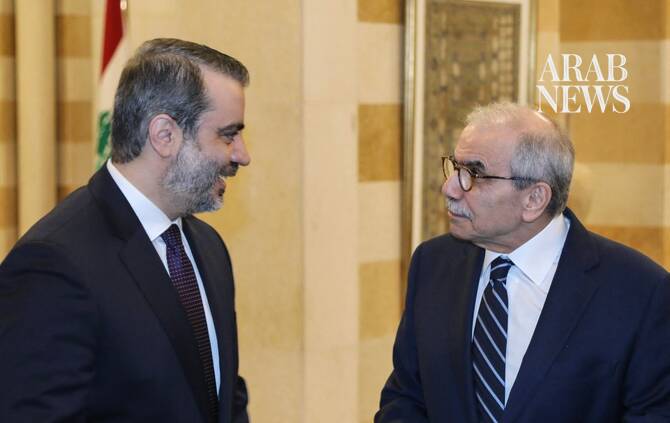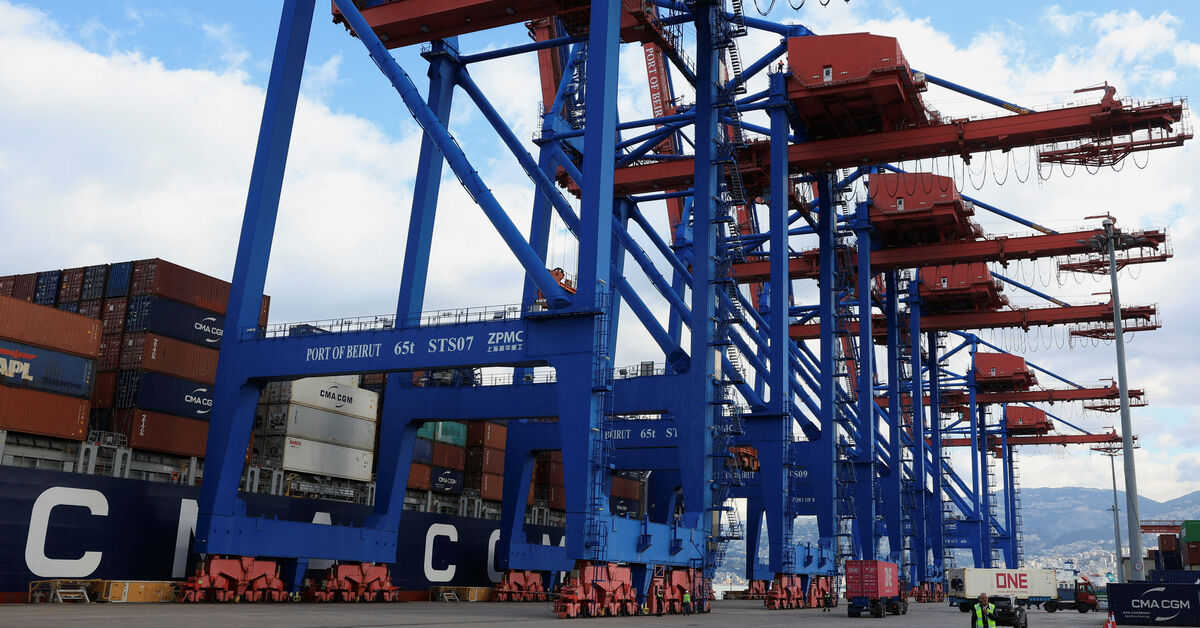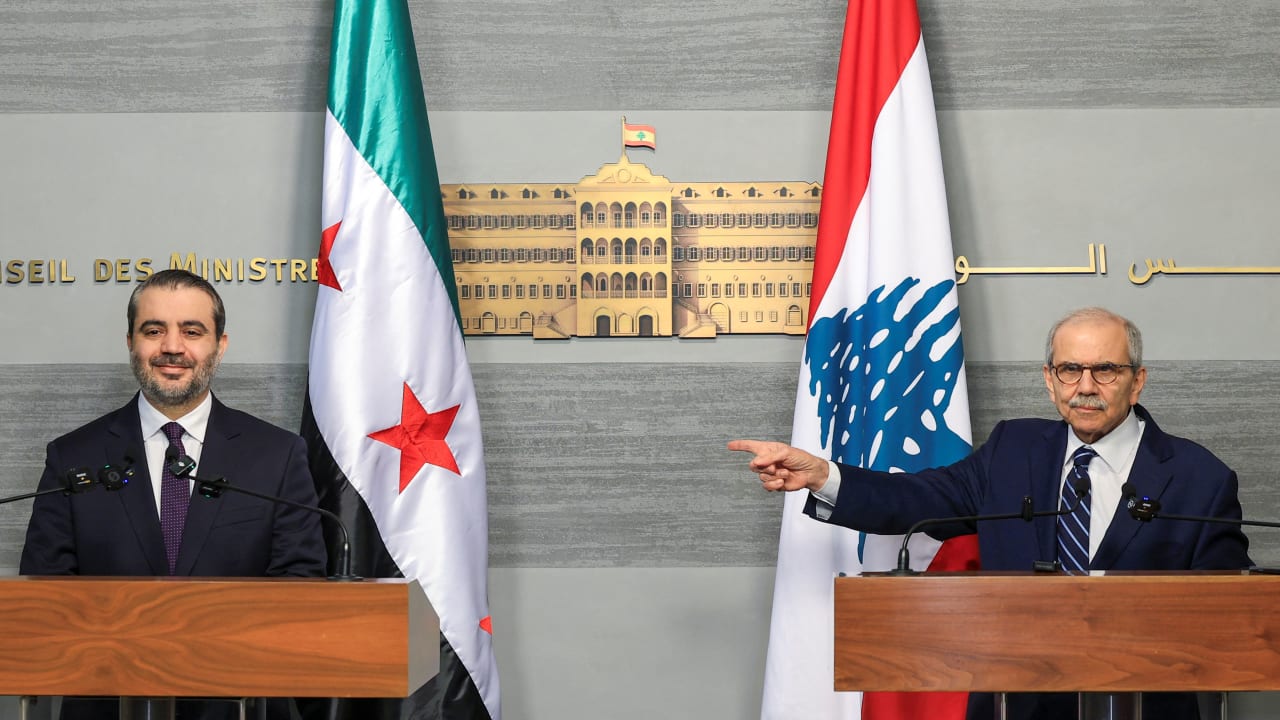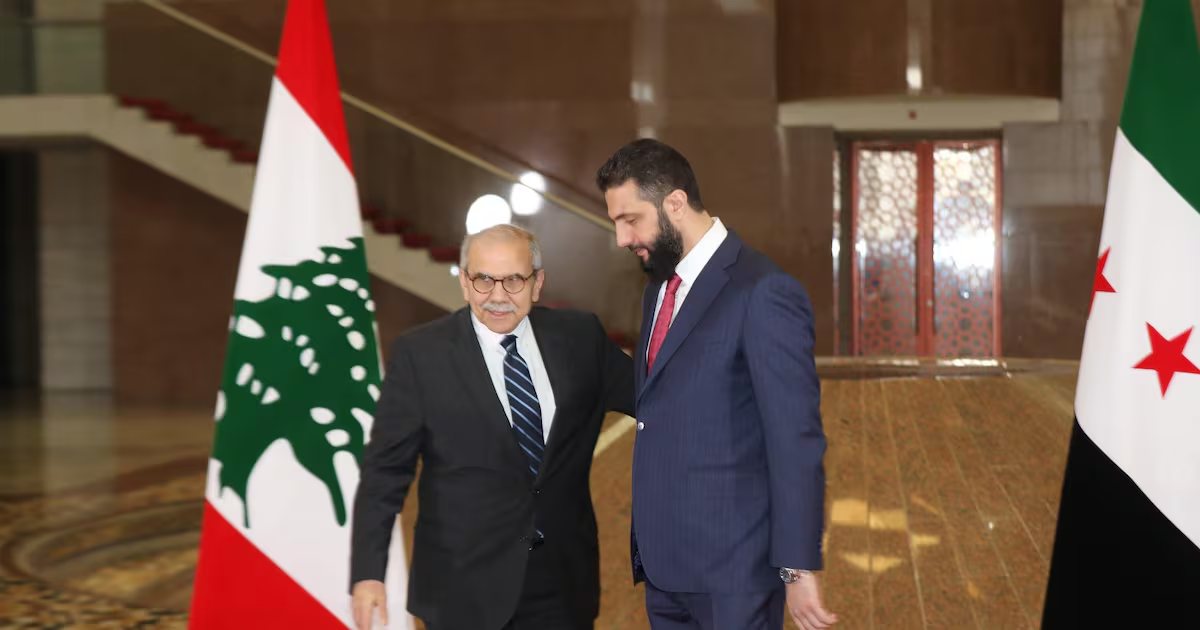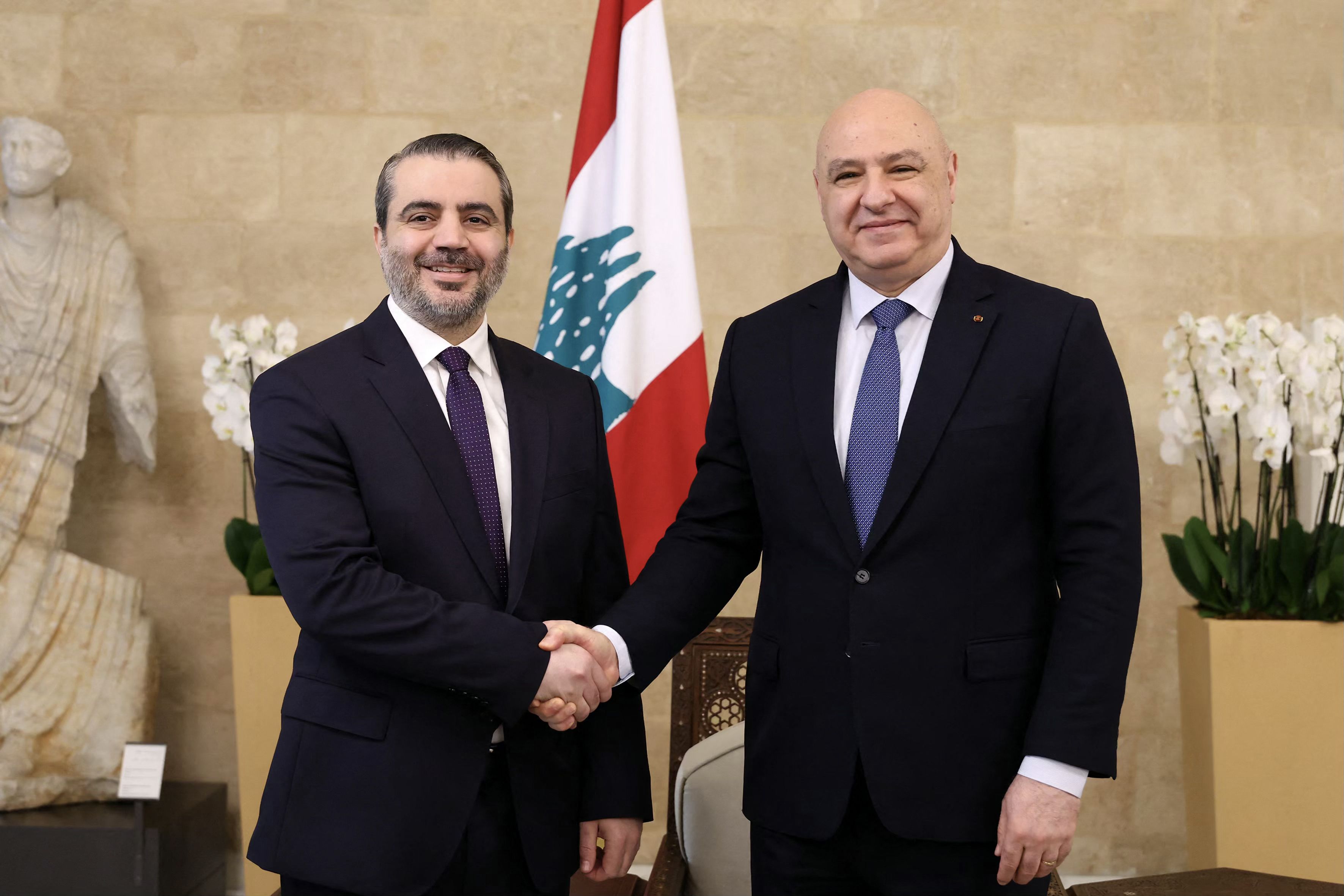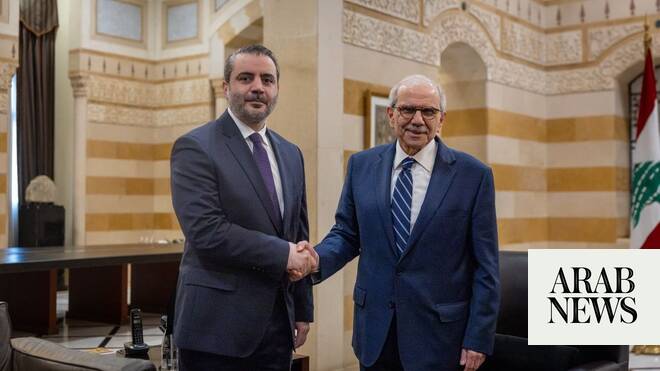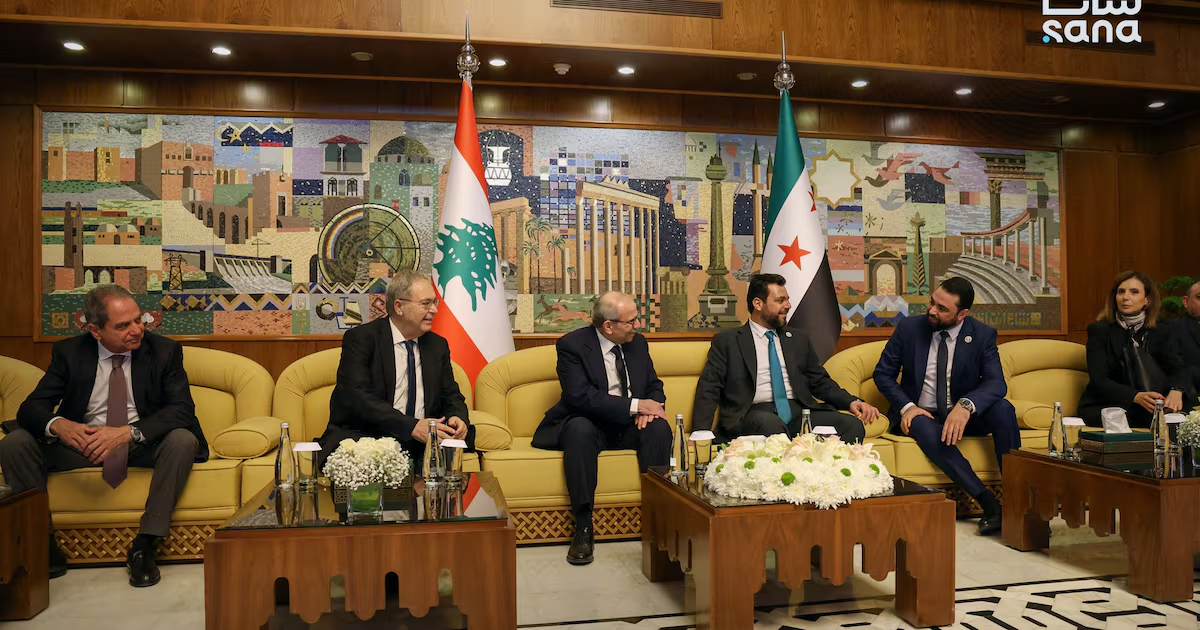
Lebanon and Syria have agreed on a series of measures to revive economic ties, with a bilateral investment conference planned for the autumn in Damascus.Amer Bisat, Lebanon’s Minister of Economy and Trade, described the restoration of ties between the two countries as a “win-win”.He told The National in an interview that his meeting with the Syrian President Ahmad Al Shara and his counterpart, Nidal Al Shaar, last month was "excellent", adding that they had "a long, detailed conversation on investment possibilities between us as well.”The two countries initiated a reset in their troubled relationship after the collapse of nearly half a century of iron-fist rule by the Assad family, marked by almost 30 years of Syrian military occupation of Lebanon.The revival of economic ties hinges on a three-pronged approach, Mr Bisat said, with the first focused on boosting private-sector links. This includes the creation of a Lebanese-Syrian Business Council, whose board comprises 11 companies – five Lebanese and six Syrian – as well as the forum on investment scheduled for autumn in Syria's capital city.Investment opportunities include “everything from electricity and construction to ports, including agreements or co-operation between the ports of Latakia, Tartus, Tripoli and Beirut, and then all the way down to tourism, cement and tobacco”, he said.Amer Bisat, Lebanon's Minister of Economy, said US investors could be attracted due to the large Lebanese diaspora. Salim Essaid / The NationalShow caption: Amer Bisat, Lebanon's Minister of Economy, said US investors…The second channel focuses on government-to-government deals, with a committee set up to review more than 40 economic agreements signed during the Assad era. Mr Bisat said the review, which could feature renegotiating, rewriting and in some cases scrapping or adding agreements, should be completed by the end of the year.The third area covers logistical and technical issues, such as visas, transit, transport and import fees, he added.Lebanon could benefit from Syria’s post-conflict reconstruction and investment boom. “The Lebanese know Syria very well,” Mr Bisat said. “They understand it. They know the risks. They have connections.”Need for investment Lebanon is still reeling from the fallout of the 2019 economic crisis, with financial losses hovering around $70 billion, an insolvent banking sector that has yet to be restructured and depleted state finances.After a brief economic rebound in 2025, Lebanon’s economy is estimated to contract by 7 per cent this year due to the resumption of war between Hezbollah and Israel in March, Mr Bisat said.The US-Iran war and the deterioration of the global economy, driven mainly by soaring energy prices, have also disproportionately affected the country, with annual inflation reaching 17 to 19 per cent, he said.Play02:08Lebanon and Syria involved in daily security talks, says Lebanese Interior Minister The cost of rebuilding southern Lebanon, where dozens of villages have been badly damaged or destroyed by Israeli troops, is estimated at $11.5 billion.Engulfed in a cycle of crises, Lebanon needs a vast amount of capital to rebuild its devastated south, about 7 per cent of which is still occupied by Israel, and relaunch its gutted economy.“This country has not seen investments since 2019,” he said. “And we need funding. It has to be from the public sector but also, ideally, from the private sector.” After a meeting deemed historic between presidents Donald Trump and Joseph Aoun in Washington, the first US visit by Lebanese leader in 17 years, America pledged to organise an investment conference for Lebanon. A political source told The National that the file was in the hands of the US ambassador to Lebanon, Michel Issa, and that the conference could be held in Washington.“The idea came up, and I know there's an interest from both sides to develop something concrete and the discussions are continuing,” Mr Bisat said. Lebanon could attract US investors due to its large diaspora and strong presence in the business world, he added, helping to meet the country’s capital needs.PreconditionsPlay01:41Al Shibani's Tripoli visit a new chapter in Syria-Lebanon relationsThe high-level meeting came amid Israel-Lebanon negotiations aimed at ending hostilities in the south and paving the way for lasting peace.The Washington conference is seen as one of the concessions secured by Mr Aoun in exchange for engaging in tricky negotiations with Israel, while the main sticking point, Israel’s withdrawal from southern Lebanon, remains unresolved.Since Lebanon and Israel, countries that do not have bilateral diplomatic ties, began direct talks, some in business and diplomatic circles have suggested that establishing relations could allow the small Mediterranean country to bypass the International Monetary Fund and the financial reforms tied to its assistance.“Politics, stability, end of the war, sovereignty of the state. These are preconditions. They're necessary conditions but they're not sufficient,” Mr Bisat said. In 2022, Lebanon reached a staff-level agreement with the IMF that would unlock about $3 billion in funding and restore broader credibility in the financial sector. But authorities have been unable to implement the required reforms amid political deadlock. Proposed amendments to a Bank Resolution Law, setting out how authorities should deal with insolvent banks, were approved on Wednesday by the Parliament’s Finance and Budget Committee. A separate – and key – financial gap law, aimed at distributing the sector’s massive losses and addressing the recovery of deposits, was approved by the government in December but has yet to be cleared by parliament.“Reforming the banking sector is a precondition before we can attract capital investments,” Mr Bisat said.
Lebanon and Syria push economic reset with Damascus investment conference planned | The National
Amer Bisat, Lebanese economy minister, tells The National the neighbours are rebuilding business ties as cash-strapped Lebanon seeks foreign capital
894 words~4 min read