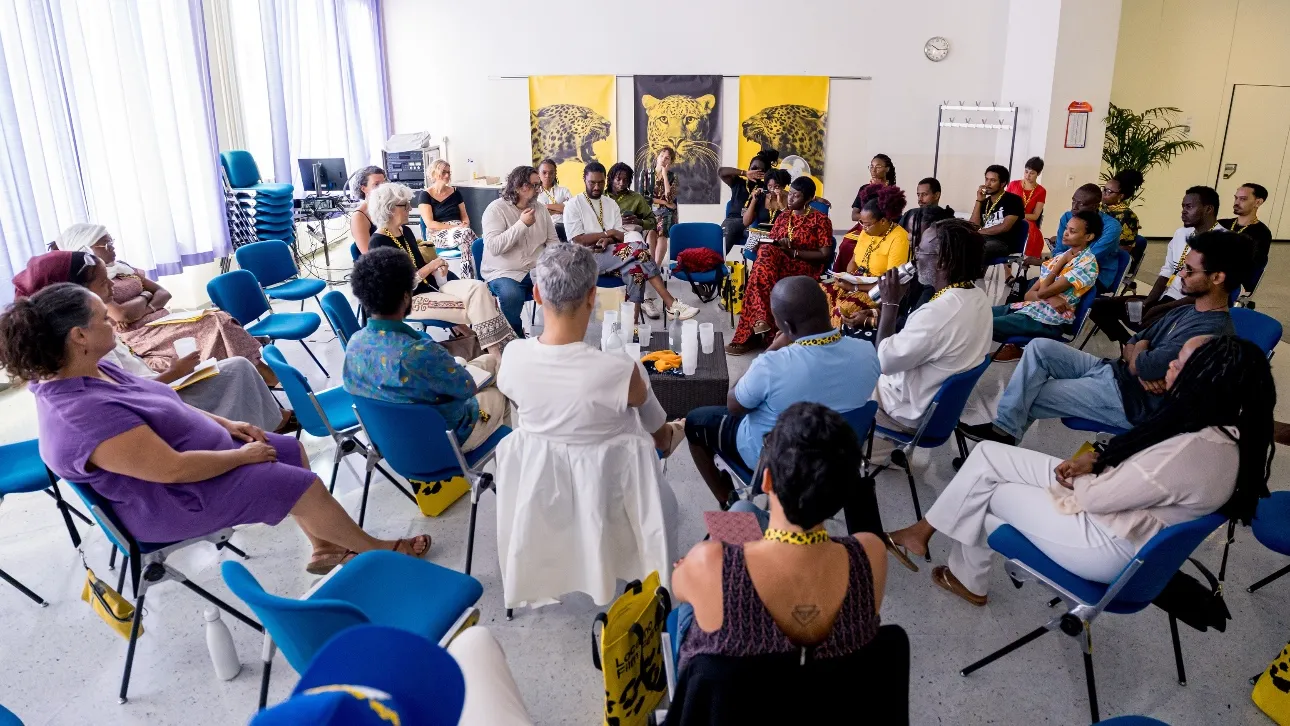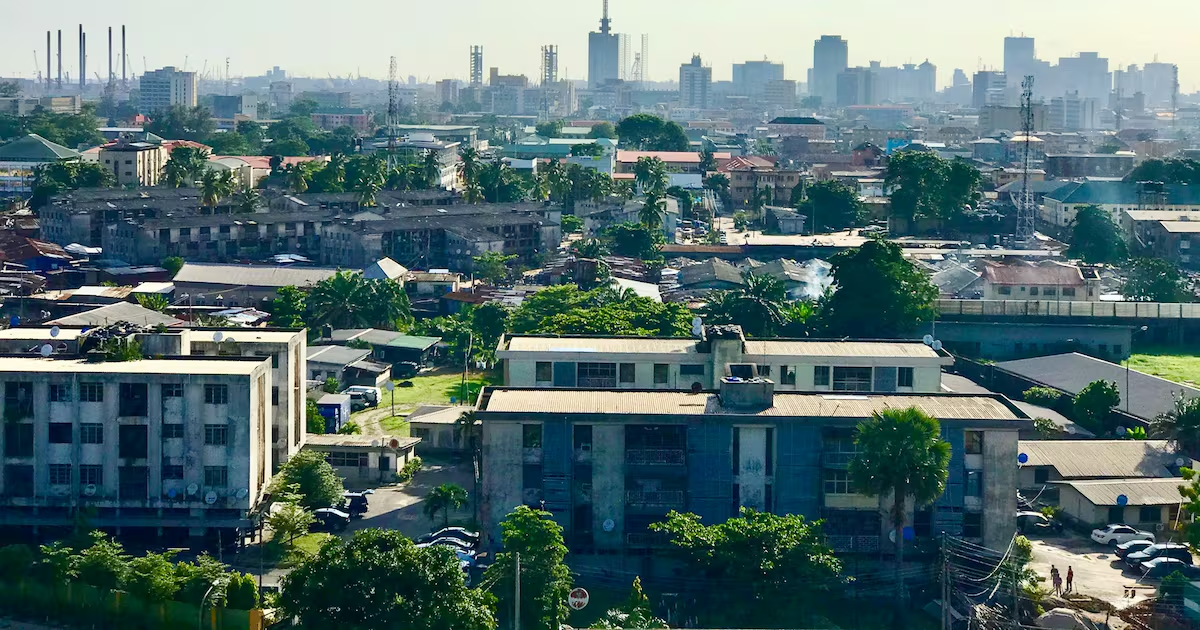
Steven Markovitz looks surprisingly fresh on my computer screen when we meet at 8am. He is in Switzerland for the Locarno Film Festival, and as one of the judges for the Pardi di Domani short film awards, his schedule is jam-packed. But Markovitz — whose production company, Big World Cinema, has been going strong for over three decades — is a film man through and through. He is energised by the task.He is also on a quiet high after the inaugural African Film Investor Roundtable (AFIR), which took place in Cape Town in July. Markovitz tells me that this event forms part of a broader vision: ensuring that African filmmakers benefit from “a once-in-a-generation opportunity”. “We are reaching a critical mass of African entities investing in film,” he explains. “What we need is to co-ordinate resources and consolidate the investment community, getting investors more producer-ready and producers more investor-ready. With all this equity coming onstream, we need to be able to deliver.”So the AFIR, which has already resulted in new co-production agreements, was more than a talk shop (though there was plenty of discussion about “common challenges and solutions, policy issues and best practice”). The event grew from the success of the African Producers Accelerator, a 12-week programme for mid-career film and television producers from across the continent, on which Markovitz has collaborated with seasoned film investors like the Bertha Foundation, the National Film and Video Foundation and the Ford Foundation.The AFIR brought in new partners, from Nigeria’s MBO capital (which has previously dipped its toes in the Nollywood waters and is now looking for opportunities in Morocco, Ghana, Rwanda and South Africa) to creative sector advisory and incubator the HEVA Fund and pan-African financial institution Afrexim Bank. Markovitz reminds me that “Afrexim is actually African taxpayer money. Governments are putting their money where their mouths are. So there is a huge responsibility on producers and filmmakers to be ethical and organised, with the capacity to build a bigger local market for our films.”I raise a potential criticism of the AFIR — that, in aiming to generate blockbusters, it overlooks those who are making films on shoestring budgets. Markovitz notes that recent Rotterdam Tiger Award winner Variations on a Theme was made on a budget of only a few hundred thousand rand but admits that his initiative focuses on supporting films that have already secured some financial backing to become big commercial successes.“Grant money is all very well, but it’s not sustainable for African filmmakers to depend on European finance. We’re trying to break that pattern. Most African film copyright is held in Paris, London or Berlin; we need to own our films, securing rights and royalties. This brings greater artistic freedom. When filmmakers and producers don’t have majority ownership of their intellectual property, they lose creative control.”A not insignificant barrier to trans-African partnerships is nationalistic competition and, in particular, South Africans “behaving like the Americans of Africa”. Markovitz cites the “long history of South African companies failing in African markets because we impose our view on the continent. I often have to counter the narrative of South African arrogance and exceptionalism. We also had to ask ourselves if we should be hosting a pan-African platform like AFIR in South Africa. Xenophobia was a legitimate fear for some delegates”.While it is hoped that AFIR will be an annual event in Cape Town, there will be future iterations in, for instance, Lagos at the Creative Africa Nexus (Canex) in November. “Lagos is the future of the world,” Markovitz affirms. “It’s where you find the most inventiveness and resilience, a spirit of entrepreneurship and survival.”What else is coming up for Big World Cinema? There is a documentary on Brenda Fassie, and, in a different key, the company has optioned a thriller based on the life of Dimitri Tsafendas, the man who killed Hendrik Verwoerd. Markovitz suggests that this signals a departure in the filmic treatment of South African history. “Over the past 30 years we’ve had many important and ‘earnest’ films. Now that we have greater distance from apartheid, filmmakers are taking more risks and feel less reverential in treating the past.”In South Africa and across the continent, the challenge is to match them with investors. This year’s African Producers Accelerator received 260 applications from 30 countries. Markovitz ends on an optimistic note: “We’re just getting started.”Business Day
CHRIS THURMAN | African filmmakers seek control as film investment gathers pace
New investment drive aims to build a stronger, self-sufficient African film industry
726 words~3 min read