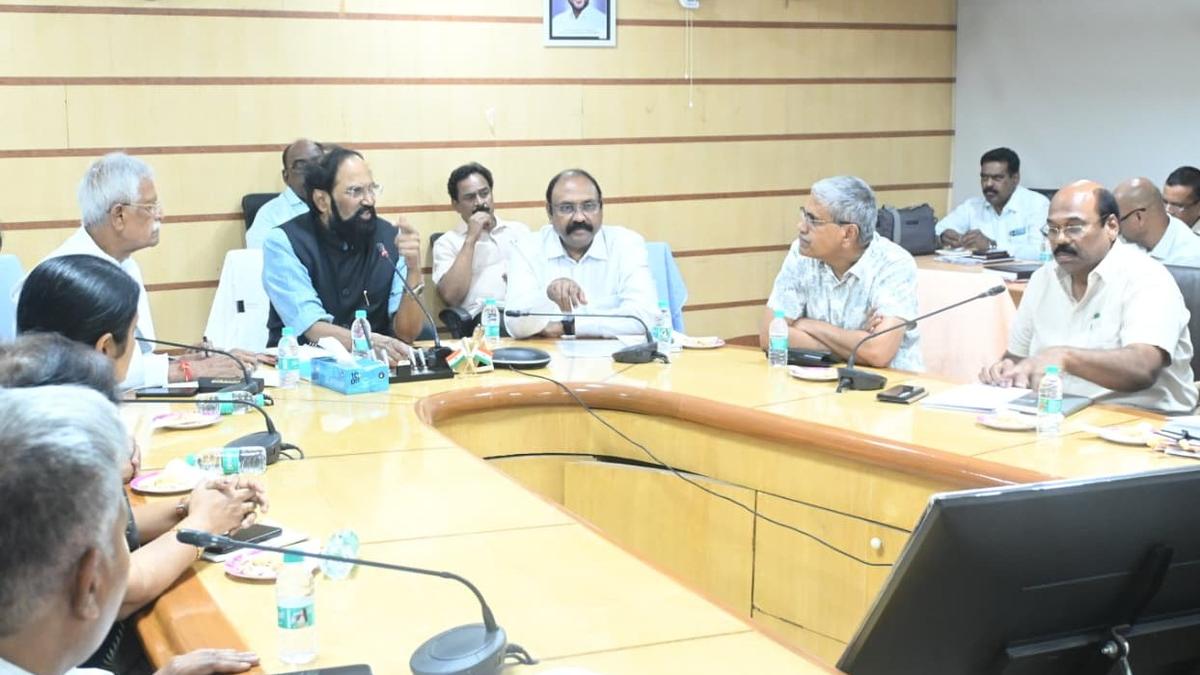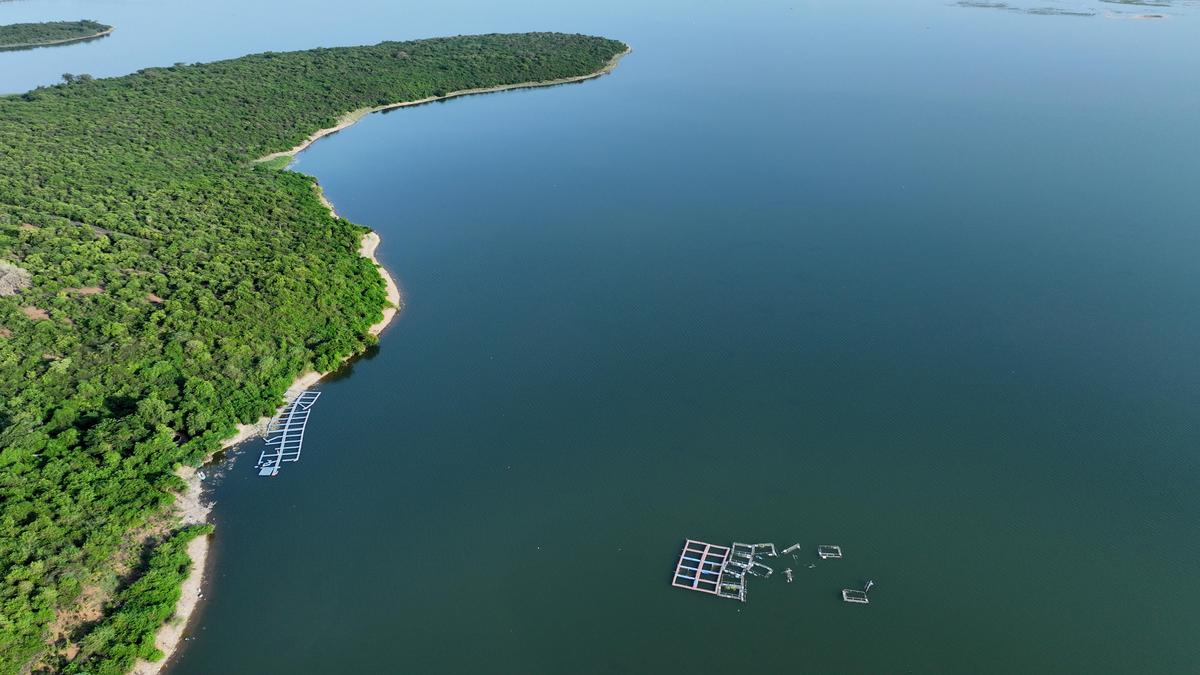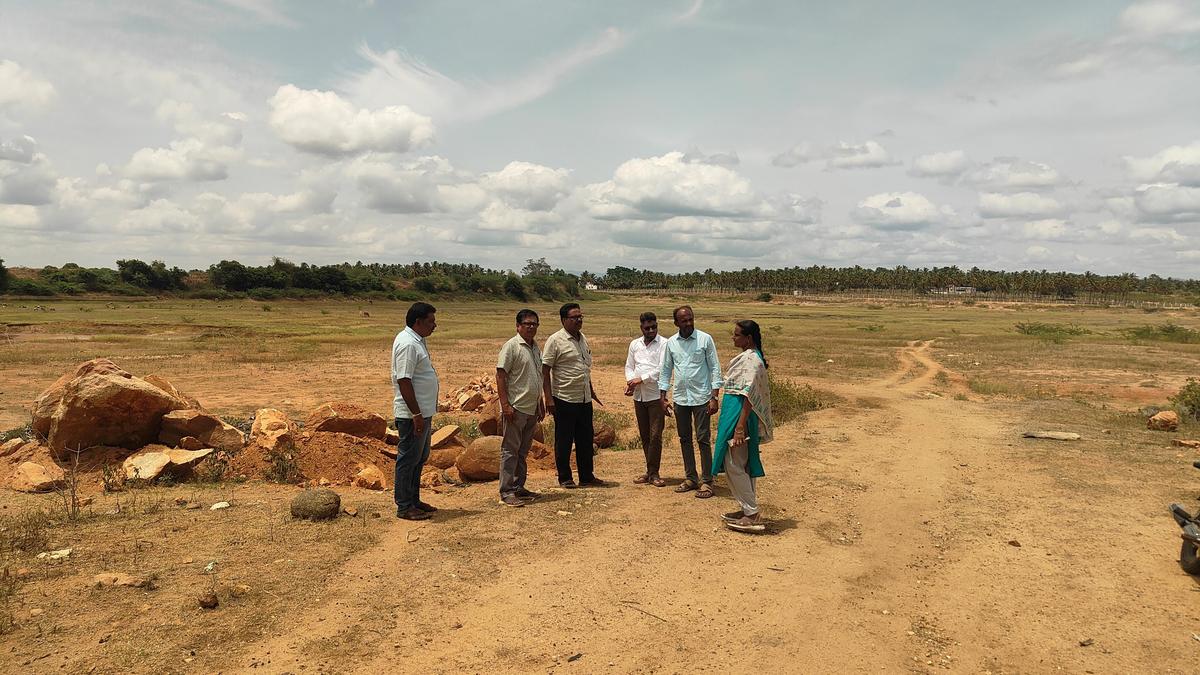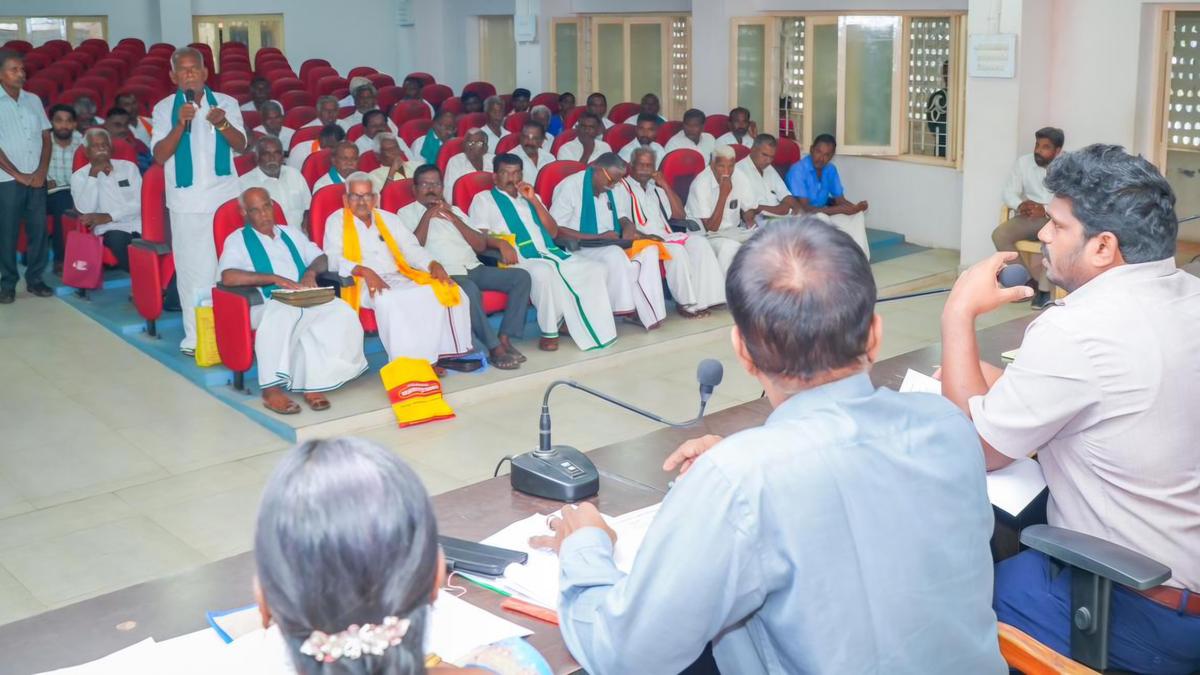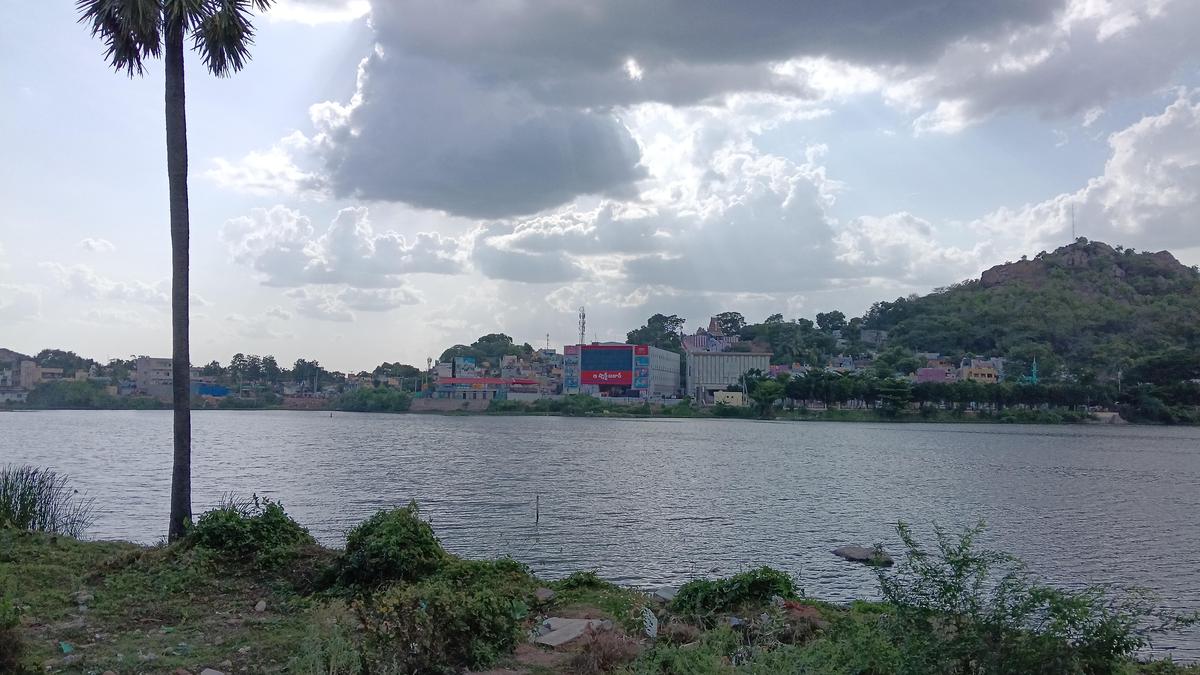
When officials inspected four irrigation tanks in Gudipala mandal in May 2025, farmers and residents raised concerns about a problem that has become increasingly visible across Chittoor’s traditional water-storage network: shrinking storage capacity due to silt accumulation and alleged encroachments.Chittoor District Collector Sumit Kumar inspected Bangarappa Cheruvu, Reddamma Cheruvu, Ramireddy Cheruvu, and Narayanareddy Cheruvu after farmers and residents raised concerns.“The tank used to hold water for much longer. With silt accumulating and parts of the tank area being occupied, the storage capacity has been reduced. Sir, you know very well that we farmers are increasingly vulnerable to poor rains in Chittoor, and we have no other option but to depend on borewells when the tanks don’t fill,” P. Rangaiah, 48, tells the Collector when the latter interacted with the residents.The Collector immediately directed officials to survey encroachments, prepare estimates for desilting, and examine the supply channels connecting the tanks. The Irrigation officials were given a free hand to use MGNREGS funds. The National Highways Authority of India (NHAI) officials were asked to remove soil reportedly deposited near Bangarappa Cheruvu during expressway construction, as farmers complained that the dumped soil had affected the water-spread area.The Gudipala inspection is a testimony to a persisting problem that extends across Chittoor district.The 2023 District Survey Report lists 4,121 minor irrigation tanks in Chittoor district. Their combined designed storage capacity was recorded at 15,133.73 million cubic feet (mcft), against a current storage capacity of 8,924.23 mcft, leaving a difference of 6,209.50 mcft.A revenue official in Nagari said that the figure should not be described as the quantity lost to encroachment. “Storage capacity can decline because of siltation, damaged structures, reduced inflows, changes in catchment areas, and other factors. The survey records a substantial gap between the capacity for which the tank network was designed and the capacity recorded at the time of assessment,” he said.Chittoor Municipal Corporation, the district headquarters, was once surrounded by 14 tanks that quenched its thirst for drinking water. Eleven of them had been fully encroached upon, while Gangineni Cheruvu and Kattamanchi Cheruvu had been contaminated by drain water and rendered unusable. Kajuru Cheruvu on the Chittoor-Palamaner road, within the city limits, was subjected to gross neglect, with its feeder channels completely shut for the last four decades, according to an official of Irrigation Department. The NTR Jalasayam on the outskirts is a saving grace, as it continues to serve the civic population.Despite the vagaries of time, the condition of Gangineni Cheruvu continues to attract public attention. “Gangineni Cheruvu has changed considerably over the years. Wastewater, weeds, and garbage have affected the water body, while the surrounding area has become increasingly built up,” Ulaganathan, a resident of Chittoor, said.Stating that the issue is not limited to the tank bed, a municipal official says that feeder channels, surplus channels, and drainage routes determine whether rainwater reaches and leaves a tank. Blocking any of these can alter the size of a water body even when its recorded land area remains unchanged, he explains.Meanwhile, an Anantapur-based NGO, the International Human Rights Protection Commission (IHRPC), had approached the Chittoor district court, seeking protection of the buffer zone of the Gangineni Cheruvu from encroachment.“Towards the Deer Park side and along the Vellore Road, the Gangineni Cheruvu had been subjected to ruthless encroachments. While its area was over 80 acres, it’s now not even half. We are also approaching the Andhra Pradesh High Court in this regard, as there has been no response from the district-level officials. This case clearly illustrates the continuing interface between urban land use and protected water bodies,” IHRPC general secretary R.K. Shobha Rani says.Agarampalli Ayacut Cheruvu near Kanipakam provides another documented example. In a 2025 Andhra Pradesh High Court proceeding, petitioners identified themselves as ayacut farmers and alleged encroachment of the tank. The revenue records showed the tank’s total extent at 47.84 acres. The petitioners alleged that 16 acres had been encroached upon and that garbage was being dumped in the tank. They also referred to representations made to the authorities in 2007, 2020, and 2024.“We have been approaching the authorities for years because the tank is our irrigation source. If a sizeable portion of the tank area is occupied, both storage and the ayacut are affected,” an ayacut farmer alleges.Responding to the allegations, a revenue official states that tank encroachment could not be assessed based on local allegations. “Survey numbers, revenue classification, Full Tank Level, and the legally protected extent of the water body all become relevant,” he said.The narrowing and encroachment of the Neeva River within Chittoor city continues to be a major public-safety concern. The issue is widely viewed as not merely an encroachment or revenue matter.“It has become a flood-management and public-safety concern. When the natural river corridor is narrowed or obstructed by construction, dumping, or other activities, the river has less space to safely carry flood flows. During rains, the municipal and revenue authorities rush to the riverbed zone, alert the residents in encroached areas, and everything will be silent later,” Somasekhar, a resident of Chittoor, says.During the October 2017 floods, 13 of 15 colonies in the Thena Banda and Veerabhadra areas were submerged, while residents of nine colonies were advised to evacuate, and these colonies were developed following encroachments on the Neeva riverbed, he says.In 2022, more than 300 families were reported to be living along the banks of the river Neeva. Even today, the residents approach the district administration to show them a housing site, but the issue has remained vexed for years without a solution.In 2024, the Andhra Pradesh High Court directed the Chittoor District administration to ensure that no sand mining was permitted in the Neeva riverbed without authorisation.Residents observe that the top priority should be a scientific, transparent survey of the Neeva through Chittoor Corporation, comparing its original and present alignment and width. Every encroachment and obstruction should be mapped, legally examined, and removed wherever required.“The river must not be allowed to become narrower at the cost of Chittoor’s flood safety,” Siva Kumar of Jendaman Street, close to the Neeva riverbed, says. Incidentally, in the Indira Nagar area, the Neeva River’s width remains truncated to a mere 20 feet.
Rejuvenating shrinking tanks in Andhra
Efforts to rejuvenate shrinking irrigation tanks in Chittoor district address siltation and encroachment impacting local farmers' water access.
1,543 words~7 min read