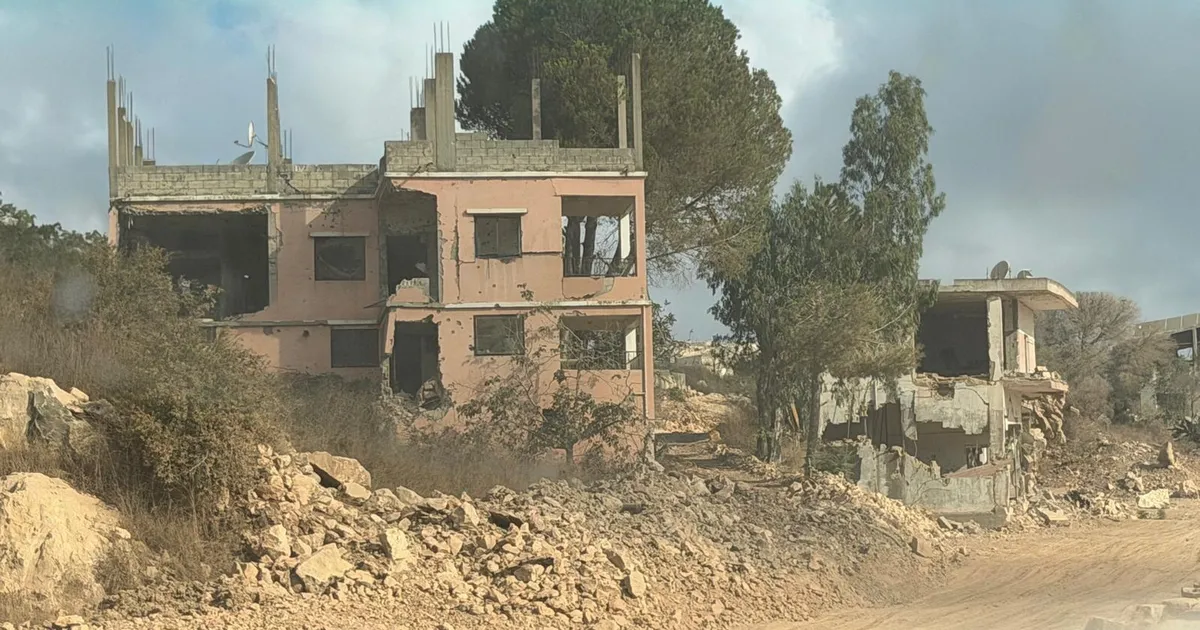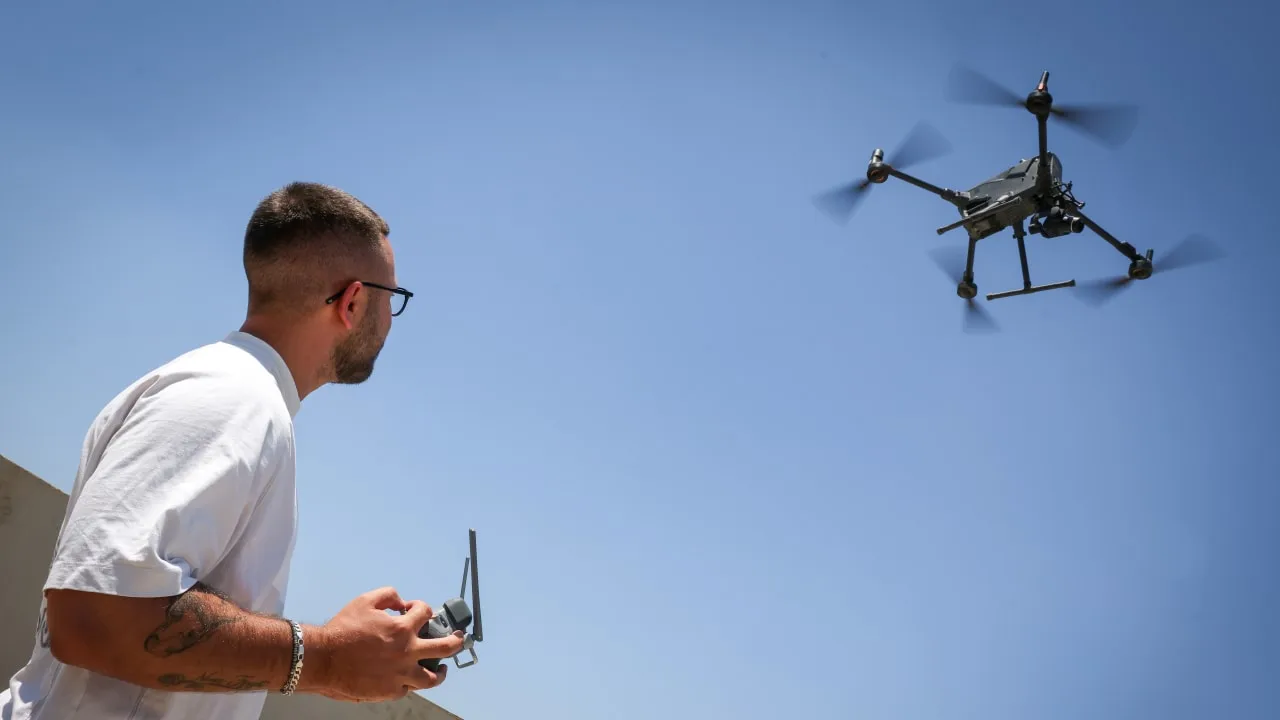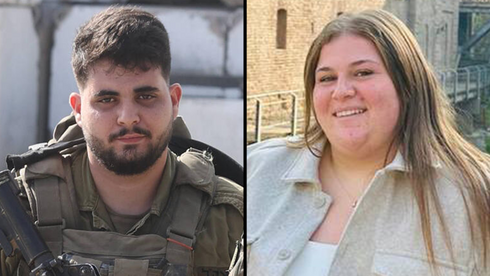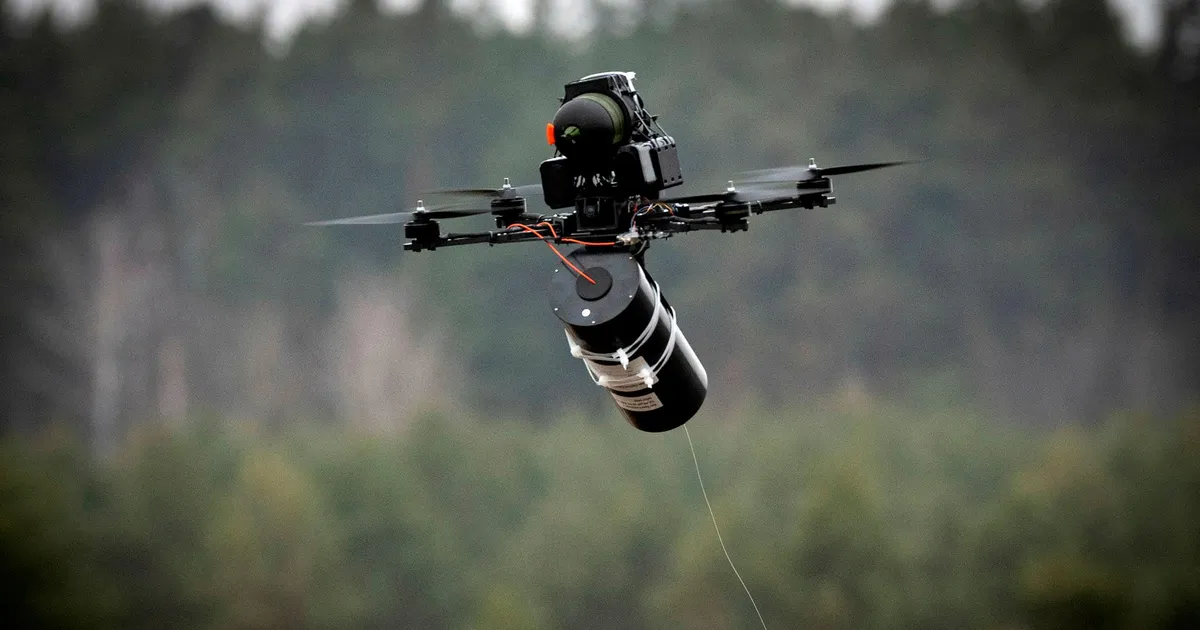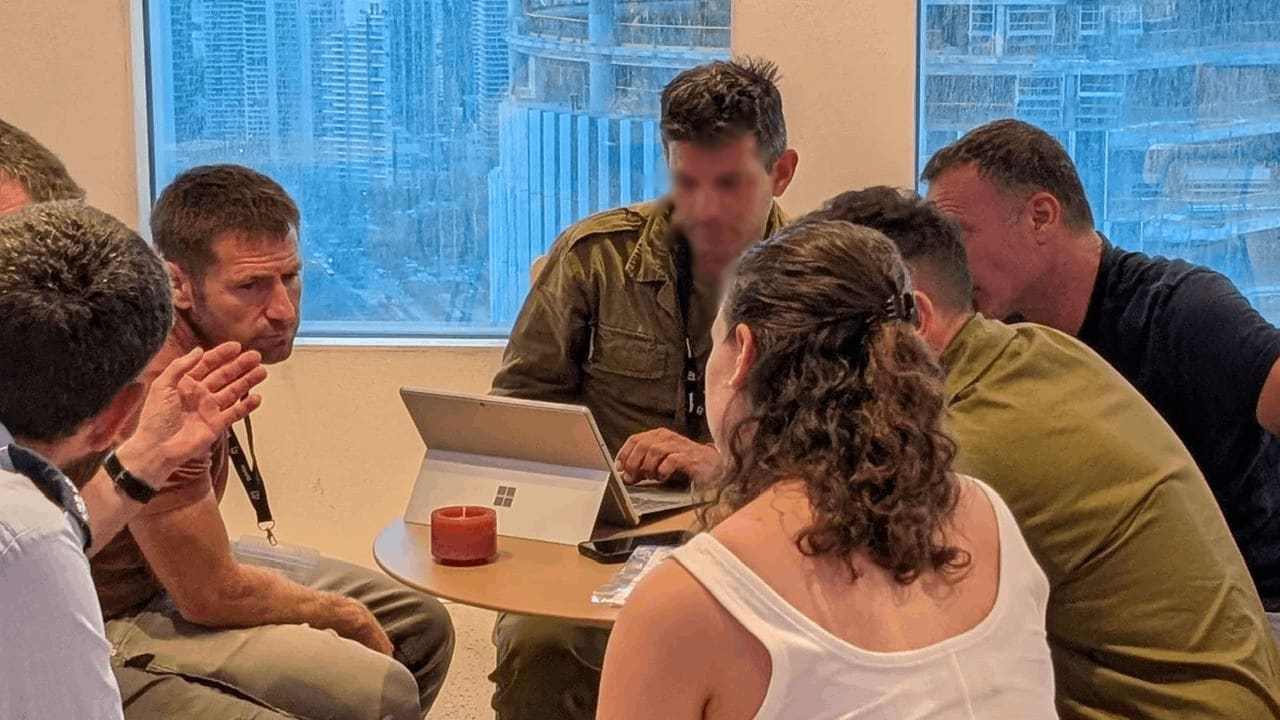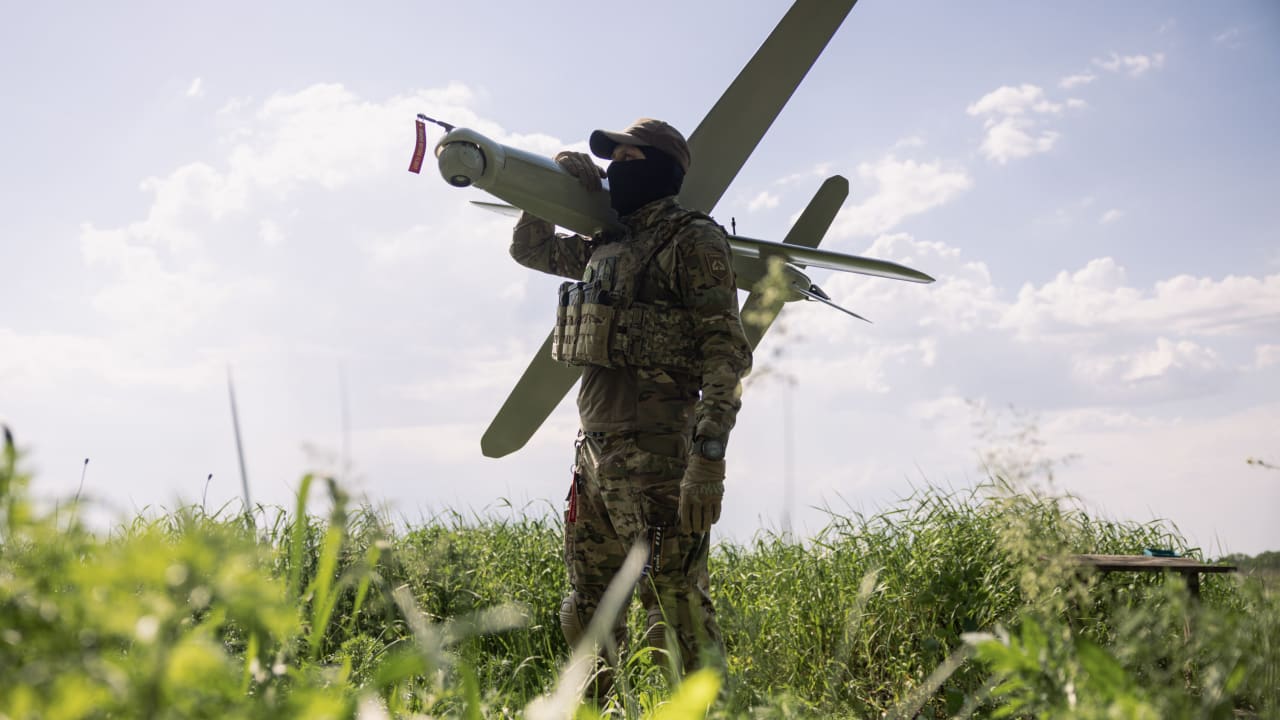
Udi Oster helped bring thousands of donated drones to Israel after October 7; after his brother was killed in Lebanon and longtime employee Or Levy was kidnapped to Gaza, he now leads Aitan, developing one system to control multiple military dronesSophie Shulman, Calcalist|On October 8, 2023, while IDF troops were still battling Hamas terrorists inside Israeli communities and on roads near the Gaza Strip, Udi Oster, now CEO of drone company Aitan, formerly EyesAtop, met a reservist he had never seen before.“He arrived in crumpled uniform at the junction where I was, only a few hours after being called up, and I was waiting for him with a bag containing two private drones I had at home that I was supposed to give him,” Oster, 38, recalled in an interview with Calcalist’s weekend magazine. “I don’t even remember who connected us, but it was the day after the massacre and every drone that could reach the battlefield had to get there.”GalleryUdi Oster That brief roadside meeting became Oster’s entry point into the drone industry. The experience exposed what he describes as a startling battlefield gap. “Suddenly everyone understood that if a fighter has a surveillance drone, he can see a kilometer ahead and understand where the terrorists are, and that even if he has a drone you can buy at BUG or KSP, it changes the battle. Then you ask yourself: How can it be that he doesn’t have one?”Today, the widespread use of drones by combat units can seem obvious. In October 2023, Oster says, it was anything but. What shocked him most was not the absence of futuristic military technology, but the lack of simple equipment already available to civilians. A basic commercial drone could provide an infantry unit with a meaningful operational advantage, yet many soldiers did not have access to one in quantities suited to full-scale war.Giving away his two private drones was only the beginning. Soon after the war began, Alon Dror, now CEO of defense startup Kela, asked Oster to help bring drones into Israel that wealthy Jewish donors in the United States wanted to contribute. Dror had been brought in by MAFAT, the Defense Ministry’s Directorate of Defense Research and Development, to bring order to donations flowing in chaotically from the United States and set up a war room at Tel Aviv’s Sarona complex.Flights had been disrupted, it was unclear which units needed the equipment most urgently, and donors themselves often did not know where to send it. The solution was improvised but effective. Volunteers gathered millions of dollars worth of equipment in Florida, Washington and New Jersey. At U.S. airports, contacts approached passengers flying to Israel and asked whether they would agree to carry black Pelican cases filled with drones intended for combat units.“We photographed their passports, wrote down who was taking what and sent them to Ben Gurion Airport,” Oster said. “Then we waited for them in Israel and took the equipment from them. That’s how the first shipments arrived.”Demand was immediate. Every unit wanted a drone, particularly one with thermal imaging capability. Oster says the IDF simply had not stocked enough of them for the type of war that erupted on October 7.“For years, the IDF’s concept was that there would be no ground maneuver and there was no reason to direct budgets to this field,” he said. “The money went to defense and strategic targets.”Oster estimates that between 3,000 and 4,000 drones were brought into Israel during the roughly two months the war room operated. Even that, he argues, was far from enough. Drones may not be strictly disposable, but in combat they are expendable. They crash, are shot down, malfunction and need constant replacement.Nearly three years later, drones have become one of the most widely used and sought-after tools in the IDF arsenal. Oster’s own trajectory during that period captures how dramatically the military’s needs changed from October 6 to October 7.Today he leads Aitan, a startup developing a unified operating system for different types of civilian and military drones. The company is currently raising $15 million, including from a former senior OpenAI executive, and counts former IDF chief of staff and defense minister Shaul Mofaz among its advisers. Several weeks ago, Aitan and Kela won a major IDF drone tender.Eitan OsterThe company’s unusual name carries a deliberate reference to AI, but also a deeply personal meaning. It was changed in memory of Oster’s brother, Eitan, an Egoz commando team commander who was killed in battle in Lebanon in October 2024.Oster believes technology available today could alter battles like the one in which his brother was killed, alongside Or Mansour, Itay Giat and Nezer Itkin. He is careful not to claim that more equipment would necessarily have changed the outcome, but says the troops were operating at a technological disadvantage.Heavy fog prevented aircraft and helicopters from providing assistance, while the terrain made it impossible for armored vehicles such as Namer personnel carriers and tanks to accompany the force.“I don’t know what the battle in which they fell would have looked like if they had more tools,” Oster said. “But I do know that today there are technologies that can change battles like that.”That experience became part of Aitan’s operating philosophy. Its slogan, he says, is to make sure IDF troops never enter a fair fight, but always have an advantage.Before the war, Oster’s career had little to do with drones. While still serving in Unit 8200, he met Daniel Almog, an immigrant from the United States, and in 2014, at age 26, the two founded Tapingo, an online food-ordering platform similar to Wolt. In 2018, the company was sold to U.S. delivery giant Grubhub for $150 million.The timing soon gave them second thoughts. COVID erupted not long after the sale and food delivery exploded. “We even found ourselves thinking about how cheaply we had sold,” Oster joked.But life inside a large American corporation quickly became frustrating. “It was very comfortable, but after a year I realized the organization didn’t appreciate me coming in with that Israeli frenzy,” he said. “They told me, ‘Where are you running? Relax.’”After a restructuring proposal he put forward was rejected, Oster left. He and Almog founded Zetz, a company focused on international logistics and supply-chain management, but the venture was short-lived. Hamas’ October 7 attack erupted soon afterward and almost all the company’s employees were called up for reserve duty.One of its longtime employees was Or Levy, who had worked with Oster since the Tapingo years. Levy was kidnapped from the Nova music festival, while his wife, Einav, was murdered.Within days, Oster and the employees who had not been mobilized created yet another war room, this one dedicated to finding information about Levy. They checked when he had last connected online, where his phone had been, attempted to access his Google account and reviewed videos and other material emerging from the attack.“Or wasn’t just an employee, he was a central figure in the company,” Oster said. “You understand that you’re inside an event you have absolutely no way to control, so you look for any little thing you can do.”A week later, they attended Einav’s funeral. Two weeks after that, they were told Levy had been kidnapped to Gaza, and later received confirmation that he was alive.Or Levy (Photo: Moti Kimchi)Amid that chaos, Oster’s growing familiarity with the drone world gradually became a new business direction. He and Almog met representatives of roughly 15 Israeli companies working on different aspects of drone technology before arriving at EyesAtop, a small Tirat Carmel company with seven employees, founded by Ido Yitzhak, Yinon Atzmon, Einav Harazi and Ben Barkai.Despite its size, the company already had a working product that had been sold to the IDF. Oster remembered hearing soldiers ask for drones equipped with the “Ronen” system, although he had no idea what Ronen was. He eventually discovered that it was an operating system developed by EyesAtop as early as 2017, designed to control multiple types of civilian and military drones from a single platform.Oster and Almog invested $1 million in the company in March 2024 and took control of it in September 2025. It has since grown rapidly. Aitan now employs about 50 people in Ramat Gan and records annual sales in the tens of millions of dollars.The company’s basic premise is that the battlefield will not be dominated by one drone model but by many, supplied by different manufacturers and designed for different missions. The challenge, Oster says, is allowing a soldier to control all of them through the same familiar interface.“What we are trying to do is take capabilities that exist today in the Zik and bring them down to company level,” he said, referring to Elbit Systems’ intelligence-gathering and strike UAV.One example is the ability to connect different drones within the same mission. If a surveillance drone identifies a terrorist, the system can help direct an attack drone toward the target. Soldiers can track a moving target while simultaneously reviewing earlier footage showing what that person had done before. Multiple drone operators can also share their live feeds, much like screen sharing on Zoom.That solves what Oster sees as an increasingly basic battlefield problem. Two operators may be looking at the same area through different systems but struggle to explain to one another exactly what they are seeing. A shared interface allows them to work from the same picture.Aitan is hardly alone in pursuing this market. Much larger companies, including Anduril, Ondas and Israeli drone maker Xtend, are investing heavily in military drone technology. Oster nevertheless believes the sector remains unusually open.“Since October 7, there has been a huge blue ocean in everything connected to drone technology, and not much has been done yet,” he said.One structural problem, he argues, is that military equipment is often purchased by people who will not be the ones operating it. Since October 7, he says, the IDF has become increasingly aware that procurement bodies must understand the needs of troops in the field.Drones create another challenge because they evolve too quickly to be bought under traditional multiyear procurement plans and stored for years in emergency warehouses.“You can’t buy drones as part of a multiyear plan and put them in warehouses, because in two weeks there will be a better drone,” Oster said.Reservists create a similar problem. A soldier may be trained on one drone today but not return to operational service for years, by which time the model may already be obsolete. A unified operating system, Oster argues, allows the underlying hardware to change while preserving the operator’s training.Egoz drone team troops operate against Hezbollah in Bint Jbeil, Lebanon (Photo: IDF)For Oster, however, the war that created the business opportunity has never been only a business story.He grew up in Maccabim-Reut in a religious Zionist family and now lives in Ra’anana with his wife and four children. Alongside his twin brother, he attended the Israel Arts and Science Academy in Jerusalem. He later studied briefly at the pre-military academy in Eli before being recruited to Unit 8200, where he specialized in finding security vulnerabilities.During the Second Lebanon War in 2006, Oster remembers examining Hezbollah communications equipment captured in Lebanon and discovering a huge collection of recordings of IDF communications, including encrypted material.“It made me understand that they had been preparing themselves for war for years and were much more sophisticated than we perceived them to be,” he said.Years later, Hezbollah would be responsible for his brother’s death.Oster was preparing meatballs for the family’s Rosh Hashanah meal in 2024 when his father called. It was unusual enough that Oster noticed immediately. His hands were covered with food, so he answered the phone with his elbow.“There’s no easy way to say this,” his father told him. “Eitan was killed. Come home quickly.”“Until that moment, unlike the rest of the family, I had been in healthy denial,” Oster recalled.Months later came another emotional moment. In February 2025, Or Levy was released from Hamas captivity alongside Eli Sharabi and Ohad Ben Ami.“Meeting him was almost unreal,” Oster said. “For so long you get used to talking about him as a person who is somewhere, and suddenly he is standing in front of you.”Levy is not working today. He is focused on rehabilitation and spending time with his son, but Oster says they remain close and he still visits the company.“He knows we are always waiting for him,” Oster said.“There is an office here reserved for him.”
His brother fell in Lebanon, his colleague was kidnapped: now he's building the IDF’s drone future
Udi Oster helped bring thousands of donated drones to Israel after October 7; after his brother was killed in Lebanon and longtime employee Or Levy was kidnapped to Gaza, he now leads Aitan, developing one system to control multiple military drones
2,077 words~9 min read