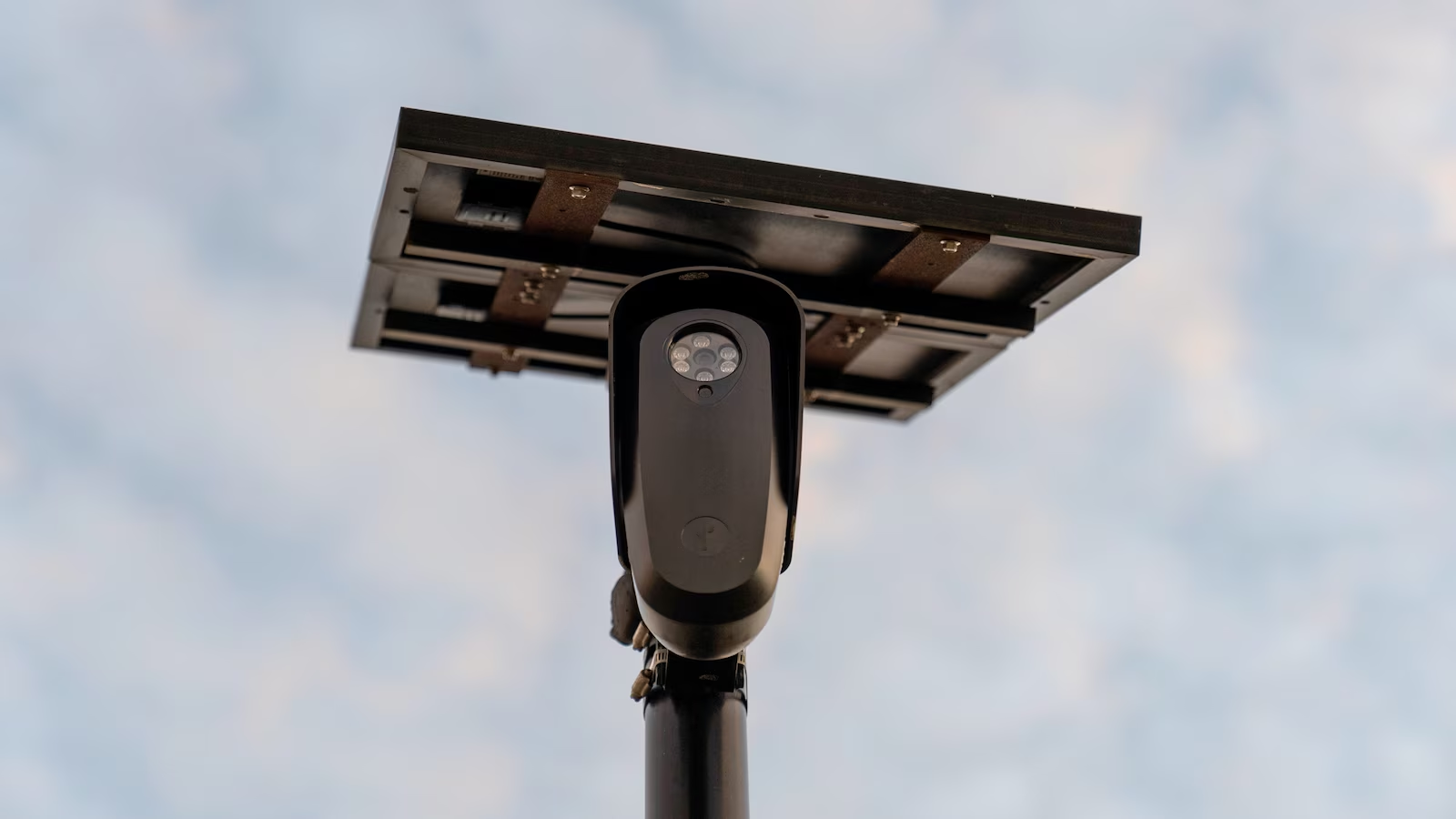
The ACLU on Thursday largely dismissed new privacy measures announced by surveillance tech company Flock Safety, arguing the changes do little to address mounting concerns about the company’s sprawling automated license plate reader network and abuses of its technology by law enforcement agencies and other malicious actors.Flock on Thursday unveiled new guardrails for its law enforcement customers, including a reduction in default license plate data retention from 30 days to seven, mandatory auditing tools designed to flag suspicious searches, and requirements that officers associate searches with case numbers.The ACLU said the changes "seem to be a thinly veiled PR attempt to counter communities’ genuine privacy concerns with its mass surveillance system with largely hollow security promises, rather than an earnest effort to address them."ACLU senior policy counsel Chad Marlow asserted that “transforming an exceptionally dangerous mass surveillance system into one that is fully protective of civil rights and civil liberties is a difficult, if not impossible task.""That is even more the case with a company like Flock, whose nearly $1 billion in venture capitalist funding has locked it into an operational model that seeks to trade our privacy for massive profits," he continued. “Given that Flock’s latest announcement still appears more focused on addressing a PR problem than the significant privacy and other harms its products create, we will continue to analyze the company’s proposals fairly and honestly."Flock Safety's new guardrails come amid growing nationwide backlash against automated license plate readers (ALPRs). As more and more instances of alleged police abuse emerge—including use of Flock cameras to stalk exes, track abortion patients, target undocumented immigrants, and spy on protesters—an increasing number of law enforcement agencies are canceling or not renewing contracts with the company."Abuse of Flock technology, at any level, is unacceptable," Flock Safety said in its statement Thursday. "We have strengthened safeguards over the past nine years, from basic audit logs to proactive monitoring. Sixteen weeks ago, we introduced audit assistance, which detects abnormal activity and flags it for administrator review. In recent weeks, those reviews have been associated with arrests of several law enforcement officers who allegedly abused the system.""We will now require all law enforcement customers to adopt this feature by the end of this year," the company continued. "In addition, we will institute proactive lockout. When a user’s activity meets defined criteria for abnormal behavior, Flock will automatically suspend access pending administrator review. The goal is to intervene before misuse becomes recurring or widespread.""In July 2025, we introduced an optional case code requirement for searches," Flock noted. "Results from participating agencies have been promising, so we will now require case codes for all law enforcement searches by the end of the year. Agencies may bypass the requirement in emergencies, but every exigent search will be flagged for administrator review.""We are not perfect," the firm added, "so we will keep listening, improving, and building a better standard for public safety technology together."However, the ACLU analyzed Flock's announced changes and found that "the devil will be in the details":For example, an exception to the data retention policy is something called evidence mode, which is “when a search is tied to a case number, that data is preserved instead of aging out after seven days.”... “If ‘evidence mode’ only retains hit result data that police determine may be evidence in an active investigation of a specific case, then the change may be a positive one. But if evidence mode triggers the retention of any ALPR data that is searched, then the new mode could indefinitely retain all the ALPR data Flock collects and shares nationally.”Another “change” the company is implementing is that local police will be able to decide what types of offenses other Flock customers can search their data for... Flock has attempted this before, and the security measure failed because police were easily able to circumvent the system’s requirement that they input the purpose of their search.Finally, Flock announced that in response to the reports of police abuse, they will now require reasons for a search, and that they plan to universally roll out its audit assistance tool to detect police misuse. Flock’s announcement fails to note how easily users have circumvented “search reason” security measures in the past or how its new policy improves the quality of the feature."Change may still come as Flock faces this ever-growing threat to its corporate viability," the ACLU said, "but we certainly won’t be holding our breath."
ACLU Says New Flock Camera Guardrails Nothing But a 'Thinly Veiled PR Attempt' | Common Dreams
“Transforming an exceptionally dangerous mass surveillance system into one that is fully protective of civil rights and civil liberties is a difficult, if not impossible task.”
737 words~3 min read