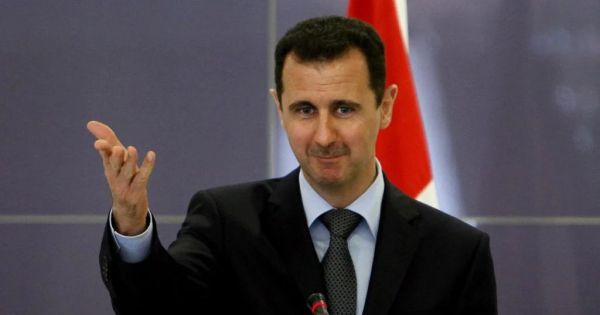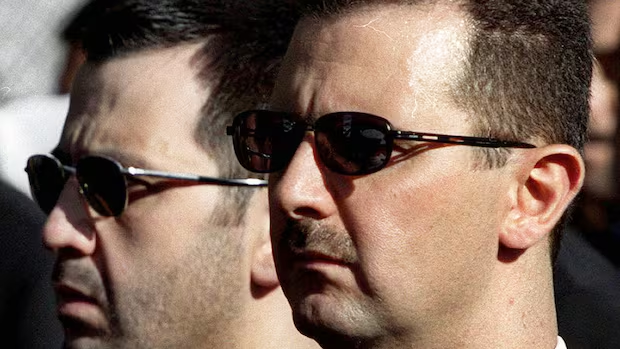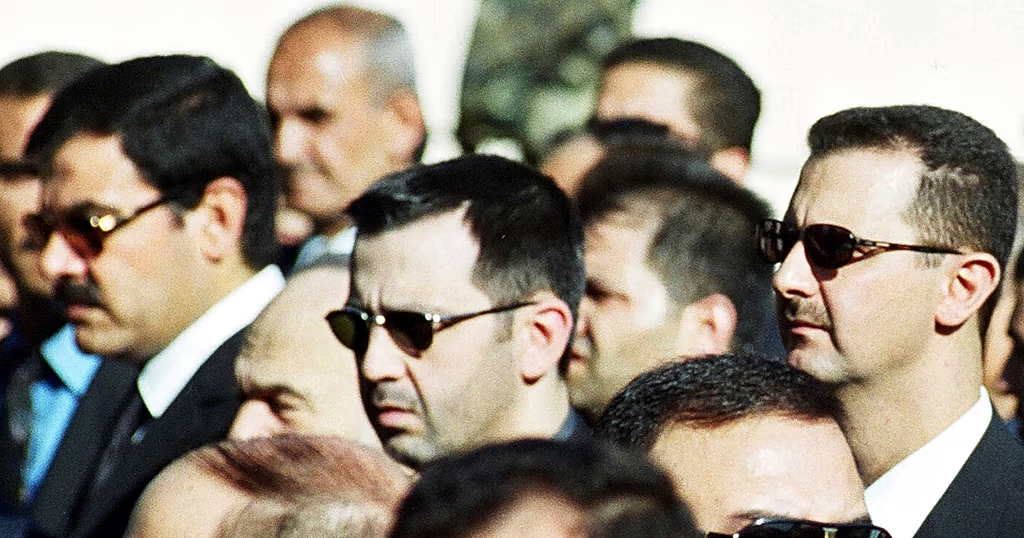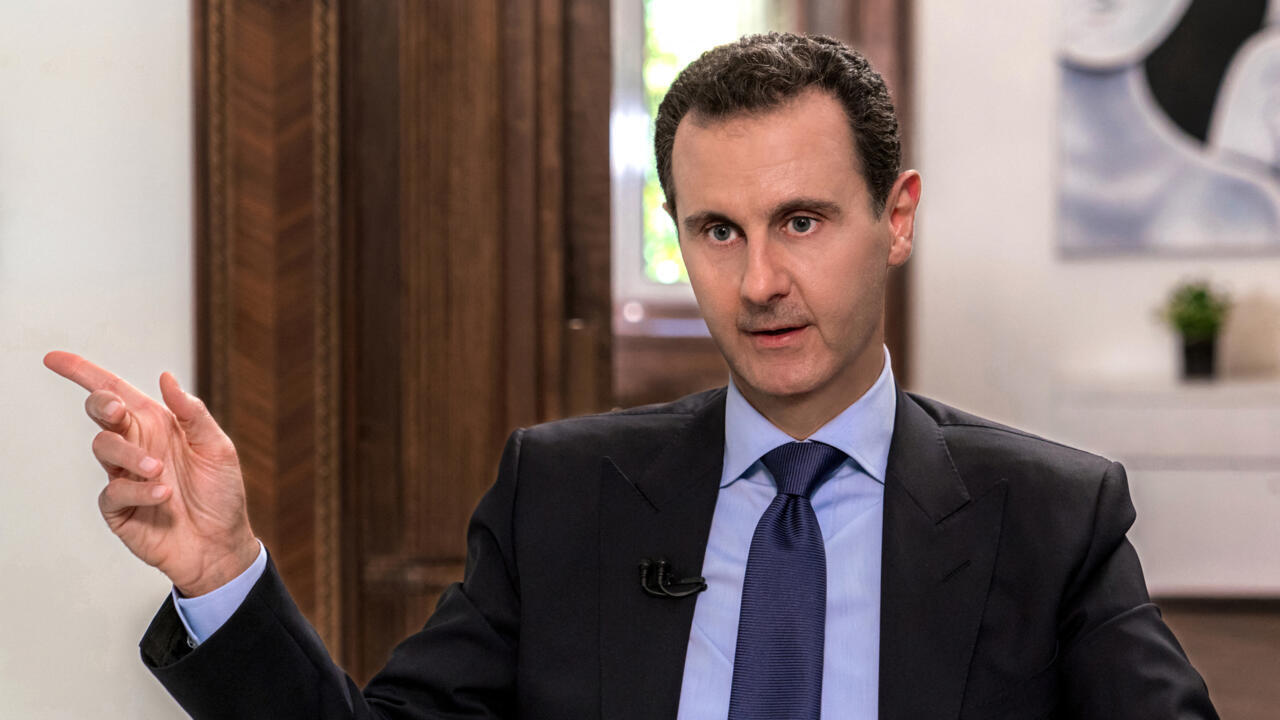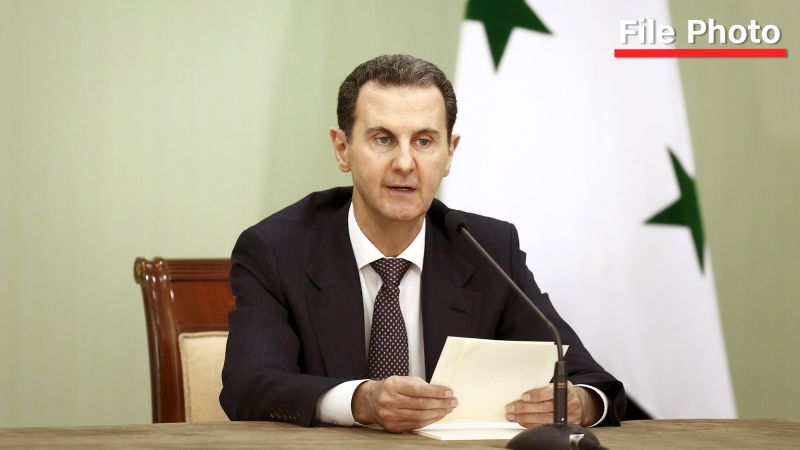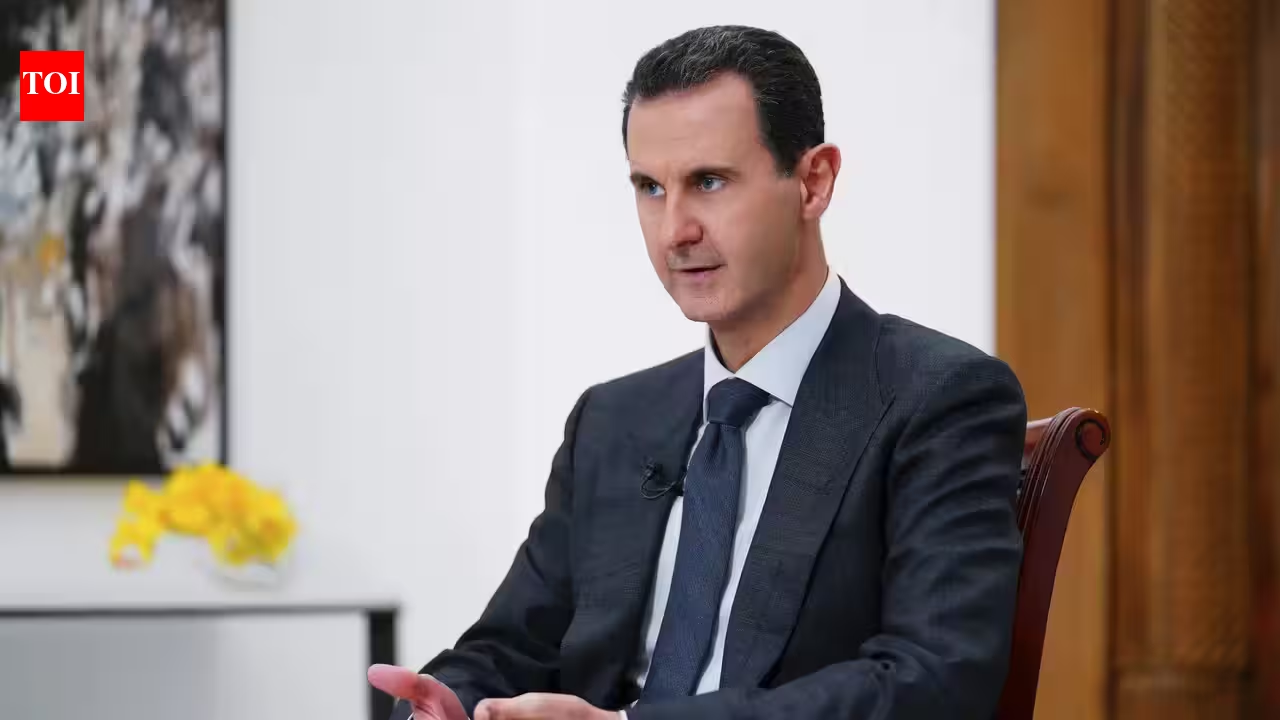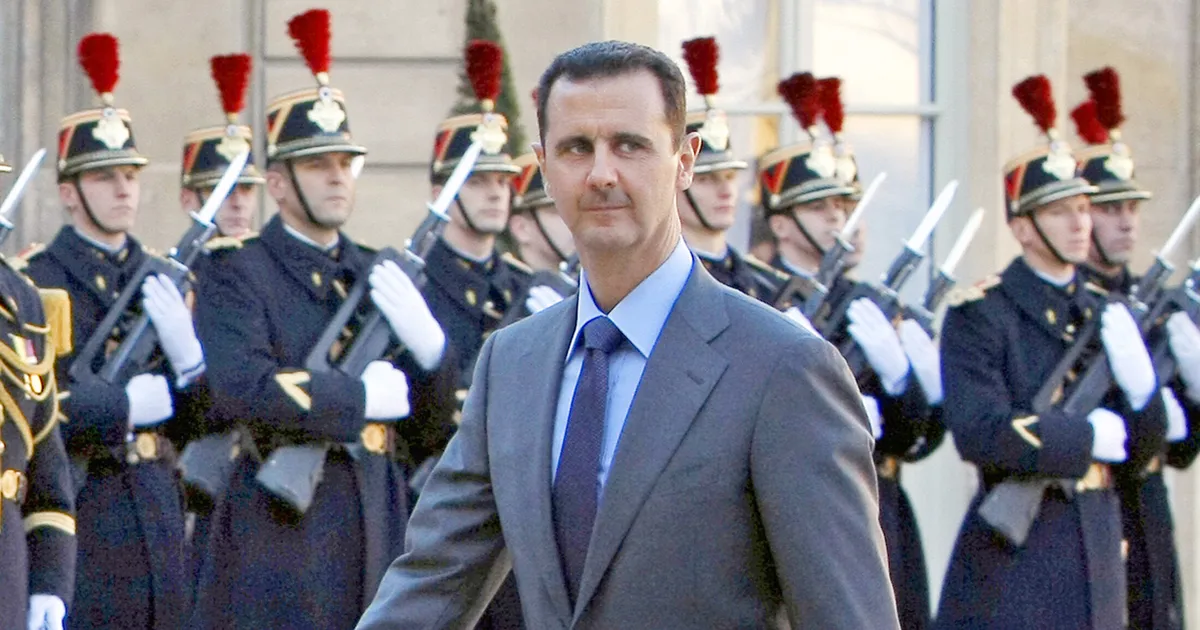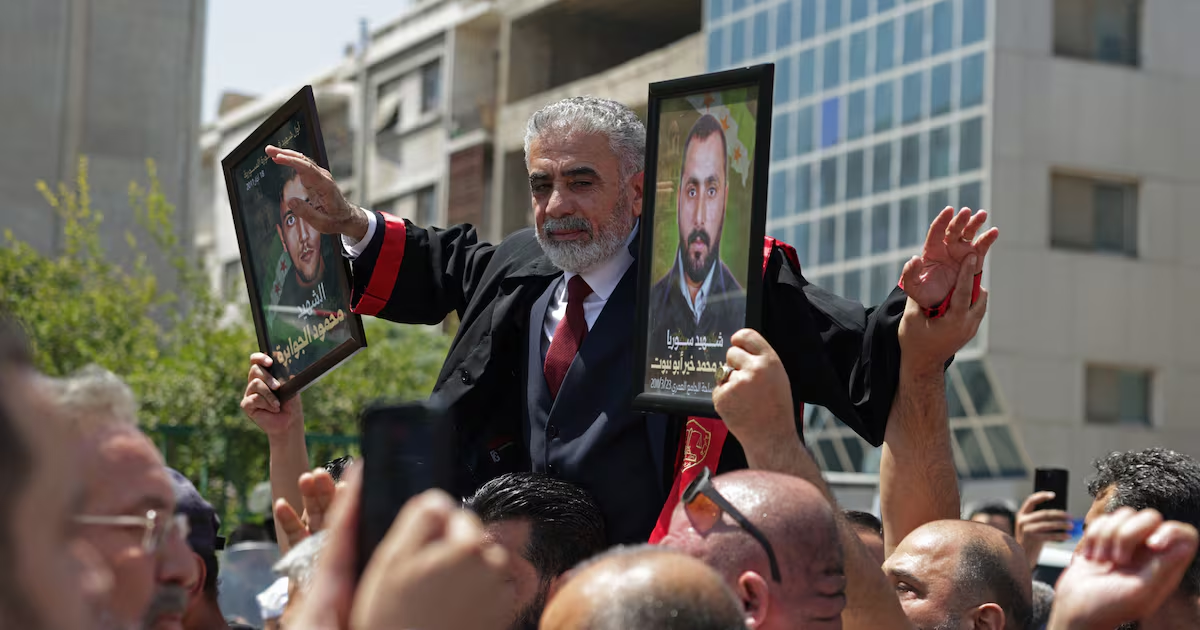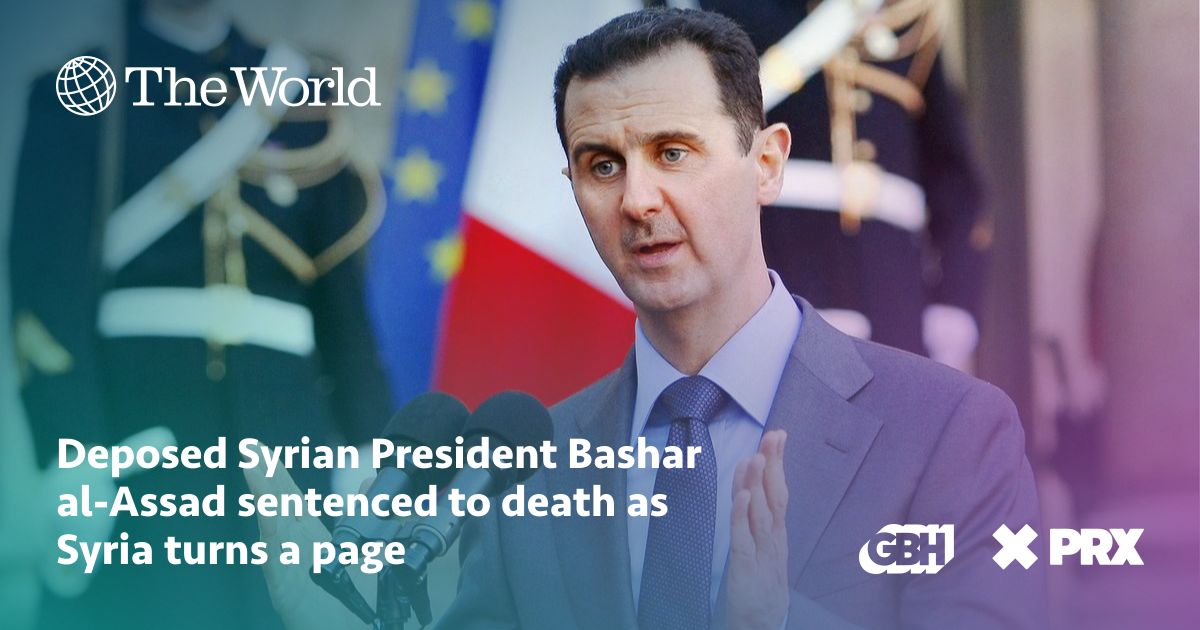
Public radio’s longest-running daily global news program.AboutContactDonateMeet the TeamPrivacyTerms of use©2026 The World from PRXPRX is a 501(c)(3) organization recognized by the IRS: #263347402.Deposed Syrian President Bashar al-Assad sentenced to death as Syria turns a pageDeposed Syrian President Bashar al-Assad and his younger brother were sentenced to death in absentia by a Damascus court this week. But Joshua Landis, from The University of Oklahoma, tells The World’s Host Marco Werman that it’s unlikely the Kremlin would surrender the Assads. Conflict & JusticeAugust 13, 2026Updated: August 13, 20267:47In this file photo, then-Syrian President Bashar al-Assad addresses reporters at the Elysee Palace in Paris, France, Dec. 9, 2010.A Syrian court sentenced ousted President Bashar al-Assad and his brother to death in absentia this week for murder, torture and crimes against humanity committed before and during the country’s 14-year civil war that left about half a million people dead.The verdicts by a court in Damascus are the first against Assad or any members of his inner circle since his family’s five decades in power came to an end 20 months ago. They are mostly symbolic, however, because Assad and his brother, Maher, had fled to Russia after the Syrian government’s collapse to rebel forces in December 2024.Six other former officials were also sentenced to death in absentia. The only former official sentenced to death and in custody is Assad’s maternal cousin, Atef Najib, who oversaw a crackdown on dissent that led to an uprising that sparked the civil war.Atef Najib, former head of the Political Security Branch in the Daraa area during Bashar Assad’s rule, sits in the defendants’ cage during a trial session at the Palace of Justice in Damascus, Syria, April 26, 2026.Ghaith Alsayed/APDamascus-based analyst Mutasem al-Syoufi said Syrians are welcoming the decision.“He deserves this,” al-Syoufi said. “Assad is not a president who is seeking asylum in Russia. He is a wanted man.”The new post-Assad Syria is taking shape in Damascus. This week, its new government finalized an agreement with Moscow to scale back Russia’s military presence on Syria’s Mediterranean coast. The World’s Host Marco Werman spoke with Syria analyst Joshua Landis, who heads the Center for Middle East Studies at the University of Oklahoma.For the time being, it’s not. But it was an important moment. And today, Syria has been carrying out televised court cases, and there was a very high-profile one against Atef Najib, a cousin of the president who was in charge of torturing some young Syrians that sparked this uprising in 2011. And he stood in front of the cameras in a yellow prison suit with big black stripes on it.That was a cathartic moment for Syrians to see these trials and to hear that the [deposed] president was being condemned to death. And there was a lot of celebration in Damascus. Of course, Assad presented himself as someone protecting Syria’s minoritiesnd. A many of the minorities feel beaten down today, and they may look at this as a moment of grays rather than black and white.Riot police stand outside the Palace of Justice during a court session that sentenced Atef Najib, a cousin of ousted President Bashar Assad, to death for overseeing a crackdown in Daraa that helped spark Syria’s uprising and civil war, while Assad and his brother Maher were sentenced to death in absentia, in Damascus, Syria, Aug. 11, 2026.Ghaith Alsayed/APResidents check damaged buildings, as they start returning to the Sheikh Maqsoud neighborhood after days of fighting between government forces and Kurdish fighters in the northern city of Aleppo, Syria, Jan. 13, 2026.Omar Albam/AP/File photoIn this file photo, Syrian President Bashar al-Assad and his wife Asma plant a jasmine tree in an environmental garden during the opening of the Jasmine Festival, in central Damascus, April 27, 2007.Bassem Tellawi/AP/File photoWell, they just issued an important accord this week in which the two bases, Hmeimim, the big air force base, and then another port, Tartus, are going to be converted, not into exclusive Russian military bases, but they are going to be training centers for the Syrian military. But Russia’s still going to play a role in both of them. So, in some ways, it’s a good diplomatic solution because Syria once again gets to impose its sovereignty over these two bases. But at the same time, Syria maintains relations with Moscow without alienating America.So, it’s downgraded Russia’s role, but it has Russia with good relations because it needs Russia for votes in the UN. And it’s not clear where Syria’s relationship with Israel is headed because Israel’s taken a whole bunch of new territory in Syria around the Golan Heights. Syria, the new president, wants Israel to move out of that and to strike a peace deal that will establish firm borders between Israel and Syria. And the United States is encouraging that, but not pushing very hard.A convoy of buses carry Syrian refugees who return home from Lebanon, arrive at the Syrian border crossing point, in Jdeidet Yabous, Syria, July 29, 2025.Omar Sanadiki/AP/File photoIt’s a cause for optimism that people are going home. The major achievement of Ahmad al-Sharaa, this new president who we have to say used to be the head of al-Qaeda in Syria, he has really transformed himself. He’s given up any revolutionary ambitions. He wants peace with Israel and he wants to rebuild the country. He has done an extraordinary thing, which is to get the embrace of President [Donald] Trump and to have all American sanctions lifted from Syria.Today, Syria can rebuild, and American oil companies are back there. The World Bank just extended it $100 million in loans to rebuild the financial system and Gulf countries are beginning to really invest money in Syria. So, there is a lot of hope for rebuilding Syria and getting money back and being able to provide a home that Syrians will want to return to. Democracy? Big question mark. Most Syrians today, they’re very grateful to shut up, and they’re willing to put up with a large degree of authoritarianism today because they see good things happening, and they believe better for us to have an enlightened dictator. And that’s the way many Syrians look at him. Not all. The minorities, 30% of Syrians, tend to be very skeptical.This interview has been lightly edited and condensed for clarity.AP contributed to this report.
Deposed Syrian President Bashar al-Assad sentenced to death as Syria turns a page - The World from PRX
Deposed Syrian President Bashar al-Assad and his younger brother were sentenced to death in absentia by a Damascus court this week. But Joshua Landis, from The University of Oklahoma, tells The World’s Host Marco Werman that it’s unlikely the Kremlin would surrender the Assads.
1,051 words~5 min read