New Delhi: While it will not result in an abrupt halt in the purchase of Russian oil, the passage of a Russia sanctions bill in the US Senate last week has put India in a difficult position. If the legislation becomes law and Washington uses its tariff powers, Indian refiners could face pressure to reduce their dependence on Russian crude, potentially raising the country’s oil import bill.
At the same time, Indian exporters could also face higher barriers in the US market. Further, enforcement of the legislation, analysts told ThePrint, could potentially raise oil and fuel prices, including in the US.
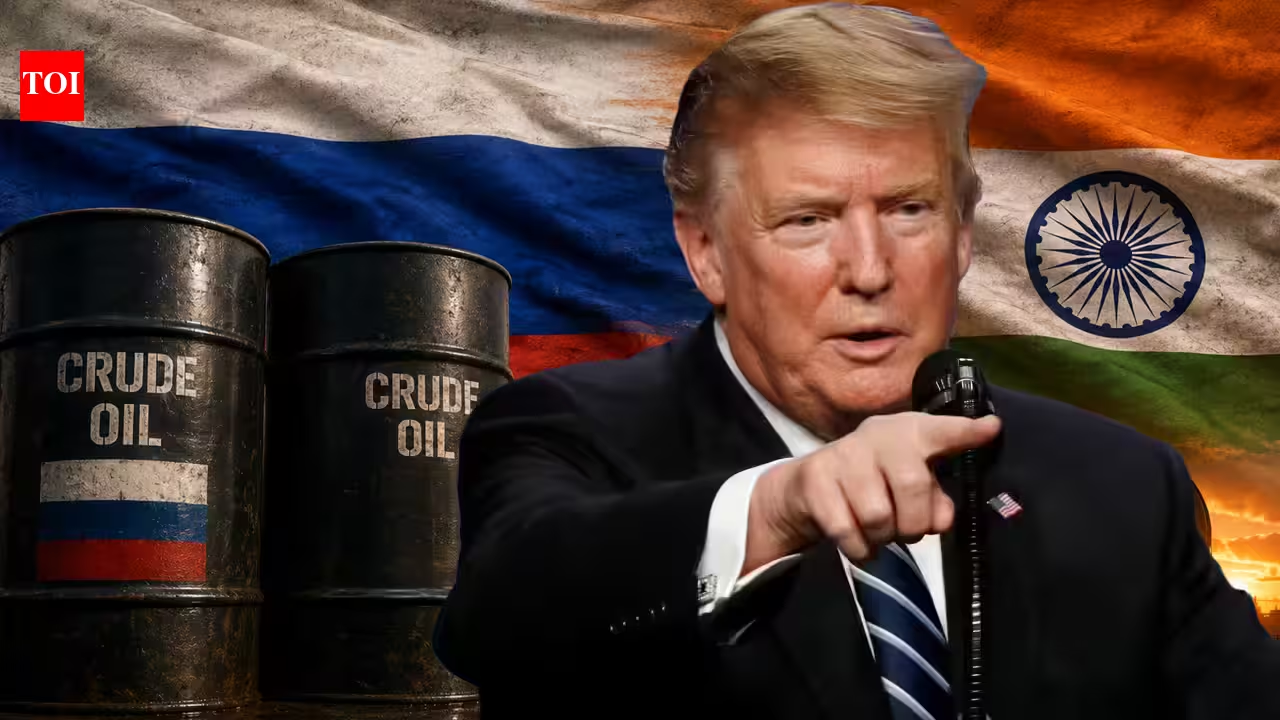
The Lindsey O. Graham Sanctioning Russia Act of 2026, passed by the Senate, 86 in favour and 11 against, would allow US President Donald Trump to impose tariffs of up to 100 percent on buyers of Russian oil or gas including India and China.However, the Bill is yet to be cleared by the US House of Representatives, which is scheduled to take it up on 31 August, and would need Trump’s signature to finally become law.For India, the stakes remain high because Russian crude has over the years become a major part of its oil basket. Kpler data show Russia’s share of India’s crude imports has been gradually rising and reached around 55 percent in July 2026.“The proposed US sanctions legislation significantly increases the geopolitical and commercial uncertainty surrounding Russian crude trade, but it does not automatically imply that India will abruptly stop purchasing Russian oil,” Praveen Rai, director, energy markets at Grant Thornton Bharat, told ThePrint.Rai said the legislation still leaves scope for waivers and executive discretion, meaning the practical impact on India would depend on how aggressively Washington implements the provisions.