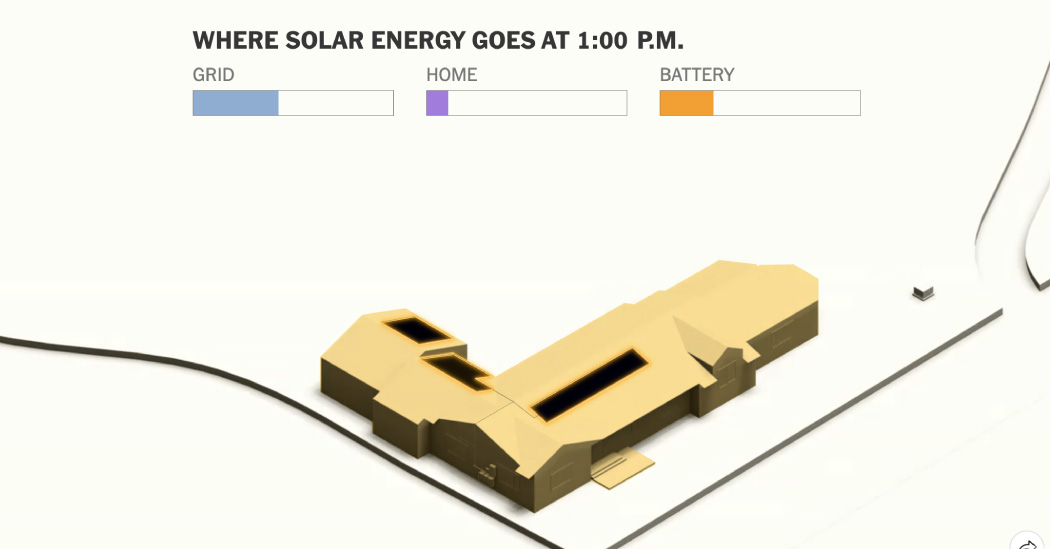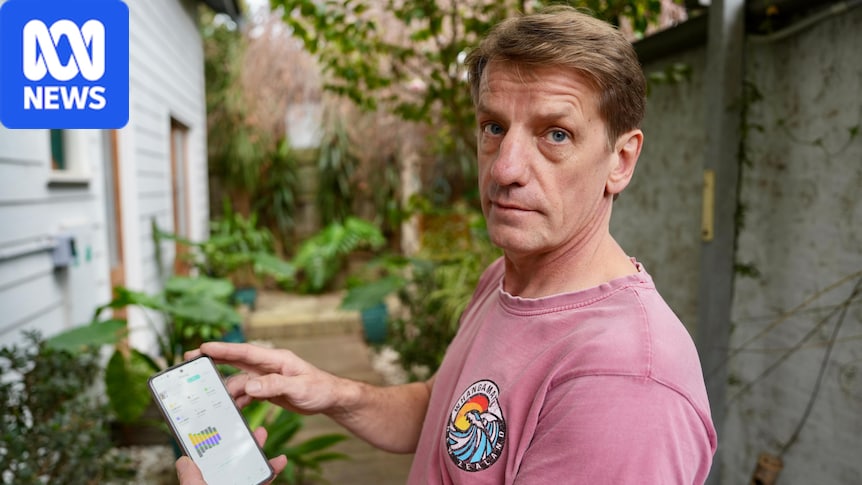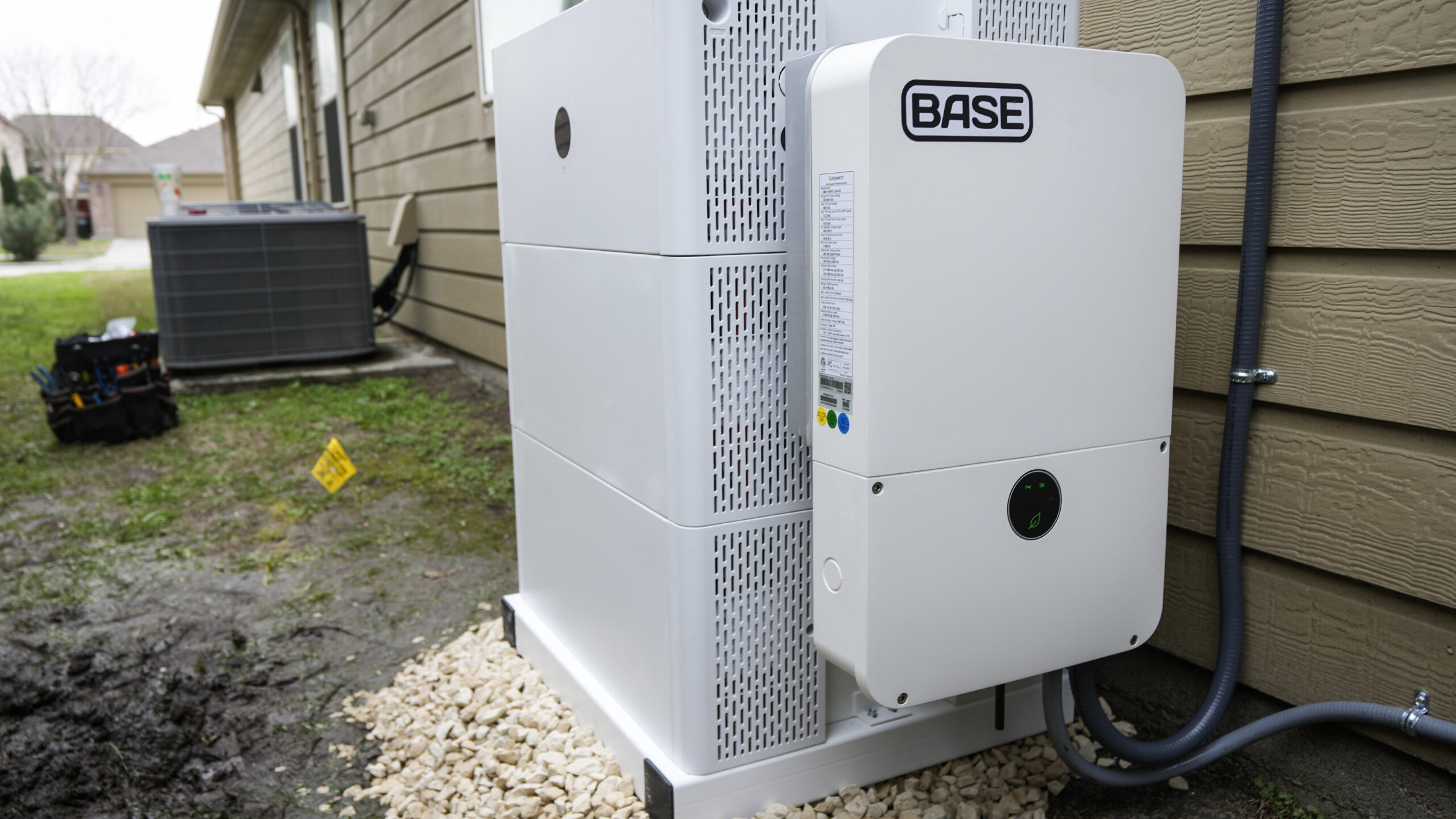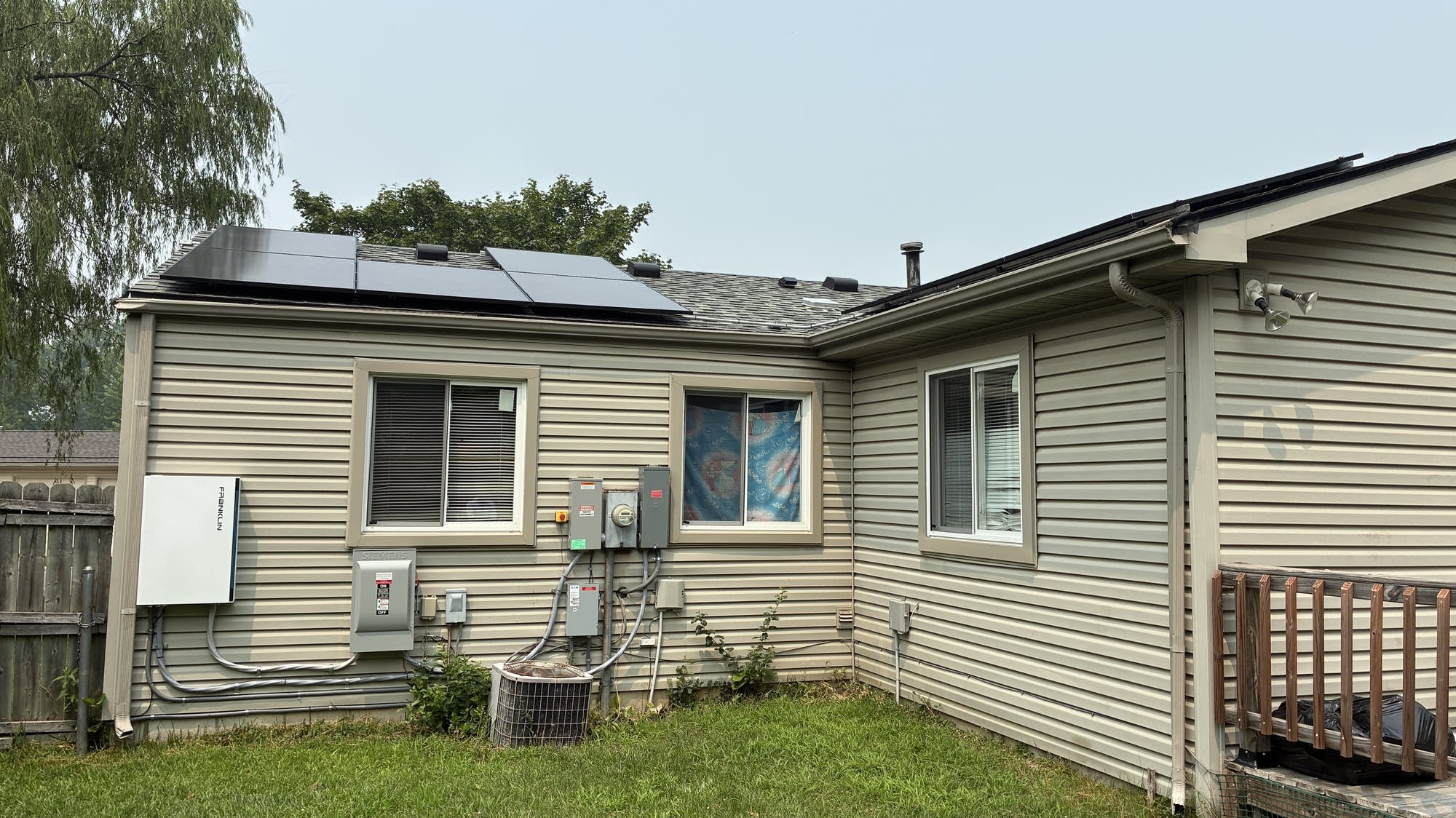
Bruce Schauer is thrilled to show off all 10 of his new solar panels. When the city offered to put them on his house for free, he signed up right away.“I've been wanting it for a long time. I'm the first one in the neighborhood to get it put up,” he says.He lives with his daughter, his granddaughter, and his great-granddaughter, and they’re no strangers to power outages. Michiganders have some of the least reliable electricity in the country.Electric utilities have been facing all kinds of problems recently. Data centers are gobbling up every megawatt-hour they can, rates are up, and extreme weather is causing reliability issues.“About a year ago, we had a blackout here, and I lost a freezer full of meat and a refrigerator full of meat,” Schauer said.The solution to a lot of those problems is what’s known as local power. Solar panels and batteries, for instance, can reduce demand on the grid, produce electricity cheaply, and they can supply power when the grid can’t.The downside is that installing those solutions can cost consumers tens of thousands of dollars. That’s why the City of Ann Arbor has started installing solar panels and batteries for free. Each battery system supplies enough power for a home to stay operating for more than a day, provided the homeowner doesn't keep running the air conditioning.Caleigh Wells/MarketplaceThen, last month, during one of those really bad summer heat waves, Schauer’s neighborhood lost power for two days.This isn’t just about spoiled meat. Schauer’s daughter needs daily shots for her arthritis, and they need to be refrigerated. Before the panels were installed, a power outage that long could have been devastating. But this time, the battery kicked on, and Schauer’s family had power.“Our medicine was saved. Our food was saved. It was a godsend. It was amazing,” said his granddaughter, April Adkins.The godsend has a name: the Ann Arbor Sustainable Energy Utility. The city’s residents voted to create it a couple years back. “Having the power actually produced in our community is really valuable for resiliency,” said Shoshannah Lenski, the utility’s executive director.This utility doesn’t replace the giant electric company that serves the city. It’s supplemental, and right now it’s funded by government grants and the city budget. In addition to solar panels and a battery, residents who need insulation or a new roof get that too — also for free.The catch: residents don’t own the panels or the batteries; they just pay a monthly fee for the privilege of having them.“It's like any other utility. We own the generating assets, and residents buy the power or the service and the benefits of it,” Lenski said.The City of Ann Arbor estimates solar systems like this one will cost each household roughly $600 per year, but will save $700-$1000 per year on utility bills.Caleigh Wells/MarketplaceAnd if there’s, say, a massive heatwave, the utility can pull energy from your battery to lighten the load on the grid and prevent an outage.Lenski said this costs households about $600 per year. But it cuts electric bills by $700-$1,000 per year. “Ultimately, the long-term goal of the sustainable energy utility is to be self-funding through the collection of rates,” she said.Right now, this is just a pilot project in one neighborhood of Ann Arbor called Bryant. Installations started in June, and already about a fifth of residents have signed up. Utility officials hope that once this pilot project is done, they’ll be able to expand the program to the whole city.So far, residents love it for a bunch of reasons. “Charging a car alone off of just energy generated from the sun would be great,” said resident Myles Burchill. “Just having the system and being able to get green energy is important for us.”“I’m able to provide affordable housing,” said Monica Carter, a landlord with 10 homes in Bryant. “There's no upfront costs out of my pocket. There's no upfront costs out of my tenant, so it's a pure win for my tenants.”The majority of residents in Bryant are low-income. Many of them count as “energy-burdened,” meaning they spend up to a third of their income on utility bills. And Bruce Schauer loves the reliability. The fridge keeps running, and he doesn’t have to fret about his family.“I'm 80 years old. I might go in the next couple of years, you don't know,” he said. “My daughter and granddaughter don't have to worry about this kind of stuff. It's taken care of for them when I go, so gets a lot of worry off my mind.”
Free solar panels and home batteries? Ann Arbor's trying it out
Electricity is getting more expensive and less reliable. Local power, like solar panels and batteries, helps solve those problems, but they’re expensive. That’s why Ann Arbor, Michigan, is installing them on homes for free.
756 words~3 min read