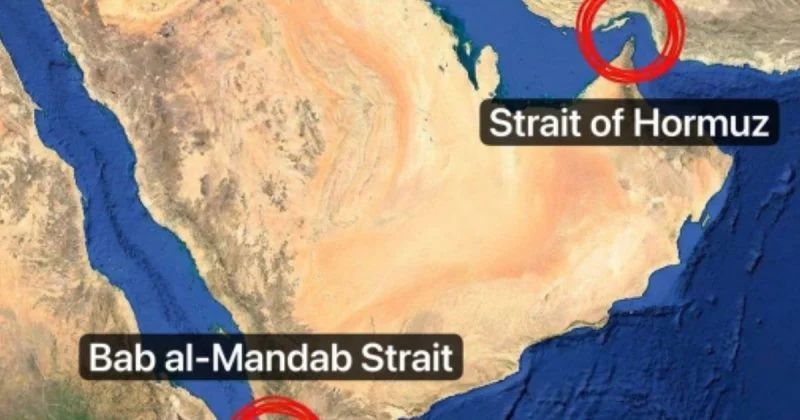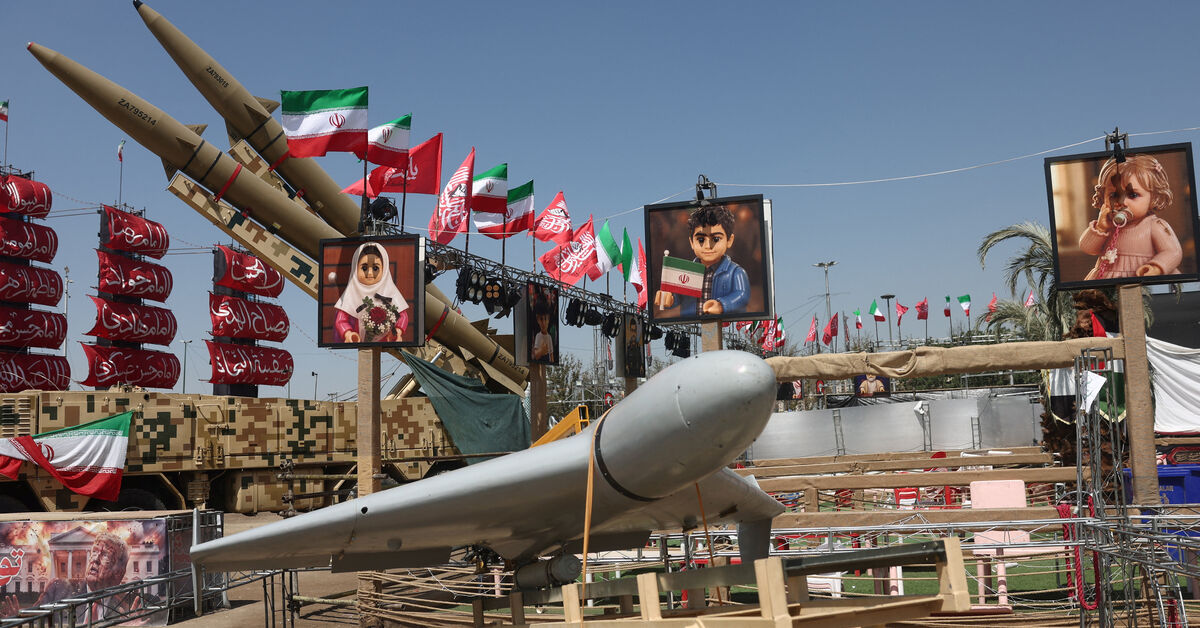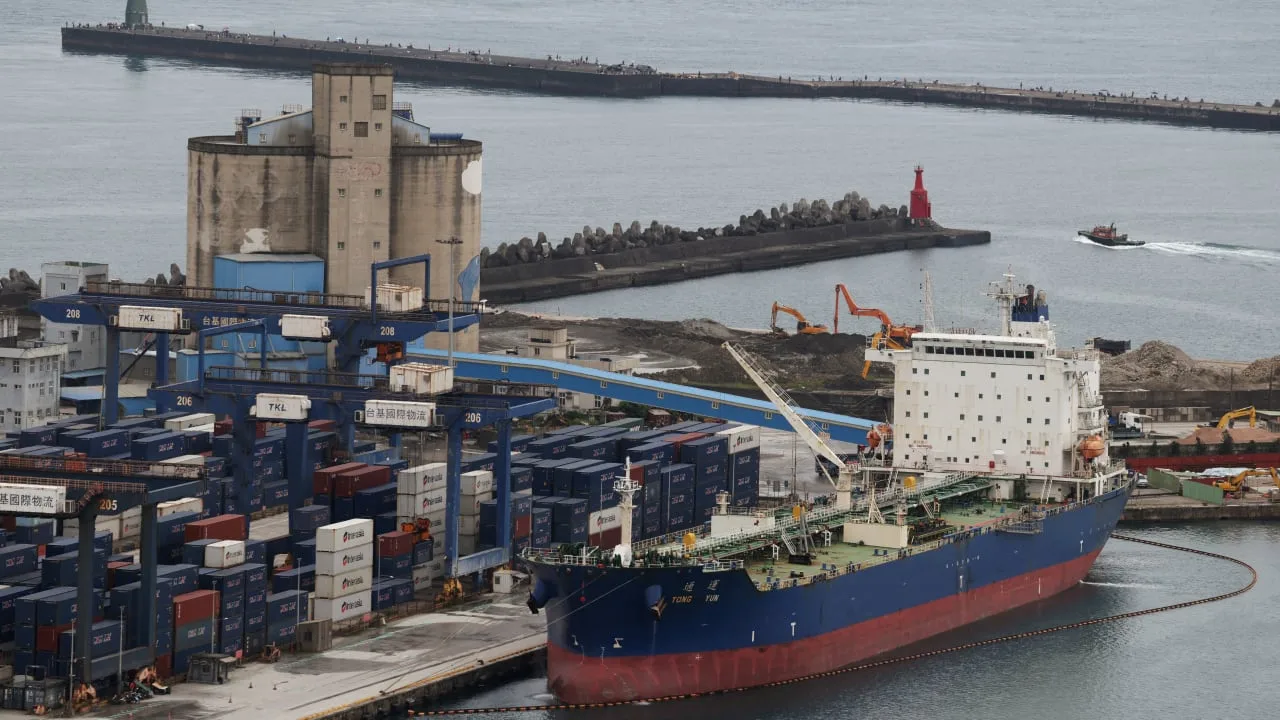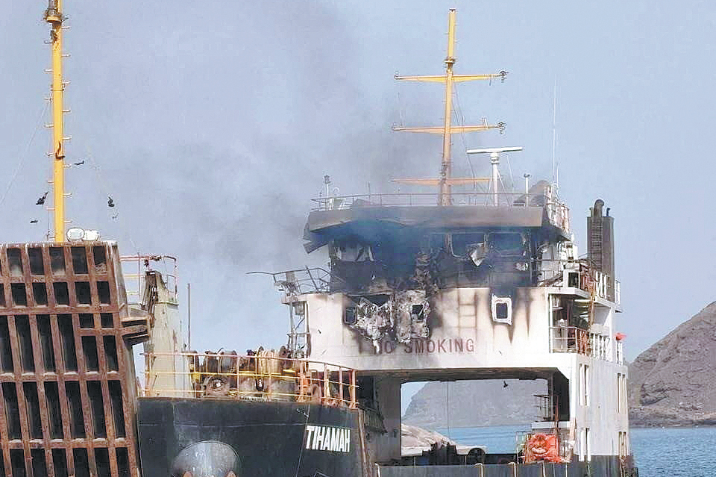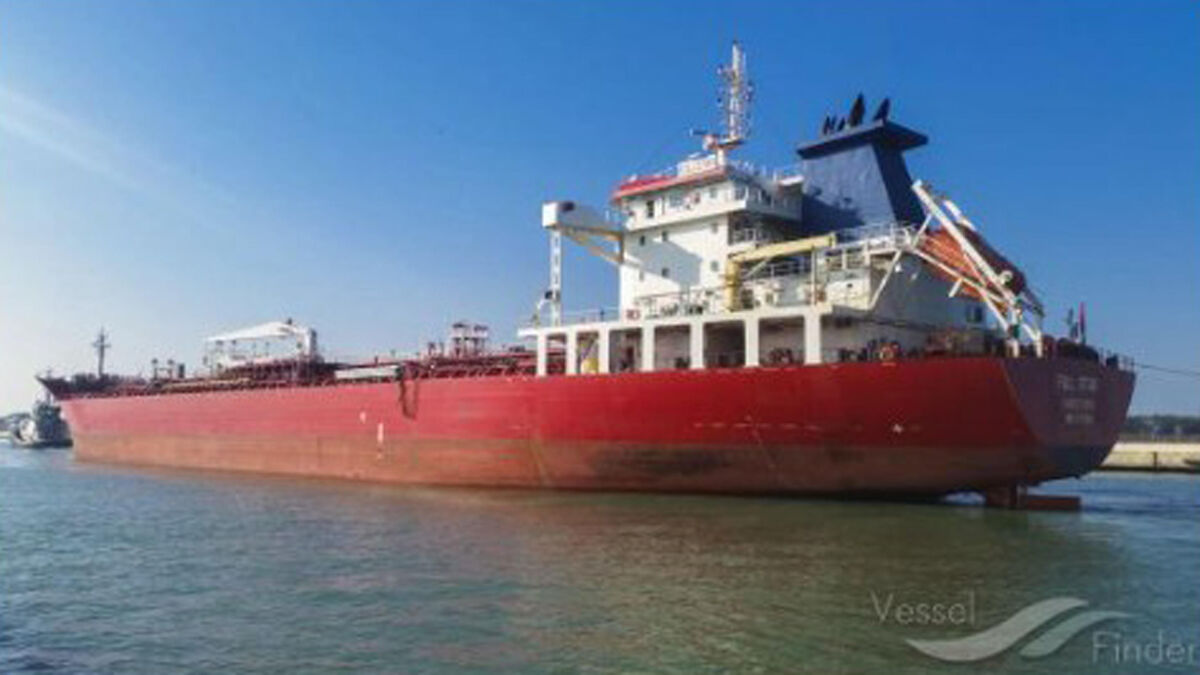
For the first time since the start of the war in the Middle East, a Houthi attack on commercial shipping has resulted in casualties in the Bab el Mandeb Strait, the route that was taking on a portion of the oil no longer leaving the Persian Gulf. The attack took place on Tuesday against an Egyptian vessel, despite the fact that the threats and the embargo imposed in early July by the pro-Iranian militias had only targeted Saudi ships. To circumvent the blockade of Hormuz, Saudi Arabia has, in fact, increased the flow of crude oil through the East-West pipeline to the port of Yanbu on the Red Sea, with transits through Bab el Mandeb rising to 8.1 million barrels a day compared with the 5.4 million that passed through before the war. However, the attack on the Egyptian tanker is a sign that the risk is now more tangible and has been extended to all parties considered hostile. As a result, the price of Brent crude has risen again to almost $90. Yet, at almost the same time on Tuesday, US Energy Secretary Chris Wright was taking credit on X for the results of the US military’s efforts in the Gulf regarding oil flows, writing that the weekly average flowing out of Hormuz had risen to almost 9 million barrels a day, in addition to the approximately 7 million passing through the bypasses – making a total of around 15 million barrels a day. “On Sunday alone, over 20 million barrels had left the Gulf region, exceeding the pre-conflict average,” the White House official specified. His statements, however, have been challenged by several experts. Andrea Paltrinieri, professor of the Economics of Financial Intermediaries at the Catholic University of Milan, explained to Il Foglio the inconsistencies between the secretary’s announcement and the data: “What Wright is saying is wrong. He believes there is an outflow from Hormuz of 9 million barrels, but both satellite images and Kpler’s estimates show an outflow of 3–4 million barrels a day, which is lower than the 7 million of ten days ago,” says the economist. “The problem, then, is the return flows – which producers need to clear storage facilities and receive new tankers before increasing output, ed. – which are almost non-existent. Consequently, production, particularly in Kuwait and Iraq, is struggling to get back on track. Iran, meanwhile, is subject to the US blockade. Needless to say, the Strait of Hormuz is not currently open, and the Revolutionary Guards’ protocol must therefore be followed,” says the expert. Javier Blas, an oil specialist at Bloomberg, has also pointed out that the data tells a different story from Wright’s: “The United States claims that nearly 9 million barrels of oil per day pass through the Strait of Hormuz, not counting bypass pipelines. This is well above what most tanker trackers are currently reporting, namely 4–6 million barrels per day.”And the alternative route, even before Tuesday’s Houthi attack, was far from stable: “There is a passage through Bab el Mandeb, but it is not continuous,” says Paltrinieri. “There are days when 5 million barrels pass through and others when only 3 million do, namely when VLCCs (very large crude carriers with a capacity of around two million barrels, ed.) are attacked. But it is not just a question of flow; it is also a question of cargo.” And the deterioration in the Red Sea has been faster than official forecasts: the Short-term Energy Outlook published on Tuesday by the US Energy Information Administration (EIA), which was finalised on 6 August, did not anticipate that the Houthis’ threats would pose risks of further production disruptions, given that, up until then, the intimidation of Saudi ships had not affected supply. “Saudi VLCCs therefore pass through the Suez Canal,” continues Paltrinieri, “but from there they can only transit at half load rather than full load – carrying one million barrels rather than two – and they have to take a longer route” if heading for Asia.Global demand thus continues to be underpinned by stocks. However, since the start of the war, according to the International Energy Agency (IEA), observed global reserves have fallen by 410 million barrels. US strategic reserves alone, established in 1975, have fallen to 1983 levels. The buffer that has so far prevented an even greater energy crisis is being depleted, and signs of strain are beginning to show. According to Paltrinieri, “there has nevertheless been a reprieve in recent days” thanks to the oil flows that emerged during the 30-day period covered by the memorandum of understanding – the June truce between Washington and Tehran. But at several hubs, “including Cushing in Oklahoma and Fujairah in the Emirates, we have reached ‘tank bottom’”, i.e. the bottom of the tanks. In fact, the ‘1-2’ spread between Brent and WTI has quickly returned to backwardation”: this means that oil for the nearest delivery date is once again costing much more than that for a later delivery date, a sign that the market fears a lasting shortage.However, the US EIA’s short-term forecast sees Brent at $78 in the fourth quarter of 2026 and at $69 in 2027. The IEA, on the other hand, estimates that, should the situation ease next year, supply would exceed demand by 4.6 million barrels a day – enough to rebuild stocks by mid-2027. In any case, both forecasts are based on the same condition: that safe passage through both straits is restored.
The attack on Bab el-Mandeb and the crude oil shortage. Paltrinieri speaks out
First casualties of the war in merchant shipping: the Houthis strike where oil was being transported to bypass the Strait of Hormuz. Meanwhile, US Secretary Wright boasts of record volumes but is contradicted by experts
909 words~4 min read