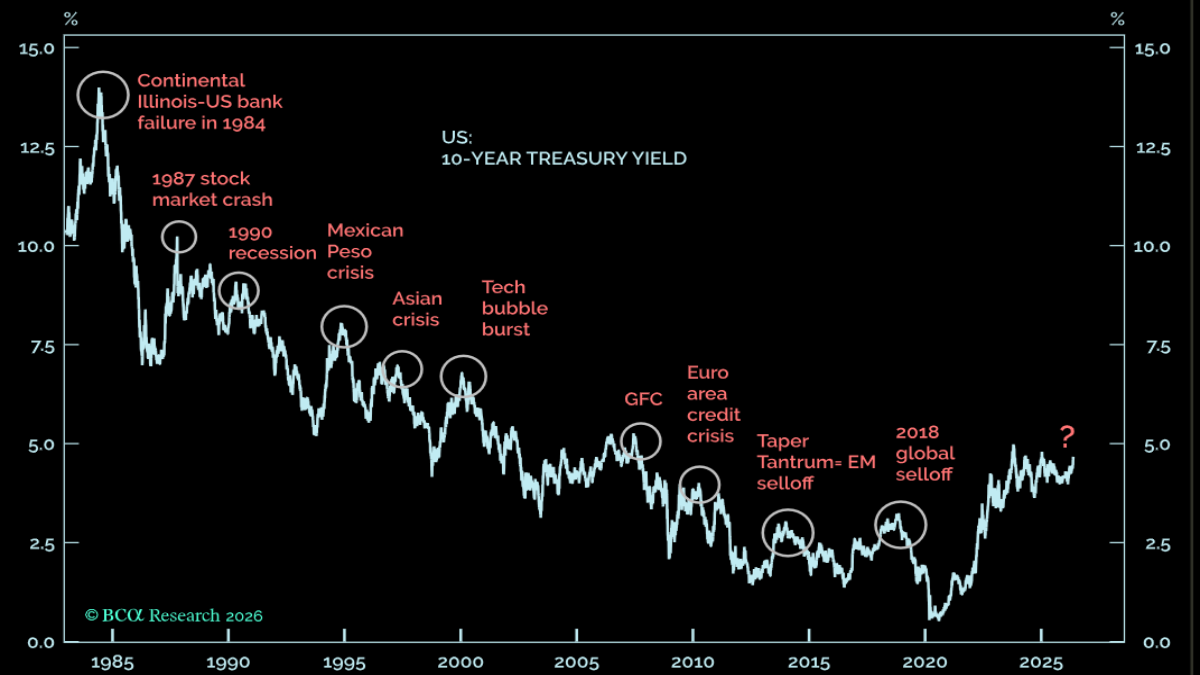
Since the beginning of this year, US Treasury bond yields have risen by more than 40 basis points for thirty-year maturities. Hovering around the 5.2 percent mark, they have reached the highest levels since 2007.
This trend comes as leverage across the financial market continues to build, increasing the potential for higher rates to expose vulnerabilities and amplify losses. History offers several examples of this dynamic. In fact, losses on bond portfolios of leveraged institutions have, at times, spilled over into broader market crises.
There is no sign of such turmoil yet. Fixed-income markets have remained orderly, with the bellwether secured overnight financing rate in repo markets stable around 3.6 percent. But the combination of rising yields, elevated leverage, and an ongoing correction in AI stocks warrants close attention. Authorities and market participants should be prepared to take precautionary measures before potential financial stability risks escalate.
Rising yields, rising risks
Several factors have driven the rise in bond yields, including higher inflation expectations amid elevated energy prices following the Iran war and uncertainty surrounding a new Federal Reserve Chair. But the more fundamental concern is the US fiscal position: persistently high budget deficits have reached 6 percent of GDP, while government debt now exceeds the size of the US economy.