The gap between "it works" and "it works reliably" is wider than most developers think
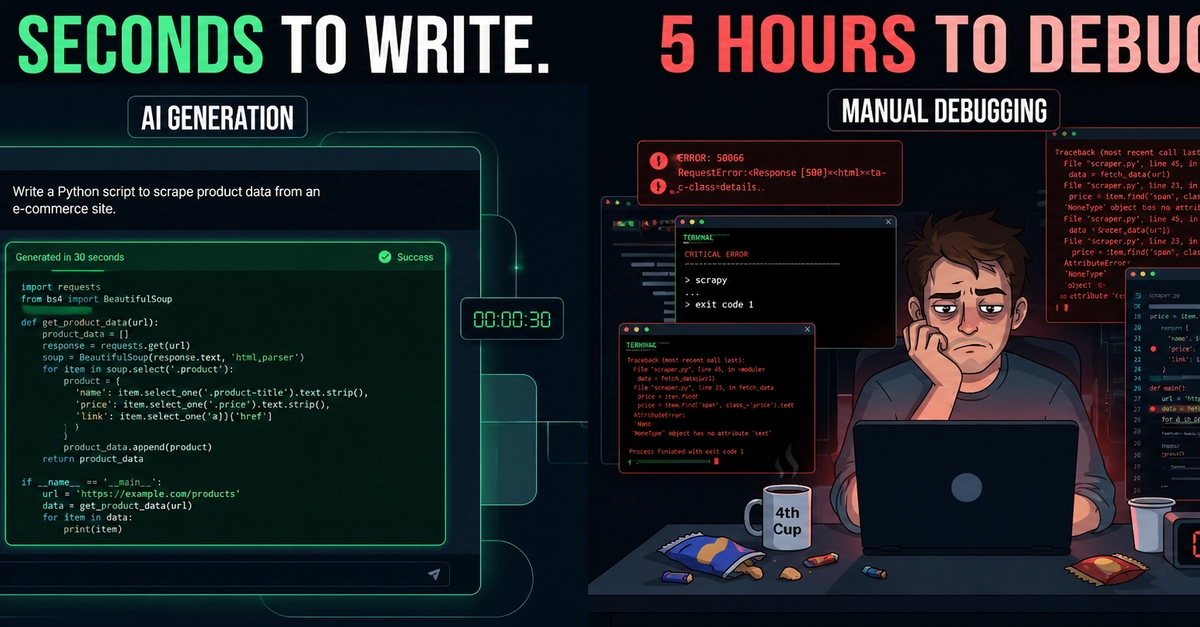
I spent an entire weekend last year debugging a script that an AI model had written for me in under ten seconds. The irony wasn't lost on me. What should have saved me hours ended up costing me more time than if I'd written the thing from scratch, and the worst part was I couldn't figure out why it kept failing in ways that felt almost random. One run it worked perfectly. The next run, same input, same environment, it threw an error I'd never seen before.
That weekend taught me something about AI-generated code that no tutorial had prepared me for: the code that looks correct and the code that actually is correct are not the same thing, and the distance between them is where most of your debugging hours go.
The illusion of completeness
AI models are excellent pattern matchers. When you ask for a function that sorts a list or a script that scrapes a webpage, the model draws on millions of examples of similar code and produces something that resembles a correct solution. The syntax is usually clean. The logic often looks sound. It compiles, it runs, it might even pass your first few tests.