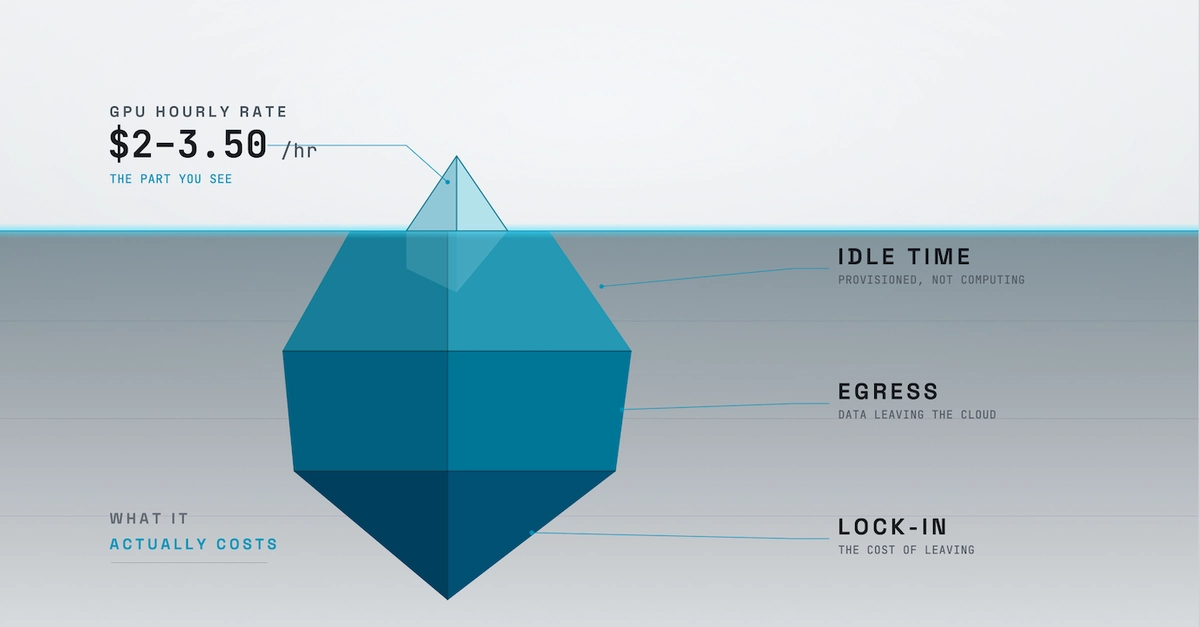
If you have run a diffusion model locally, the marginal cost of one image feels like zero. The model is already in memory, the GPU is already warm, and you just call pipe(prompt) again. That intuition is what makes teams underestimate the real number when they move the same feature into a product. The per-image cost in production is dominated by things the notebook hides: the seconds you pay for a GPU that is loading a model, the VRAM you rent whether or not a request is in flight, and the renders you throw away.
We build CasaNova Labs, an AI studio for real estate imagery, so this arithmetic is our unit economics. Here is how it actually breaks down, with numbers you can plug your own rates into.
The model is bigger than people remember
The workhorse for photoreal room generation is an SDXL-class latent diffusion model. Per the SDXL technical report, its UNet has around 2.6 billion parameters, roughly three times the UNet of Stable Diffusion 1.5, and it renders natively at 1024x1024. In half precision that weight sits at about 10 GB of VRAM before you add anything, and a real staging pipeline adds plenty: a ControlNet to keep the room geometry, an inpainting pass to swap furniture without touching the walls, sometimes an upscaler on top.