Oil: Deepsea ambitions
| Photo Credit:
iStockphoto
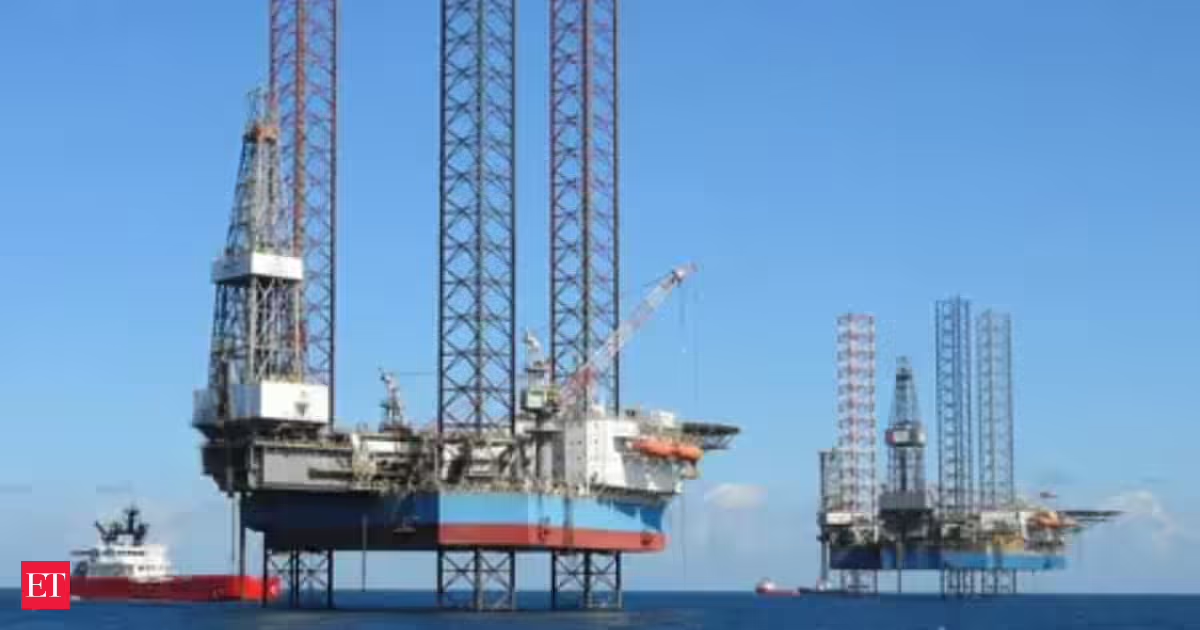
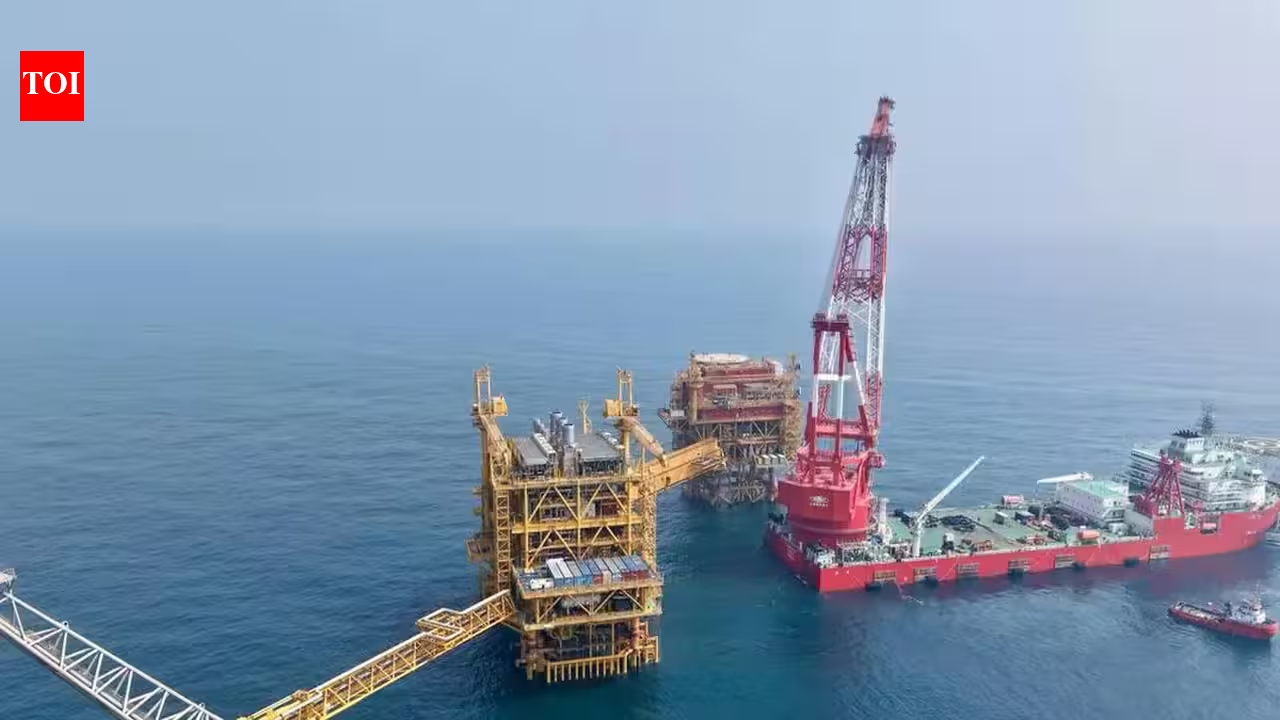
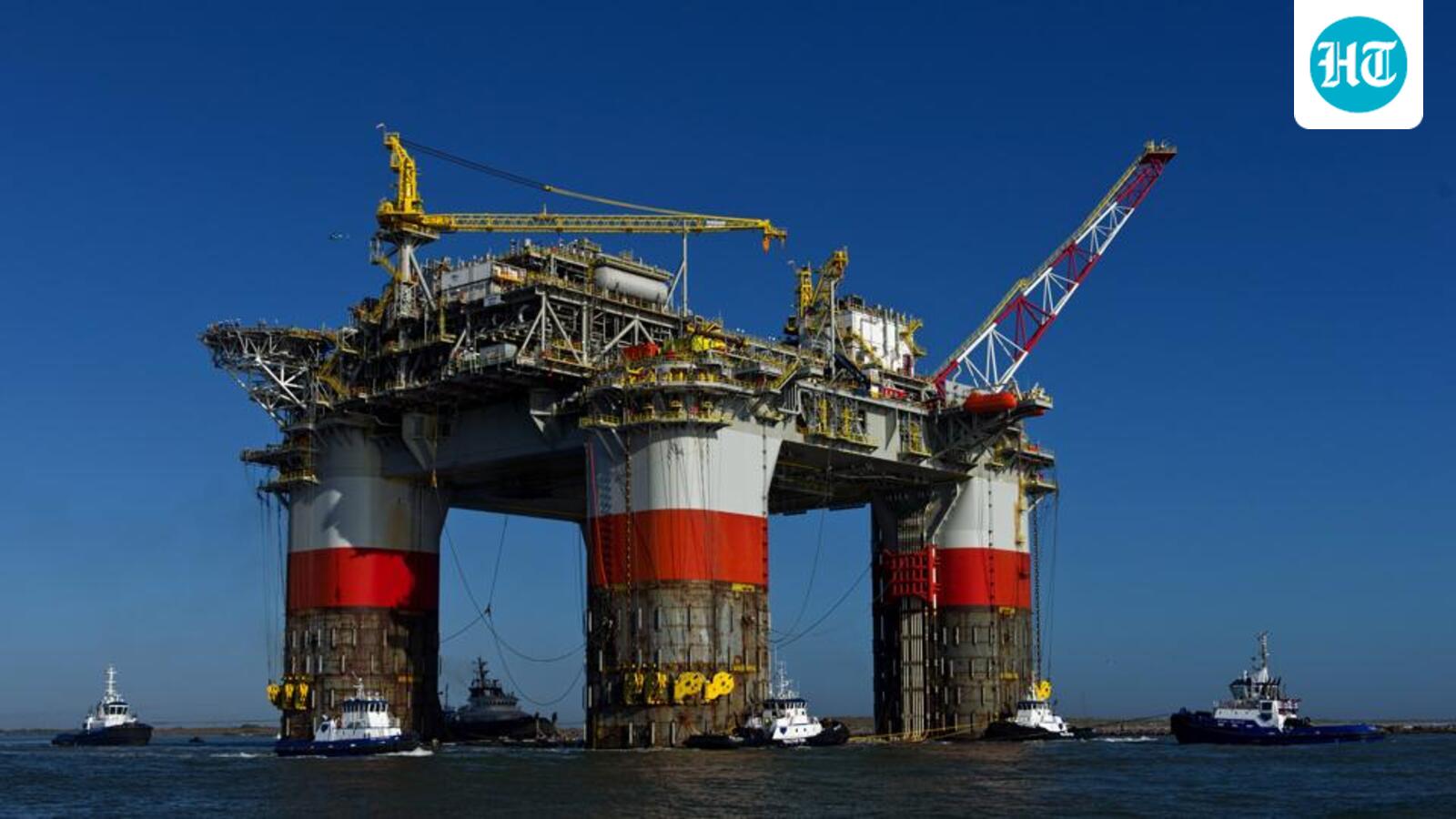
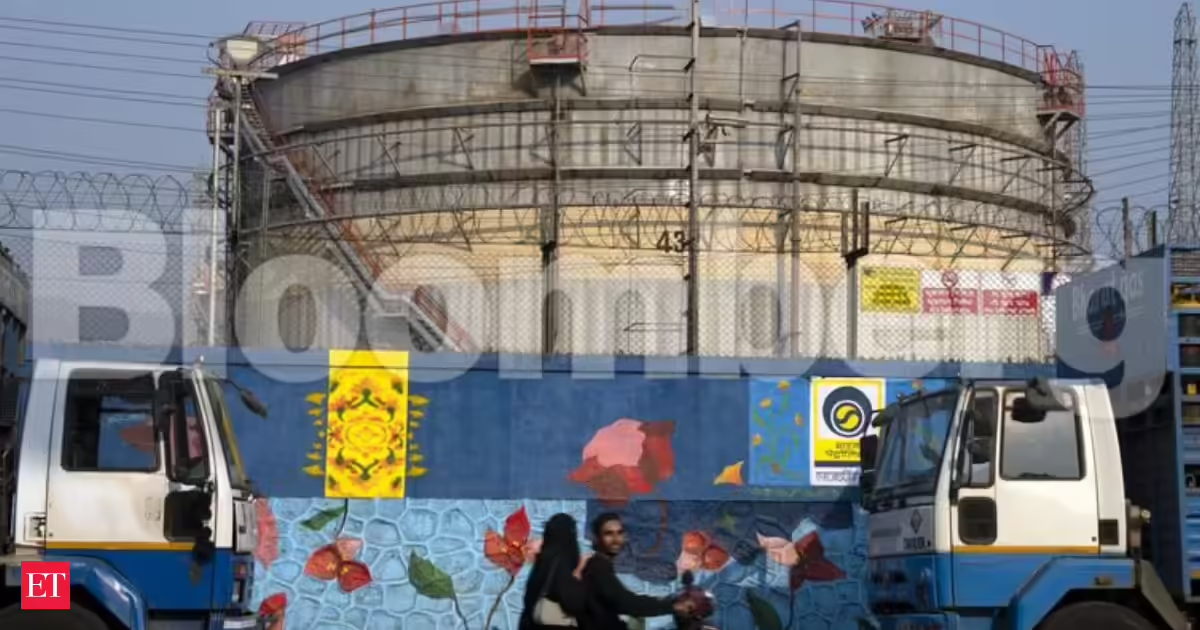
Rattled by the war-induced oil shock, India (which imports nearly 90 per cent of its crude needs) has of late unveiled a slew of policy steps to reduce its oil import bill; this could touch $170 billion this fiscal, assuming a price of $85 a barrel this year. On the supply side, the Centre has unveiled an ambitious plan for State support in exploration, namely, Samudra Manthan.Under its ₹84,000 crore outlay for Samudra Manthan over five years, the Centre will support half the cost of drilling deepwater exploration wells, given that hydrocarbon exploration has a long-gestation period — with the period from exploration to commercial production taking five to 10 years. The scheme primarily comprises acquisition and processing of offshore seismic data (₹28,534 crore); drilling of 60 deepwater exploration wells (₹43,200 crore). This comes in the wake of considerable activity in the sector. According to Petroleum Minister Hardeep Puri, 172 exploration blocks covering nearly 3.8 lakh km have been awarded under the Open Acreage Licensing Policy over a decade, with committed investments exceeding $4.3 billion. He said that in FY26, about 674 wells were drilled, few new discoveries made and seven discoveries monetised.Meanwhile, some reports by the House committee on Petroleum and Natural Gas have dived into this issue. They have raised the need to step up investments in new fields, in the wake of declining returns from ageing ones, which account for nearly three quarters of domestic output. In doing so, they have pointed to rising capex and declining domestic output — a drop from 34.2 million tonnes in FY19 to 28.7 million tonnes in FY25. In the context of the latest investment push, the committee looking into this issue rightly calls for “clearly defined performance benchmarks, periodic evaluation and accountability mechanisms”. The need to spend this huge order of public money sensibly cannot be overstated, given India’s experiences in this regard — with respect to the Krishna-Godavari basin, where either the reserves or the costs of extracting them were not correctly estimated beforehand. A 2012-13 CAG report is instructive here. It has observed that ONGC’s processes at that time were far from efficient. “Cost overrruns and shortfalls in survey and drilling targets were noted,” it observes. There were delays in hiring and mobilisation of rigs. While the contractual arrangements have changed, this experience remains relevant.Meanwhile, another House panel report suggests increasing the level of strategic storage from about 75 days of supplies (including 65 days’ stock with oil marketing companies) to 90 days. Strategic petroleum reserves, at 5.5 million tonnes are enough for just about 10 days. The Centre has, according to the report, not laid aside sufficient funds for new storage centres. Earmarking resources for storage is likely to be more effective than spending large sums on prospecting and exploration alone.Published on August 13, 2026