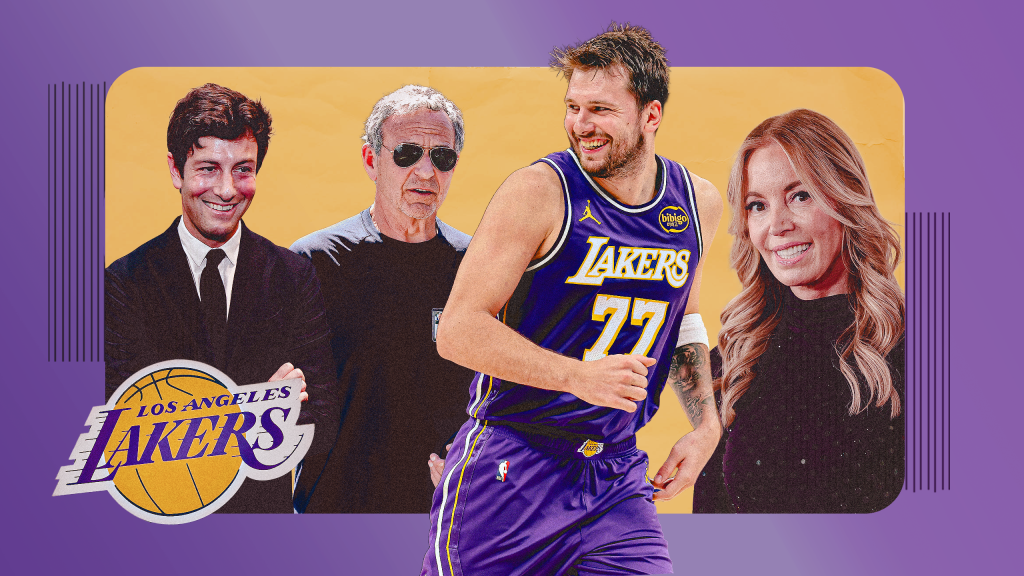
Illustration: Sarah Grillo/AxiosJosh Kushner isn't letting his FIFA folly keep him on the sports sidelines.Yesterday he stunned the NBA by announcing an agreement to buy the Los Angeles Lakers for $12.5 billion from Mark Walter, who only gained club control last October.There's a lot more to this situation than just rich boys and their toys, so let's dig in:Catch up quick: Walter first bought a minority stake in the Lakers five years ago from the controlling Buss family, before last summer agreeing to up his stake to 85% at a $10 billion valuation — a record price for a professional sports franchise.Kushner, meanwhile, had his eyes on an NBA expansion franchise in Las Vegas. He was working on the deal with former Disney CEO Bob Iger, who had recently rejoined Kushner's Thrive as a senior advisor.A lot of Iger's work at Thrive was with a new unit called Thrive Eternal, which focuses on assets with "qualities that cannot be replicated by technology." Its first deal was for a minority stake in the San Francisco Giants.Fast forward: Kushner and Iger within the past few weeks appear to have pivoted from Las Vegas to Los Angeles.The obvious question, though, is why? New pro sports owners never do quick flips — these are trophy assets — and Walter hadn't hired bankers to solicit interest.Neither side wants to talk about this part, but the Occam's razor explanation may be that Walter is under federal investigation into his sprawling sports, business, and insurance empire.This doesn't necessarily mean Walter needed liquidity, or less distraction. But it would explain why Kushner and Iger made the call.Zoom in: "But wait," says rhetorical reader. "If Walter was doing a fire sale, why offer a $2.5 billion premium to the price he just paid? Couldn't Kushner and Iger have gotten a better bargain?"In theory, yes. But this is the sort of premium that preempts an auction and Kushner has a history of paying up for assets he really wants. This is the modern VC pricing philosophy, where the ends justify the means.Also worth remembering that the Lakers don't own their own arena. Much like the beloved Boston Celtics, which remain in the midst of a two-part sale for up to $7.3 billion. Two pro sports investors I spoke with yesterday just shook their heads at paying these prices without the real estate and related revenue (parking, concessions, etc).Behind the scenes: Thrive Eternal is limited to owning up to 20% of the Lakers, per NBA rules.Word is that Kushner and Iger both will invest personally, with Kushner as control owner. Other investors are expected to join. Kushner is required to have at least a 15% personal stake and have a higher ownership percentage than does Thrive Eternal.Jeanie Buss is still governor of the Lakers, despite Walter's ownership, and it's unclear if and when that may change. Iger is likely to be the courtside face of ownership, given that Kushner lives in New York.Look ahead: Walter still owns a lot of sports assets, headlined by the Los Angeles Dodgers.A source familiar with the situation insists that the Dodgers aren't on the block. Then again, neither were the Lakers.
Digging into the Lakers shock sale
There is more to this than just the record price.
526 words~2 min read