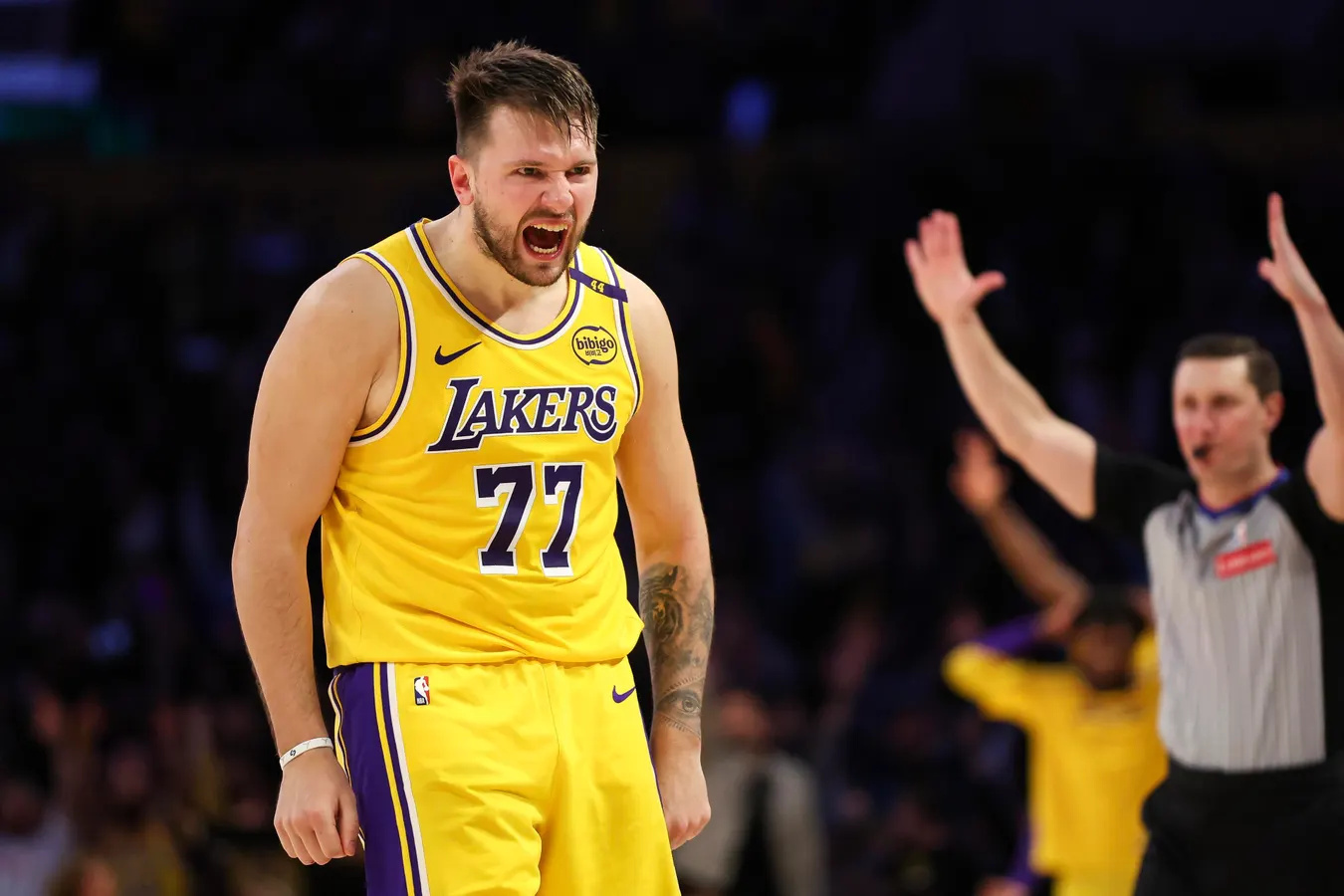
LA LakersGetty ImagesThe Los Angeles Lakers have been sold for the second time in just over a year. A group led by Josh Kushner (younger brother of Jared Kushner) and Bob Iger (former CEO of the Walt Disney Company) purchased the franchise for a reported $12.5 billion. This sales price marks the largest amount a team has been purchased in the history of professional sports. The previous owner, Mark Walter and his group, held a 71% stake in the Lakers, the majority of which was acquired in October 2025. The appreciation in value on this transaction translates to approximately $3 billion in profits. While this is a tremendous windfall for owning a franchise for just a small time period, a chunk of this money will soon fall into the hands of the U.S. government because a gain realized on the sale of a business is subject to tax, and the tax liability might vary by $100s of millions depending on the timing of the sale. Lakers Ownership Rarely Changes Hands, Until RecentlyThe Los Angeles Lakers have only seen a small number of team owners in their history – until this year.In a deal also involving the Los Angeles Kings and the Los Angeles Forum, Dr. Jerry Buss famously purchased the Lakers from their previous owner, Jack Kent Cooke, in 1979 for $67.5 million. Prior to his death in 2013, Buss ran the Lakers during a stretch where the team won 10 NBA championships. After Buss’s passing, his children took ownership and control of the team.The Buss family’s 46-year run as owners ended in June 2025 when they agreed to sell majority control to Mark Walter and his group, a deal that finalized in October 2025. Walter and his group own 71% of the team, according to the Los Angeles Business Journal, and the majority of their stake in the team was purchased at a $10 billion valuation. However, less than a year later, their group is headed for the exits with Kushner and Iger agreeing to buy the team at a valuation of $12.5 billion, according to The Wall Street Journal. This sale marks a stunning change for a team that the Buss family took nearly half a century to build.MORE FOR YOUThe Tax Reality To The Lakers Record SaleThe Lakers’ 2026 sale raises many questions, and taxes happen to be one of them.Walter’s 71% stake in the Lakers took place over two different purchases. Their group bought a 27% stake in the Lakers in 2021 at a $5.5 billion valuation (approximately $1.5 billion cost). Selling that same 27% stake at the current $12.5 billion valuation brings in $3.375 billion, a taxable gain of approximately $1.89 billion. As Walter and his group held this stake for one year and one day or longer, it will receive a preferable long-term capital gain treatment, which will be subject to a 20% federal tax, a 3.8% federal net investment income tax, and a 13.3% California state income tax. The combined blended rate on this tranche of ownership amounts to a blended tax rate of 37.1%. On a gain of $1.89 billion, Walter and their group will owe approximately $701 million. Where there could be wildly fluctuating tax considerations is the second tranche of ownership, a 44% stake that was acquired in October of 2025. Using the $10 billion valuation, this ownership has a cost basis of $4.4 billion. Selling that 44% ownership at a valuation of $12.5 billion brings in $5.5 billion, a gain of $1.1 billion.If the sale finalizes after one year, it will receive a similar tax treatment as the first tranche, then it will be taxed at the blended tax rate of 37.1%, and the $1.1 billion gain will lead to approximately $408 million in taxes owed.However, if the sale finalizes before the one-year mark, then Walter and his group will no longer receive the preferential long-term capital gain treatment. Instead, the federal government will apply the 37% ordinary income tax rate on the sale, leading to a blended rate of 54.1% and approximately $595 million in taxes owed – a difference of $187 million.It can be difficult to estimate the exact amount owed by Walter and his group. The tax treatment depends on how the transaction is structured and allocated among the numerous partners in Walter’s group. Regardless of the structure, the math is clear. Walter and his group will owe a significant portion of their profits to the federal government and the state of California. On the low end, they are looking at a $1.1 billion tax bill. However, this amount has the possibility to balloon to nearly $1.3 billion if it closes too early.The Lakers Sale – Billions On Paper, But Very Different After TaxesThe headlines say that Walker and his group seemed to magically turn $10 billion into $12.5 billion in less than a year. However, the reality tells a different story. Their $3 billion gain across two different transactions may lead to as high as a $1.3 billion tax bill and only $1.7 billion in after-tax profits. Sports ownership can make for some shockingly high profits due to their consistently increasing valuations. However, the after-tax reality tells a different story. The Lakers record sale is no exception, and Uncle Sam remains undefeated as one of the biggest winners of the announced sale.
The Lakers Just Sold For $12.5B, But Uncle Sam Wants His Cut
The Lakers just sold for $12.5B — a record. But Mark Walter's capital gains tax bill could wipe out over $1 billion of that windfall.
887 words~4 min read