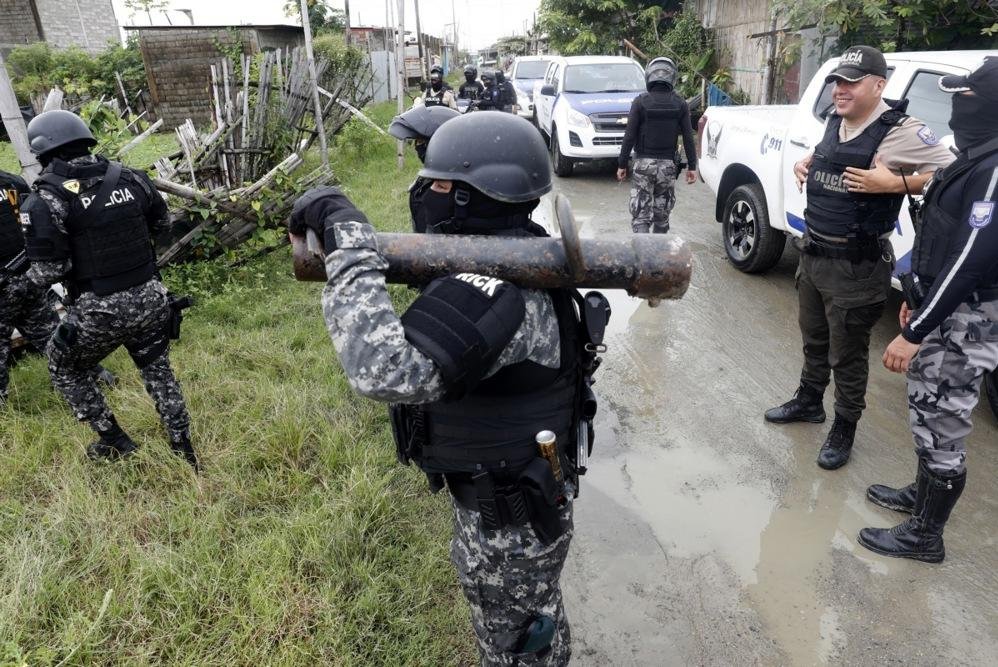
Reading Time: 5 minutesGUAYAQUIL—At a private shooting range on the edge of Ecuador’s largest city, helicopters touched down, and government officials climbed out of black SUVs. Former Noboa government Cabinet minister José de la Gasca, in tan tactical gear, took aim at a bullseye and fired. Behind the firing line, beside a bar whose sign read We don’t call 911, we use COLT, a champion sport shooter told me his bulletproof-vest company was thriving.
The same afternoon, 20 minutes away, families gathered for lunch in a backyard beneath a different sign: ¿Dónde Están? They had come from across the country to help one another search for relatives who, they said, had been disappeared by the police or military. Sara Castillo told me about her intellectually disabled son, Bruno Rodríguez, who had been digging a drainage ditch outside their home in the coastal city of Esmeraldas when a military patrol took him and his brother-in-law, Fardi Muñoz. They never appeared in any jail. When Castillo sought official records of their arrests or whereabouts, she was told they were classified. She had never stopped searching. “No one else took them,” she said. “It was the state.”
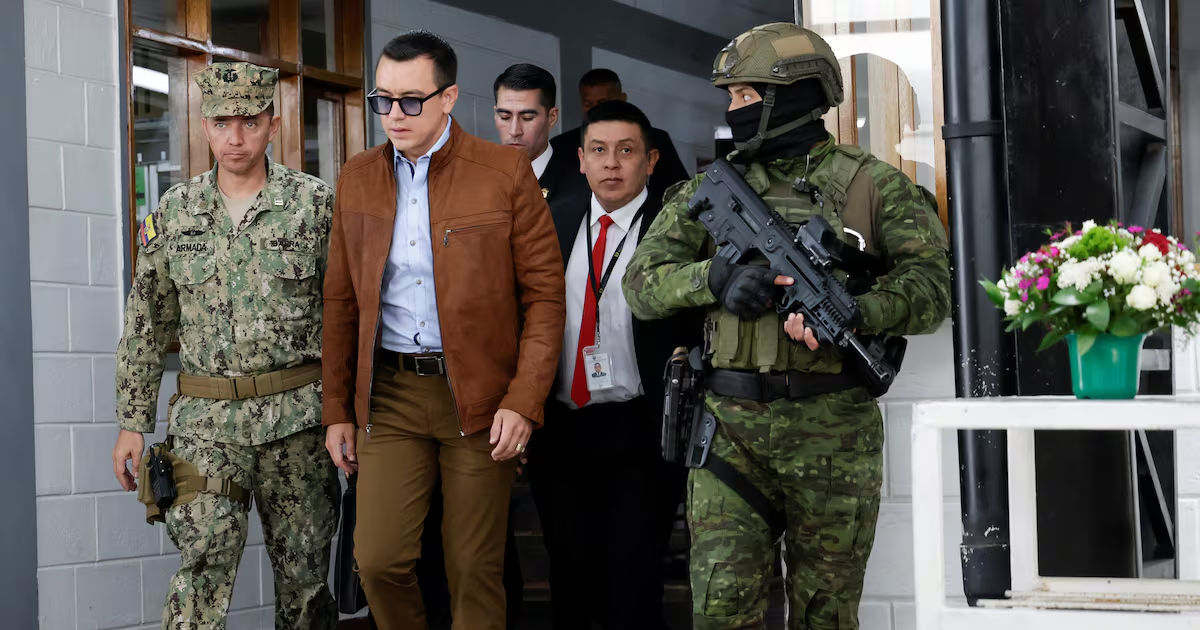
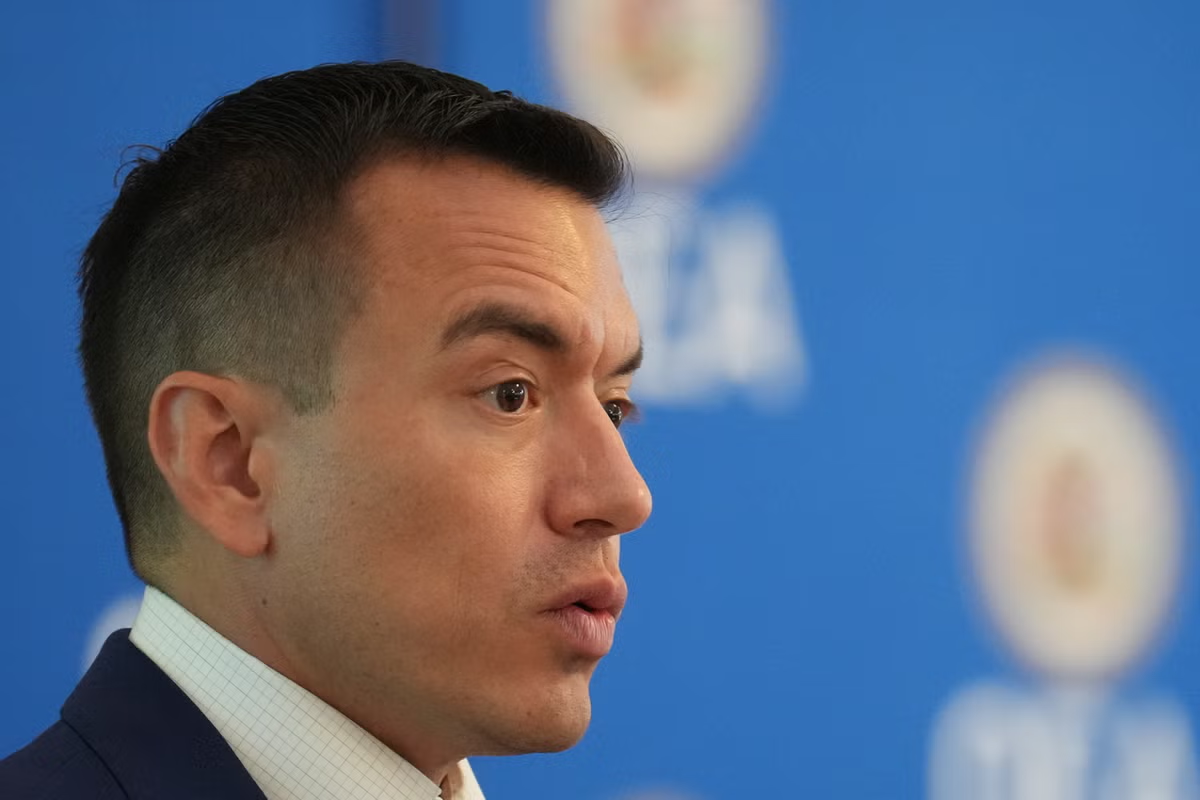
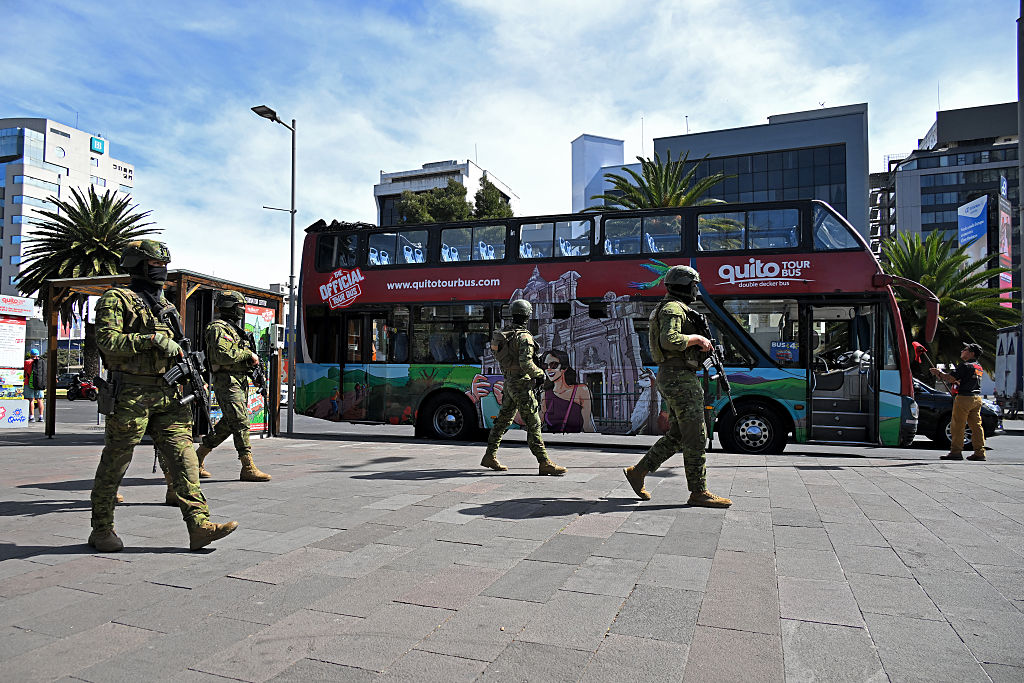
These are the faces of Ecuador under President Daniel Noboa as his security crackdown moves into its third year. A militarized state has, with U.S. assistance, decapitated some of the gangs responsible for South America’s highest homicide rate and reduced murders 11% from last year, according to official statistics. But these tentative gains sit uneasily alongside concerns about democratic erosion, human rights abuses, and unresolved impunity: the factor that, more than any other besides international drug demand, allows criminality to thrive in Ecuador.