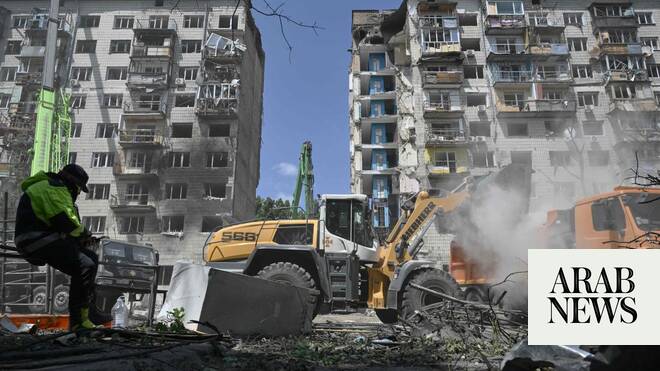
ByAMICHAI STEINAUGUST 13, 2026 15:46For nearly five years, Israeli Ambassador to Ukraine Michael Brodsky has lived under the constant threat of Russian missiles and drones, watching a country at war struggle to preserve some semblance of normal life.“There are attacks almost every night,” Brodsky told The Jerusalem Post as he prepares to conclude his tenure in Kyiv. “But we also know this from our experience back home; people eventually get used to everything, and Kyiv tries to live a normal life.”While some residents still seek shelter in subway stations during attacks, Brodsky said most Ukrainians have learned to carry on with their daily routines despite the nightly threat.“Some people prefer to go to the subway stations. But I think most people simply don’t do much anymore,” he said.For Brodsky and his embassy staff, however, the war has never truly become routine.How Israel's ambassador to Ukraine speaks on how Putin's war affected diplomatic relations between Jerusalem and KyivOn February 24, 2022, when Russian President Vladimir Putin announced what he called a “special military operation” against Ukraine, Brodsky and his team awoke to the sound of the first explosions.“We woke up to the siren and immediately after heard booms,” he recalled. “Of course, we didn’t know what to do; no one was used to the new situation. So, we went down to the hotel parking lot, the whole team, those who were with us.”By then, the Israeli Embassy staff had already relocated to Lviv in western Ukraine. But the outbreak of full-scale war presented an unprecedented diplomatic challenge: Israel had to evacuate its embassy while continuing to provide assistance to Israelis and Jews across the country.“There is a very clear protocol for evacuating an embassy,” Brodsky explained. “First, we evacuate all secret documents and clear out the classified systems. We evacuated the families first, and then the staff.”Carrying out such an operation in the middle of an active war, however, was unlike anything Brodsky had previously experienced.“It is a very dramatic process because it also has political implications,” Brodsky said. “I don’t think there’s a precedent for this, certainly not in the Israeli Foreign Service.”Despite the security challenges, Israel mounted a significant humanitarian response following the Russian invasion.“In record time, we organized and established a field hospital in the Lviv area of western Ukraine,” Brodsky said.“Between 100-150 people were treated there on a daily basis. There were amazing doctors there, an amazing Israeli team that provided aid at the highest level imaginable, and many people benefited from this assistance.”Another area of cooperation emerged around Ukraine’s shuttered aviation sector.With Ukrainian airports effectively closed because of the threat posed by Russian missiles and drones, Kyiv sought to draw on Israel’s experience operating an airport during wartime.“They expressed interest in learning from our experience in operating an airport during wartime, in a state of war,” Brodsky said. “There were several delegations—theirs here in Israel, and our delegations in Kyiv.”The Ukrainians ultimately came to understand that operating an airport under attack was technically possible, Brodsky said, but only if certain conditions were in place.“They understood that, in principle, it is possible, but of course, several conditions had to be met, and in my opinion, those conditions were not met—including air defense,” Brodsky said.“Living without any flights at all for four and a half years is not easy for anyone.”Why hasn't Israel given Ukraine more military aid?Ukraine’s requests for Israeli military assistance proved far more complicated.Kyiv repeatedly expressed interest in Israeli air-defense systems, including the Iron Dome, but Brodsky said there was never a realistic prospect of Israel supplying the system.“Regarding aid, the Ukrainians occasionally raised the issue of air defense systems and the supply of weapons,” he said. “I don't think there was ever a serious intention to buy Iron Dome from Israel, but there were various feelers.”Brodsky recalled a visit to Israel by Ukraine’s defense minister in December 2021, shortly before Russia launched its invasion.“But even then, it was clear that Israel could not provide Ukraine with what it was asking for, considering the channels of communication with Russia,” he said.Ukraine’s frustration with Israel was evident throughout the following years. Ukrainian President Volodymyr Zelensky repeatedly lamented the absence of an Israeli-style air-defense system capable of protecting Ukrainian cities.“Unfortunately, we do not have our own ‘Iron Dome,’” Zelensky said in a speech at the begining of the war. “We do not yet have a modern and effective air defense and missile defense system that could secure our skies.”Brodsky said Israel understood Ukraine’s frustration, even when Jerusalem was unable to meet Kyiv’s demands.“It’s hard to come to them with complaints,” he said. “Like any country under attack that feels it is fighting for its survival, it’s hard to blame them or say they didn’t consider others' interests because they only saw their own interest."That dynamic changed dramatically after Hamas's October 7 attack on Israel.Brodsky says that on October 7th, and a day later, "all their questions disappeared".“They understood that we are also in a war, and you cannot come to us with claims that we gave them this or didn't give them that, because ultimately, both countries are conducting wars that can be called wars of survival.”According to Brodsky, the relationship between Israel and Ukraine changed significantly after October 7, with both countries now confronting wars they view through the lens of national survival.He pointed in particular to Zelensky’s immediate public support for Israel following the Hamas attack.“On October 7th, Zelensky came out unequivocally with a statement of support for Israel and even called on leaders to come to Israel to show solidarity,” Brodsky said.“I believe the potential for relations in all areas is huge, and we haven’t even begun to scratch the surface of that potential. After the war in Ukraine, we will be able to do many things there.”That relationship could now receive a further boost from a threat both countries increasingly share: Iran.Prime Minister Benjamin Netanyahu and Zelensky had a brief conversation last month during the funeral of Sen. Lindsey Graham, after the two leaders had reportedly not spoken for roughly two years.Brodsky said the growing Iranian threat has created an area in which Kyiv and Jerusalem increasingly see eye to eye.“You can't even compare the first Shaheds at the very beginning of the war and today's Shaheds,” Zelensky said in a recent interview with the Post. “They, of course, had this experience, a bloody experience on our people, on our land, and they attacked just civilians.”“Both sides understand that we see eye-to-eye regarding the Iranian threat,” the ambassador said.Ukraine has a direct interest in confronting Iran because of Tehran’s extensive support for Moscow, Brodsky said.“They also have an interest in acting against Iran because Iran is a hostile country in every way,” he said. “It doesn't just supply weapons to Russia, mainly UAVs, but it trains Russian forces and provides very extensive aid to Russia in all fields, including the economic field.”Brodsky also pointed to what he described as a significant Israeli diplomatic achievement: Ukraine’s decision to recognize Iran’s Islamic Revolutionary Guard Corps as a terrorist organization.“It must be mentioned that, among other things, as a result of our pressure and our activity, Ukraine recognized the Revolutionary Guards as a terrorist organization,” he said.“This is a very important move in our view because it also serves as an example for other countries in Europe that are looking closely at what the Ukrainians are doing.”The growing military cooperation between Iran and Russia, Brodsky argued, has created a strategic convergence between the interests of Israel, Ukraine, and the United States.From Kyiv to Khan YunisFor Brodsky, however, war was never simply a diplomatic issue unfolding around him in Ukraine.While serving thousands of kilometers away in Kyiv, he received devastating news from Israel: his son had been wounded while fighting in Gaza.“He was wounded in Khan Yunis, and we returned to Israel immediately,” Brodsky said.“He was wounded by shrapnel. Unfortunately, two of his friends who were right next to him were killed.”Brodsky and his family rushed back to Israel, reaching the hospital after his son had already undergone surgery.“We managed to reach the hospital after he had already undergone surgery and the large shrapnel had been removed from his body,” he said. “Fortunately for us and for him, he pulled through and is recovering.”Brodsky is now preparing to leave Kyiv, but the war that defined his tenure remains unresolved.The expectation in the first days of the Russian invasion that Kyiv could fall within 72 hours has long since given way to a grinding war of attrition.Yet Brodsky believes his tenure should ultimately be judged by what the embassy managed to accomplish under extraordinary circumstances.“It’s not easy to summarize five years in general, and five such intensive years in particular,” he said.“But I remember the very first moments after the war broke out on February 24th, and I remember receiving a message: ‘You are currently in, or going through, historic moments.’”“I think we handled it worthily, and we have something to be proud of—both as an embassy and as a country.”Brodsky leaves Ukraine without seeing the end of the war he witnessed from its first hours.He saw the war. The next ambassador, he hopes, will see the peace.Follow us on Google
Israel, Ukraine find common ground against growing Iranian threat, envoy says | The Jerusalem Post
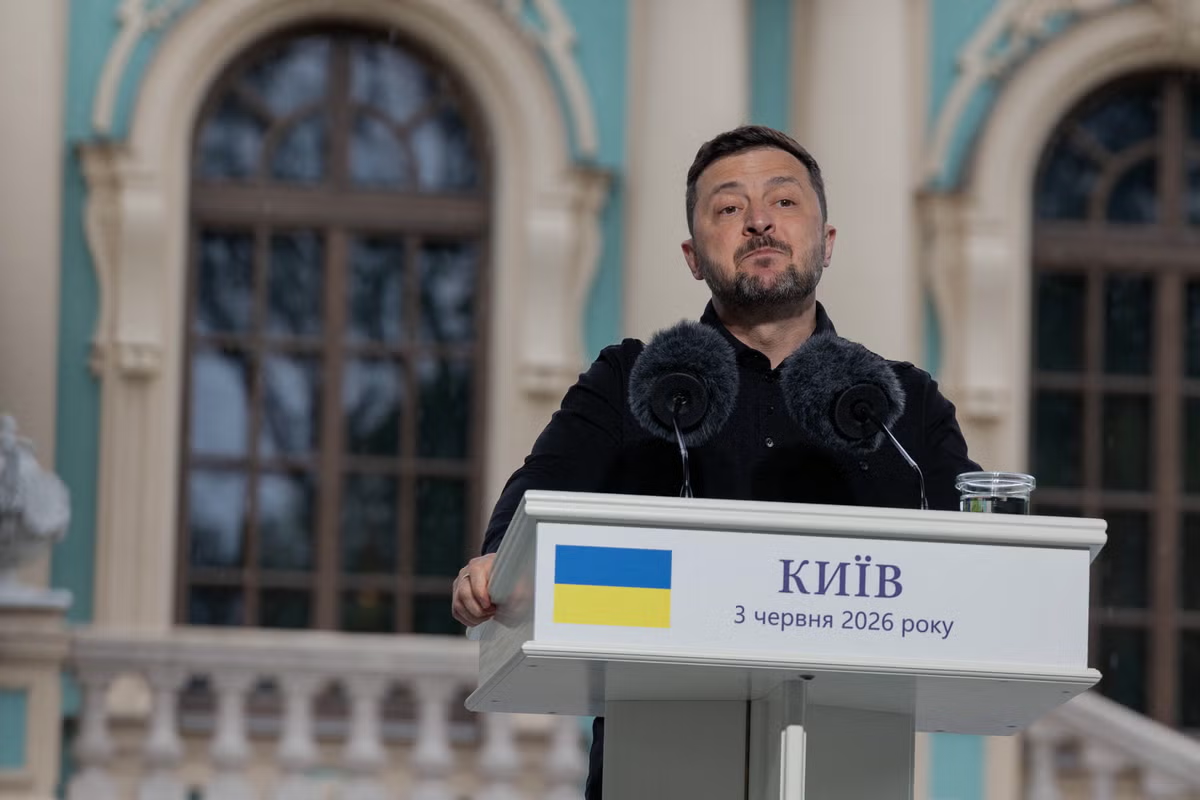
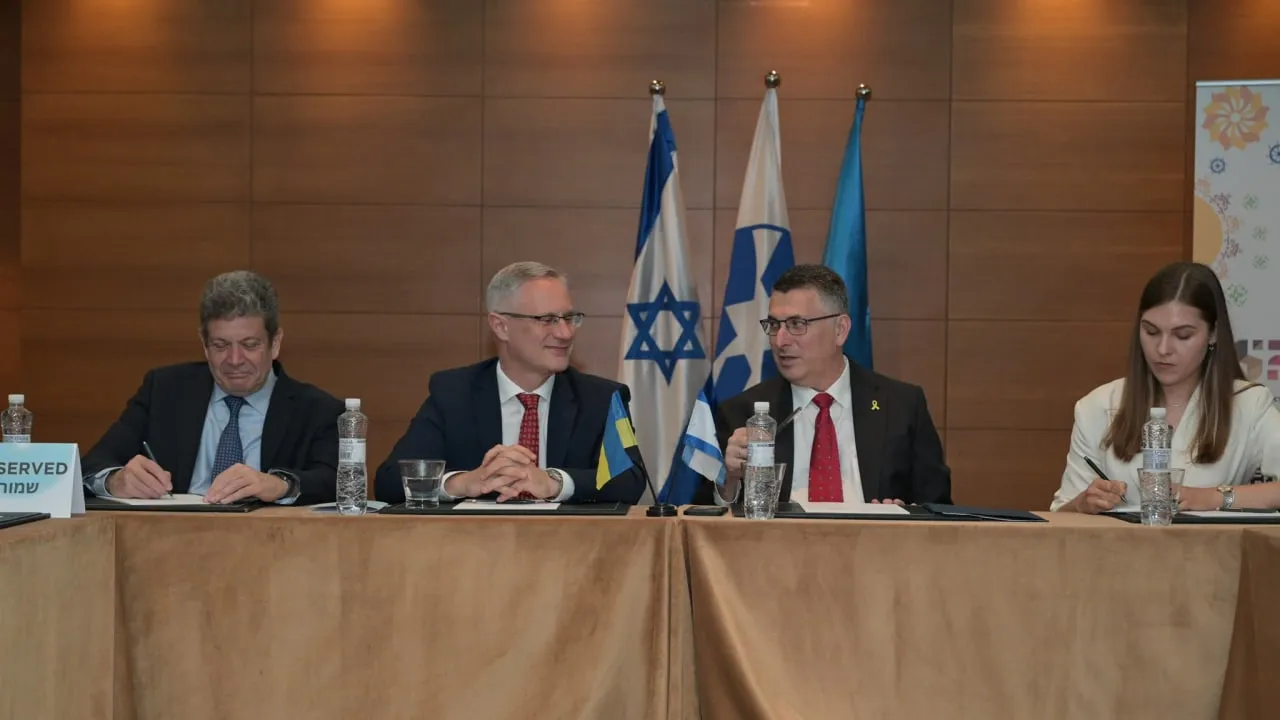
Brodsky believes his tenure should ultimately be judged by what the embassy accomplished amid extraordinary tension during Putin's war on Ukraine.
1,533 words~7 min read