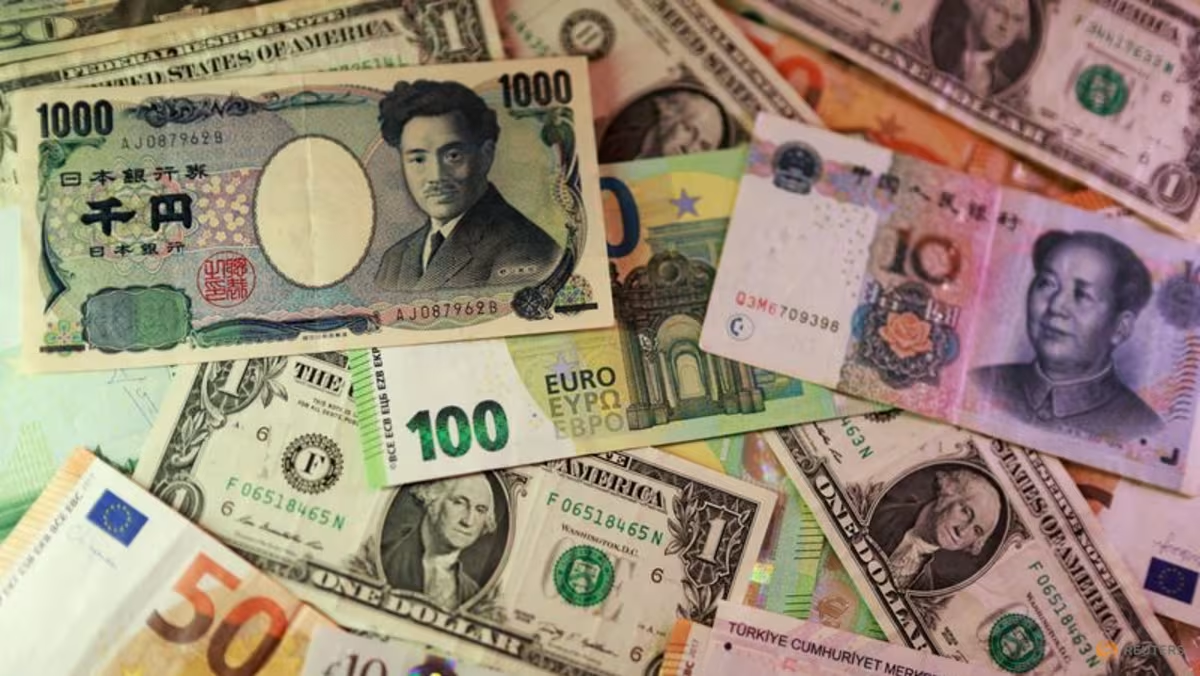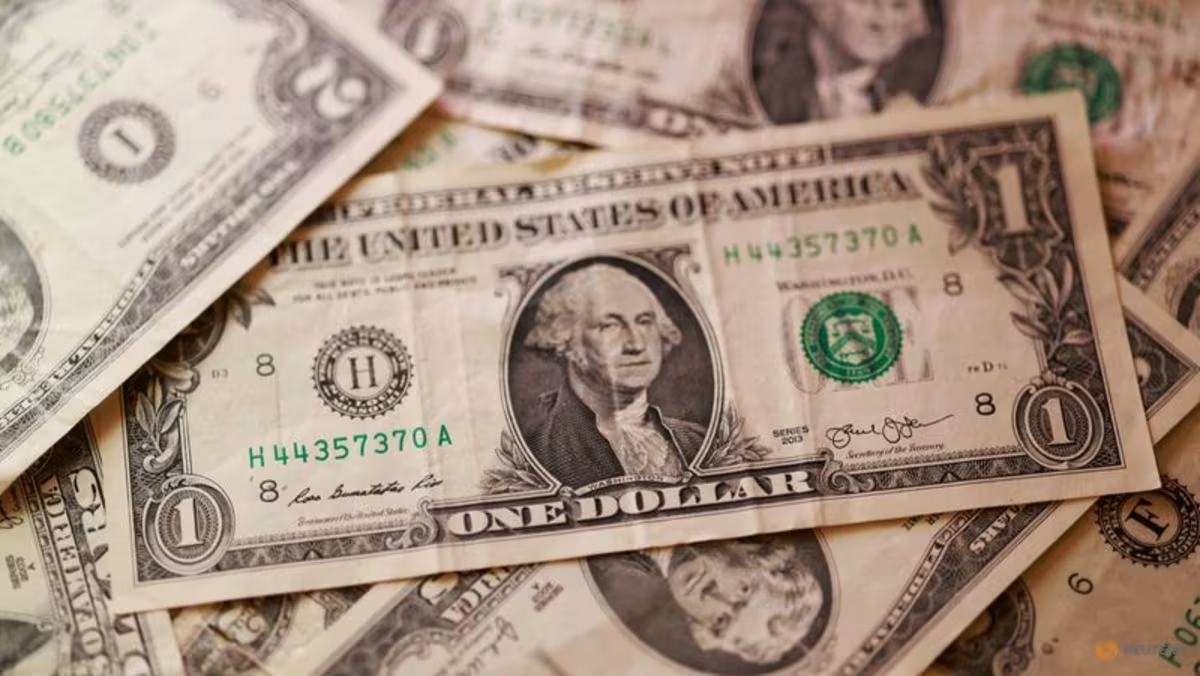
LONDON, Aug 13 : The dollar drifted on Thursday after an overall benign reading of U.S. consumer inflation prompted traders to pare back their bets on a September rate hike from the Federal Reserve.The U.S. currency is still up 0.4 per cent so far this week against a basket of major currencies, heading for its first weekly gain in three weeks, albeit in the kind of tight price range common to August, when trading activity tends to be thinner than usual. Data on Wednesday showed U.S. consumer prices increased 0.1 per cent in July, in line with economist expectations, leading money markets to reduce the odds of a September rate hike to 40 per cent, down from 54 per cent a week ago, according to CME Group's FedWatch.Next up is wholesale inflation in the form of the producer price index - which economists polled by Reuters expect to have moderated to 4.9 per cent in July from 5.5 per cent in June - ahead of the core personal consumption and expenditures index, which has typically been the Fed's preferred measure of inflation, on August 26.
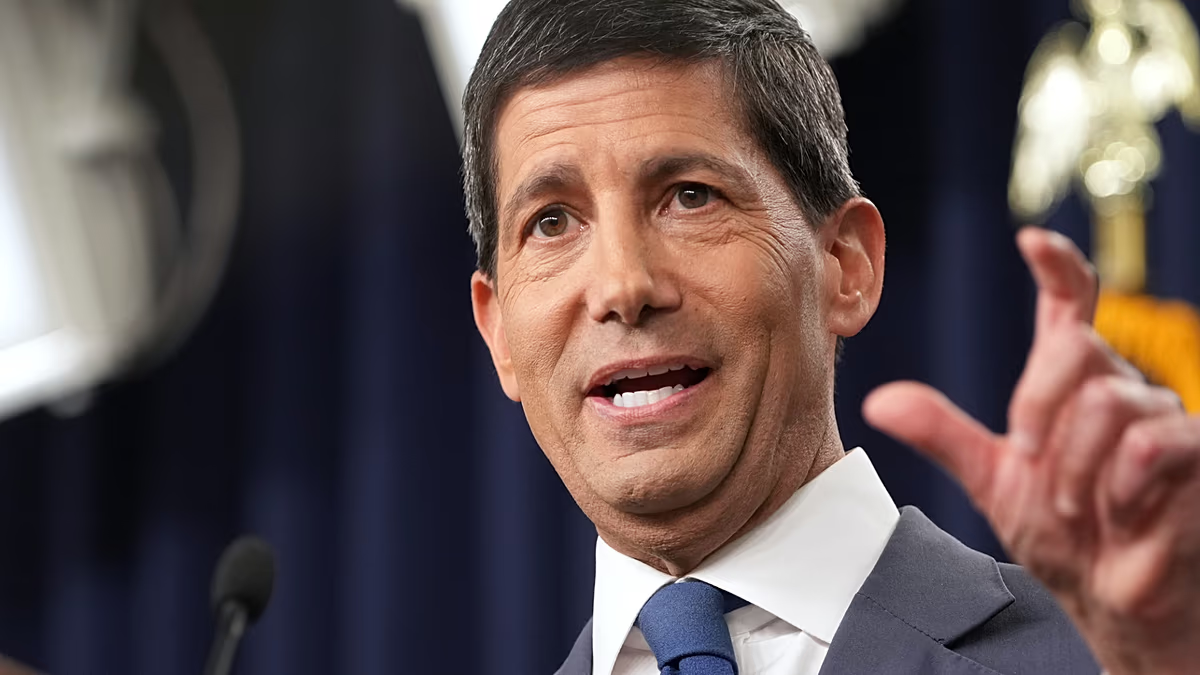
Fed Chair Kevin Warsh has indicated he prefers other metrics, but until that is clear, markets will take their cue from CPI, PPI and core PCE, analysts said."We're in a world where the Warsh Fed chairmanship is going to see a more holistic approach to inflationary dynamics, so, broadening out beyond core PCE as being an inflation benchmark. But ultimately, that's where we are at the moment," CIBC Capital Markets' head of G10 FX strategy Jeremy Stretch said. "For now, at least, the CPI print yesterday has really given the market good reason to continue to pare back Fed tightening expectations," he said.UK GROWTHThe dollar edged lower against the yen to around 159.3 yen, about 2.7 per cent below late July's 40-year highs near 164 that sparked historic joint intervention by the United States and Japan. Shusuke Yamada, head of Japan FX/rates research at Bank of America, said investors can only judge the authorities' commitment to defending the yen through dollar-yen price action and the policy response that follows.The euro was a touch stronger at $1.1537, while the pound steadied at $1.349, shrugging off data that showed the UK economy unexpectedly grew in June, thanks to a dip in energy prices, along with the start of the men's soccer World Cup and hot weather."After a thumping start to the year, UK GDP expanded by 0.4 per cent quarter-on-quarter, taking the annualised growth rate in the first half of the year to a scorching 2 per cent. And for a second straight quarter, it looks like the UK will take top place in the G7 league table," Deutsche Bank UK economist Sanjay Raja said.The Norwegian crown weakened after the Norges Bank left interest rates on hold, as expected, but noted inflation had softened recently. At 4.25 per cent, Norway has among the highest interest rates of the 10 most developed economies and its position as an oil and gas exporter has given the crown an edge this year.The Norwegian crown is, together with the Australian dollar, the best-performing currency against the U.S. dollar this year. Both have gained 5.6 per cent, in sharp contrast with laggards like the Swedish crown, down 3.5 per cent, or the Swiss franc, which has lost 2.6 per cent.The Norwegian crown was last down around 0.2 per cent at 10.98 to the euro, and down around the same amount against the dollar.The Australian dollar eased 0.1 per cent to $0.7055, but was still close to Wednesday's 10-week high of $0.7091. Reserve Bank of Australia Assistant Governor Christopher Kent told a Reuters NEXT Newsmaker event in Sydney that the risks on inflation were very much to the upside and if those risks materialised, rates would have to rise again. (Additional reporting by Kevin Buckland in Tokyo; Additional reporting by Ankur Banerjee; Editing by Jamie Freed, Jacqueline Wong and Susan Fenton)