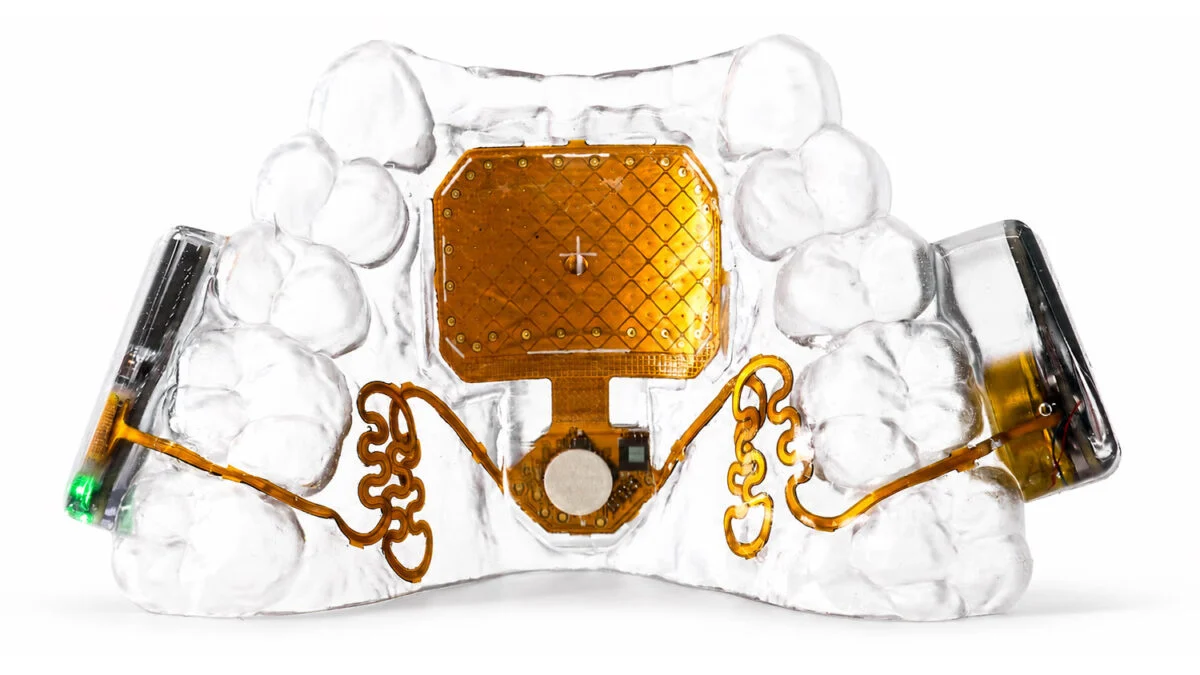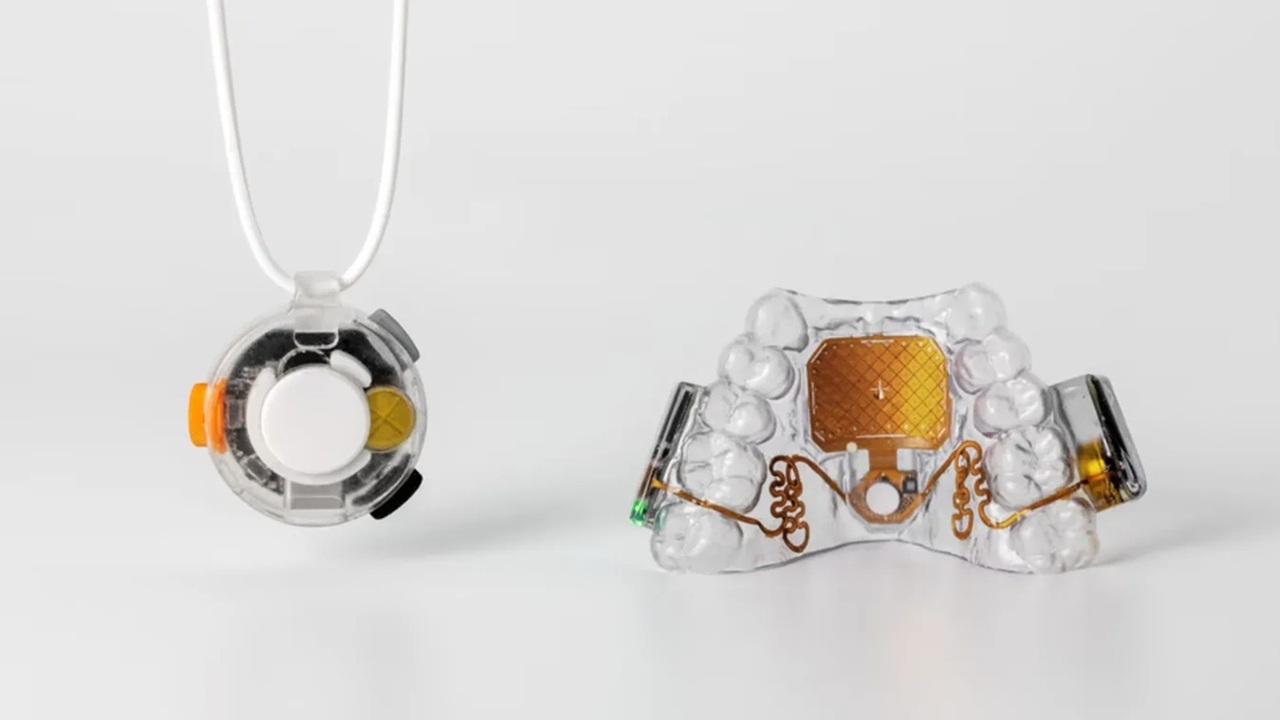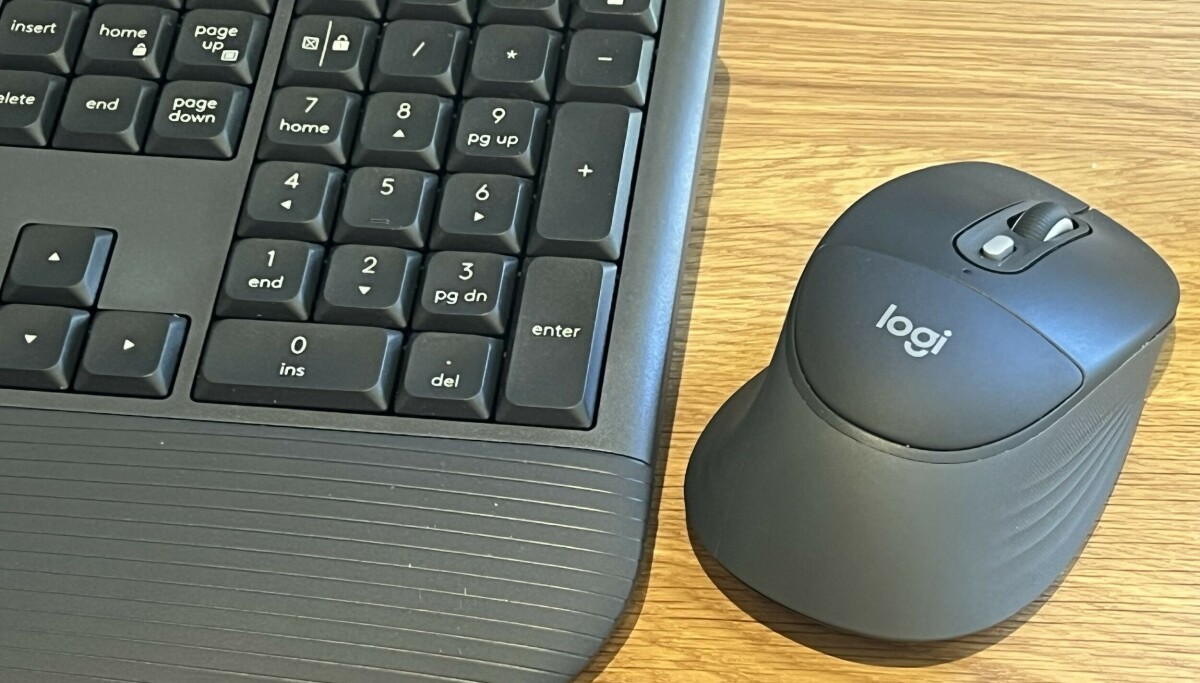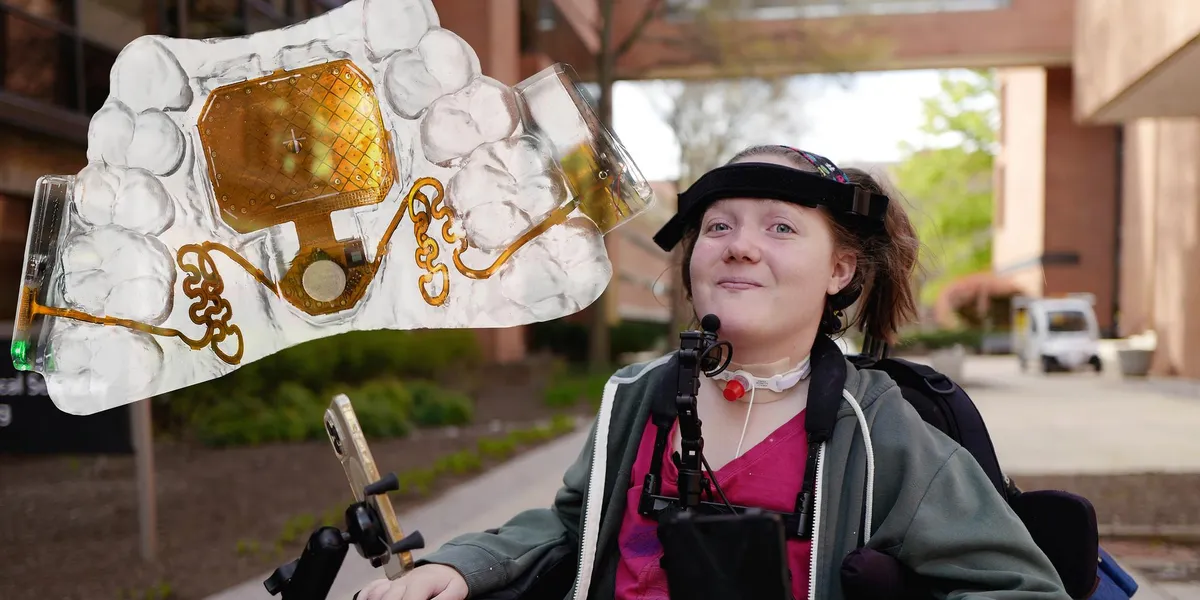
When Ryan Hudson-Peralta, a self-described “Apple fanboy,” isn’t using the computer, he’s on his phone. But all of this screentime—and mouse use—can take a toll on his body. Hudson-Peralta, a designer, speaker, and disability advocate, was born with no hands and uses a wheelchair. “With my disability, I was born without shoulder sockets,” he says, and using a traditional computer mouse for an extended period leads to shoulder pain.Through a consultancy he founded, Equal Accessibility, Hudson-Peralta sometimes requests test products, whether they’re designed for people with disabilities or not. In 2024, in exchange for feedback on the device, he received a prototype of Mouthpad, an experimental tongue-computer interface, similar to a touchpad on a retainer, which allows hands-free wireless interaction with computers and smartphones.In addition to a touch-sensitive area on the roof of the mouth, the Mouthpad incorporates other assistive technologies: a barometer that detects “sip” gestures while also sensing tongue presses; and an accelerometer and gyroscope that track head movement. Designed to be as thin as possible to allow users to speak easily while wearing the device, it is compatible with dictation or voice commands. The device, which communicates via Bluetooth, is removable and rechargeable.“The product is incredible,” says Hudson-Peralta. “I thought it was going to be a little bit of a learning curve, but it absolutely was not at all.” He still uses the Mouthpad, generally preferring to control a cursor with head movements and click with the tongue, in rotation with a computer mouse. For the first time in his life, Mouthpad has allowed Hudson-Peralta to do things on a computer away from the desktop, perhaps from the comfort of a couch, and give his shoulder a rest. He believes the device could have even greater benefits for others, for example, some of his friends with paralysis in their upper limbs.Now, the Mouthpad may reach a wider audience. In July, it became commercially available to the public. Although the device has been developed prioritizing feedback from people with disabilities that can make it difficult to operate off-the-shelf electronics, such as quadriplegia, it is not being sold as a medical device.“If you design for those who are most constrained, you design better interfaces for everybody,” says Tomás Vega, a co-founder of Augmental, developers of the Mouthpad. Augmental/YouTube A customized experience for all usersMouthpad can connect to any device that accepts a Bluetooth mouse. It is expected to be used as an assistive device, directly or indirectly controlling a range of devices including tablets, smartphones, powered wheelchairs, and even sexual aids—all tech used in everyday life that people with physical disabilities may have difficulty controlling. Beyond its uses as assistive tech, Mouthpad could also augment workflows or videogame experiences as a novel input option; find roles in occupational safety when both device access and free hands are important; and perhaps benefit scientific research. “We believe in universal design,” Vega says.Over roughly six years of development, Augmental has added ways to customize Mouthpad inputs to match user preferences and abilities. The physical device also needed to be custom fit because of natural variation in mouth shape and size, and the hardware needed to be thin and flexible, yet durable. “The mouth is the most hostile environment in the body,” says Vega. Despite this, as long as users don’t grind their teeth, Vega expects the number of battery cycles to be the limiting factor for the lifespan of the device, at least two years.A single Mouthpad costs US $1,400, which would not be covered by medical insurance, with additional fees for a dental fitting. As one Mouthpad reviewer notes, the device may be eligible for other forms of reimbursement, such as vocational rehabilitation programs.Though less expensive computer input options may be available, Hudson-Peralta says that the Mouthpad is “much cheaper” than many of the assistive technologies that he uses and must pay for out of pocket. These devices do not generally have the same economies of scale as mass market electronics.Vox tunes in on nearly silent speechFor many users, the Mouthpad will be one of multiple inputs for devices. Other hands-free computer controllers include mouth-operated joysticks, eye-tracking, and more experimental brain computer interfaces. Voice control is now a common method for inputting text, and along with the release of Mouthpad, Augmental announced a new necklace microphone device, called Vox. If Mouthpad is the mouse, the company says, then Vox is the keyboard.Vox is currently able to understand “low volume speech,” says Vega, but as with most other speech recognition devices, can struggle with outside noise, or lack user privacy. One long-term goal for the Mouthpad, then, is a fully silent speech interface. That is, the ability to provide the benefits of modern speech interfaces without the need for users to speak audibly, even at a whisper.Mouthpad currently only tracks the tip of the tongue, however articulating certain speech sounds (e.g. k, r, and o-sounds) involves the main body of the tongue and the back of mouth, so silent speech may require following movement of the entire tongue. This whole-tongue tracking could open up therapeutic and research applications related to speech. For example, some people can articulate their tongue and mouth, but are unable to speak conventionally, perhaps due to a removed or damaged voice box. “These patients may experience social isolation and even depression due to their speech or sound disorders,” says Jun Wang, a speech-language pathologist at the University of Texas, Austin, who has worked on a tongue-tracking device.Expanding access to tongue-tracking techAugmental is not alone in its efforts to develop mouth-based interfaces. Hananeh Esmailbeigi, for instance, is a biomedical engineer at the University of Illinois Chicago who develops wearable technologies, including a “tongue-trackpad.” Without the opportunity to examine the Mouthpad closely, Esmailbeigi declined to comment on specifics of the device, but applauded expanded access to the technology.“I am encouraged to see growing attention and investment in this modality and greater public awareness of the potential of intraoral interfaces,” says Esmailbeigi. Beyond computer interaction, she is interested in the devices as a source of quantitative information in rehabilitation for motor control problems that affect speech. “I think [tongue interfaces] have great potential due to the high flexibility and endurance of the tongue,” says Lotte N. S. Andreasen Struijk, a biomedical engineer at Aalborg University in Denmark. She helped develop iTongue, which is available in the European Union for computer and powered wheelchair control. Earlier versions of the device required a barbell-shaped tongue piercing to track the tip of the tongue, however the newest version no longer requires the piercing.Assistive devices like Mouthpad can facilitate computer interaction and build technical skills, says Hudson-Peralta. But he emphasizes that access to technology can “help people grow not just in careers, but in social life.”
Mouthpad Brings Hands-Free Control to Everyday Devices
The “universal” device was designed with disabilities in mind
1,121 words~5 min read