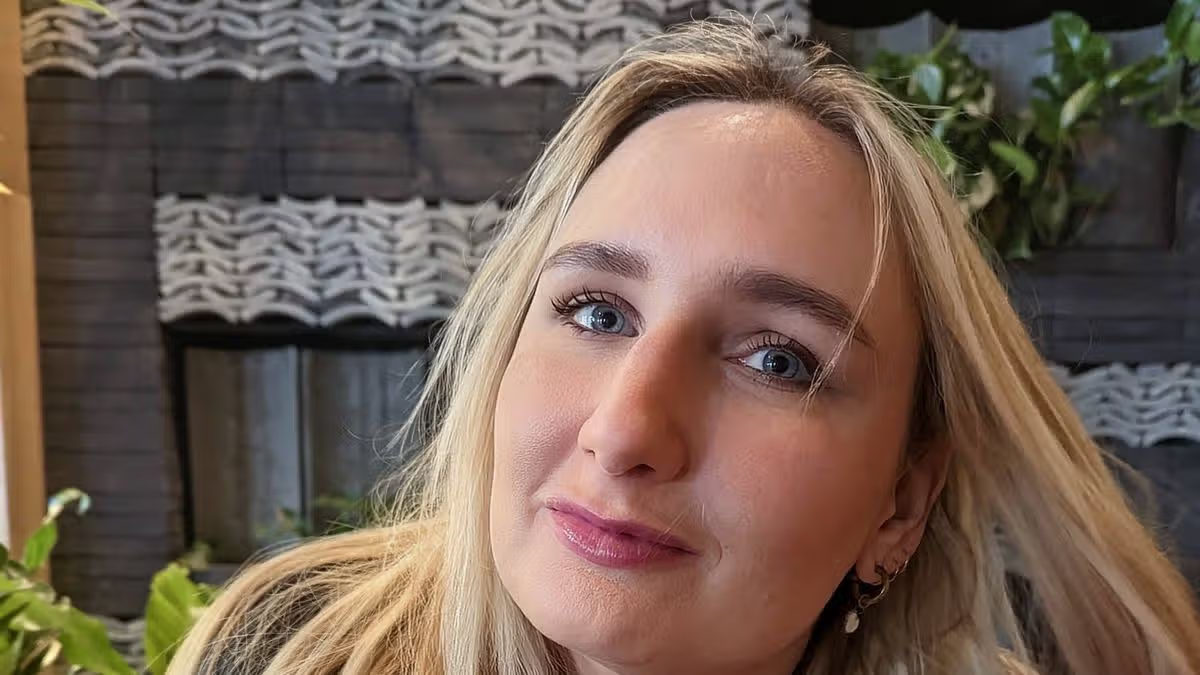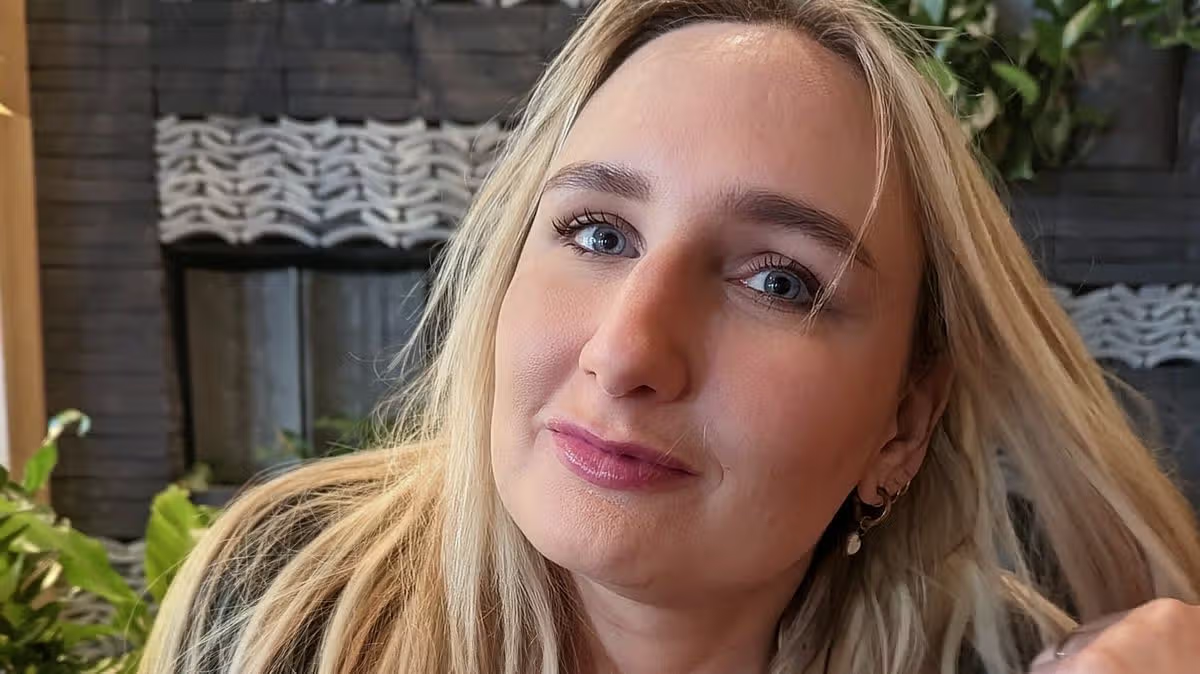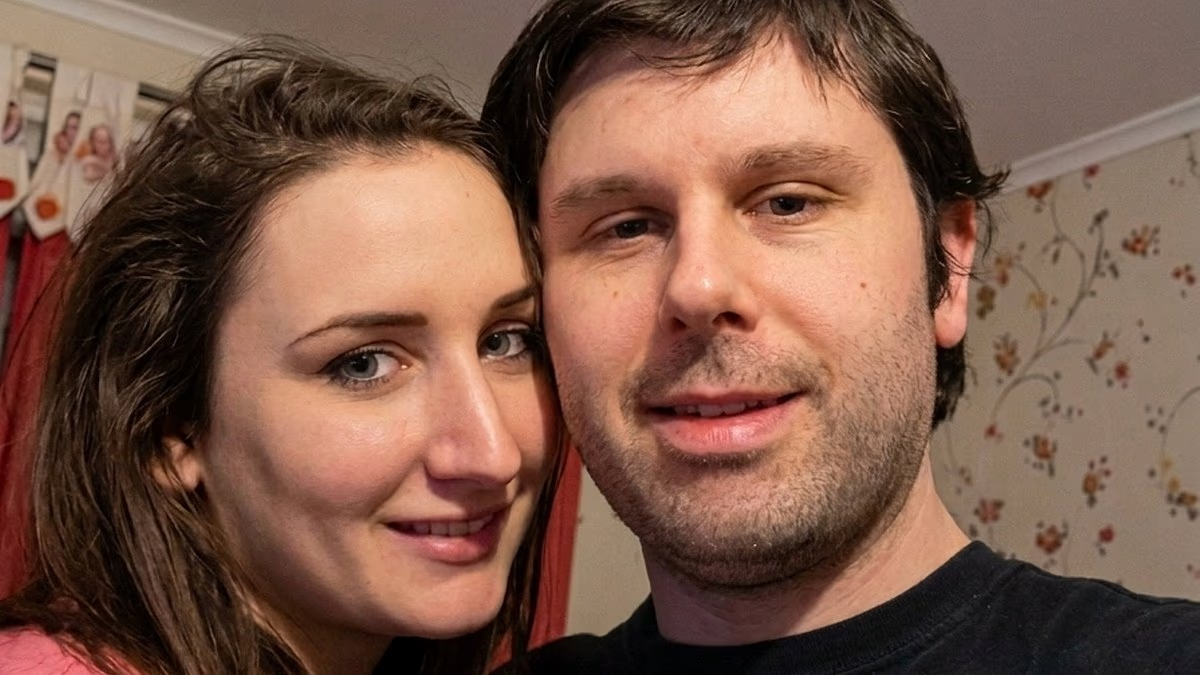
One afternoon in October 2024, 39-year-old Michelle Roberts felt the usual wave of post-lunch exhaustion that comes with looking after her five young children.But Michelle, from Hertfordshire, was irritated by another problem, too. A bout of particularly severe heartburn that left her feeling nauseous.She called her husband Ben, 43, an IT manager, who was on his way home from work, to tell him she was feeling unwell and needed to lie-down.Alarmed at how ill she sounded, Ben urged Michelle to call 999.'She was hesitant because she didn't want to bother them,' says Ben. 'Now I wish we had.'By the time Ben had returned, Michelle was in bed and had called 111 – the NHS non-emergency number. After some back-and-forth, the operator decided to send an ambulance.Ben was instructed to wait for the ambulance downstairs – so he decided to make dinner for the children at the same time.'Neither of us knew how serious the situation was,' he says. When Michelle felt a burning sensation in her throat and a wave of fatigue, she initially she thought she was suffering from food poisoning But within hours she was slumped over, unconscious and barely breathing 'As I was walking out the door she said: "Ben, I'm scared." 'I assured her she would be fine because an ambulance was coming. That was the last thing she said to me.'When Ben returned upstairs half an hour later to check on her, with no ambulance in sight, he found her slumped over and not breathing.He immediately began CPR while frantically calling 999 to find out when the ambulance would arrive.Ben continued to give CPR for over an hour, as blood began to pour out of Michelle's eyes, ears and mouth and her ribs snapped under the pressure. An hour and 20 minutes after making the call, an ambulance arrived – but it was too late. Michelle was dead. She had, it was later explained to Ben, suffered a fatal heart attack.'My children and I were downstairs in the living room,' says Ben. 'A paramedic came down and said there had been a catastrophic event and I just knew. The mother-of-five had no pre-existing health concerns and led a fairly active lifestyle'I was in shock, but I took my children one by one upstairs to say goodbye to their mum. The kids were everything to her and in an instant our lives had been changed forever.'When Michelle went to bed early with a heartburn-sensation in her throat, there was no indication that she was minutes away from suffering a deadly heart attack. The healthy mother-of-five had none of the 'classic' symptoms. There was no crushing chest pain or shortness of breath. The only clue that something was seriously wrong were symptoms millions of women experience and put up with every single day – tiredness, nausea and heartburn. Cardiologists speaking to the Daily Mail say her death highlights a dangerous reality – women at risk of one of the most serious types of heart attack are too often dismissed because their symptoms are atypical. Michelle suffered a major heart attack – aptly dubbed the 'widowmaker' heart attack, given its bleak survival rates. Only 12 per cent of people who suffer this type of heart attack outside of hospital survive – a fate thousands of Britons could face if they don't know the risk factors and warning signs. Experts say the tragedy also highlights the importance of knowing key risk factors such as cholesterol levels, blood pressure and family history, as well as recognising less typical symptoms including persistent fatigue, breathlessness, heartburn and a general feeling that something is not right. Michelle had none of the classic warning signs of a heart attack - other than a sense that something was seriously wrong 'Dismissing these as panic, indigestion or menopause is a recognised pattern,' says Dr Oliver Guttman, a consultant cardiologist at St Bartholomew’s Hospital, London.'But any combination of these symptoms - especially in someone with cardiac risk factors - should be treated as a red flag for urgent treatment.'So, how can you know if you're at-risk of a widowmaker heart attack? And what should you do if you begin to show symptoms?First, it's important to explain why heart attacks happen.Heart attacks, where the blood flow to the heart muscle suddenly becomes blocked, kill around 24,000 Britons every year – and hospitalise around 100,000.Smoking, heavy drinking, a poor diet high in salt and fat, as well as obesity and a lack of exercise all increase the chances of a heart attack occurring.Experts say two of the most accurate indicators for whether a patient is at-risk of a heart attack are blood pressure and cholesterol levels. Around a third of UK adults have high blood pressure – when the force of the blood pushing against the walls of the arteries is consistently too high. 111 call handlers sent an ambulance - which Ben eagerly awaited whilst cooking for their five kids. By the time it arrived Michelle was deadMeanwhile, high cholesterol – fatty plaque that builds up in the arteries, raising the risk of a blockage – affects around 60 per cent of adults.However, studies show that many patients are unaware that they are in danger of suffering a heart attack.Only 57 per cent of people with high blood pressure have actually had it diagnosed, while fewer than half of adults with high cholesterol aged between 40 and 74 (when the NHS offers a mid-life Health Check) know they have the dangerous condition.However, not all patients who suffer a heart attack have high blood pressure or high cholesterol.Ben says that, in the year before her death, Michelle had been checked for both, but her levels had come back as healthy.Experts say there is growing evidence there is another important risk factor – whether patients have a genetic form of high cholesterol called Lipoprotein(a), or Lp(a). Studies show that patients with high Lp(a) levels can be twice as likely to suffer a heart attack as those who do not – even if they are otherwise healthy.And, crucially, high Lp(a) levels do not show up on a standard cholesterol check carried out by a GP.
The heart attack symptoms women should look out for
When Michelle Brooks went to bed early with heartburn, there was no indication that she was just minutes away from suffering a fatal heart attack.
1,667 words~8 min read