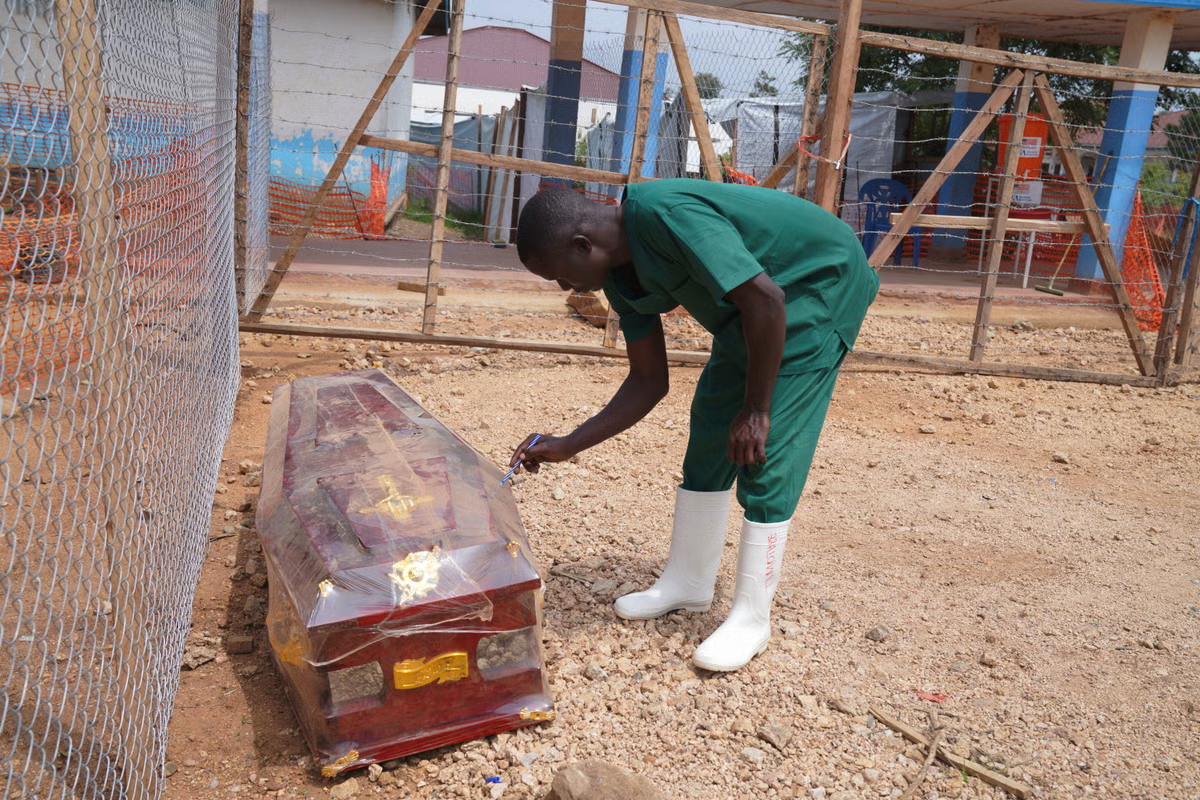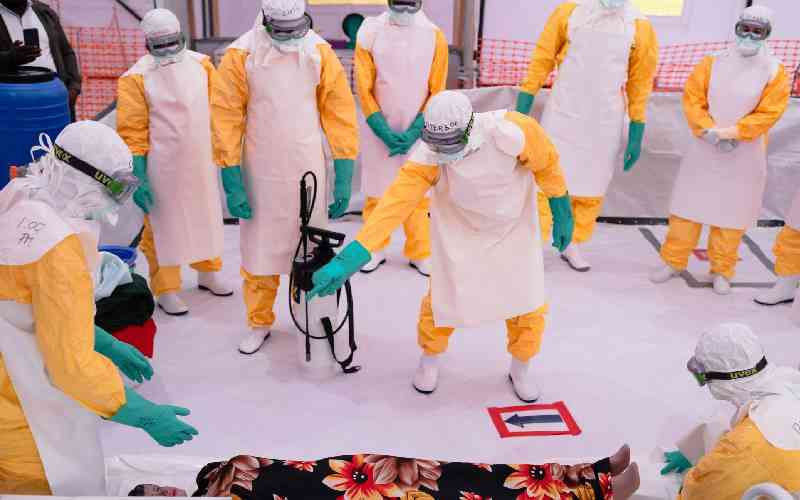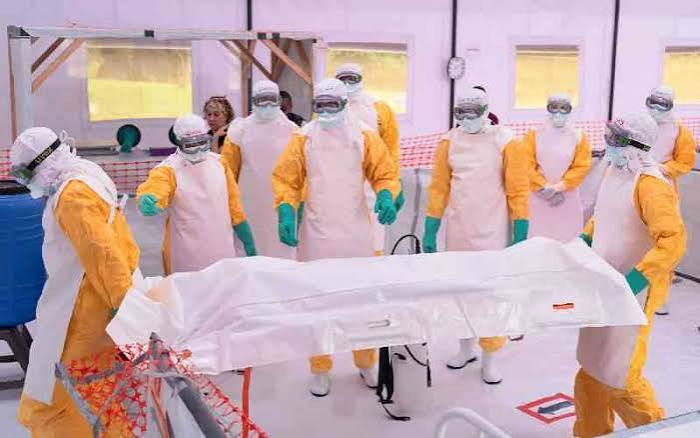
Health workers simulate evacuation protocols using a manikin for deceased victims of Ebola during a training by Médecins Sans Frontières (MSF) in Ongata Rongai, Kajiado County, on July 10, 2026. [AFP]
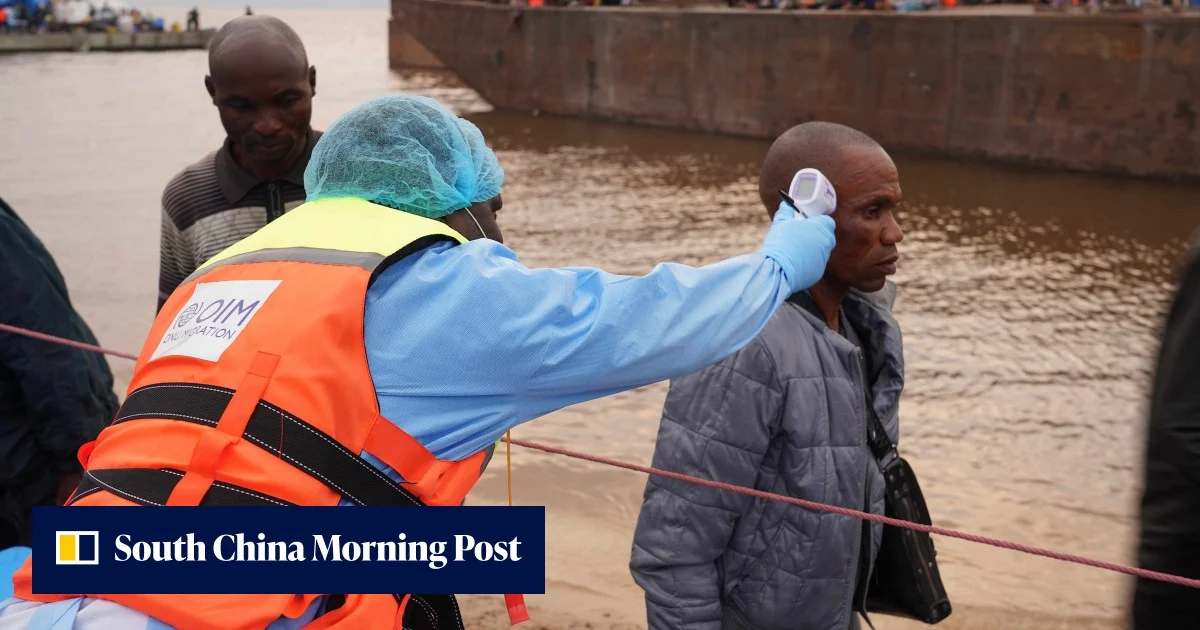
The Ebola outbreak in the Democratic Republic of Congo may have been underway for weeks before health authorities knew they were dealing with the virus, raising fresh questions about how much transmission can occur before an outbreak becomes visible. A study has revealed.The possibility has emerged from epidemiological investigations into the current outbreak, which was formally declared on May 15 after laboratory confirmation in Ituri Province.By then, however, investigators believe the virus may already have been circulating in communities.
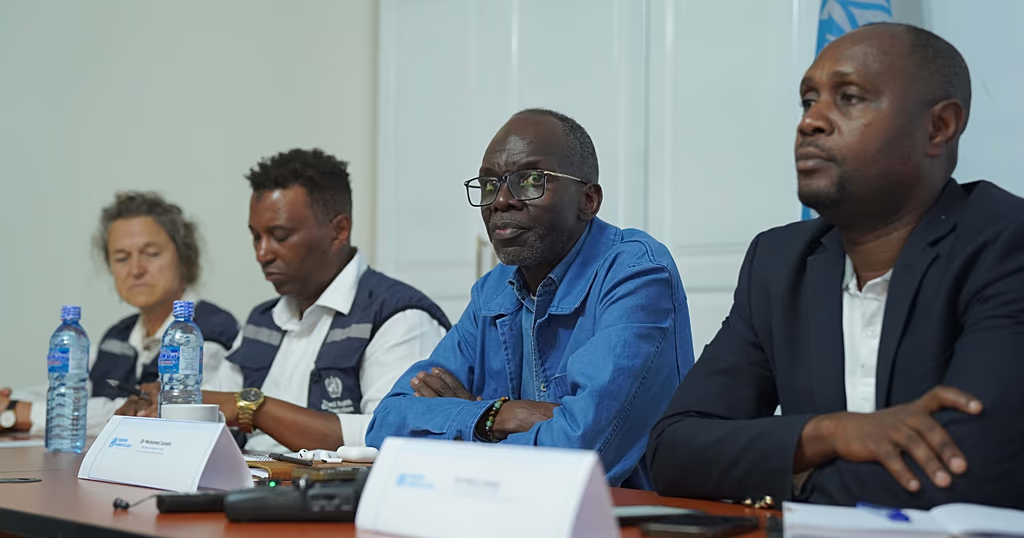
A clinical review published in the New England Journal of Medicine (NEJM) says investigations indicate that transmission probably began several weeks before the outbreak was officially recognised, including possible transmission linked to people handling the bodies of deceased patients.That distinction is critical in an Ebola outbreak. The date authorities announce an epidemic is rarely the same as the date the virus began spreading.In the DRC, investigators are now working backwards through patient histories, unexplained deaths, contact networks and viral sequencing to establish how far the virus may have travelled before the first cases were identified.“The 2026 Bundibugyo virus outbreak has highlighted persistent challenges in detection, surveillance and the availability of effective countermeasures for Ebola species beyond Zaire Ebola virus,” said Dr Nancy J. Sullivan, ScD, one of the authors of the NEJM review, according to the material reviewed.The investigation has also drawn attention to a possible early transmission event in February.Reuters has reported that investigators are examining a funeral in Mongbwalu involving a man who died in February. More than 80 people reportedly attended, with relatives handling the body after it was transported in a damaged coffin. The event remains under investigation and has not been established as the source of the outbreak.That uncertainty is important.Finding an early transmission event does not necessarily identify where an outbreak began. Ebola investigations often reconstruct the earliest stages of an epidemic only after cases begin appearing in numbers large enough to trigger investigation.The first recognised case in this outbreak was a nurse who died in April in Mongbwalu, Ituri Province. Other healthcare workers who had cared for patients at the same facility later developed compatible symptoms.By the time that signal became clear, the virus had already had an opportunity to move.And that is where the danger of delayed detection lies.Ebola can initially resemble illnesses that are common across much of tropical Africa. Fever, weakness, headache, muscle pain, vomiting and diarrhoea are not unique to Ebola and can initially be mistaken for malaria or other infections.A patient may therefore seek treatment without Ebola immediately being suspected. Family members may provide care at home. Health workers may come into contact with an infected person before the diagnosis is known.In some communities, relatives may also handle the body of someone who has died.Each of those encounters can create another opportunity for transmission.The scale of the outbreak now confronting DRC shows what can happen when those early signals are missed.As of August 11, Congolese authorities had reported 4,450 confirmed cases and 2,063 confirmed deaths. The outbreak has spread across five provinces.That places the epidemic among the largest Ebola outbreaks ever recorded and makes the question of when transmission actually began more than an academic exercise.Every infection detected late potentially means more contacts to trace. Every unidentified contact creates another gap in surveillance.And every unexplained death makes it harder for investigators to reconstruct the chain of transmission.WHO Regional Director for Africa Mohamed Yakub Janabi has captured the difficulty confronting response teams bluntly.“We are chasing the virus, the virus is ahead of us,” Janabi said, according to reporting from a UN briefing.He has also called for urgent protection of Bunia, where patients from surrounding areas are increasingly seeking treatment.“We have to protect Bunia now,” Janabi said, while calling for treatment capacity to be expanded outside the city.The concern is not only how many people have become infected, but how many infections may still be invisible.Investigators are using patient histories, unusual clusters of illness and deaths, contact tracing and genomic sequencing to piece together the outbreak's earlier stages.The scientific evidence also suggests that the virus responsible for the current epidemic is genetically distinct from the Bundibugyo virus associated with Uganda's 2007 outbreak and is more closely related to the strain involved in the 2012 DRC outbreak. The findings point towards a new zoonotic transmission event.That makes the timeline even more important.