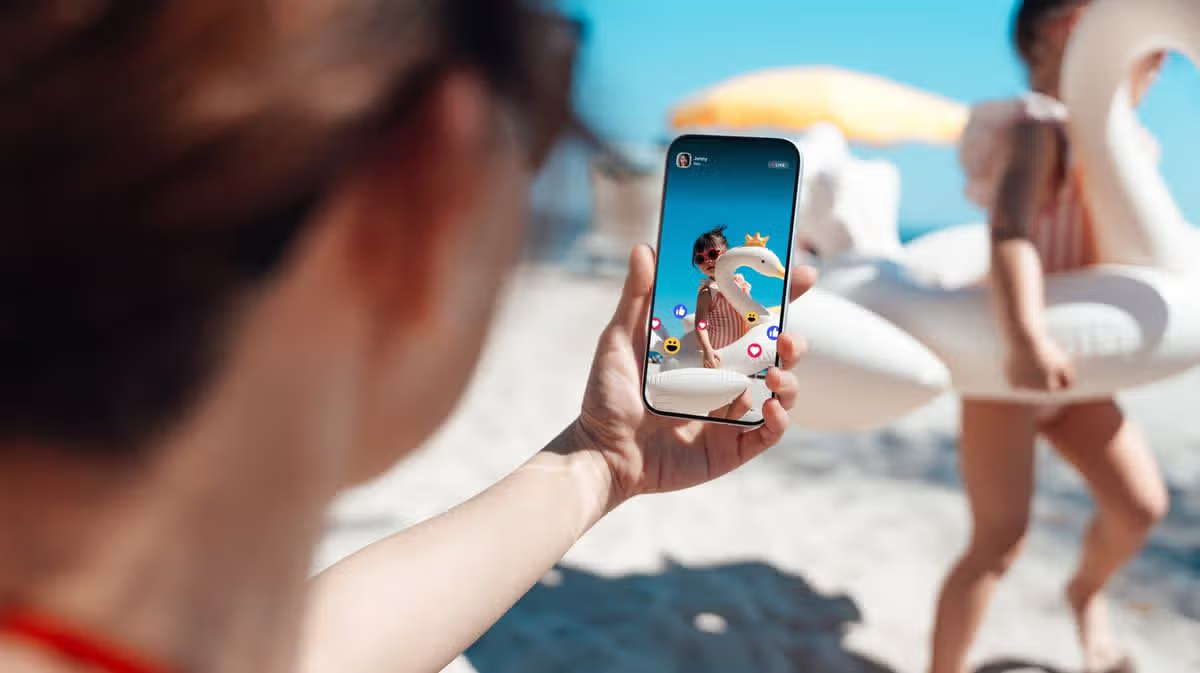
More and more people are deciding to stop sharing their children's faces and personal information online - which can cause arguments between parents in the middle of a nasty separation or divorce11:39, 13 Aug 2026It can be extremely difficult to co-parent after a nasty separation or divorce, never mind if there are children involved too. It's natural for human beings to have different opinions on what is the right thing to do for their child, but when you're part of a family unit, it's easier to make decisions together.But if there is any animosity between a set of parents, it can be even harder to come to an agreement on things such as holidays, having a phone or discipline techniques. One topic that has become even more prevalent over the last few years is posting your children on social media.Many parents, including celebrities such as Adele, Mila Kunis and Ashton Kutcher, and Emily Blunt and John Krasinski, have made the decision to keep their children off social media for a number of reasons.Parents might not want to show their children's faces on social media to protect their privacy and safety, stop their images from being misused for AI-generated deepfakes, or respecting the child's right to future consent and autonomy over their own digital footprint.But what can you do if your ex partner is posting pictures of your child on social media when you don't want them to? Teresa Davidson, Partner & Head of Family at Winston Solicitors, explains who gets the final say.She said: "There is no automatic answer where one parent's view overrides the other's. If the two parents can’t agree, it ultimately comes down to asking the court to make a decision on that specific issue."In practice, that means one parent applies for a decision on that one question, and a judge decides what is in the child's best interests."That said, it should be the last resort rather than the first. Most disagreements of this nature are far better resolved between the two of you, or through solicitors or another form of non-court dispute resolution."Applications like this are made under the Children Act 1989, where are parent can ask for a prohibited steps order, which prevents the other parent from doing something specific, or a specific issue order, which resolves a single disputed question.The court decides on the basis of the child's welfare rather than on which parent feels more strongly.Teresa continued: "The child is the third person in this conversation, and often the one nobody asks."As children get older, their own view about being posted online carries real weight, and asking them is frequently the quickest way out of a deadlock between two parents.Article continues below“It’s worth asking a slightly different question too, not just about how they feel about the photo today, but how they might feel about it still being out there in ten or twenty years, once they’re old enough to have their own view on it.”
Ex-partner is posting pictures of our child online - your legal rights explained
More and more people are deciding to stop sharing their children's faces and personal information online - which can cause arguments between parents in the middle of a nasty separation or divorce
493 words~2 min read