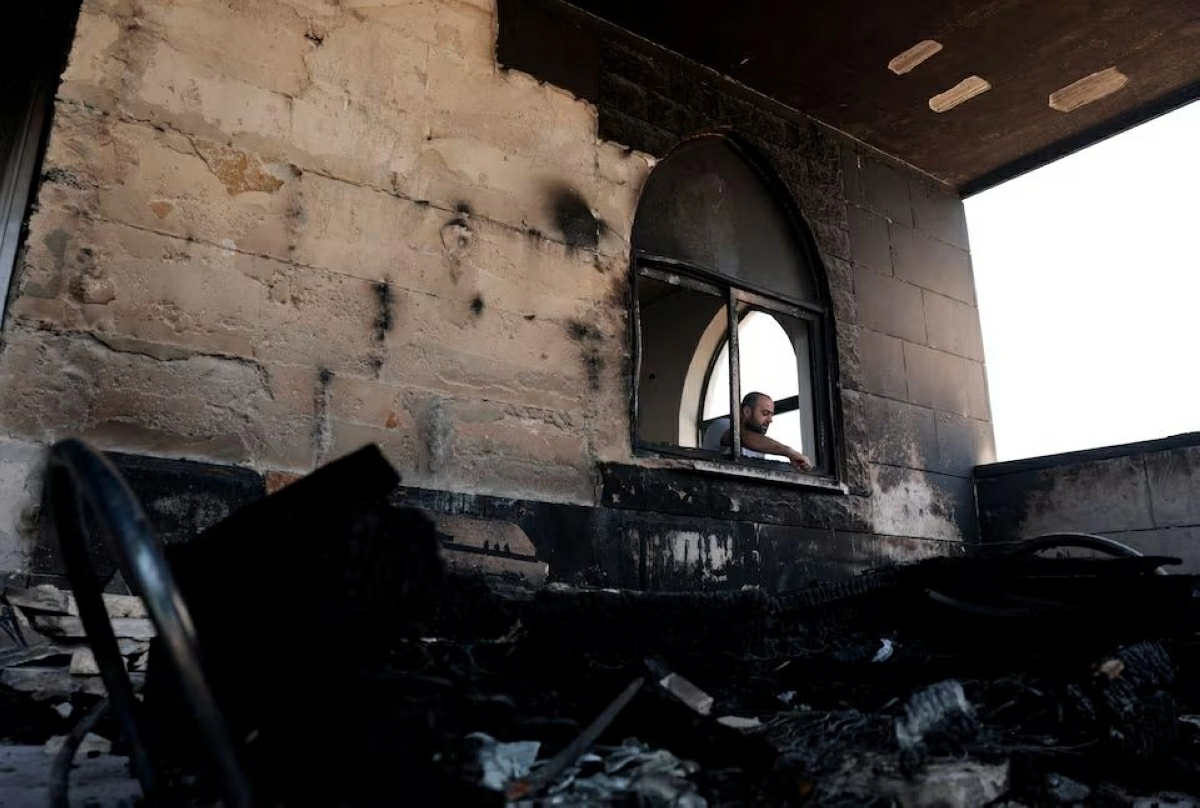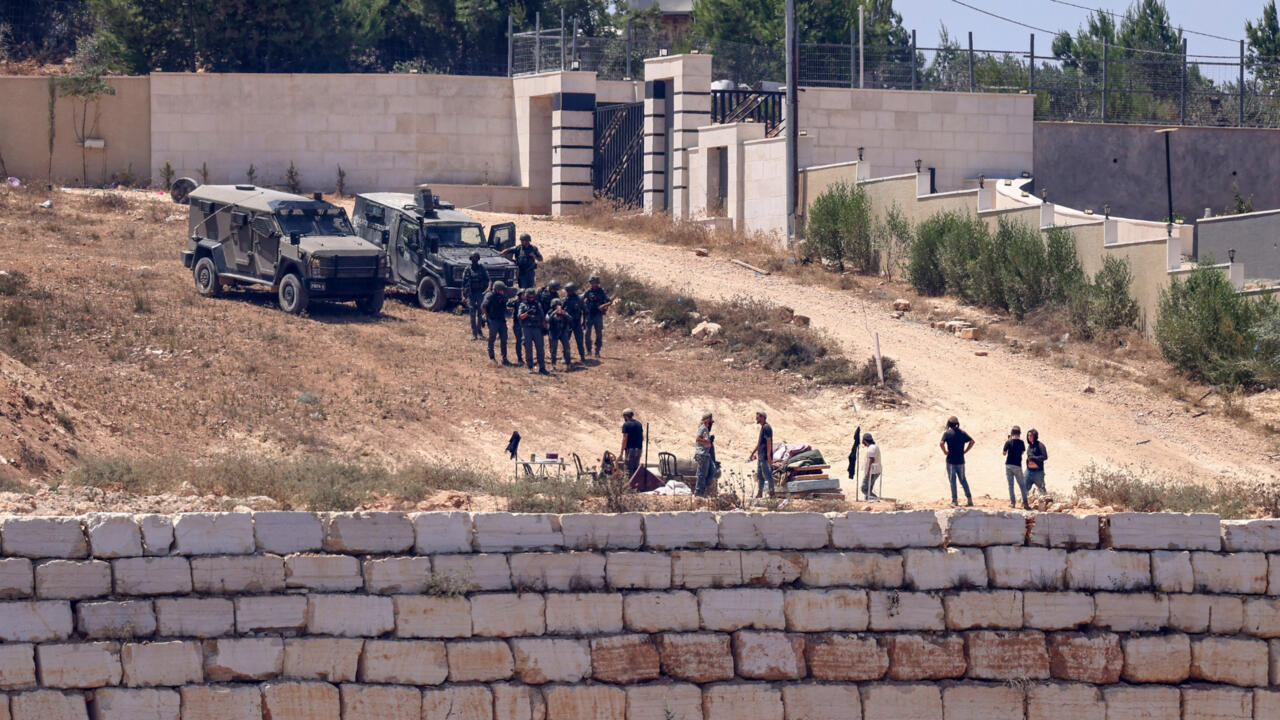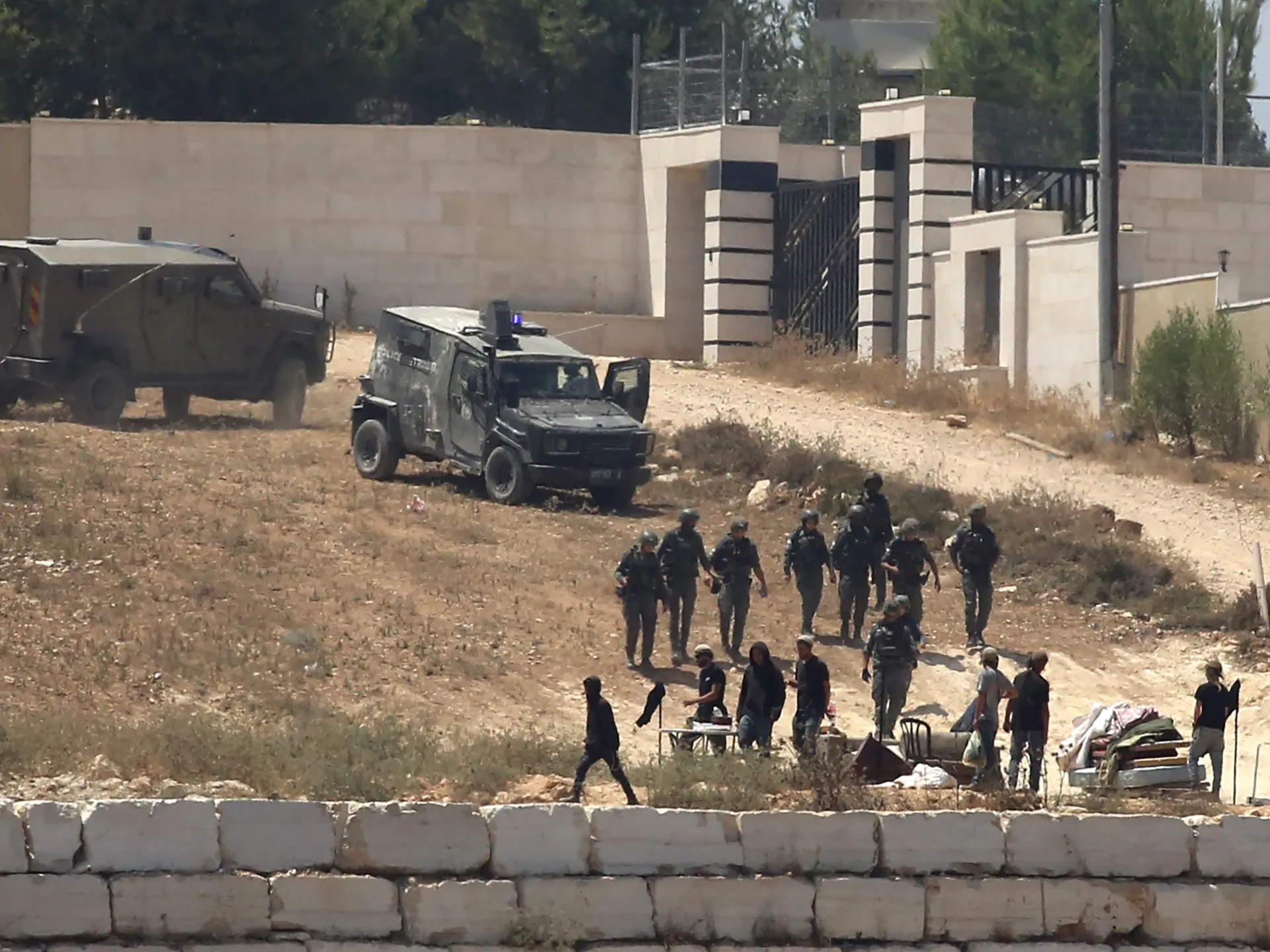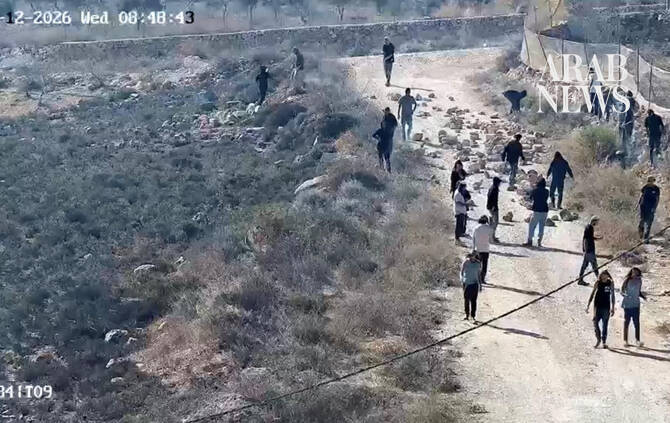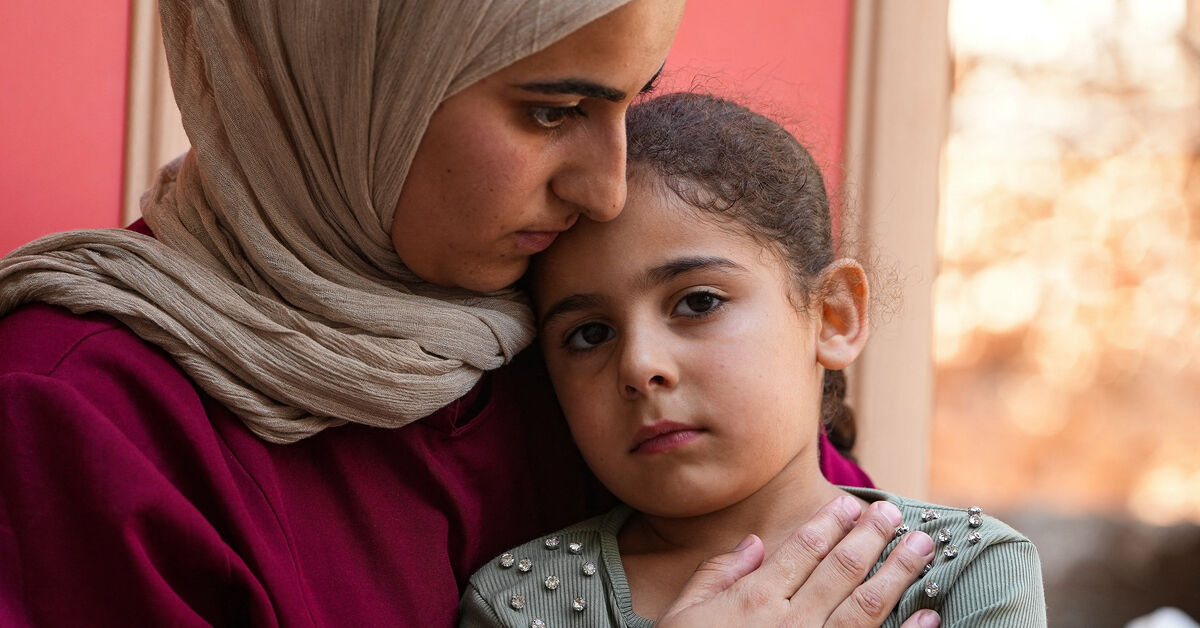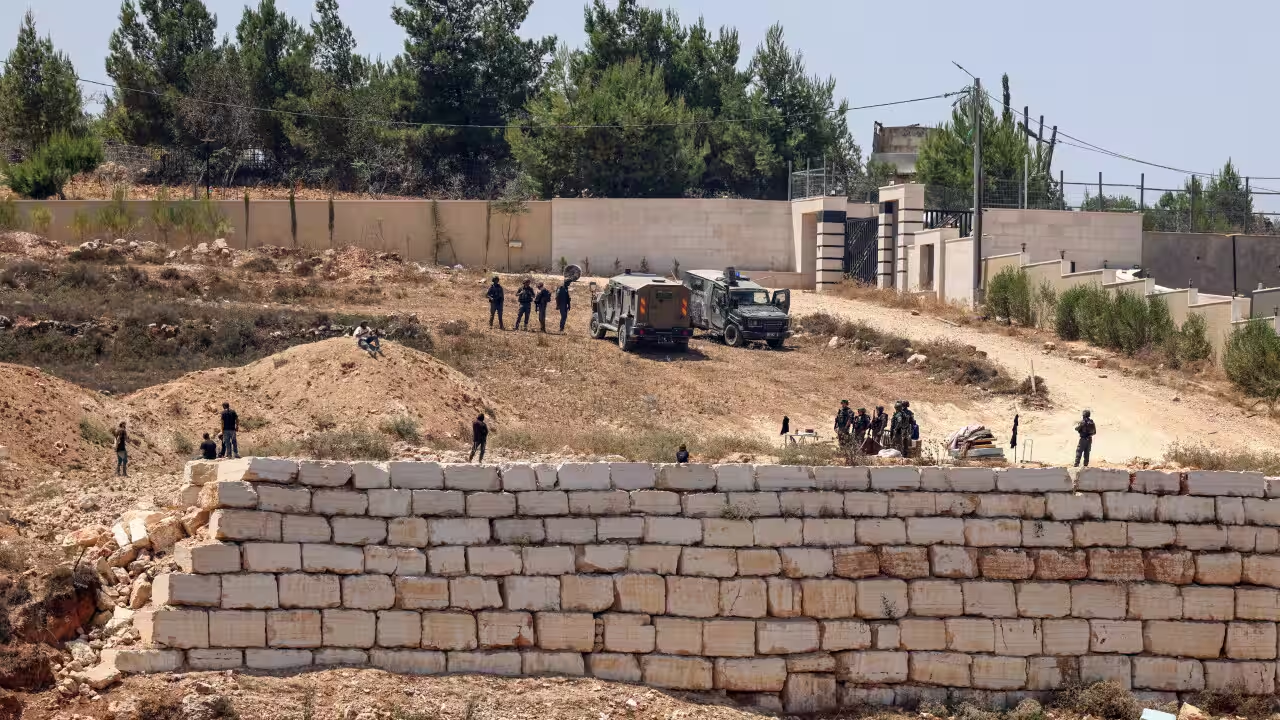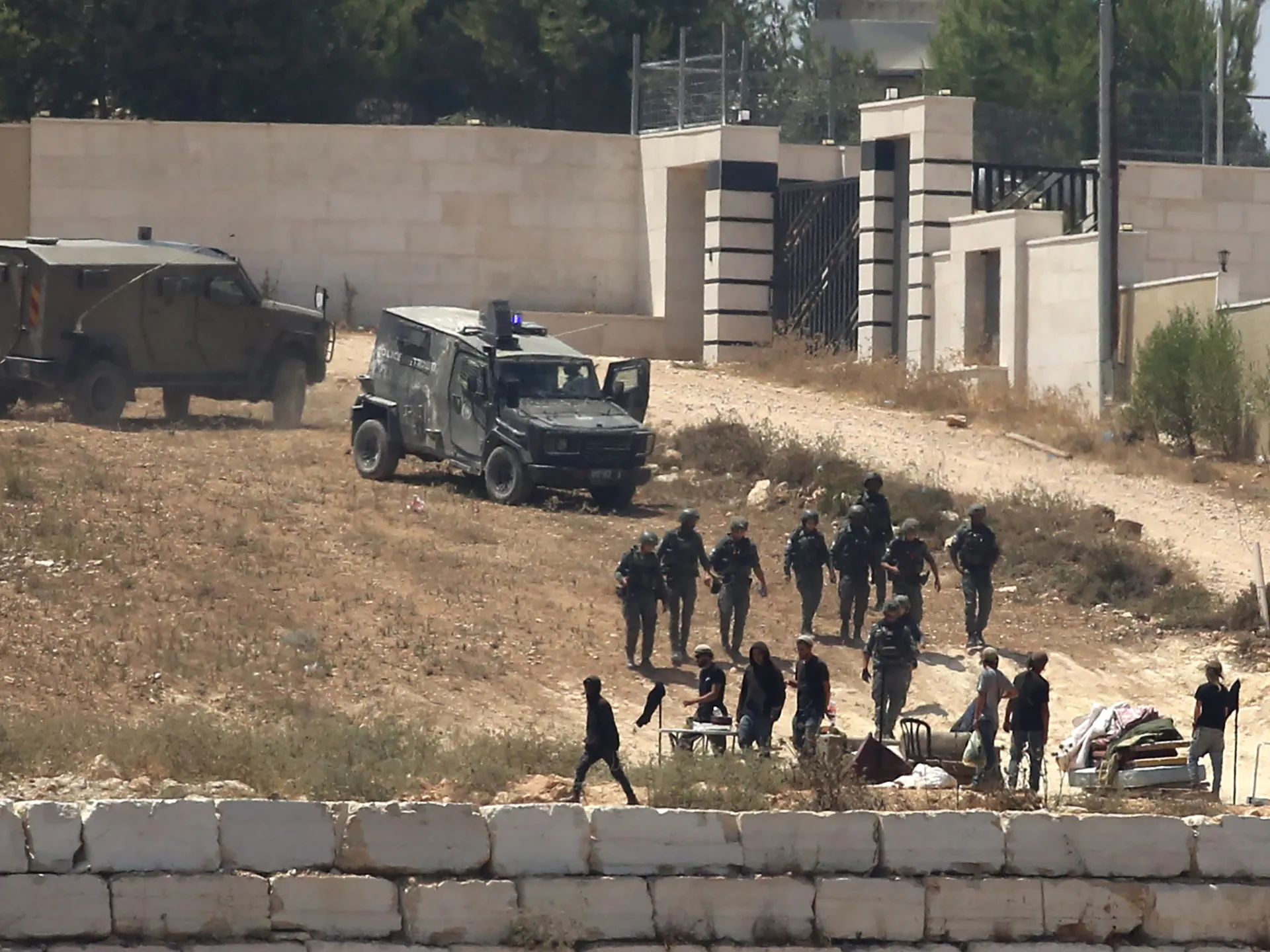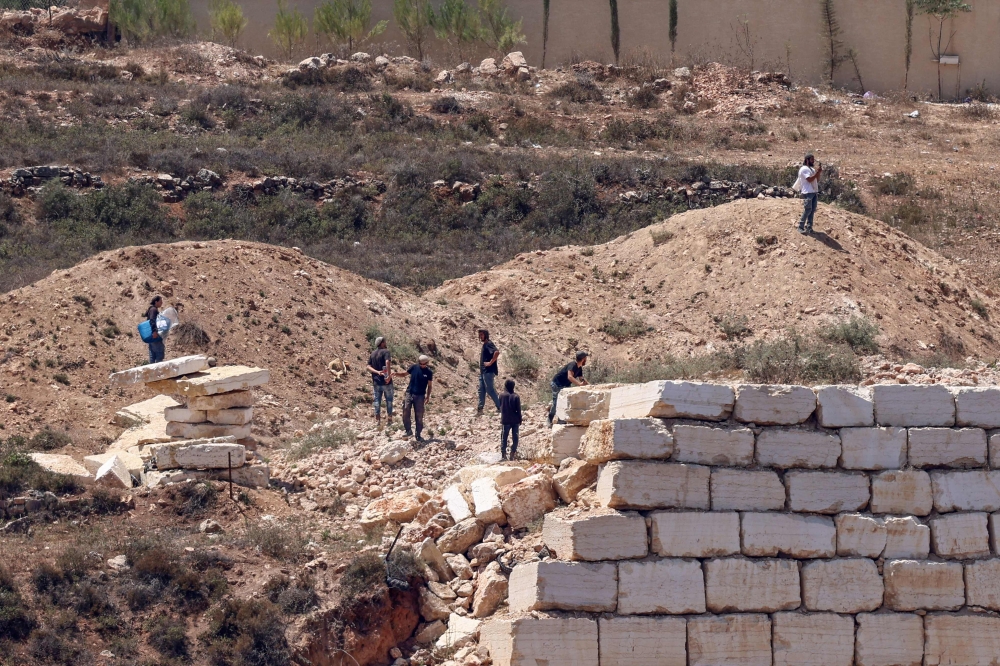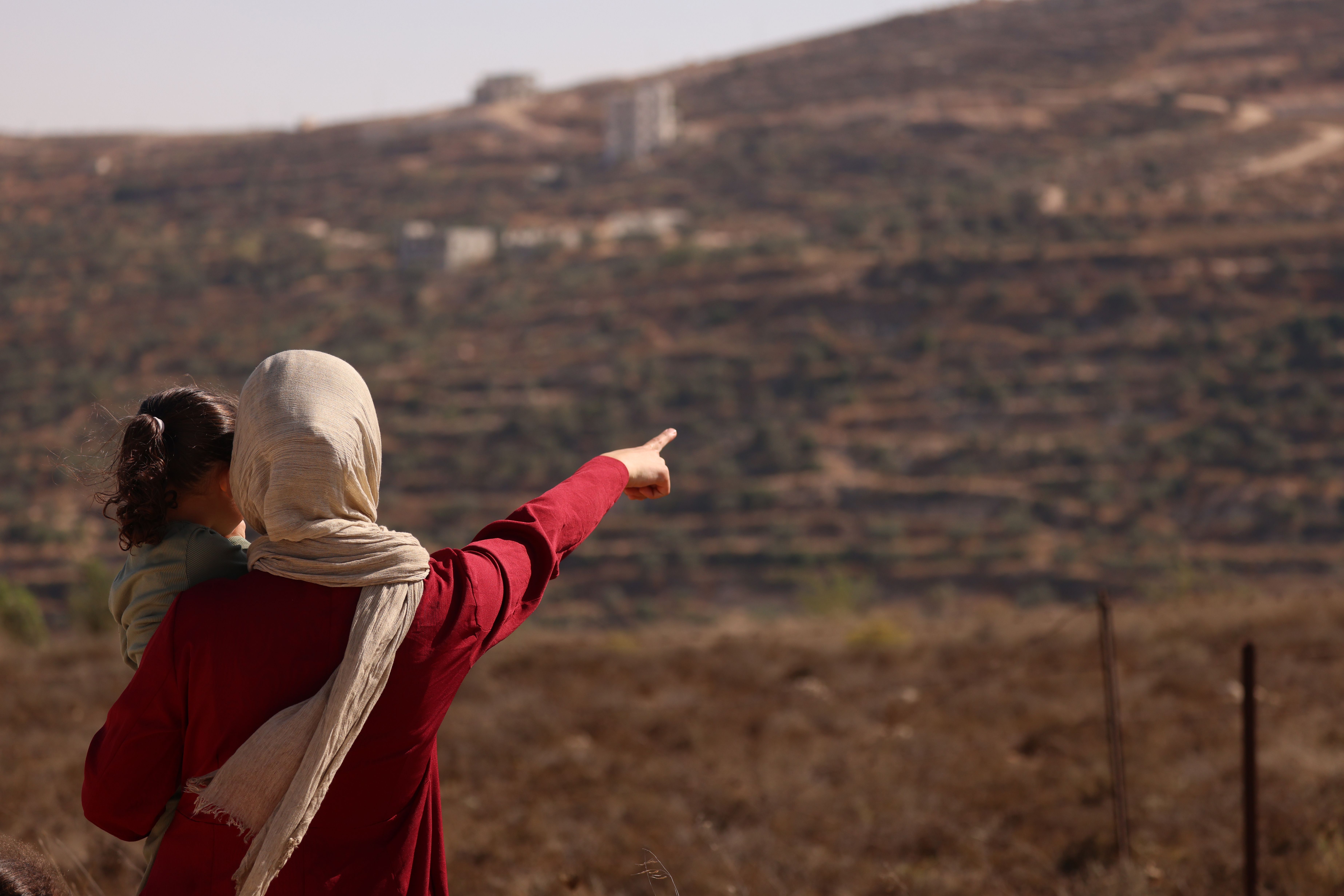
Two Palestinian families have been trapped since Sunday inside their homes on a rocky West Bank hillside by a group of violent Israeli settlers, who set up a tent in the front yard of one of the houses. Residents say about 10 to 15 settlers have been attacking them around the clock, throwing stones and an axe.Early on Wednesday morning, after the siege began to draw news attention, the Israeli army’s commander for the occupied West Bank, Ma Gen Avi Bluth, showed up in the village of Qusra and listened as one of the families described how the settlers had been terrorising them since January. Outside, his soldiers tried to disperse the settlers with tear gas.Yet, by 10.20am, videos from security cameras show, the soldiers had left. Soon after, residents said, the settlers resumed their attacks.“We had some hope in the morning when we saw that the army was present,” Aisha Hassan (35), who was in the meeting with Bluth, said by telephone, even as she said one of the settlers was throwing stones at her. “But when we saw that the army could not stop the settlers – now, honestly, we are more afraid.”On Wednesday evening, the army said in response that it was assigning an extra battalion to the West Bank to try to “strengthen order and operational control in the area”.Members of the Israeli army during a raid in the town of Qusra, south of Nablus, West Bank, on Thursday. Photograph: Alaa Badarneh/EPA The army’s initial retreat and broader struggle to contend with settler violence cast a spotlight on the increasingly chaotic situation in the West Bank, where hundreds of Israeli settlers have been terrorising Palestinians with near-impunity all year.As of late July, 18 Palestinians have been killed by settlers, one more than in all of 2025, according to UN data. Settlers have been boasting on social media of their attacks, posting videos showing mosques that have been torched in Palestinian towns.At times, soldiers have taken part in the violence, Palestinian and Israeli officials say, reflecting disciplinary problems that the military has acknowledged are an issue.“It’s a great fiasco,” said Gadi Shamni, a retired two-star general and former head of Israel’s Central Command, whose area of responsibility included the occupied territory. “There’s a loss of control over the West Bank.”Israel’s right-wing, pro-settler government says concerns about settler violence are overblown, and officials have repeatedly signalled their support for Israelis accused of attacks. The defence minister, Israel Katz, boasts of having stripped the army of the authority to issue detention orders for settlers – which had been a key tool for restraining Israeli extremist violence. In July, he visited in prison a settler arrested as a key suspect in the sexual assault of a Palestinian man in March and clashed with Bluth over the suspect’s detention.Israeli soldiers move around during a raid in the town of Qusra, south of Nablus, West Bank, on Thursday. Photograph: Alaa Badarneh/EPA In Qusra, near the city of Nablus in the northern West Bank, the violence has afflicted two families in particular: the Hassans and their neighbours the Abu Ridis.Louai Abu Ridi (46), a native of Qusra who emigrated to Ohio in 2003 and is a US citizen in the petrol-station business, said he had spent about $1 million (€867,000) building a house in his birthplace. The settler attacks, beginning in January, started to lay waste to his investment, he said. His brother moved into the house to try to protect it.Abu Ridi said he had appealed to the US embassy in Jerusalem for help and was told to report the attacks to Israeli authorities. An embassy spokesperson did not immediately respond to a request for comment on Wednesday.Aisha Hassan, whose brothers Yusuf and Rizq built two other homes on land owned by their father, said settlers had broken windows and doors, cut utility lines, destroyed solar panels and stolen the birthday gifts a two-year-old had received days earlier.Residents said the settlers appeared to be based in an unfinished home outside Qusra. In March, witnesses said, settlers based in that same home killed another Qusra man, Amir Odeh, and beat and stabbed his father.Sometimes the settlers have tried to intimidate the families, grazing sheep on their land and destroying their plantings. But the violence has escalated, Hassan said. Settlers once tried to push the family’s cooking-gas tank into the house through an open window, she said. They have fired gunshots and thrown Molotov cocktails at the house, she added.Israeli settlers besiege a Palestinian home for the fourth consecutive day in the town of Qusra, south of Nablus, on Wednesday. Photograph: Alaa Badarneh/EPA Efforts by New York Times reporters on Wednesday to reach the scene and speak with the settlers and residents were rendered fruitless by roadblocks guarded by soldiers and settlers.On Sunday, after the settlers set up camp just outside the Hassans’ homes and erected a tent, the family called police. When an Israeli soldier showed up, Hassan said, he ignored the family and instead greeted the settlers warmly. Video recordings show him joining the settlers in prayers.On Monday night, when Hassan’s two-year-old niece, Hoor, spiked a fever and the family called an ambulance, she said, settlers blocked the ambulance and, the driver said, tried to ram it with an all-terrain vehicle. Late on Tuesday afternoon, other soldiers made it possible for another ambulance to take the girl to a local clinic, Hassan recounted.The military issued a statement Tuesday acknowledging reports of Israelis seizing Palestinian homes and land in Qusra and expressing “condemnation” for what it called “illegal, reprehensible and unacceptable” actions. On Wednesday, it said disciplinary action would be taken against the “security personnel involved”.Shamni, the retired Central Command chief, said what had allowed him to keep the Israeli-occupied West Bank relatively calm during his tenure, from 2007 to 2009 – close co-operation with Israeli police, the internal security agency and the military’s civil administration – could no longer be counted on. Pro-settler extremists, such as cabinet ministers Bezalel Smotrich and Itamar Ben-Gvir, wield too much influence over all those agencies, Shamni said.Moreover, he added, the military units serving in the West Bank are largely composed of soldiers who grew up in the settlements. “They are the settlers,” he said. “That’s the problem.”Shamni said he wished US president Donald Trump would force Israeli prime minister Binyamin Netanyahu to crack down on settler violence.Bluth’s visit to Qusra on Wednesday appeared to signal a new resolve to address the situation, but it evidently alarmed the settlers. The young men who had been attacking the Qusra homes were quickly joined by scores more, who could be seen throwing stones on to the road to make it impassable and then scuffling with soldiers, according to witnesses and video viewed by a reporter.Soldiers confiscated a tarp and an all-terrain vehicle but ultimately drove off, leaving the settlers behind. – This article originally appeared in The New York Times.2026 The New York Times Company
Palestinian families feeling helpless as settlers besiege their West Bank homes
Hundreds of settlers have been terrorising Palestinians in the West Bank with near-impunity all year
1,156 words~5 min read