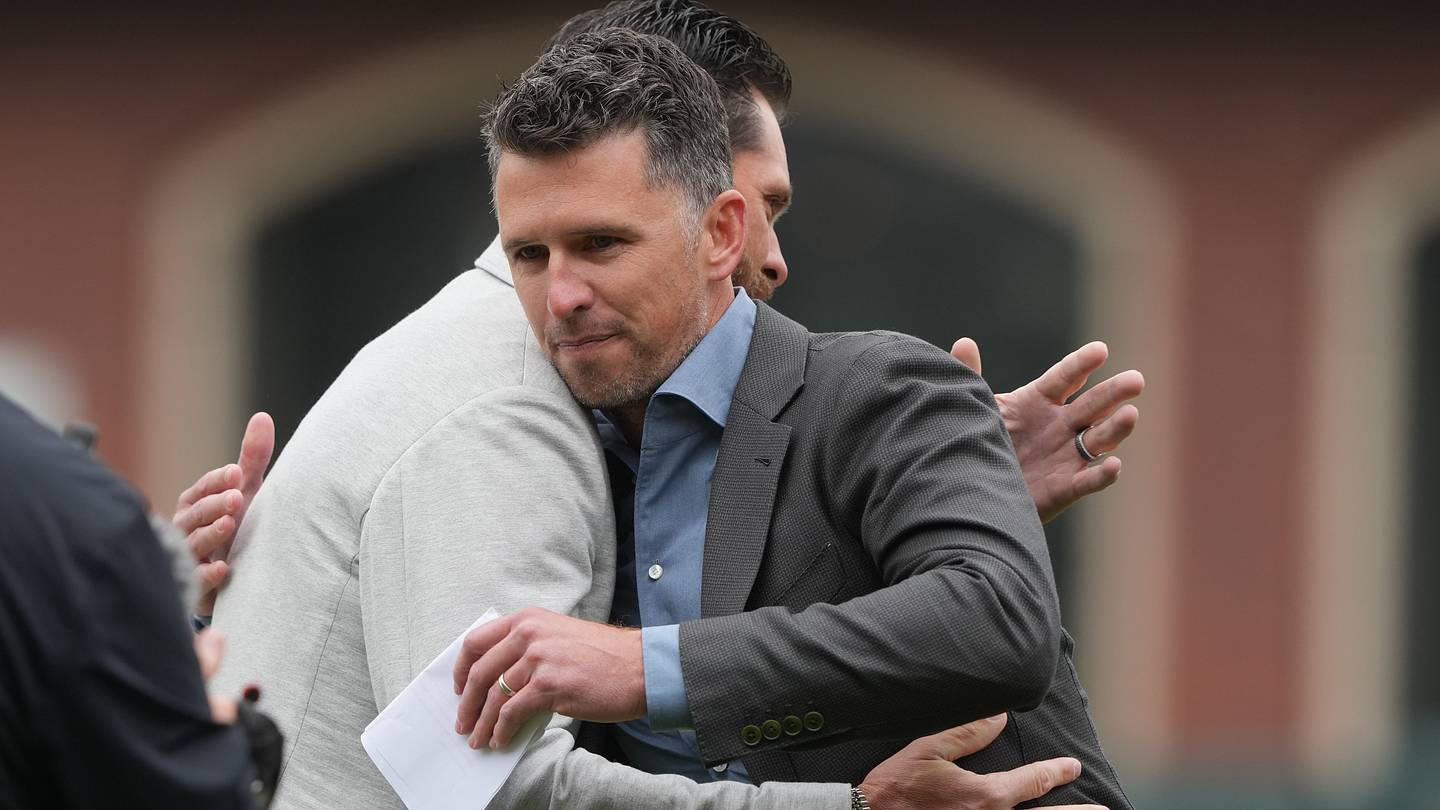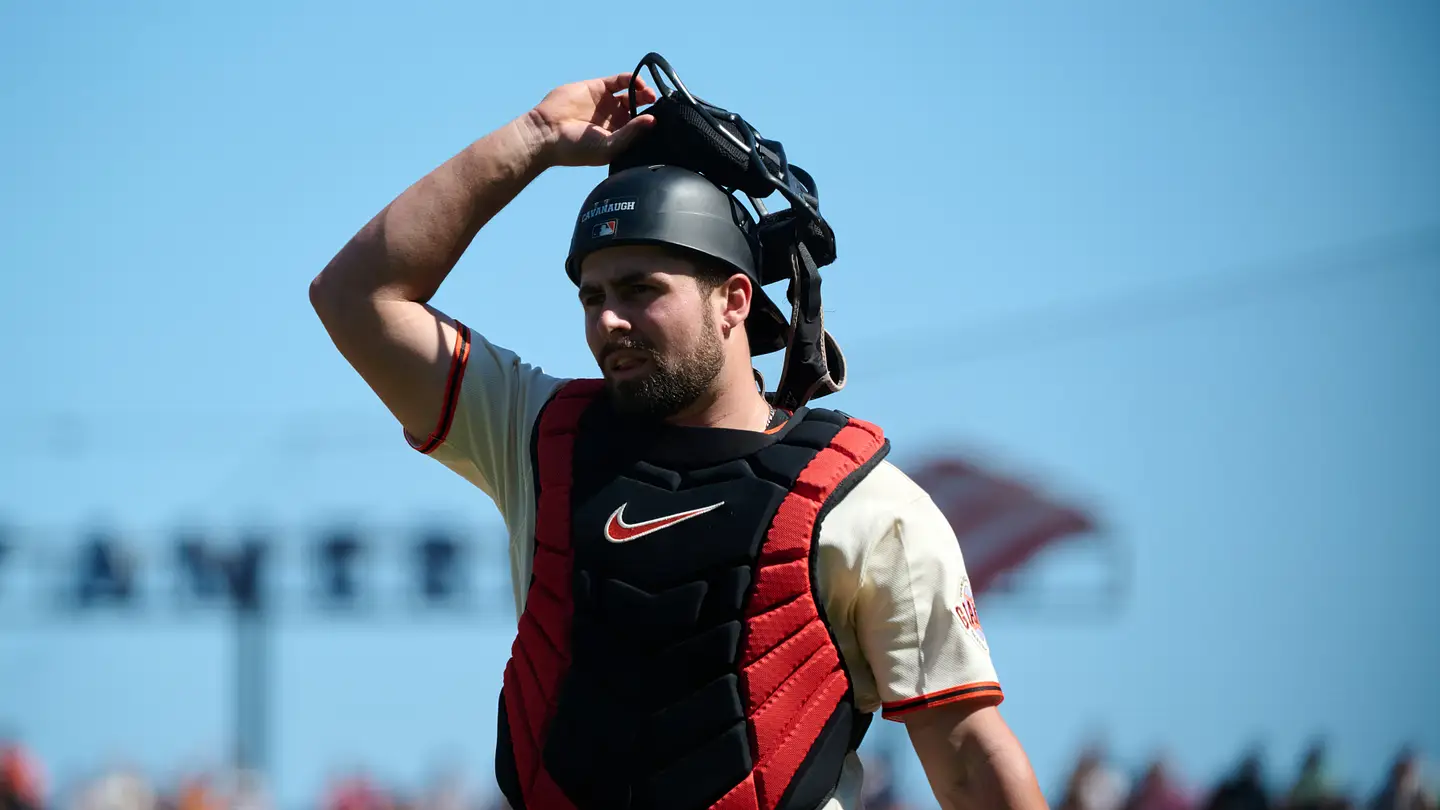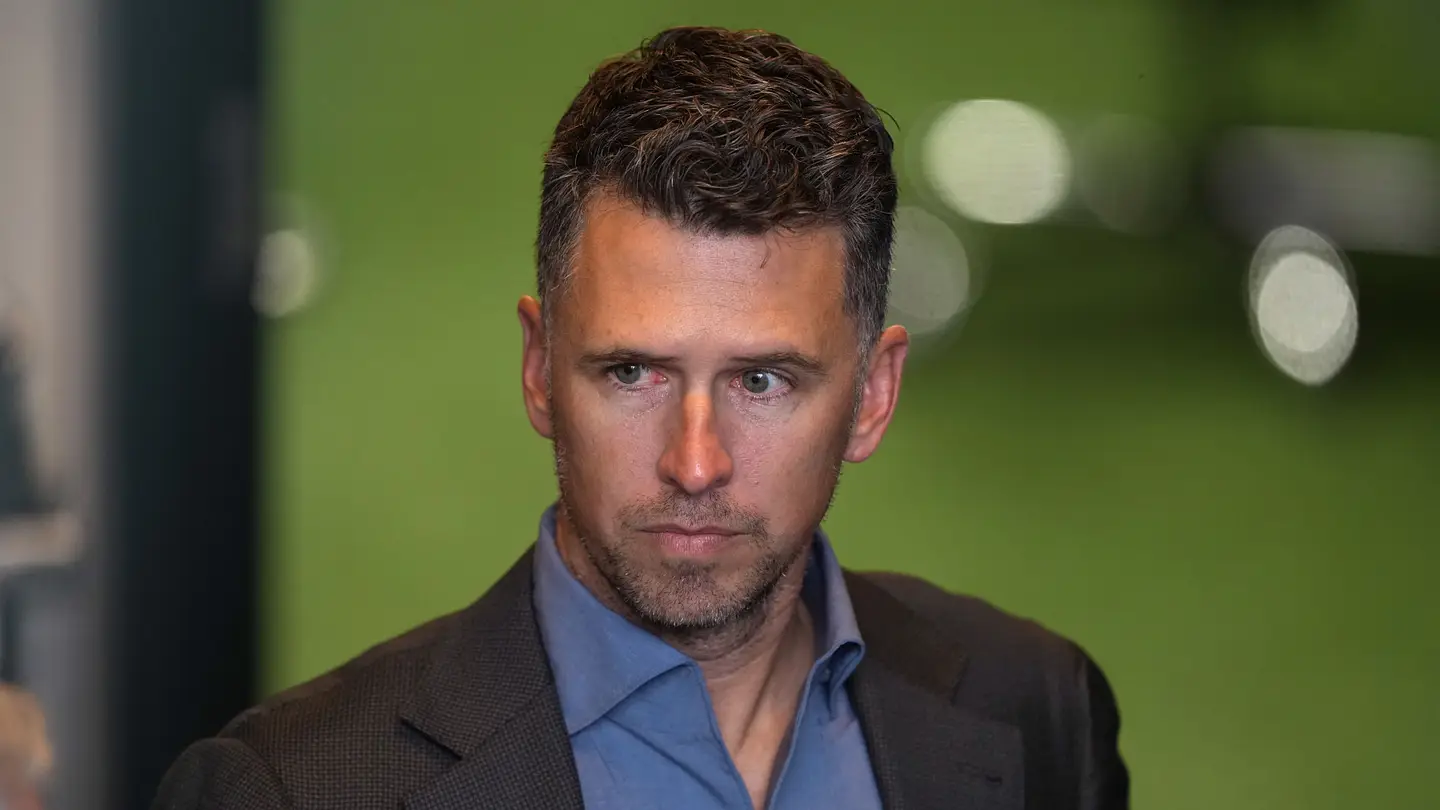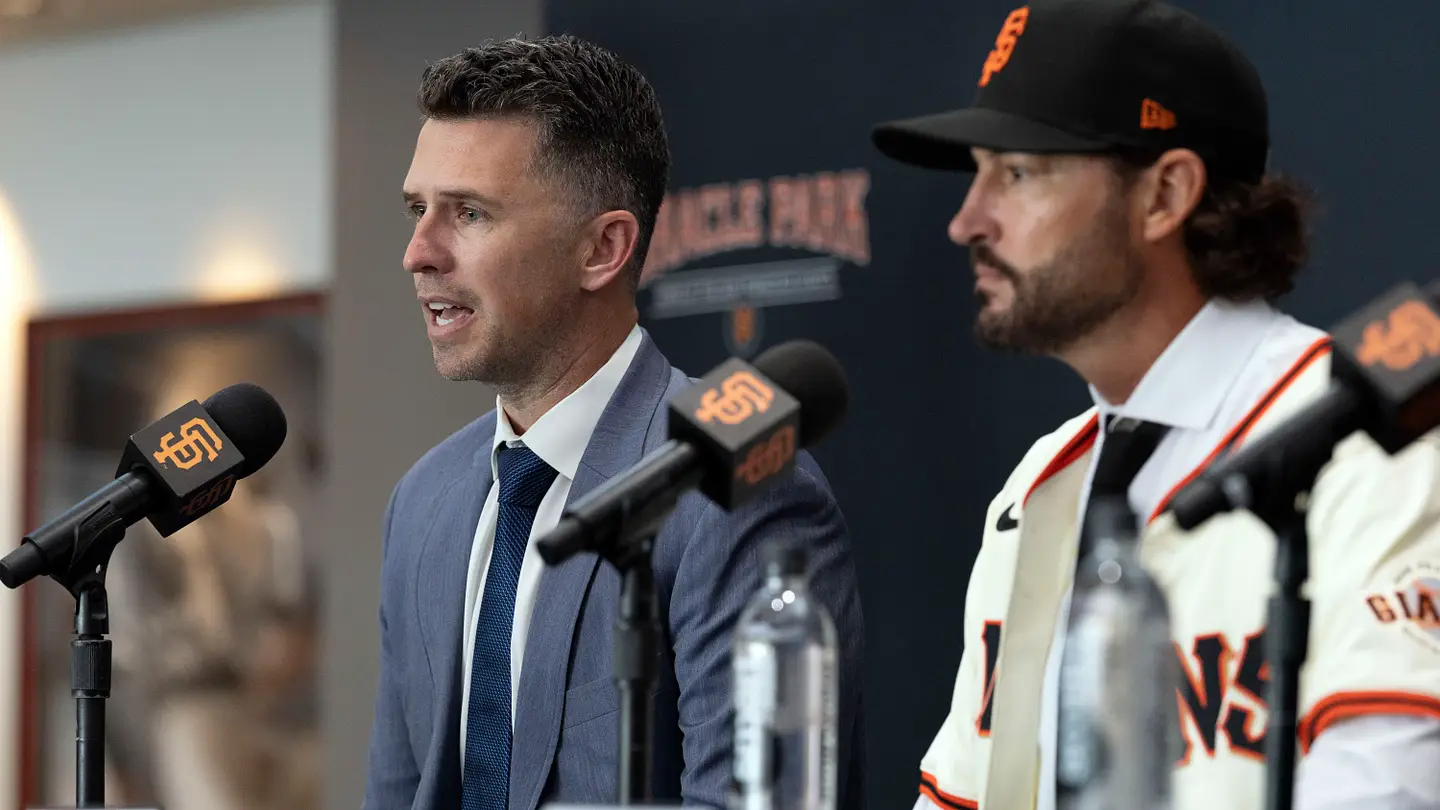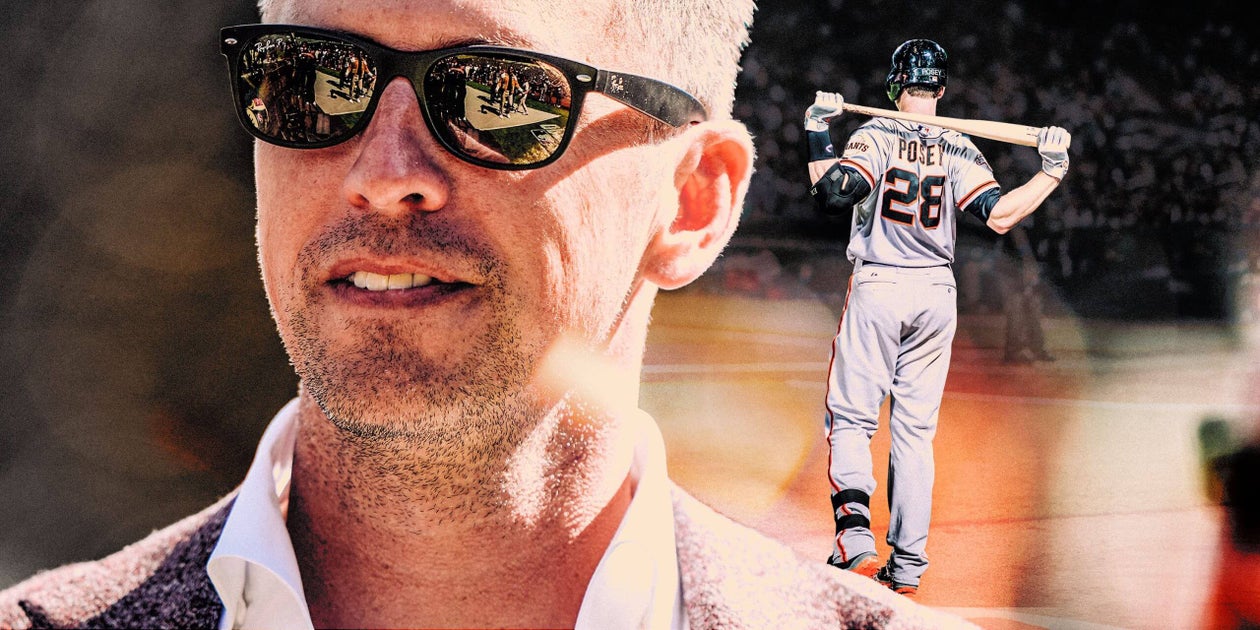
SAN FRANCISCO — The morning fog has morphed into a sunny 59-degree afternoon, but it sounds like thunder inside Oracle Park. Amid the applause, the guest of honor stands behind a lectern, flanked by posters of his playing days, all of which bear the same message: “Thank You Buster.”The pregame ceremony on Buster Posey Day, the first Saturday of May 2022, is a tribute to what the San Francisco Giants call “an unparalleled legacy.” Bruce Bochy, his former manager, says it was “an honor to have a front row seat watching one of the best ever do his thing.” Those in attendance laugh and reminisce and occasionally dab at the corners of their eyes.“It’s hard to know where to start, with all those kind words,” Posey says after thanking the crowd. “Makes me a little uncomfortable, as you all know, with all those nice things being said about me.”Before abruptly retiring the previous November, Posey spent 12 years as a homegrown star. Drafted in 2008, Posey won Rookie of the Year in 2010 and MVP in 2012, becoming the first National League catcher to do so in 40 years. He was a seven-time All-Star and an integral part of World Series winners in 2010, 2012 and 2014. Scores of Bay Area pets — and even some children — are named in his honor.The ceremony was a chance to say goodbye to a player who had earned immense respect around baseball, but whom many didn’t expect to see around the park until the next World Series reunion. Posey had already moved back home to Georgia. He shot down questions about managing or coaching, saying his focus was on family time with his wife, Kristen, and two sets of twins. Teammates joked that he was probably getting ready to grow a beard and go fishing.Four months later, Posey somewhat shockingly joined the Giants’ ownership group, which added a seat for him on its six-person board of directors. Two years after that, he was named the team’s president of baseball operations, effectively winning a power struggle with incumbent Farhan Zaidi, who was dismissed in the same September 2024 press release.It’s been a tumultuous two years since. Built to win now, this year’s Giants (50-71) are barreling toward a fifth consecutive non-winning season for the first time in franchise history. Posey invested more than a half billion dollars in an underperforming veteran core. His free-agent signing of shortstop Willy Adames has misfired. His big-swing trade for slugging Boston Red Sox first baseman Rafael Devers may hamstring the club for years to come.Posey took his biggest risk this winter when he hired manager Tony Vitello from college to the big leagues in an unprecedented jump that has exhibited some very public growing pains. Off the field, fallout from the team’s June Pride Night controversy made national headlines, and Posey’s refusal to speak about it later made things exponentially worse.Posey may have been uncomfortable with the praise showered upon him at his retirement ceremony, but for a player who garnered nearly universal admiration, he is now grappling with an entirely new sentiment from the Giants fan base: anger.The Giants' Buster Posey put his legacy on the line. Will it work?Brittany Ghiroli and morePosey’s ascent, unimpeded by an external candidate search, is at least in part a nostalgia play, an enormous risk in an industry that has become careful and data driven. One longtime MLB executive likened the direct jump from player to president to eating at a Michelin-star restaurant, then going to the grocery store to try to replicate the meal yourself.He doesn’t need the money nor the spotlight that comes along with this job. He has almost nothing to gain. Yet here Posey is, putting his sterling reputation on the line.“It’s either really admirable or really foolish,” said another rival executive who, like others interviewed, spoke on the condition of anonymity because he wasn’t authorized to speak publicly. “And we’ll know which when it’s over.”Posey is more than halfway through a three-year contract that runs until the end of 2027, the same season in which he likely will be voted into the Baseball Hall of Fame in his first year of eligibility. How long he will remain the Giants’ chief decision-maker beyond that remains to be seen.“Do you want to sit here?” Posey gestures to a high-top table in an empty booth behind home plate during batting practice. “We can watch some baseball, at least.”It’s early July. He has spent much of the afternoon in windowless rooms preparing for the weekend’s amateur draft. Despite the Giants’ struggles, watching baseball remains one of the best parts of Posey’s job.“I’m here because I believe I can do this,” he says at the beginning of an hour-long conversation. “Not to sound harsh, but I try not to sweat some opinions out there that I wouldn’t ask for advice.”At 39, he has a little more gray in his temples, but otherwise Posey looks exactly like he did on the field. The Giants are coming off a rare complete win over the Blue Jays. In a few hours, they’ll be down 8-0 in the third inning. The next day, they’ll be nearly no-hit by Toronto All-Star Dylan Cease.It was clear by early June that the season was off the rails. The Giants have never been above .500. The roster construction is flawed. The bullpen has been a significant problem, particularly in the ninth inning. Posey took significant heat on local radio earlier this season for saying he “didn’t regret” not signing a closer in the offseason.“I felt like we had other needs that were more pressing,” Posey reiterates. “It was a gamble I took.”The expensive veteran infield trio of third baseman Matt Chapman, Devers and Adames proved immovable at the trade deadline. Chapman, who had season-ending hernia surgery Tuesday, posted a .692 OPS in 84 games. Adames, 31 next month, is on pace for the worst season of his career with a 0.2 fWAR through 115 games. Devers has rebounded from a brutal start and was heavily shopped at the deadline, but to move him, the Giants have to absorb a significant amount of the remaining money on a 10-year, $313.5 million contract that runs through 2033.The architect of the roster has been grappling with something he never did as a player: lack of control. Rival executives warned Posey to not live and die with every win or loss, that the further you get away from the field, the harder it is to live with the results.Posey sighs. He’s quiet for a minute, trying to articulate how different his current role is from the one that made him a star.“You have control over trades or signings or who to release, but it’s very concise,” Posey says. “Maybe there’s a buildup to those decisions, but then they happen in a small moment of time. Then you live with those decisions, and sometimes there’s not anything you can do to rectify it if you want to go back on something.“Whereas if I make a poor decision on a swing at the plate,” Posey snaps his fingers. “I can change that on the next pitch.”Posey hasn’t been afraid to take big swings. He was instrumental in extending Chapman — overstepping Zaidi, who was in charge at the time — and didn’t hesitate to sign Adames to a franchise-record, seven-year, $182 million deal before the 2025 season. The Devers trade made sense at the time, giving the Giants the big-name slugger they kept missing in free agency. But in retrospect, the timing looks off.Devers is a big bat built for a win-now team. The Giants aren’t contending, and the 29-year-old’s contract may soon be an albatross, one that the Red Sox were happy to shed. While he was a three-time All-Star in Boston, some in the organization found Devers immature and selfish. On more than one occasion, Devers became upset when asked to honor the age-old practice of letting veteran players with more service time hit first in the batting cages. One former Red Sox star threatened to start swinging with Devers still in the cage if he didn’t move.There is no easy way out for Posey, who told local media after the Aug. 3 trade deadline — when he drew largely favorable reviews — he “was glad” to have Devers, Adames and Chapman still on the team.Giants president Buster Posey took his biggest risk this winter when he hired manager Tony Vitello from Vanderbilt. Lachlan Cunningham / Getty ImagesOne of the biggest decisions a baseball operations head makes is who mans the dugout. Wooing Vitello away from the University of Tennessee wasn’t just risky, it was head-scratching to many in the industry. With nine managerial openings across the league, the market was flooded with experienced talent – making Posey’s college hire all the more startling.Posey inherited veteran Bob Melvin but dismissed him at the end of 2025, just three months after a public show of support when he picked up Melvin’s ‘26 option. It marked the third straight season in which the Giants had made a significant leadership change, with former manager Gabe Kapler fired at the end of 2023. Posey said, at the time, the turnover wasn’t ideal but was necessary for a win-now 2025 group that went 29-36 in the second half.“Unfortunately, we talked about it a lot, what the standards are for the Giants,” Posey said after dismissing Melvin. “We have high standards. I hold myself to those same standards.”Unwilling to wade into the top tiers of free agency this winter, San Francisco is spending roughly $10.5 million on the manager spot — a $4 million buyout to Melvin, a $3 million buyout to Tennessee and a reported $3.5 million salary for Vitello, who signed a three-year contract.Lack of fundamentals is a league-wide problem, but incidents in which Giants players didn’t know the correct number of outs or cover the right base — Adames has been guilty of both this season — reflect poorly on Vitello and his new coaching staff. The rookie manager told players to treat him as a teammate, which raised eyebrows. Vitello has had clear issues deploying his bullpen and leading professional athletes making tens of millions of dollars. Perhaps no moment encapsulated that more than Devers temporarily refusing to exit a June 21 game after Vitello called for a pinch runner in the top of the ninth, then storming off to the dugout. Some inside and outside of the organization fear Vitello is too deferential to big leaguers and wonder if he might lose control of the clubhouse, if he hasn’t already.Vitello is expected to return next season. You get only so many managers, and Posey may not be able to afford another about-face.“One of the challenges in this job is trying to understand when is the time to act and when is it time to not and just hold the course,” Posey says. “I look at the job that Tony and his staff are doing, I don’t have any reason not to believe that what they’re doing isn’t gonna get us to a place where we’re playing more consistent winning baseball.”2027 will be a big season for Vitello. It will be even bigger for Posey.“Do I want to take this on?”Before the news became public, when only a small group of people knew Zaidi was going to be ousted, the enormity of what Posey was signing up for hit him.Upon joining the Giants’ board, Posey made it clear that he had no interest in Zaidi’s job. But two years later, Posey took the lead in stalled extension negotiations with Chapman. It was clear then: Posey wasn’t merely a feel-good figurehead.He had already moved back to the Bay Area with his family. He was three years removed from playing, the daily pain in his back and hip made more manageable by not spending hours a day behind the plate. Posey could have continued to play a part in the organization without being the Giants’ top guy. But the competitive juices that saw him abandon hobbies four months into retirement never went away.“Did I want my younger kids to see Dad just not do anything?” he muses.Posey was initially seen as a savior. Fans had soured on Zaidi — who led the organization to a franchise-record 107 wins in 2021, Posey’s last, followed by consecutive non-winning seasons — and were tired of being spurned by big-name free agents. Posey, beloved as ever, would give the Giants an identity again.It was, Giants chairman Greg Johnson later made clear, Posey’s idea.Buster Posey says Giants fans, in person, have been overwhelmingly supportive. Lachlan Cunningham / Getty ImagesIf he valued legacy above everything, he wouldn’t be here. Several top executives estimate it can take a decade of learning to figure out how to lead 400-plus people, the intricacies of player development and how to react when things go sideways.Posey’s closest comparison is Derek Jeter, the five-time World Series-winning New York Yankees icon who was part of the Bruce Sherman-led ownership group that bought the Miami Marlins in September 2017. Jeter, like Posey, owned a small stake in the organization and was named CEO with no prior front office experience. Miami went 218-327 during his time as key decision-maker before Jeter stepped down and relinquished his ownership stake in 2022 citing a “difference in vision.”But Jeter never played for the Marlins. Imagine the spotlight — and scrutiny — if Jeter had taken over the Yankees. “Jeter’s every move would have been eaten alive by the press,” said a team executive. “That is Posey’s reality.”And it’s one he willingly accepted. Posey said he decided to take the job after driving over the Bay Bridge nearly every day and catching himself fantasizing about the Oracle Park stands being full in October again. The image drove him past any hesitation.“There was definitely the realization of, ‘Wow, this is a big job,’” Posey says. “But once I got to that point, a strength of mine is always knowing when I put my head down at night I did all I could. I’m going to give this job my all and see if it works out, which I believe it will. If it doesn’t, I’ve got my group of people that care about me, and ultimately, that’s what matters.”Posey can’t recall a stint of prolonged bad press when he played, but this year’s club is one of baseball’s biggest disappointments, and local and national media have questioned both his ability to lead and job security. Recent headlines reference a “legacy tarnished” and “institutional failure.” After a segment on the Giants’ flagship radio station in mid-July, Posey was ripped on a hot mic.But nothing put him in the national crosshairs more than a June 23 news conference in which Posey opened with a brief statement, then declined to answer multiple questions about the controversy that erupted 11 days prior, when four players declined to wear rainbow-logo Pride Night hats or wrote Bible verses next to the team logo in protest.His head bowed and eyes downcast, Posey looked so uncomfortable in the terse session that a Giants PR staffer threatened to end it if reporters didn’t stick to baseball questions. Whether Posey should have been the one to answer those questions instead of Johnson or CEO Larry Baer was, in the moment, immaterial. Here was the franchise’s iconic leader looking like a wilted flower — and realizing that the president of baseball operations is responsible for more than baseball.“That’s probably something I underestimated a little bit,” Posey says. “There’s times where if there’s an issue with the clubhouse staff, sometimes that’s gonna make its way up to me. Or if there’s something on a larger scale, it’s gonna make its way to me. It’s certainly more than just baseball decisions.“I always tell young major leaguers, ‘You have to understand your responsibility now is more than just a baseball player. You’re an ambassador to the game, you’re an ambassador to your team and really to your family as well, and that extends beyond what you do on the field.’ I had that sense as a player, but maybe I didn’t realize the magnitude of it in this role.”Posey feels burned by some in the media. He’s not on social media but is well aware of the online backlash. In person, he said, fans have been overwhelmingly supportive. Encouraging even.“I haven’t had anybody berate me publicly,” he says. “It would be kind of interesting if they did.”One of the criticisms Jeter faced with the Marlins was the idea that perhaps he was too big of an icon, that no one in the organization would feel comfortable pushing back. Posey, asked if this is a problem in San Francisco, said he purposely tries to listen, not talk, and let other people chime in in big group discussions.He interviewed external candidates for outgoing general manager Pete Putila, whose departure was announced minutes into Posey’s arrival. The initial thought was Posey would want someone with considerable GM experience, particularly in player development. Ultimately, he promoted the 41-year-old Zack Minasian, who had been VP of scouting, from within.Posey inherited members of Zaidi’s and previous leaders’ front office, but he’s put his own stamp on things. He elevated former teammate Randy Winn from a scouting role to vice president of player development, a newly created position. He hired Jeff Berry, his former agent at CAA, as a special assistant. Both Vitello and Adames are CAA clients.Does Posey think he has surrounded himself with yes men?“I certainly hope not. Could I answer you definitively if that’s a thing or not? I don’t think so. I really don’t,” Posey says when asked directly. “This is a different team than on the field, but we’re all in this together. … Ultimately decisions that are made have my name on it for better or worse … so, it’s going to be my decision at the end.”Posey has no previous front office experience, making the merits of his inner circle and how he dispatches them even more important as he learns on the job. Zaidi, a GM with the Athletics and Dodgers before coming to San Francisco, failed to sign big names and was criticized for trying to win too much on the margins with copious waiver claims. But to the shock of multiple rival execs, Posey’s Giants have gone days this season with open 40-man roster spots, making just two waiver claims total from April through July.There have been hits, like the free-agent signing of second baseman Luis Arraez and the emergence of top prospect Bryce Eldridge. At the deadline, Posey received universal praise for trading three pending free agents, Arraez and starters Robbie Ray and Tyler Mahle, along with multiple players under team control, a haul that netted the organization eight young players, including five pitchers. Posey says several times that his goal is to build through the farm system, that pitching will be a significant emphasis moving forward.Posey’s acquisition of Red Sox infielder Marcelo Mayer could prove to be a big win. Mayer, once seen as a franchise cornerstone, is still just 23. Prospects sell hope, and the Giants farm system, led by a trio of young shortstops, improved enough post-deadline to put them fourth in Baseball America’s latest rankings released Wednesday. The system is deep, though most of the talent is in the lower levels.For all of San Francisco’s problems, fan interest isn’t one. The Giants are averaging over 36,000 fans a game, sixth-best in baseball through the first week in August. With the Athletics’ departure from Oakland, they’re now the only team in the Bay Area. The Giants ranked fifth-highest in Forbes’ most recent MLB franchise valuations and are one of just three teams who own their stadium.“They should be the West Coast Yankees,” said a veteran agent. “They have too much money to be this bad.”That puts Posey, hero or not, on the clock. Many around baseball think that he will have to show significant progress in 2027 –where they’ll again try to win – to keep his job. Still, he is no ordinary front office executive, and his unique status could afford him more time or a potential soft landing should he need it.Posey doesn’t even want to entertain that possibility. He is here because he thinks he can do the job better than his predecessor. He wants to tell you he truly believes this year’s team is better than its record, to remind you that each Giants team that won a ring was preceded by a season in which San Francisco missed the playoffs.“Sorry to keep going back to my playing days,” he says, “but that’s all I know.”Things can change quickly. But what if it’s five years down the road and it hasn’t worked out? Would Posey, who professes to be his toughest critic, know when to pull the plug if the Giants’ next chapter still lacks relevancy?“I don’t think that’s a question for me to answer,” Posey says. “Ownership knows my intent in this is that I want the Giants to be great. I’m certainly committed to that for as long as they think that I’m the right person. It sounds defensive, and I don’t mean it to sound defensive, but it is still early, you know? It’s my second year doing this.”The job is hard. Playing was, too. Maybe people don’t realize the sleepless nights Posey says he endured when he thought he wasn’t doing enough on the field, even after he had signed a big contract. Those nights still exist.Asked if he’s having fun, Posey says yes … about 85 percent of the time. It’s roughly the same ratio he had playing, but back then, his kids didn’t have to read mean stuff about their dad online, and he didn’t have to answer for every losing streak or off-field debacle. This is his life now, and Posey doesn’t want — or expect — any sympathy. He knows espousing his belief that the Giants are headed in the right direction only goes so far. They have to prove it.Batting practice is winding down. Posey, polite as ever, shifts in his chair. The interview is over unless he has anything else he’s dying to get off his chest. He laughs.“There’s plenty, but not for publication.”
From adulation to anger: Buster Posey’s Giants legacy is on the line
Stepping straight into the top job for the team he defined, Posey is learning that running a team is vastly different than leading one.
3,715 words~17 min read