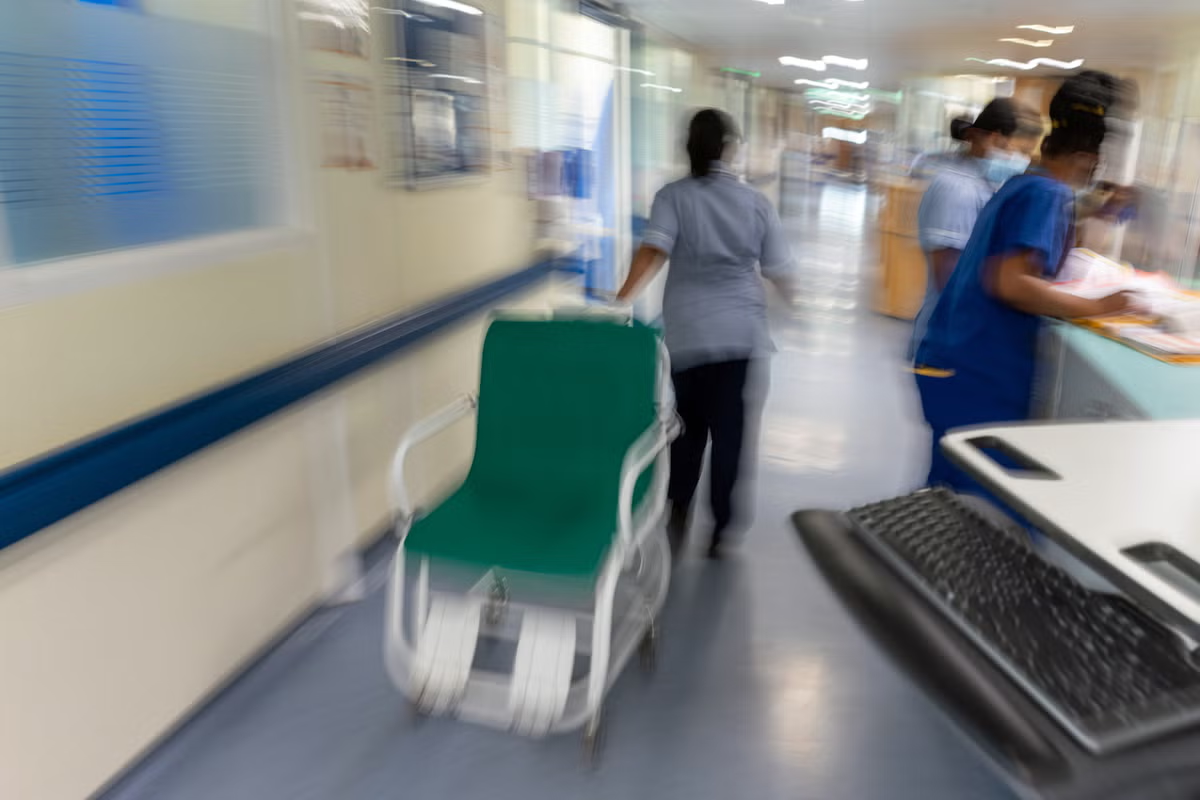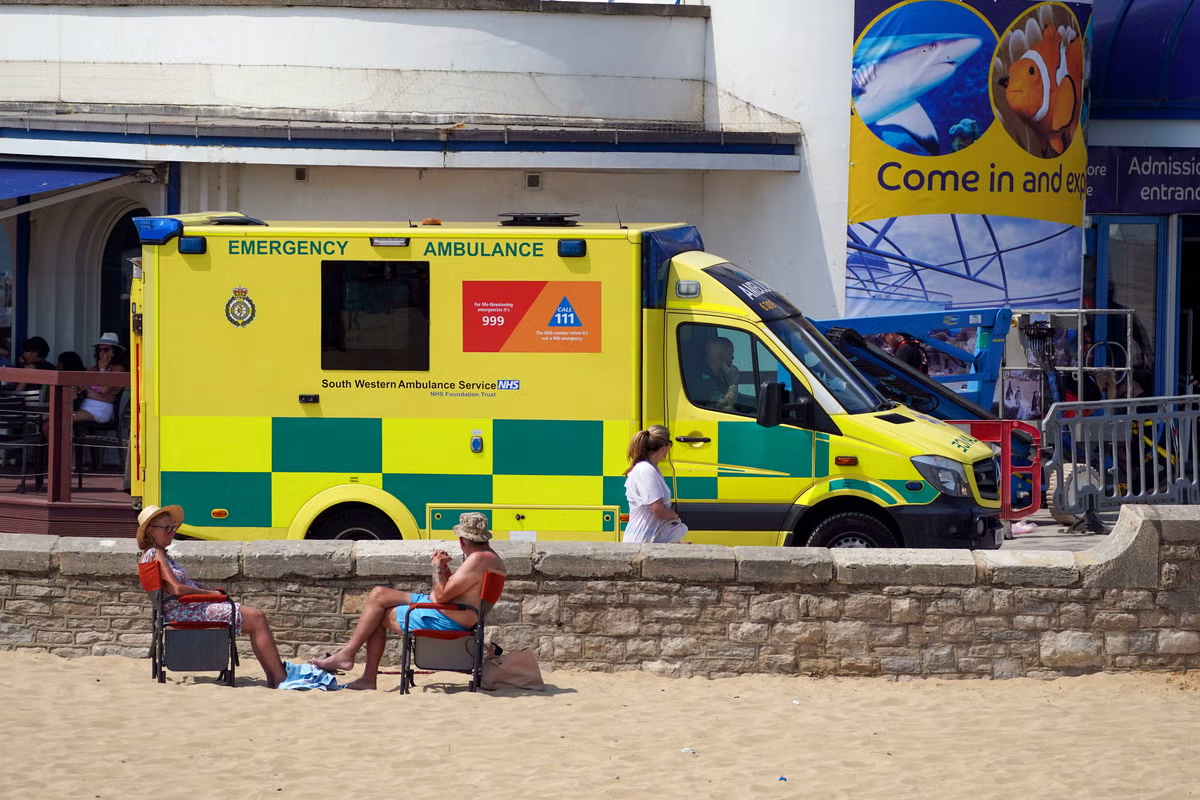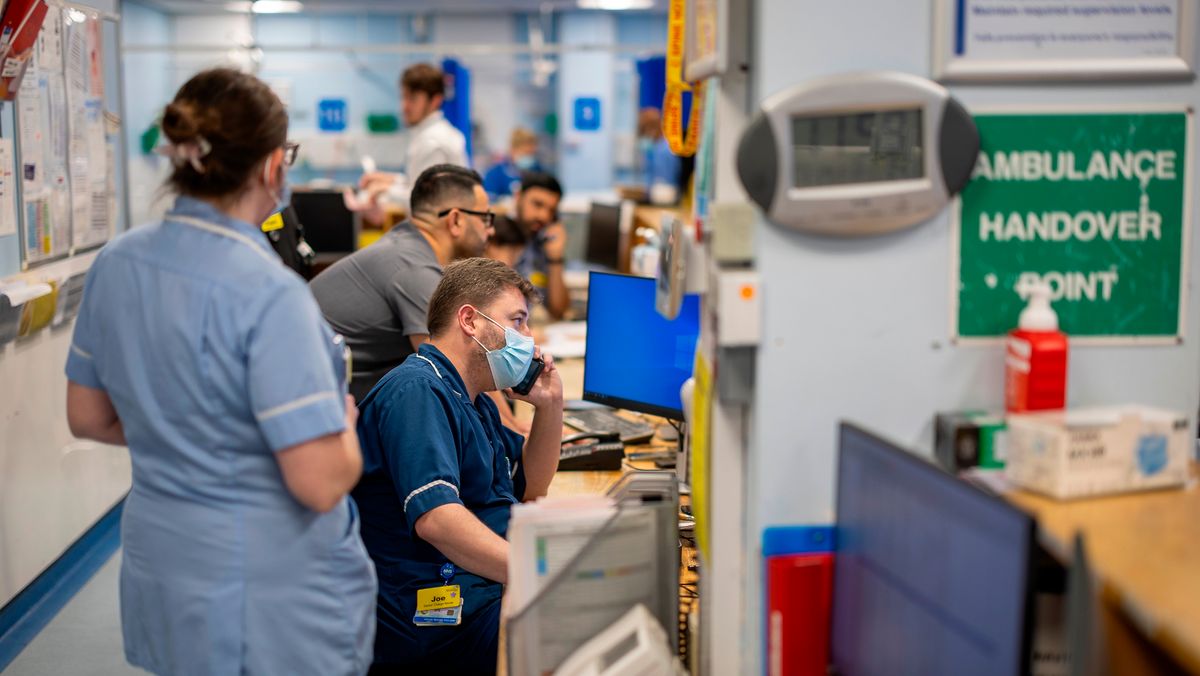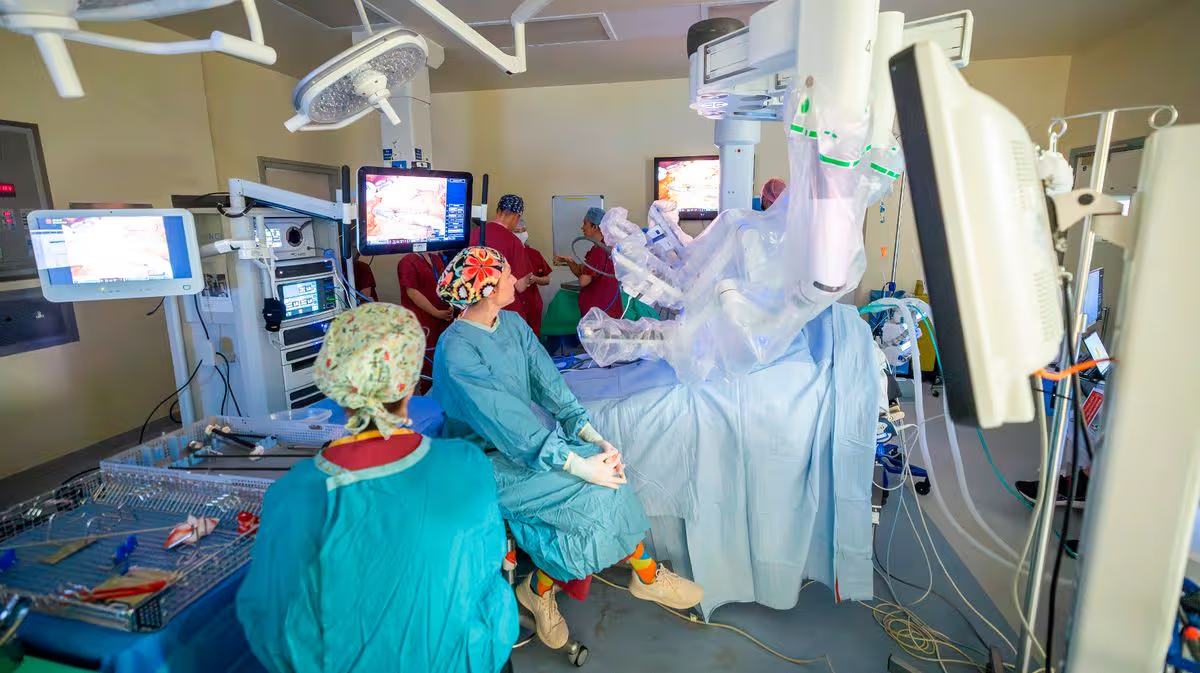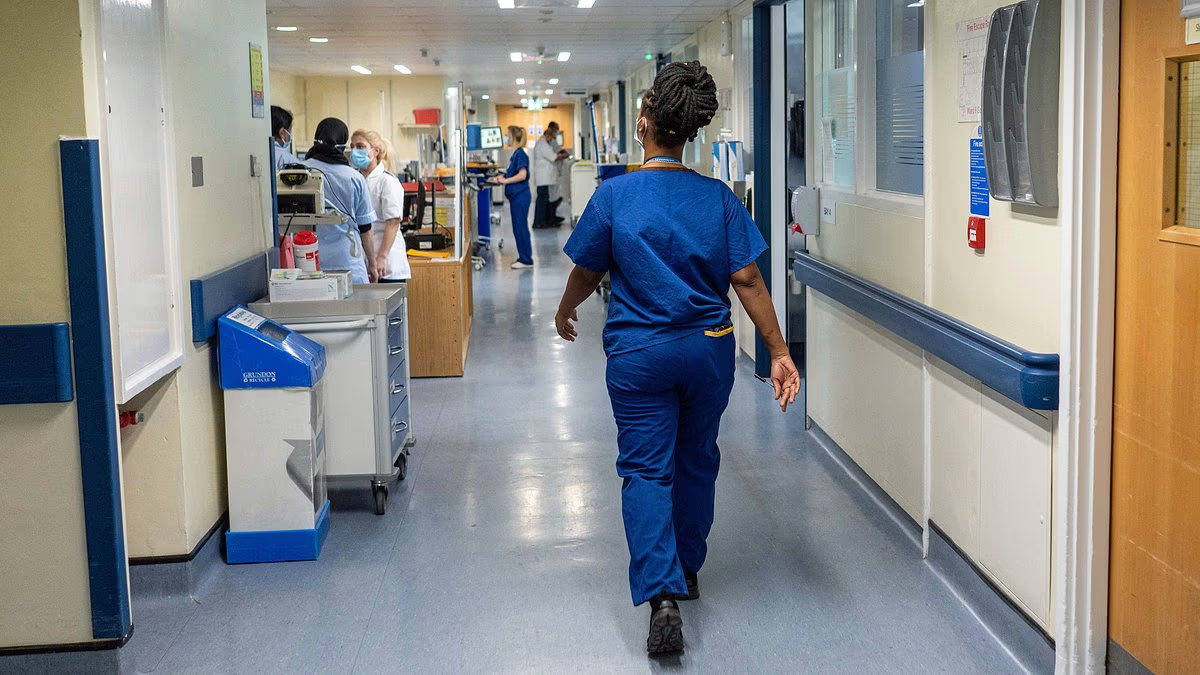
Nurses are collapsing as they treat patients in 36C buildings with no air conditioning, the Royal College of Nursing (RCN) has warned.The healthcare workers are 'dripping with sweat from head to toe' at work during five heatwaves in what is set to be the hottest summer on record.Sweltering conditions in ageing hospitals have led to many feeling sick, dizzy or even having a seizure, with some even admitted to the very clinic they work in.This has also caused concern for the welfare of patients being cared for in buildings which have been described as 'unbearably hot' and 'not fit for humans'.RCN chief executive and general secretary Professor Nicola Ranger said the fact that workplaces cannot handle the heat shows 'just how badly they are being failed'.In a series of testimonies taken from RCN members, some reported broken air conditioning, fans or ventilation in workplaces.Others were unable to even open windows in the buildings to allow some relief from the soaring temperatures inside the hospitals.Conditions became so extreme that one nurse collapsed from dehydration after a long shift on an unventilated ward and was admitted to their own hospital. One nurse told the RCN their workplace was 'not fit for humans' while another described their working environment as 'unbearably hot'Several described working in rooms where the temperature was in excess of 30C, with one saying they were forced to work in a place which was 36C (97F).Pregnant nurses said the temperatures they were forced to work in impacted their health, while two health workers with pre-existing conditions reported seizures due to excessive heat.Workplaces were described as 'not fit for humans' and 'unbearably hot'. A nurse in an NHS cancer service in England said temperatures above 33C (91F) left her nauseous, dizzy and faint. Another, working in a community health centre, said: 'It gets to the point you dread going to work, especially when wearing PPE (personal protective equipment) and providing patient care. We drip with sweat from head to toe.'Others expressed concern for patients, with one saying the heat affected surgical patients' recovery.Another added: 'We have elderly patients in our clinic, who we are increasingly worried about. We have got to the end of our tether with no support from our immediate seniors.'Professor Ranger said: 'These testimonies should be a wake-up call.'Swathes of the NHS and social care estate are in disrepair following decades of underinvestment and are utterly unprepared for extreme temperatures.'It's becoming an impossible and inhumane place to work or receive care, with vulnerable patients, including the elderly and those recovering from surgery, receiving care in temperatures that risk making them sicker. It's unacceptable.'Professor Ranger said employers must 'abide by their legal duties' to mitigate the risks to staff caused by the heat and make workplaces safer. She said: 'This includes installing air conditioning, improving ventilation, ensuring water and heat-appropriate uniforms are available and guaranteeing risk assessments are a core part of business planning, especially for pregnant or vulnerable workers.'We also need specific actions to protect those working in the community, who often are travelling in hot cars, with poor access to parking and left to walk long distances carrying heavy bags to meet patients.' RCN general secretary and chief executive Professor Nicola Ranger said hospitals are utterly underprepared for extreme temperaturesMatthew Hopkins, director of the NHS Alliance ambulance and acute network, said NHS organisations were pushing for increased funding from the Government to deal with maintenance of hospital buildings.He said: 'I think for a lot of our members that are running hospitals that are very old and where infrastructure's really under pressure, many of those hospitals are carrying significant levels of backlog maintenance.'Some of our members tell us that that totals, in some cases, more than £100 million worth of cost.'And inevitably, the boards of those organisations will be regularly discussing and focusing on the risk management associated with the trade-offs that they're going to have to be dealing with, you know, fixing a roof of a building to make it safe and watertight for winter versus installing air conditioning and potentially the impact on the electrical infrastructure.'Health Secretary Yvette Cooper has ordered the NHS to prepare for the effects of heatwaves each year in the same way that it plans for winter. And earlier this year the Climate Change Committee of MPs said that the Government should ensure cooling measures are installed in hospitals and care homes by 2035, ranging from shading through to air conditioning. There are no laws for minimum or maximum indoor working temperatures, and while guidance exists for minimum temperatures in workplaces, there is none for maximum temperatures – an increasing risk as climate change fuels more extreme heat. Ruth Wilkinson, head of policy at the Institution of Occupational Safety and Health, said: 'Indoor workers, like nurses, can find it just as challenging to work in extreme heat as outdoor workers.'This can be due to poor ventilation, lack of cooling infrastructure, and outdated building designs that leave them to cope in stifling conditions.'Heat stress can make it harder for people to work safely and effectively.'When it's too hot, the body has to work harder to stay cool, which can lead to health problems like dehydration, heat exhaustion, or even heat stroke.'Employers can take proactive steps to manage these risks and support workers. These can include adjusting work hours, providing cooling stations, and encouraging hydration.' Health Secretary Yvette Cooper has ordered the NHS to prepare for the effects of hot summers in the way it does for winterMs Cooper said: 'The extreme heat is hitting public health and our NHS.'Across the NHS and social care, staff are doing a remarkable job to respond to rising A&E attendances and ambulance call-outs, heat problems amongst the elderly and difficult working conditions. I want to thank them for all their work.'But I have also been clear that the NHS now needs to plan for summer pressures in the way we currently plan for winter pressures. 'That includes making sure buildings are more resilient in these new extreme heat conditions as well as responding to additional patient needs.'It comes as Britain braces for the hottest day of the year so far, as parts of England may hit 38C during the peak of the fifth heatwave of the summer.Rare amber 'extreme heat' warnings have been issued by the Met Office for London and parts of the South East, East Midlands, East of England, West Midlands and South Yorkshire from 9am to midnight on Thursday.Yesterday Andy Burnham chaired a Cobra meeting in response to the prolonged spell of exceptionally hot and dry weather. The Prime Minister said that there had been a 'significant number of excess deaths from heat this summer already' and urged the public to follow health advice, including checking in on elderly friends and relatives.Two record-breaking heatwaves in May and June led to more than 2,800 excess deaths.Nearly three-quarters of England and the whole of Wales are in drought, heaping pressure on water resources for households, agriculture and the environment.Baroness Brown, who chairs the independent advisory Climate Change Committee's adaptation work, warned it 'gets worse from here' until the greenhouse gas emissions – mostly caused by burning fossil fuels in power plants, vehicles, home heating and industry – behind global warming are cut to zero overall, known as Net Zero.
Nurses collapse in hospitals as they endure 36C heat without air con
Nurses are 'dripping with sweat from head to toe' at work during five heatwaves in what is set to be the hottest summer on record.
1,213 words~6 min read