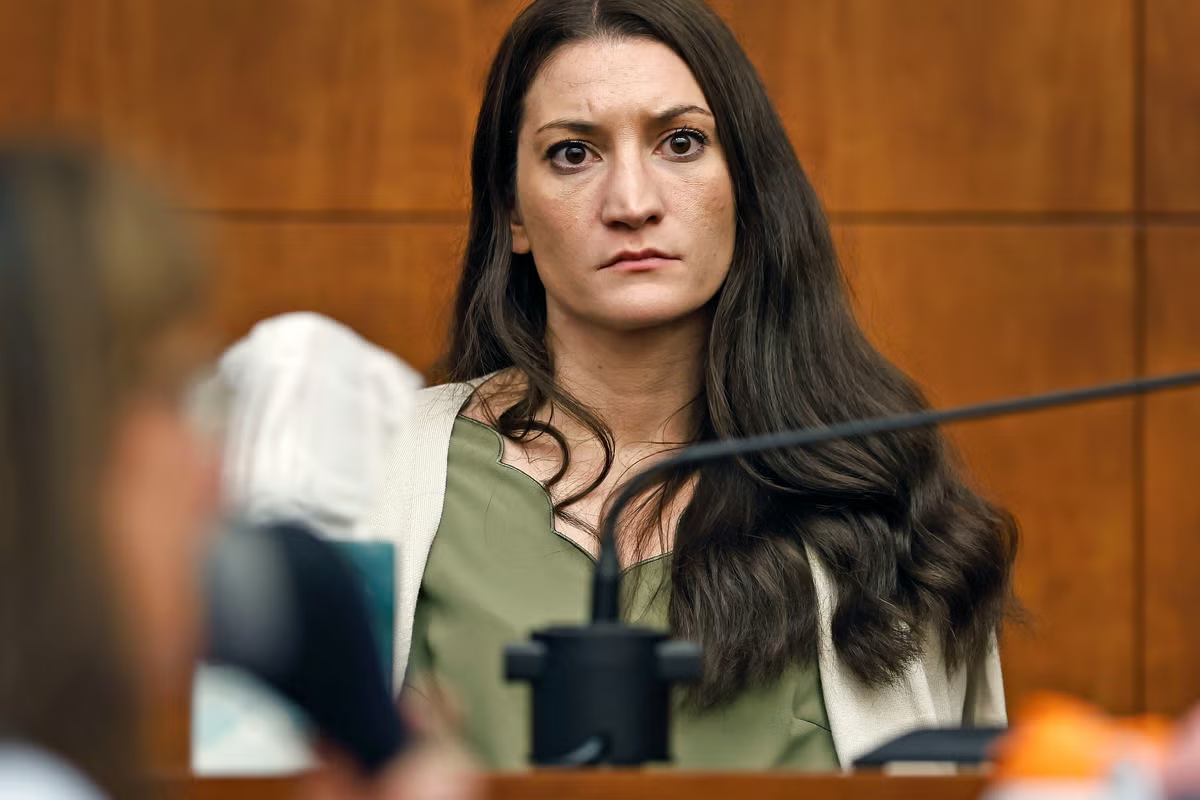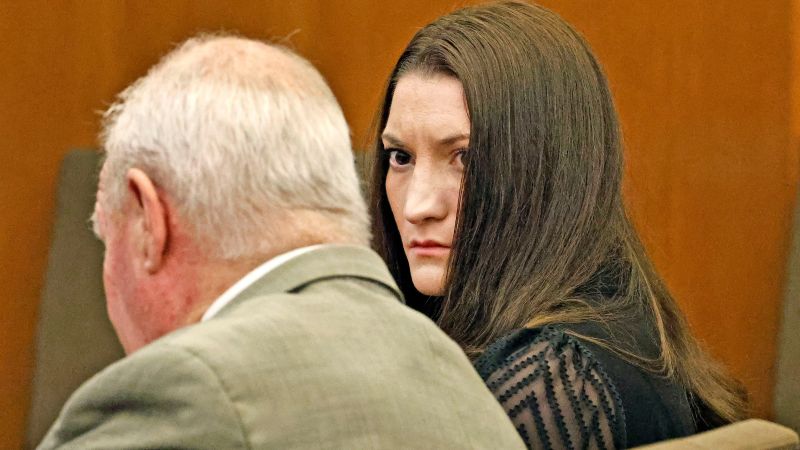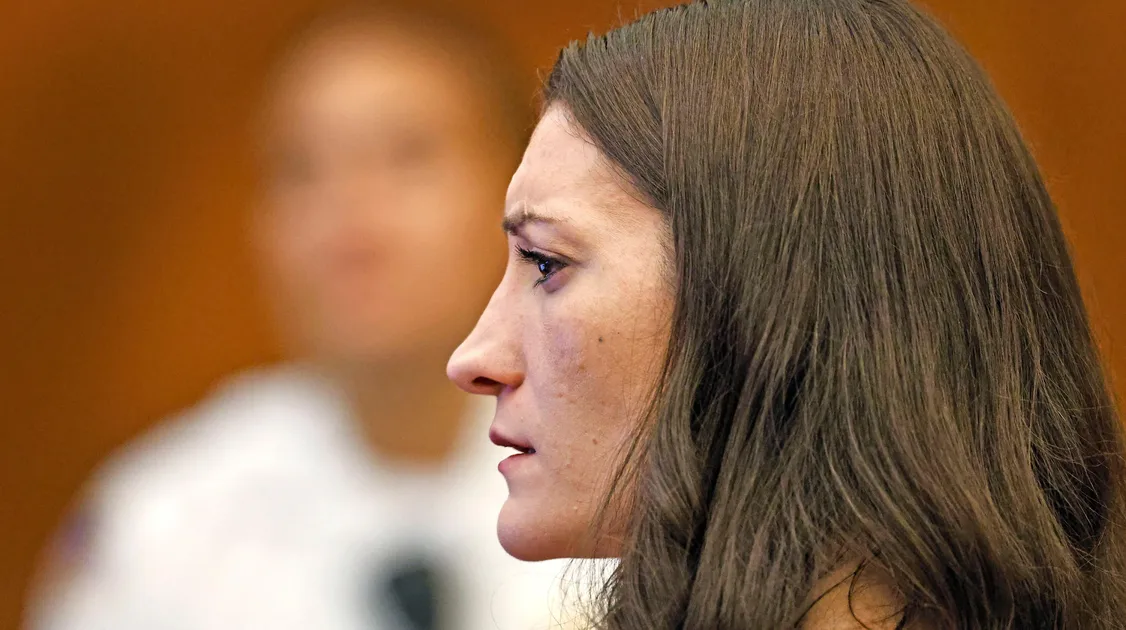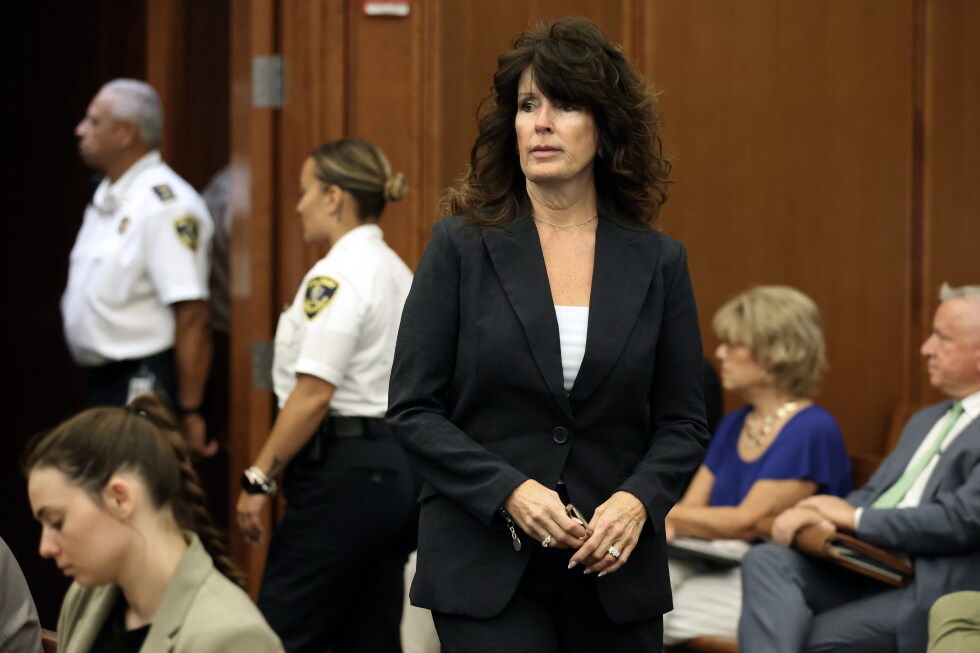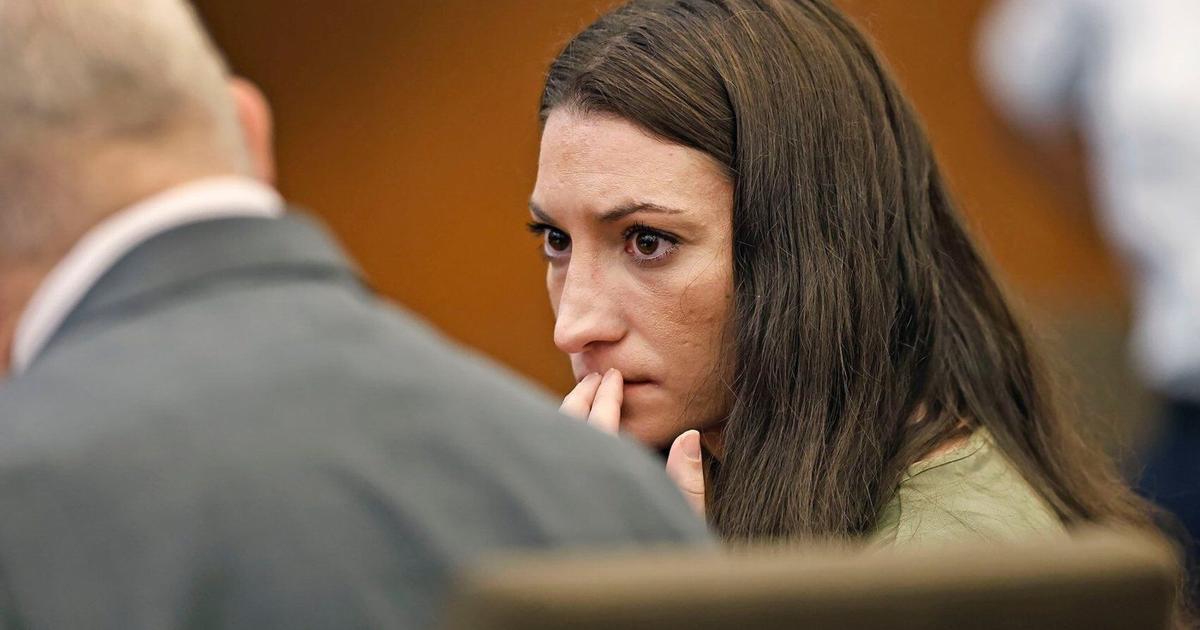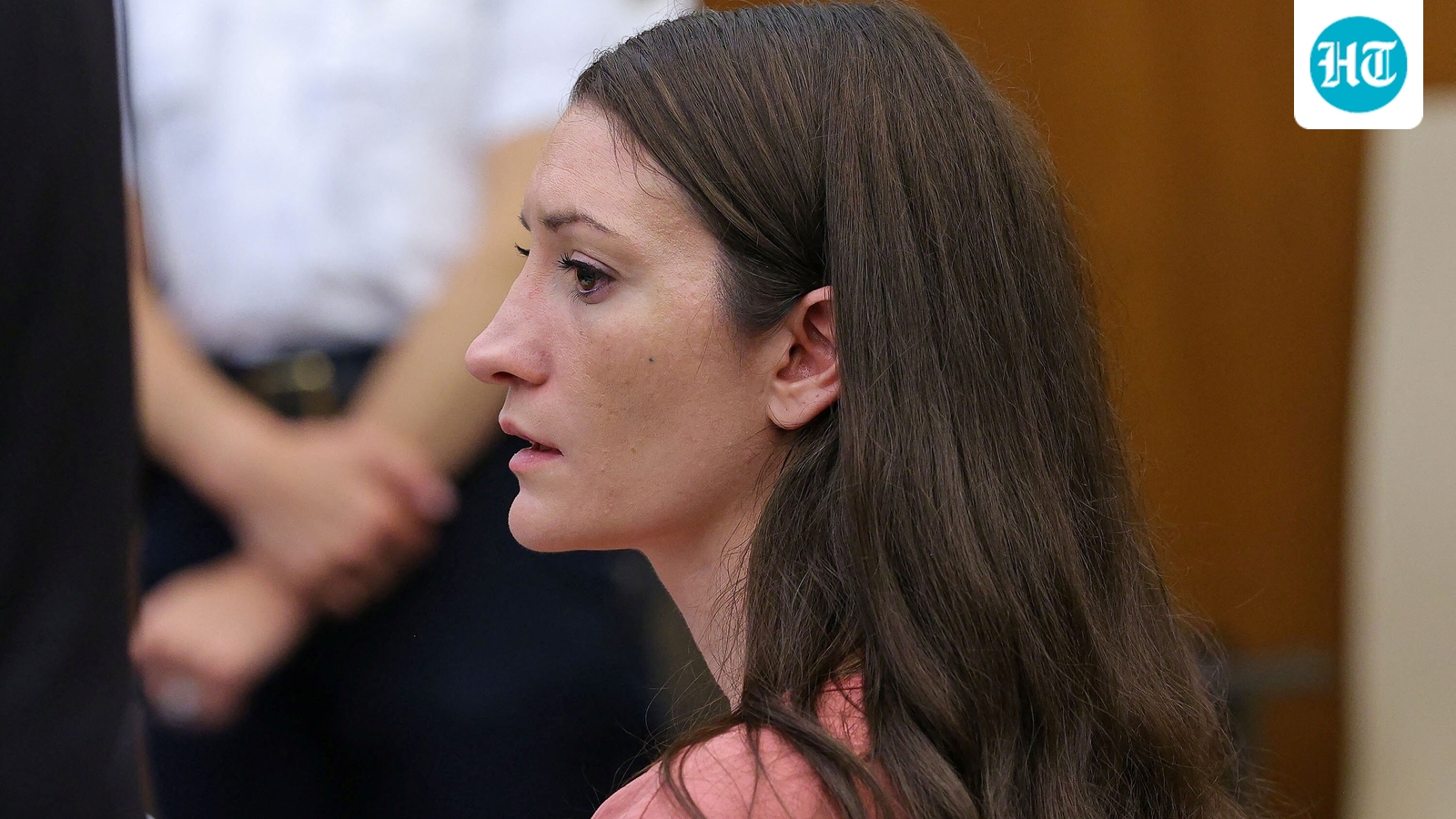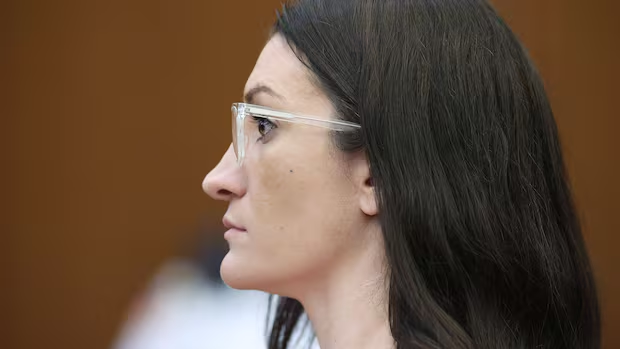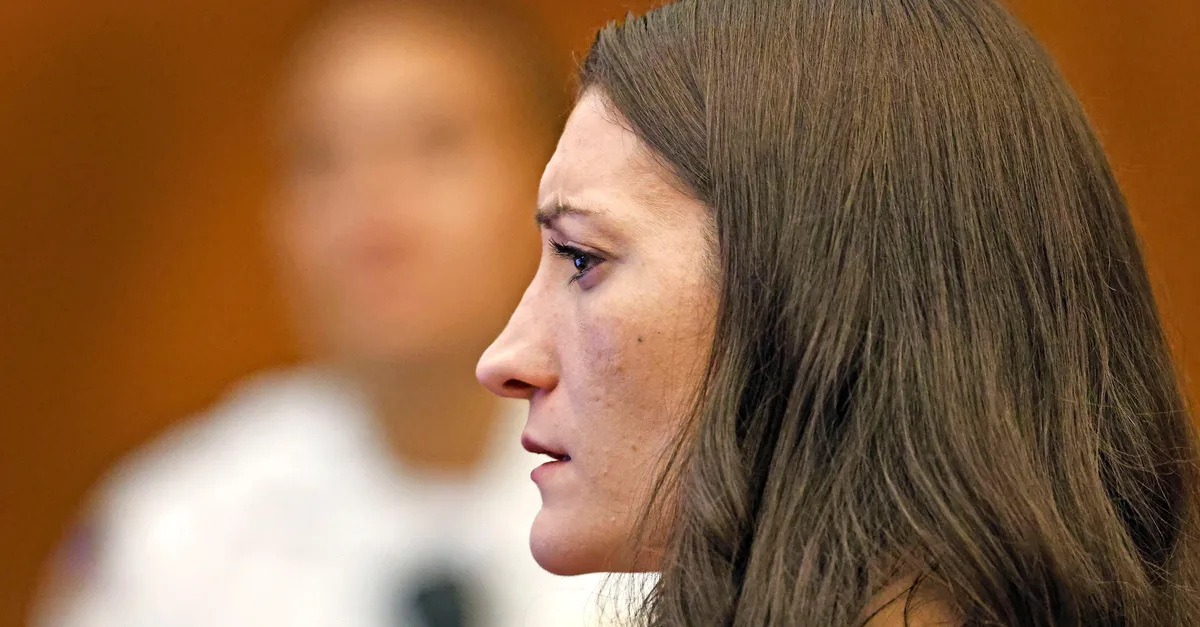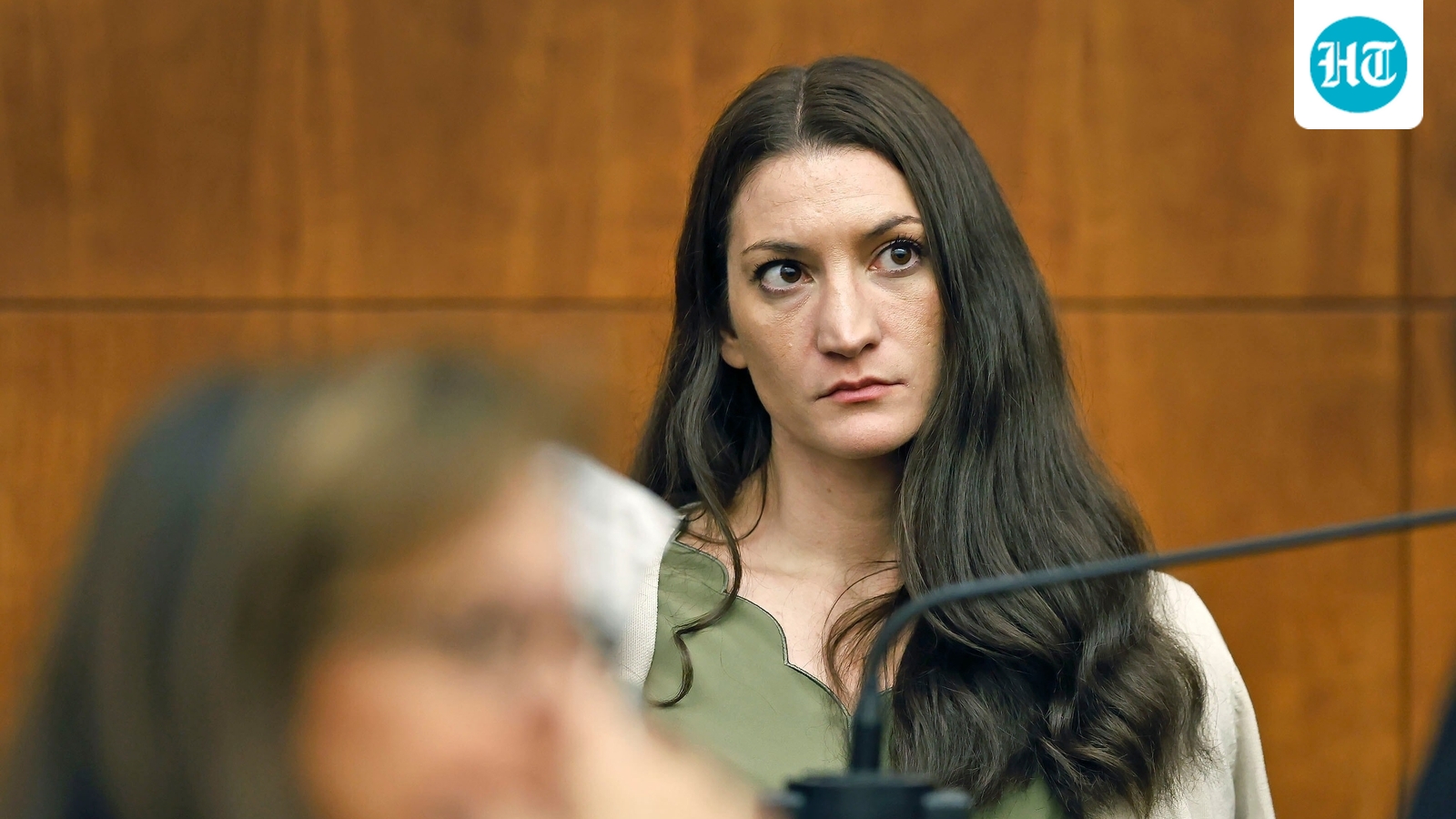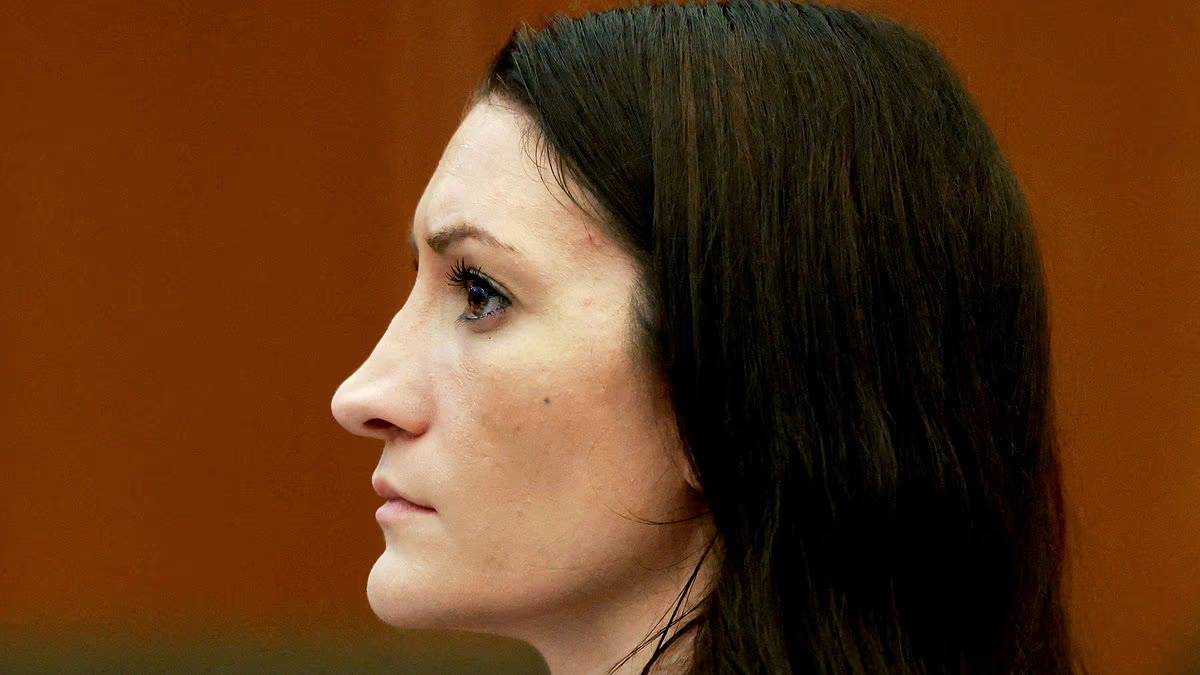
To childhood friends and local teachers, Lindsay Clancy was a loving mother who cared deeply about her three children.Together with her husband, the Massachusetts family of five made up the picture-perfect facade of 'the all-American family'.But beneath the shiny surface, Clancy was descending into a pit of despair due to postpartum depression and psychosis.In a case that shocked America, the former labour and delivery nurse strangled her three children – eight-month-old Callan, five-year-old Cora and three-year-old Dawson - before slashing her own wrists and attempting suicide in January 2023.Now, in a spectacle dubbed 'America's saddest murder trial', the 36-year-old - who has been charged with three counts of first-degree murder - is fighting to prove that her undiagnosed illness was what led her to the killings.Her legal defence has been supported by her now divorced husband, Patrick, who returned to their home in coastal Duxbury in January 2023 after picking up takeout food to discover an unusually quiet house, with 'blood everywhere' inside the bedroom.He discovered his wife lying in the garden after she jumped out of the second-floor window, with 'deep cuts on her wrists... and a red line across her neck'. He called emergency services. When they arrived, his wife told him the children were in the basement. Lindsay Clancy listens to Judge William F. Sullivan addressing the court at her murder trial in Plymouth, Massachusetts, August 11 Defence attorney Kevin Reddington, right, listens to graphic testimony as his client, Lindsay Clancy sobs, during Clancy's murder trial at Plymouth Superior Court in Plymouth, Mass., Wednesday, August 12 The defence says Lindsay Clancy was in the grip of bipolar disorder and postpartum psychosis, a rare postpregnancy condition that can alter a woman's sense of realityAfter sprinting to the basement, Patrick saw his daughter Cora first.'She had a band around her neck,' he said in court, referring to an exercise band. 'She was face down.'He then saw Callan next to her with an exercise band around his neck as well.Patrick said he then searched for Dawson and found him in his office, also with a band around his neck.He told the court his wife said to him roughly a week after the incident that she 'heard a man's voice' directing her to kill the children. If convicted, Clancy - who was left paralysed and in a wheelchair following her suicide attempt - faces life in prison without parole.Prosecutors seek to convince the 12-member jury that the then-32-year-old made a 'calculated' decision to kill their children. They say she was an intentional killer, who contrived to get her husband out of the house in order to strangle the children with exercise bands on January 24, 2023.Prosecutor Shanan Buckingham has urged jurors not to view the trial as 'a public debate about women's mental health and how the medical system treats women'.Clancy's attorneys do not dispute that she killed the children. But they argue she should not be held criminally responsible because she was mentally ill - believing she heard voices ordering her to take their lives and her own.The defence says she was in the grip of bipolar disorder and postpartum psychosis, a rare postpregnancy condition that can alter a woman's sense of reality. A forensic psychiatrist diagnosed Clancy with those conditions after the killings.Clancy and her former husband are also suing her former healthcare providers, for medical malpractice and negligence. The evidence given in court in recent weeks has bolstered the contention that the mother was overmedicated and underserved as she tried to seek help, before she suffered a psychotic mental break – exacerbated by undiagnosed postpartum depression.The evidence has also strengthened the defence argument that Clancy’s medical team failed in its duty of care towards her before the killings.She had messaged one of her caregivers less than two months before the horrific incident, to say she was having 'intrusive thoughts I never had before,' 'feeling completely hopeless' and worried about becoming addicted to some medications.Rebecca Jollotta, a psychiatric nurse practitioner at South Shore Health Perinatal Behavioural Health Programme, testified at the trial Tuesday she exchanged messages with Clancy regularly on a patient portal throughout late November and December 2022. Many of their conversations revolved around Clancy reporting trouble sleeping, depressive symptoms she was having and her search for the right mix of medications to treat her symptoms.Several times Clancy indicated to Jollotta either that she had not taken the full dose of a prescribed medication or that she wanted to reduce a dosage or change her prescription based on what she felt were intolerable side effects. Clancy also worried about being addicted to some medications like Ativan, but Jollotta said she was not. If convicted, Clancy - who was left paralysed and i n a wheelchair following her suicide attempt - faces life in prison without parole In a case that shocked America, the former nurse strangled her three children – eight-month old Callan, five-year-old Cora and three-year-old Dawson - before slashing her own wrists and attempting suicide in January 2023'I really don't like the way I feel on the Remeron and I know that I can't stick with taking it,' Clancy said in a December message, asking to switch from the antidepressant, which also is used to treat anxiety and insomnia, to a previous prescription mix. 'I started having very intrusive thoughts that I never had before.'Jollotta tried to assure Clancy that having intrusive thoughts is common with someone diagnosed with postpartum depression and anxiety and encouraged her to give the Remeron more time to work since she had only been on it a few days.'This could be some postpartum anxiety. And I wanted to familiarise her with the symptoms, so that she had them written down and she could report them to me,' Jollotta said.Jollotta, who is among several providers that Clancy and Patrick have sued over her care, repeatedly came up with alternative treatment plans for Clancy including a range of different medications, behavioural therapy, support groups and meditation. But she acknowledged that it was up to Clancy whether she chose to follow her advice.'I'm only making recommendations based on my education experience, training and what I'm seeing in terms of symptoms,' Jollotta said. 'The patient has the autonomy.'During their virtual and in-person visits, Jollotta said, Clancy never talked of having a plan to harm herself or her children. She also never showed signs of psychosis or mania.But Jollotta acknowledged that Clancy did report having thoughts of suicide. She also suggested that Clancy might have underlying bipolar disorder - due to her days of going without sleep. But Patrick has denied that was the case.In mid-December, Jollotta had a call with the couple and was told Clancy had her 'worst day' and was 'having persistent, intrusive thoughts of suicide'.Jollotta suggested she consider a higher level of care such as that offered by Massachusetts General Hospital. She settled on the Women and Infants Hospital postpartum programme in Rhode Island but was soon discharged - with advice to stop taking one of her antipsychotic medications.Jollotta, who was going on vacation, said she was concerned that Clancy had been discharged from the hospital, telling her in a message that she 'could benefit from the groups and added support separate even from medication changes'.She was worried the hospital wanted Clancy to go off Seroquel, the antipsychotic medications. Clancy was advised this could lead to 'worsening of mood, worsening of sleep,' but she insisted on going off the medication. Jollotta agreed to slowly reduce the dosage.During cross-examination, Clancy's attorney Kevin Reddington argued that Jollotta was not familiar with the care Clancy received elsewhere.Jollotta never talked to one of Clancy's psychiatrists, Dr. Jennifer Tufts, nor did she access Tufts' medical records. She did not know how many times Clancy saw Tufts, noting that she only thought Tufts treated Clancy in September.'Would it surprise you if I told you that she saw Dr. Tufts 14 times' during a four-month period ending in January, Reddington said.Jollotta never talked to anyone from the Rhode Island hospital that admitted Clancy, nor did she have access to the records of McLean Hospital, a psychiatric facility that Clancy admitted herself into on New Year's Eve.'If you're treating a person through all of this stuff that we've talked about and it's now apparent that things have decompensated so bad that they have voluntarily admitted her to a locked ward in a mental institution, is it important to Rebecca Jollotta to find out what the diagnosis and treatment was of their patient?' Reddington said.Jollotta agreed it was but acknowledged that she never did find out. Prosecutors seek to convince the 12-member jury that the then-32 year old made a 'calculated' decision to kill their childrenThe court heard Clancy being described as a 'very loving mother who cared about her children' but also that she was in a 'difficult mental place', feeling 'tired and anxious'.Three psychiatrists who saw the mother in the months leading up to the killings explained why they did not diagnose her with postpartum psychosis.Dr Alia Goodheart said she thought of Clancy as a 'low-risk' patient. The former nurse had told her she was experiencing insomnia and numbness and having suicidal thoughts, but did not have a plan to act on them.Another, Dr Jennifer Tufts, said Clancy reported feeling concerned about possibly 'one day having suicidal thoughts' if she continued 'to feel poorly', but showed no signs of mania. She advised the mother to stop taking Zoloft (sertraline), a medication used to treat panic and obsessive-compulsive disorders, and to try natural remedies including fish oil.She also told Clancy to take lorazepam in instances of 'severe anxiety'.The court has heard that she was prescribed 13 different psychiatric medications in the months leading up to the January 2023 incident.Tufts began treating Clancy in September 2022 and saw her 14 times over nearly five months, with her final appointment taking place the day before the violence.She never met the mother in person and all of their appointments were conducted virtually.Both Tufts and Goodheart are named in a medical malpractice lawsuit Clancy and her former husband Patrick have filed. So far, the trial has often made for difficult listening.It was paused multiple times on Wednesday as Clancy sobbed and cried out, 'I can't do this,' as a medical examiner testified about her children's injuries after she strangled them to death. Presiding judge William Sullivan has reminded jurors they cannot decide the case based on emotion.The court heard from a state police investigator, who testified that authorities found no evidence that Clancy had ever been abusive toward her children.Her former father-in-law, Christopher Clancy, described her as a 'very good' mother, who together with Patrick created the impression of 'the all-American family'.Clancy's childhood friend, Amy Bevins, described her as 'a good person, a good friend, a good mum'.Bevins said her friend had been open about her difficulties with her mental health and told her that a medication she was taking was causing her to have 'dark thoughts'.Bethany DeCollibus, a family therapist, said Clancy’s demeanour came across as normal, but that she had described being unable to sleep and feeling 'like a zombie'.A teacher from the elder children’s school described Clancy as a 'very loving mother who cared about her children'.The court heard how on the day of the killings, Clancy took Cora for a regular pediatric check-up. Recalling the appointment, the pediatrician, Dr Lindsay Rosshirt, testified that 'as far as I can recall, it was a very normal visit'.Dr Nicole Kumi, an expert in postpartum mental health, said the trial raised a number of issues about the diagnosis of postpartum mental health disorders and how the healthcare system identifies and responds to them.The trial, she said, highlighted 'a significant gap in care for mums in the postpartum period'.'We see it frequently and we see it escalate to unfortunate outcomes, because of a lack of education and awareness for mums, their partners and for members of the community that could potentially intervene before it gets to the state it got to with Lindsay Clancy,' she told the Guardian.Clancy, Kumi said, was actively seeking support. 'She knew something was wrong, but she didn’t know what was wrong,' she said. ‘She was crying out for help within her home and within the healthcare system, and all she was met with was medication and redirection,' Kumi said, adding: 'That’s not how we solve problems in maternal healthcare.'The Clancy trial exposes what Kumi describes as 'a maternal healthcare crisis in this country'.
Mum denies murder, saying postpartum depression made her kill children
In a case that shocked America, Lindsay Clancy strangled her three children before slashing her own wrists and attempting suicide in January 2023.
2,073 words~9 min read