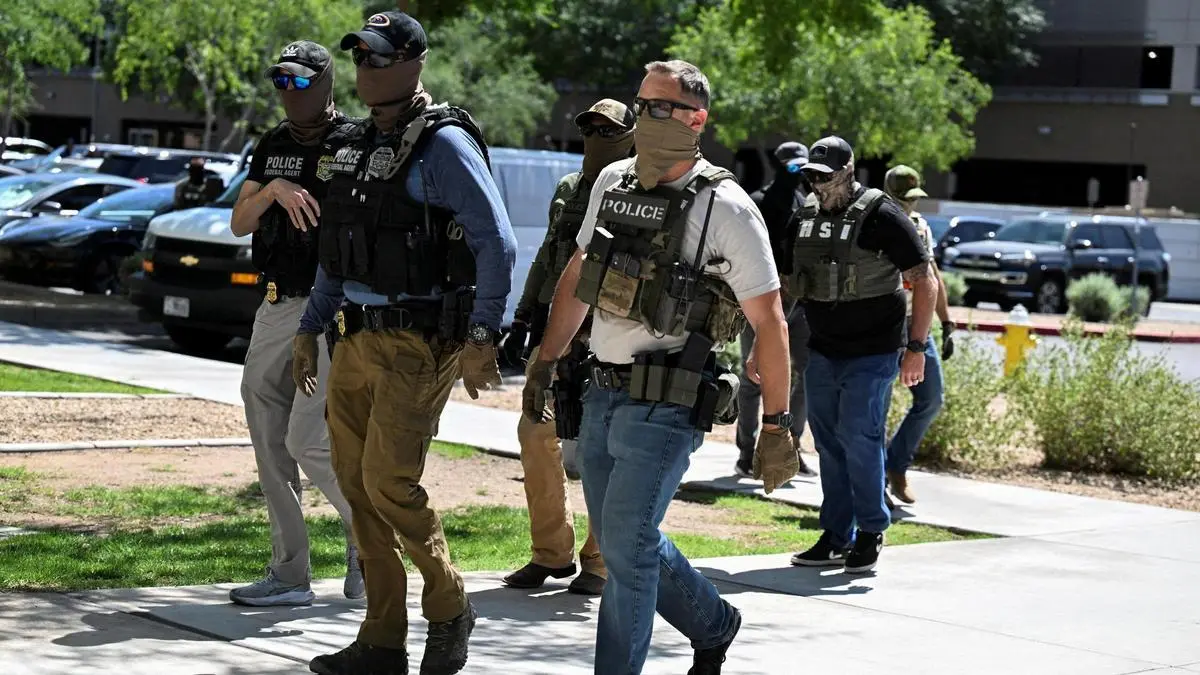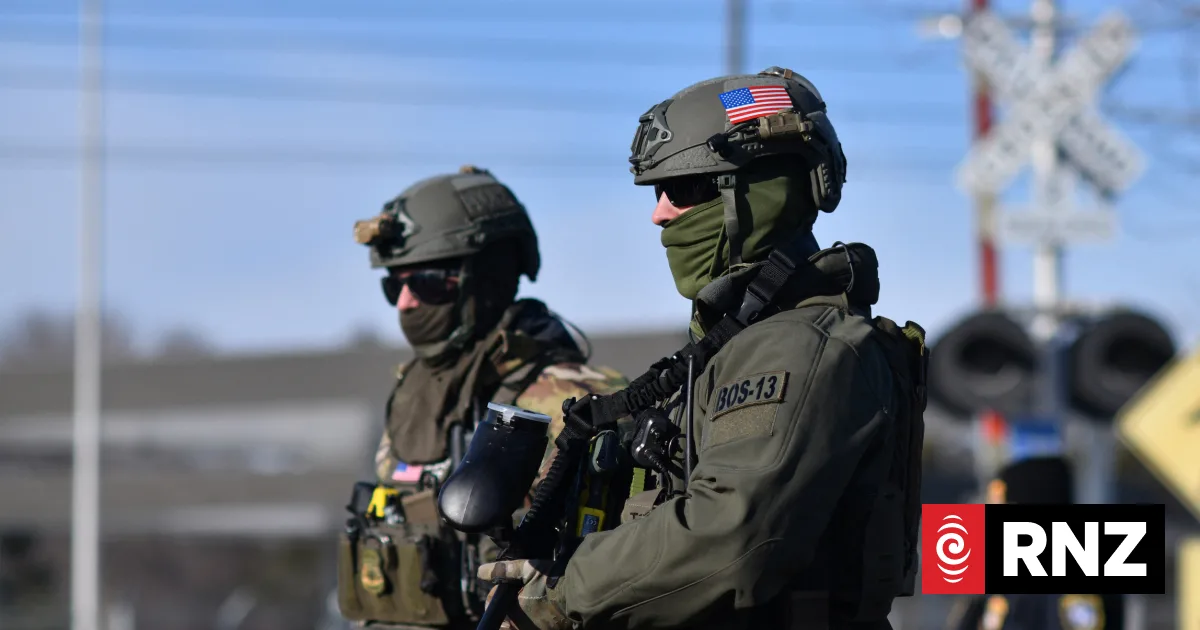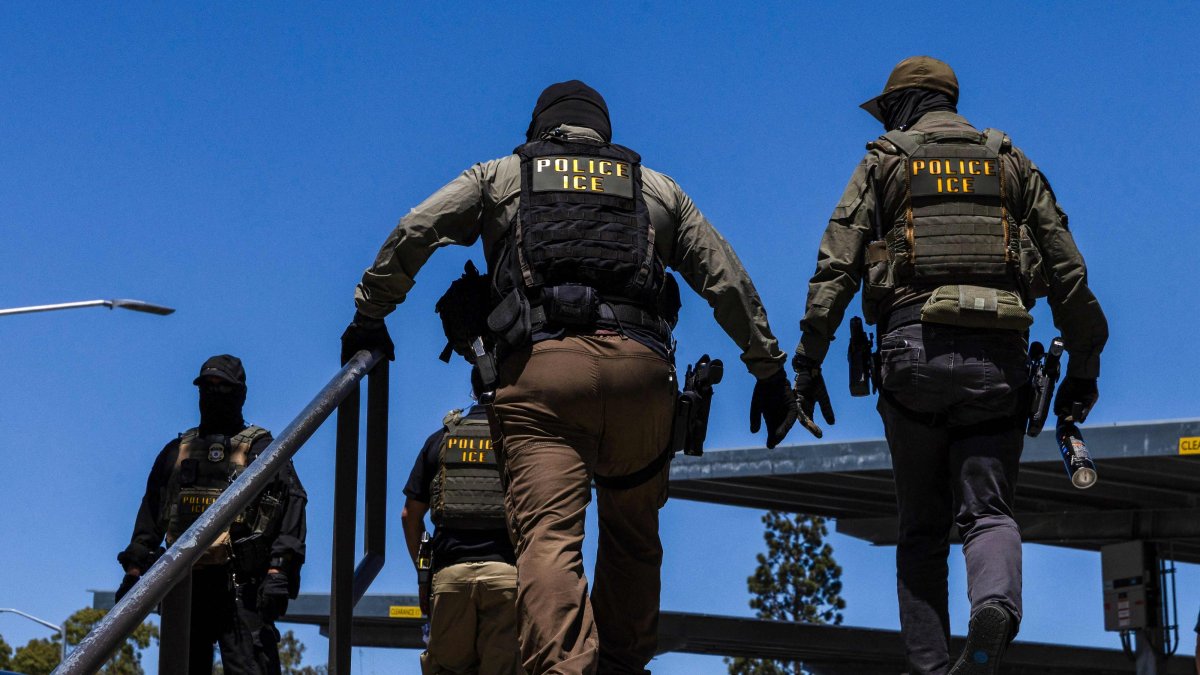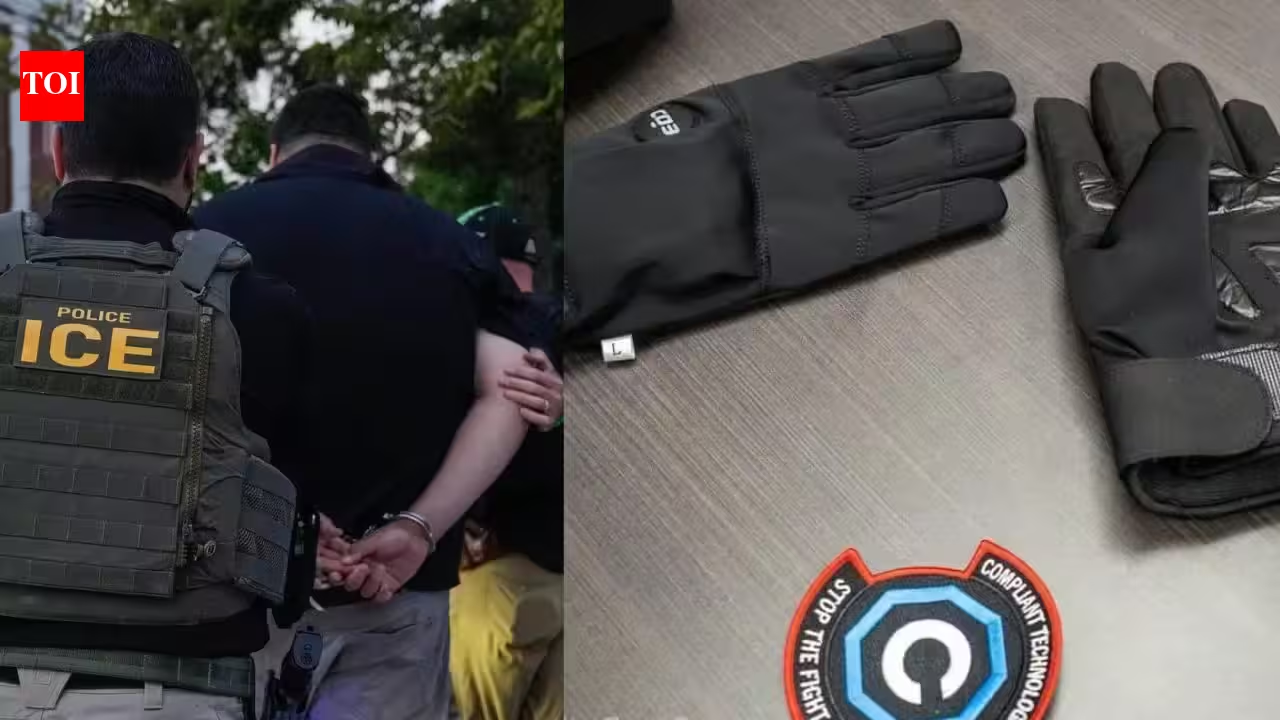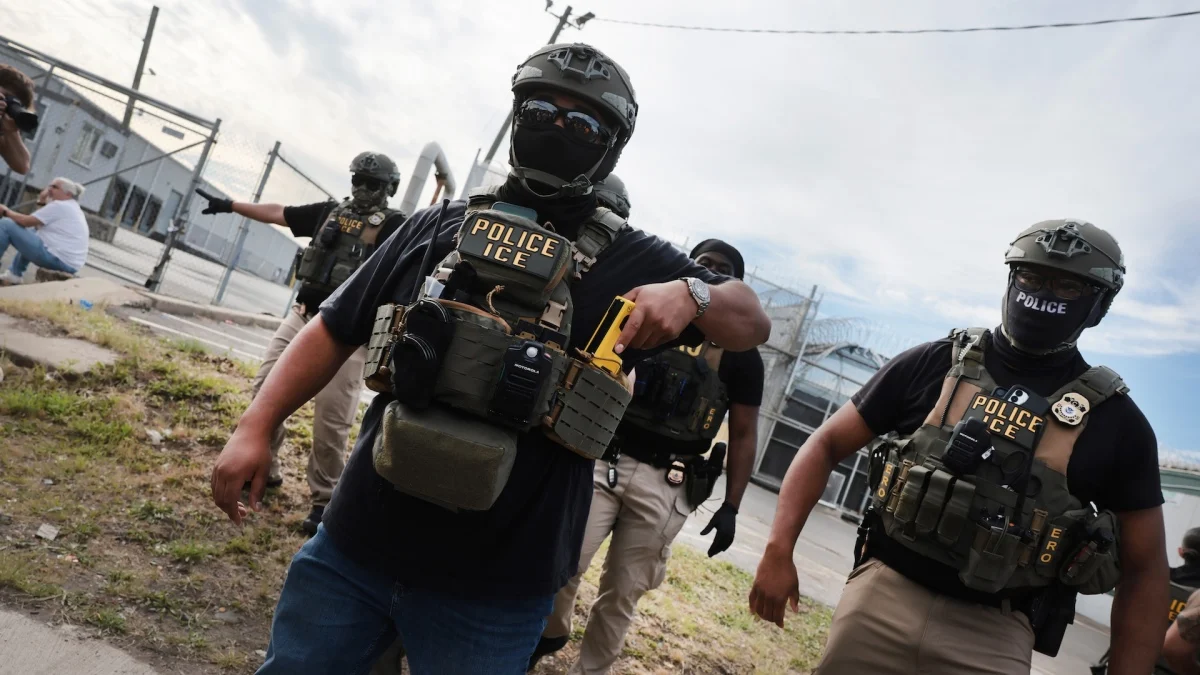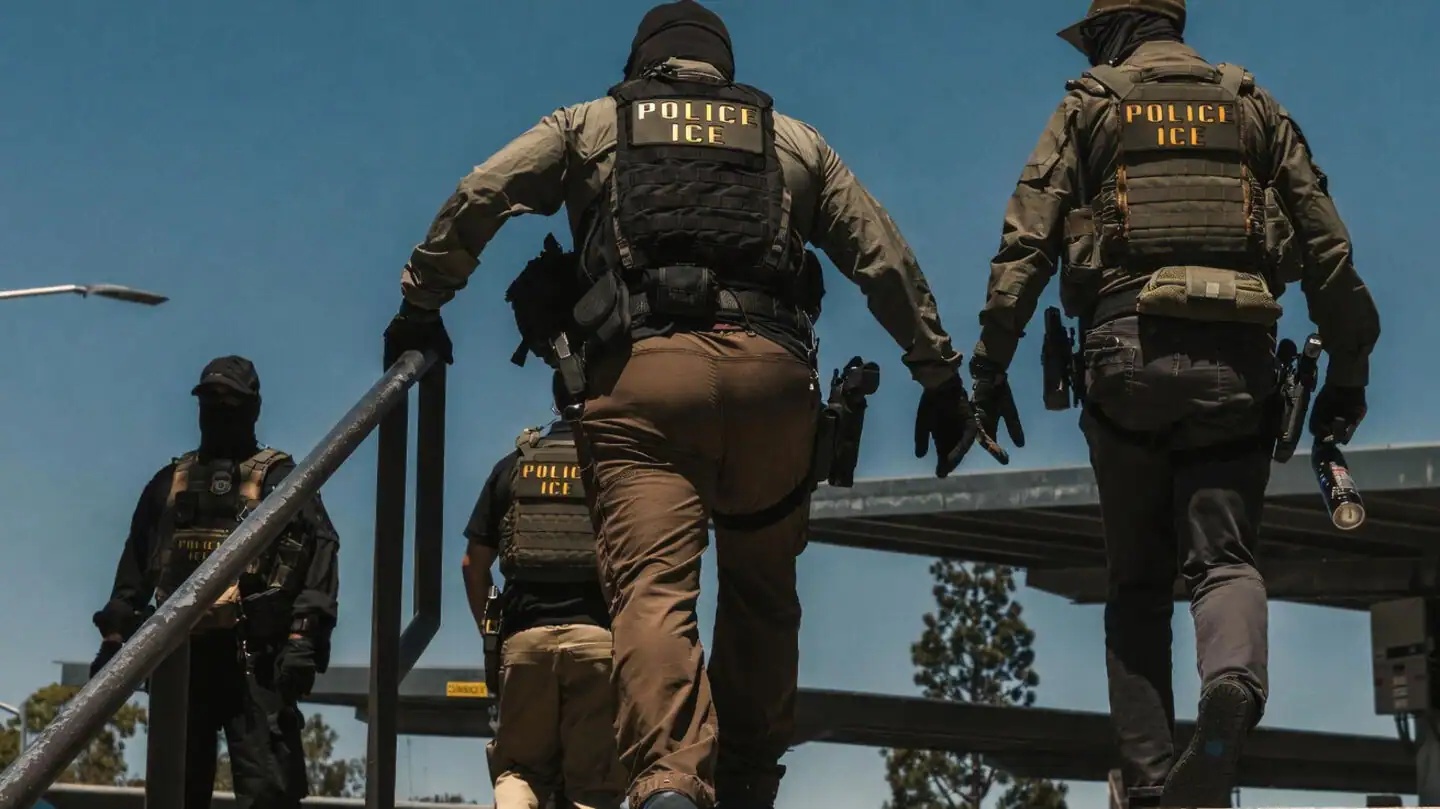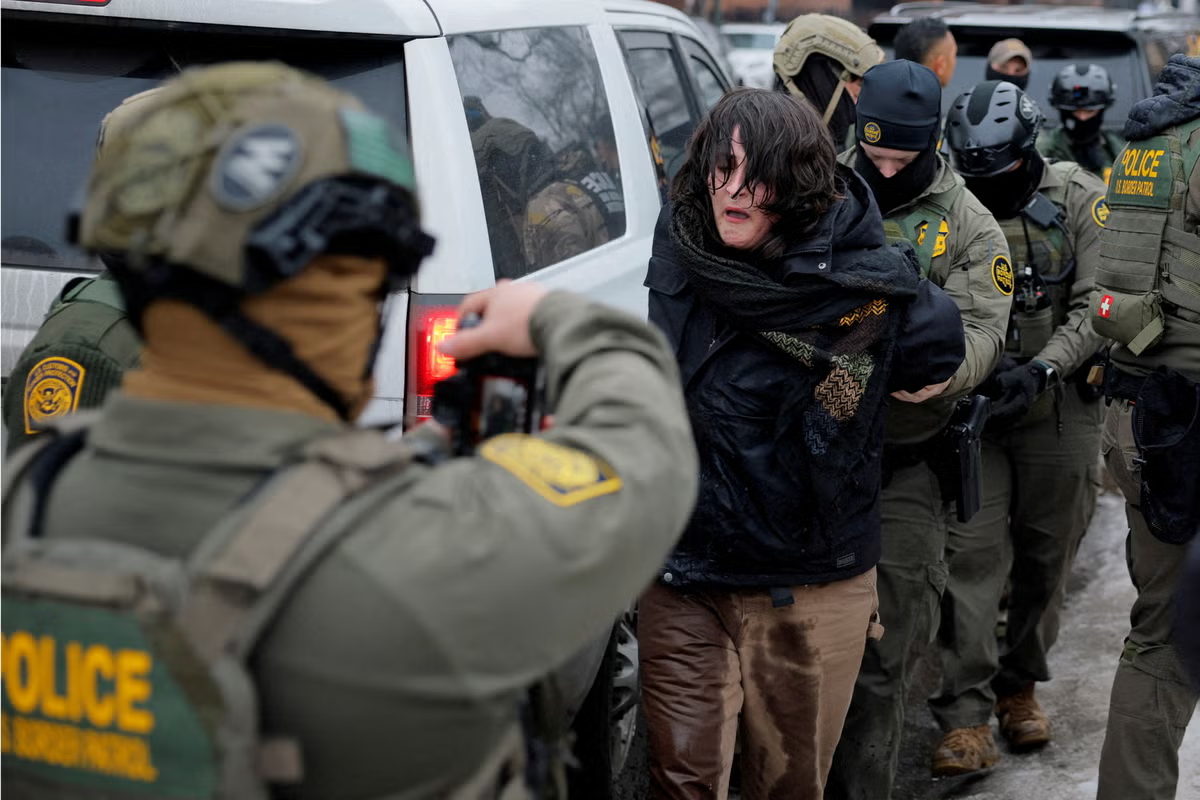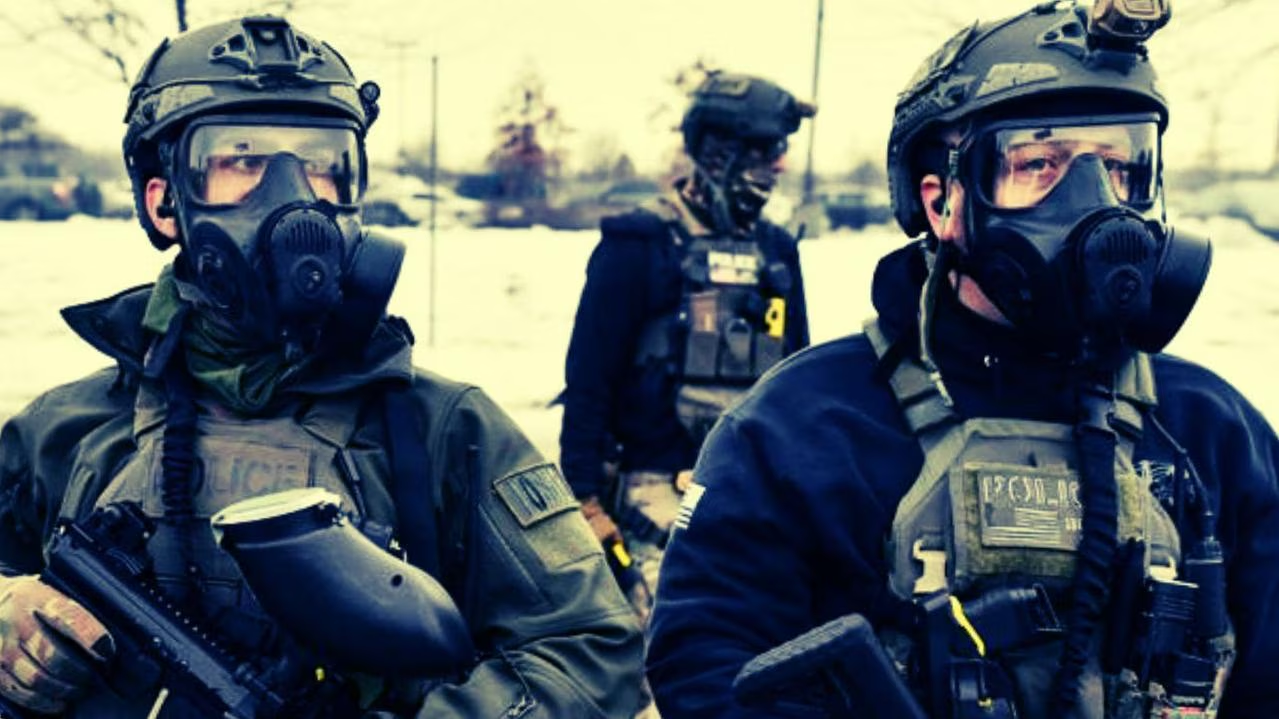
The long arm of immigration law in the US has a shocking new power – electric gloves that pack a punch greater than sticking your finger into a household power point.Unsurprisingly, they come with a “may result in sudden death” health warning.The Immigration and Customs Enforcement (ICE) branch of the Department of Homeland Security (DHS) is spending $A28 million to equip thousands of its masked, armoured and heavily armed agents with the weapon by May next year. It comes with a catchy name.G.L.O.V.E.That stands for Generated Low Output Voltage Emitter.It’s marketed as a close-range “Compliance Tool”. The desired effect is to cause the target to lose muscle control.“ICE is constantly assessing the needs of our officers in the field to ensure they have the tools and equipment necessary to safely arrest and remove criminal illegal aliens from our country,” a DHS spokesperson told US media overnight.Kentucky-based, veteran-owned manufacturer Compliant Technologies will supply the weapon under a no-bid contract. It’s derived from a patented Chinese design. It has limitations.The assembler warns that the gloves don’t work when in contact with hair or fabric. That means grappling ICE agents may have to grope around under clothing to find a suitably sensitive spot.There, it can deliver its 380-volt jolt. That compares to the Australian household electrical plug standard of 240 volts. A TASER is designed to deliver up to 50,000 volts.“Conductive Distraction and De-escalation Devices [may] increase the affects [sic] that can cause sudden death including physiological changes,” the user manual warns. This includes spikes in respiration and adrenaline. And changes to heart rate, rhythm and blood pressure,“No more than two (one pair or equivalent) of G.L.O.V.E. devices should be applied at one time to a single subject,” the manual adds.Licensed to gropeThe idea is that electrodes in the gloves send a powerful electric shock through the skin and into muscle tissue. This disrupts the nervous system sufficiently to immobilise the target. And that makes them easier to restrain and handcuff.There’s one catch.To be effective, it must come into direct contact with skin. Preferably without body hair.If the target is wearing shorts and a T-shirt, that means the arms and legs. If wearing long sleeves and pants, that means the neck, face and hands.Otherwise, agents must force their hands beneath articles of clothing to reach the desired contact points.That presents a whole new realm of unfavourable “optics”.“What low optics means is that they don’t want anybody watching to know that they’re doing this,” asserts former DHS civil rights and civil liberties office chief Margo Schlanger. “It looks like ICE is trying to avoid public accountability. That’s what this device does for them.”The Trump Administration disagrees.“Under President Donald Trump and Secretary Mullin, ICE is targeting the worst of the worst,” an ICE statement reads.“Nearly 70 per cent of ICE arrests are of dangerous illegal aliens charged or convicted of a crime in the US. While ICE law enforcement works to remove these public safety threats from American communities, they’re also facing a 1300 per cent increase in assaults, a 3300 per cent increase in vehicle attacks, and an 8000 per cent increase in death threats.”Publicly available statistics contradict this. It shows more than 70 per cent of ICE detainees have no criminal convictions. Most of those that do are for minor offences, such as traffic violations.‘Invisible Deescalation’“I wanted to provide a force option multiplier that leadership can back with low optics [which] will protect officers, and is safe and effective at the same time,” Compliant Technologies founder and former US Army Chief Warrant Officer Jeff Niklaus told Police and Security News in 2024.“I believe this is the most humane tool I can put on the belts and in the hands of law enforcement officers.”Optics are a serious concern for US enforcement agencies.Especially ICE.At least 10 people have been killed in encounters with its masked immigration officers since President Donald Trump took office in January 2025. A US citizen was shot in Minnesota in January of this year. And a Colombian national was shot in Maine last month during a traffic stop.Video of heavy-handed ICE agent tactics often goes viral on social media.Compliant Technologies says its gloves offer an “invisible de-escalation” tool.“The optics of seeing an officer repeatedly and forcefully driving a knee into the side of a person who is actively resisting may be seen as excessive force by jurors,” the Police and Security News assessment of the GLOVE’s potential reads. “Consider the favourable use-of-force optics when using the G.L.O.V.E. on a turtling [huddled] person, compared to thrusting a knee into the side of a resisting inmate or demonstrator.”The end result, however, remains the same: Debilitating pain.“It’s immediate and sharp, and it will distract you. I call it like a bee sting,” US Institute for the Prevention of In-Custody Deaths president, John Peters, told Associated Press.But former DHS civil rights officer Schlanger says the gloves do not have the same capacity as a TASER to disable a target. “They don’t incapacitate. They just hurt,” Schlanger explains.“Pain compliance is a method of painful domination. Because of that, it’s very subject to being misused. It can be used in circumstances where it’s not needed. It can be used to excess.”Pain giverAt one level, the GLOVE weapon is no different to other protective tactical gloves issued to combat troops and special operations police.What’s different are the electrodes embedded in the palms.These can be powered up by activating a prominent switch on the top of each glove.Compliant Technologies’ user manual says agents can “grab anywhere on the body … while avoiding the head, face, throat, chest and groin areas”.But if the target resists … the gloves are (metaphorically) off.“At this point, deploy the CD3s (electrodes) as necessary to gain control and compliance …”But its user manual advises they not be applied in situations of simple “verbal defiance or belligerence”. It also recommends not to use them against children, pregnant women, the elderly or disabled.The company points to “over 3000” non-fatal “real-world applications’ against street offenders or prison inmates since 2018 as proof of their safety. It adds that there have been “no documented injuries resulting from the direct use” of the gloves, and that they do not leave burns or other scars.But they do prevent targets from “performing co-ordinated muscle movement”.“The idea that you need tools like this, this level of force, to subdue a non-criminal immigrant who’s in a secure environment … that is alarming,” former acting director of ICE, John Sandweg, told TIME. He says the quality of agent training will determine if the shock gloves are used well, or abused.No problem, a DHS spokesperson assured US media overnight: “Our officers are highly trained in de-escalation tactics and regularly receive ongoing use-of-force training”. But it has not detailed what rules of engagement (ROE) will apply to the use of shock gloves. And a recent American Civil Liberties Union report catalogued more than 400 recent ICE enforcement actions that involved the use, or threat, of force. Compliant Technologies says agents need only about three hours of training to use the gloves effectively.Volunteers not included.Read related topics:Immigration
‘Sudden death’: Sick tool used by US agents
The long arm of immigration law in the US has a shocking new power – electric gloves that pack a punch greater than sticking your finger into a household power point.
1,179 words~5 min read