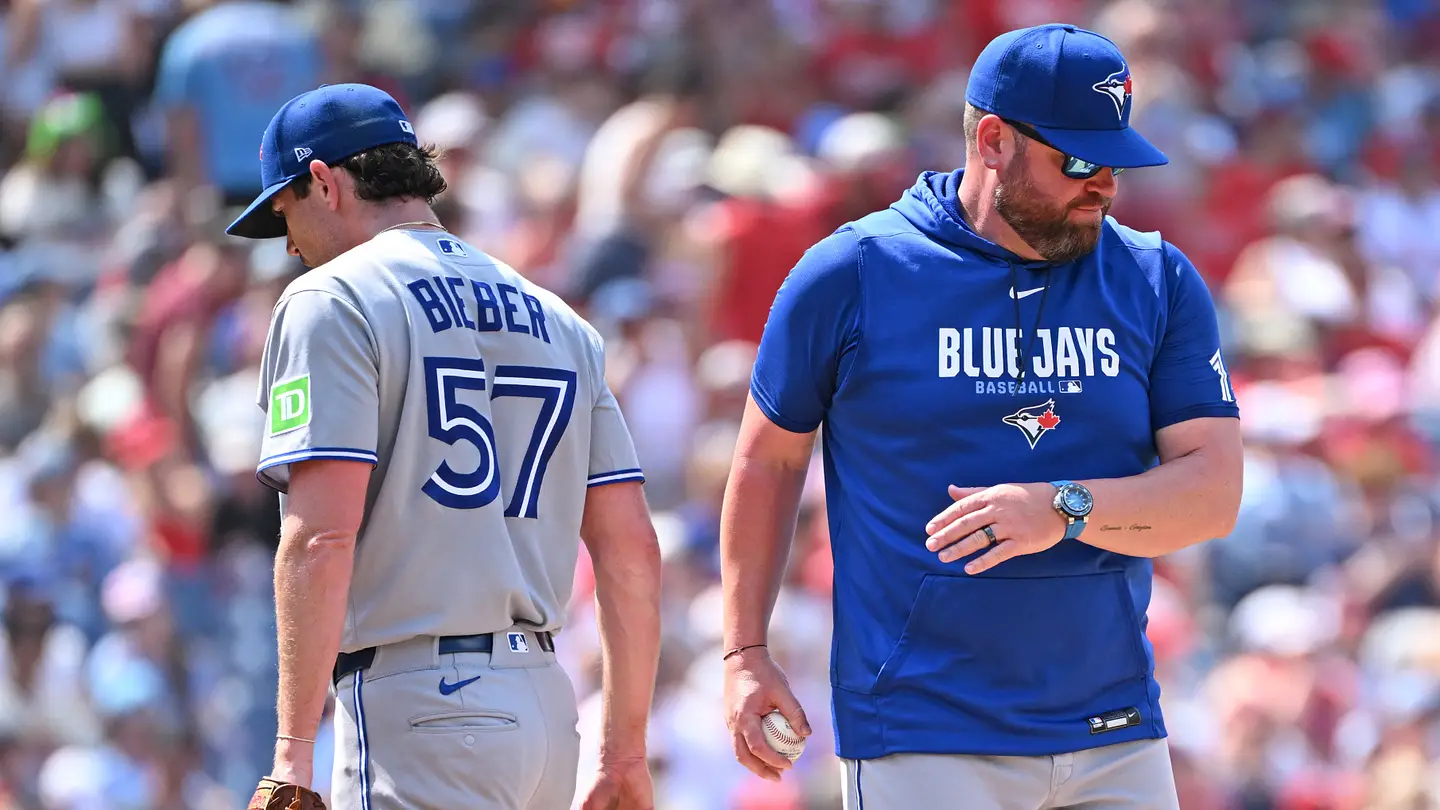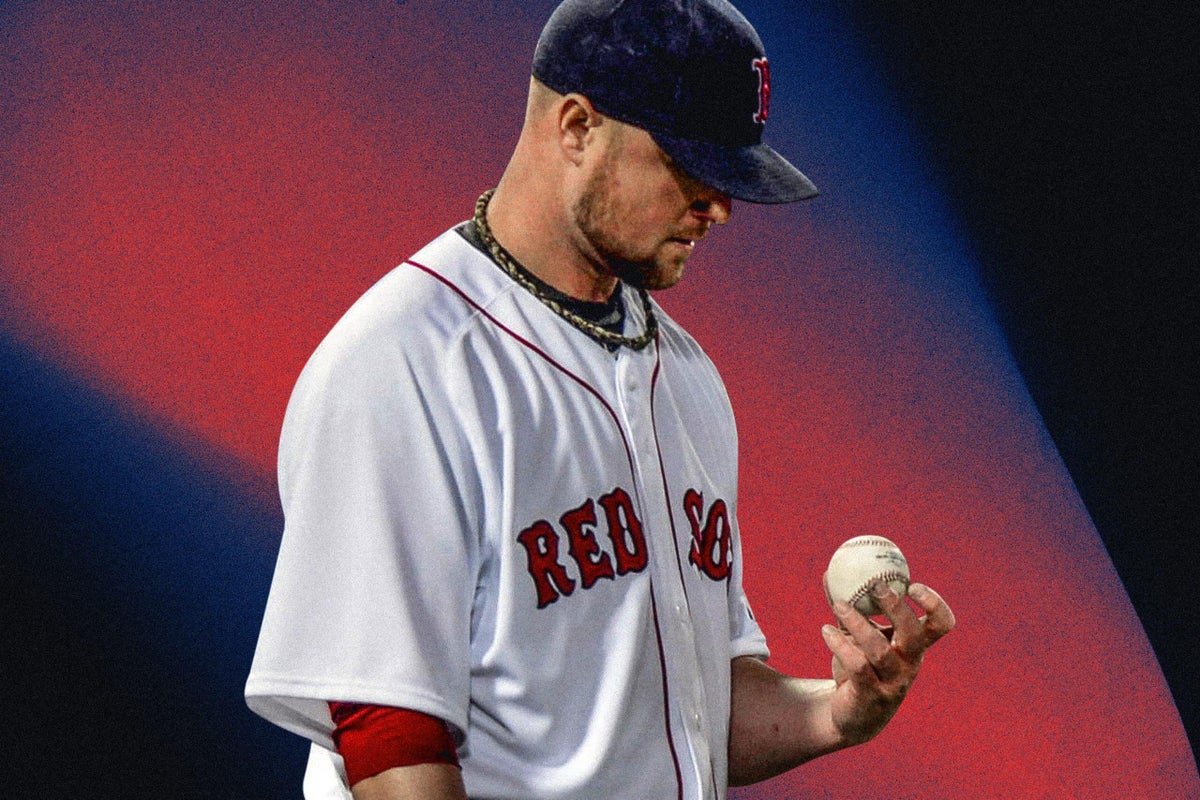
This story is part of Peak, The Athletic’s desk covering the mental side of sports. Sign up for Peak’s newsletter here.One evening in the spring of 2001, I forgot how to throw a baseball.I was in eighth grade, on a new team, and had been sidelined by a knee injury for close to a month. When I returned to practice, I fielded a ground ball at second base but spiked the ball into the dirt when I tried to throw to first. I moved to the outfield and threw one over the backstop. When I tried to play a simple game of catch from 50 feet away, I could only guide the baseball to its target, lobbing it weakly.I felt a pit growing in my stomach. My heart pounded. The more I thought about how to throw a baseball hard and straight — something I had done a thousand times before — the more anxious I became.A friend seemed to realize what was happening before I did.“Dude,” he said. “Knoblauch!”Chuck Knoblauch was the New York Yankees second baseman whose career was derailed by a mysterious condition known in sporting circles as “the yips.” In 1997, Knoblauch had been one of the best defensive second basemen in Major League Baseball. Two years later, he could not throw the ball 45 feet to first base.Knoblauch was not the first baseball player to have the yips. In the 1970s, Steve Blass, a pitcher for the Pittsburgh Pirates, battled them. In the 1980s, Los Angeles Dodgers second baseman Steve Sax had similar struggles. And in the 2000s, they befell Rick Ankiel, a promising young pitcher for the St. Louis Cardinals.Athletes in other sports were susceptible, too. Golfers seemed particularly vulnerable. So were NFL kickers and darts players, where the condition was known as “dartitis.” At the Tokyo Olympics, gymnast Simone Biles suffered from a case of the “twisties,” where she lost control of her body and withdrew from competition.The general understanding of the yips is fairly straightforward: They occur when we lose our instincts for certain task-specific movements, leaving us to try to intentionally control actions that usually happen subconsciously.After decades of research, we know more than ever about the complex relationship between the mind and body. But not enough to understand the unease or identify a single cure. In many ways, the yips remain a black box.Many “yippers” report that performance anxiety is not a factor until after the yips begin. For others, the task-specific nature of the issue is confounding. Jon Lester, an All-Star starting pitcher for the Boston Red Sox and Chicago Cubs, could throw a 93 mph strike on the outside corner. But he could not even attempt to throw the ball to first base.For years, I tried to understand what happened to me when I was 14 years old. I white-knuckled my way through high school baseball, managing the condition as best I could. But the mental scars never quite disappeared, so I tried to bury the memory.Then I received an invitation last summer to play in a co-ed softball game. I showed up to the park and clutched a ball in my right hand. In an instant, the anxiety flooded back.I lobbed a throw to my friend. I threw another one low. He could sense something was wrong.“Do you have the yips?” he asked.Late in the game, the ball came to me at third base. I fielded it cleanly. Then I thought about what I needed to do next.I spiked the throw 10 feet short of first base. The pit in my stomach returned.A few weeks later, I decided to look for answers.Rustin Dodd as a freshman in high school in the Kansas City area. (Photo courtesy of Rustin Dodd)The term yips was coined by Tommy Armour, a golfer who won three majors in the 1920s and ’30s despite struggling with putts and possessing what he called “a brain spasm that impairs the short game.”For decades, the consensus was that the yips were a psychological issue — a matter of stage fright or choking under pressure. But that started to change in the late 1990s, when a group of doctors and scientists affiliated with the Mayo Clinic began to suspect some of the causes may be neurological.One of the scientists was Charles H. Adler, a specialist in movement disorders such as Parkinson’s disease and dystonia, a neurological disorder defined by involuntary muscle contraction.There was a suspicion, Adler said, that the yips may have been similar to issues like writer’s cramp or musician’s dystonia, a neurological condition in which a small percentage of musicians lose control of their fingers and can no longer play.When Adler joined a team that started studying golfers in a putting lab (using devices to monitor brainwaves and arm muscles), they found some participants who reported having the yips also had excessive co-contractions in the forearm muscles and a slight rotation in the right wrist, often imperceptible to the naked eye. But participants who did not report the yips did not have the co-contractions.The findings suggested a focal dystonia. The studies led to a groundbreaking idea: The yips were not solely psychological. But they weren’t completely neurological, either. They instead existed on a continuum. On one side was performance anxiety or choking; on the other was a task-specific movement disorder.
I forgot how to throw a baseball. Then I learned the truth about the yips in sports
An embarrassing summer softball game sent a reporter for The Athletic on a search for answers and explanations about The Yips.
2,512 words~11 min read