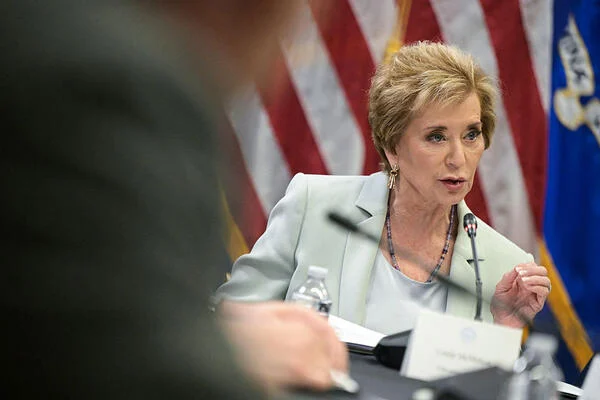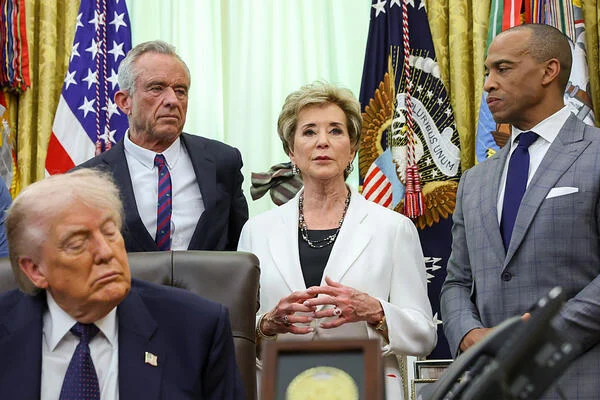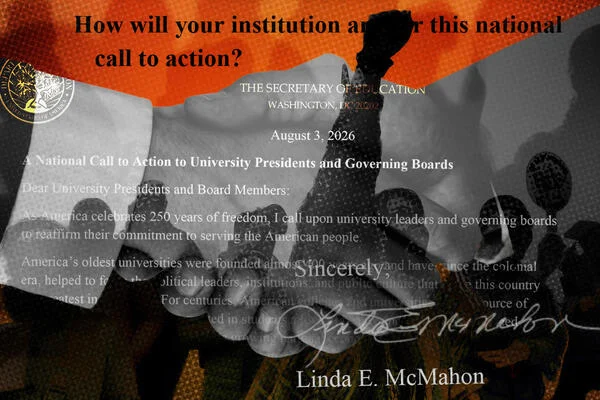
Responses to last week’s letter from Secretary of Education Linda McMahon calling on university presidents and governing boards to “seize this occasion to drive essential reforms” so as to restore public trust in higher education have so far been fairly muted. Although the American Association of University Professors issued a rebuttal, some university presidents have signaled a willingness to comply, and few if any have rejected the demand for “reform.” That worries me.
Among the reforms requested in the letter are public pledges to fair admissions, open inquiry and truth-seeking. Few would quarrel with these goals, at least when stated abstractly. But by characterizing these as “reforms,” the letter rehearses a well-worn slander: Universities are “woke” echo chambers, characterized by a leftist monoculture that subordinates truth to politics. Whether any of this is true is not open to discussion. The question for universities is simply, Will you publicly pledge to do better?
Philosophers call this a complex question—a logical fallacy identified by Aristotle in his On Sophistical Refutations. A question is complex when it conceals a question-begging assumption—a claim the person being asked the question might wish to reject, were it to be made explicit. Consider the following example, borrowed from Stan Baronett’s Logic, a textbook used in many undergraduate philosophy courses: Do you still cheat on your taxes?