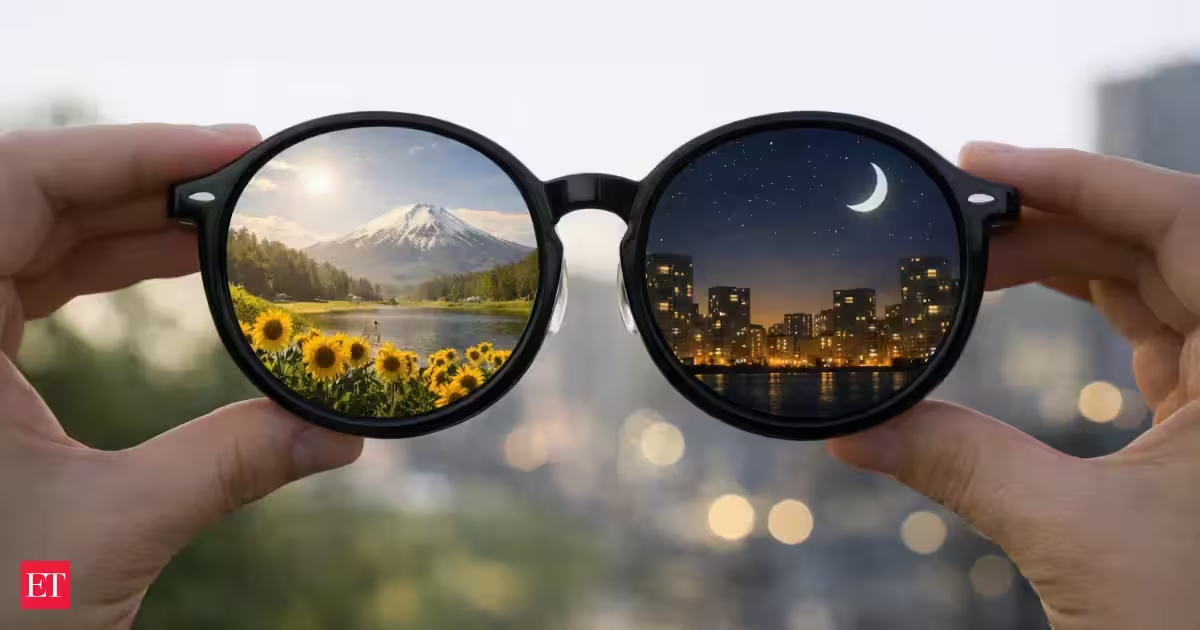
Have you ever noticed how two people can look at the same painting and see completely different things? One might call it a masterpiece, while the other dismisses it as confusing. Or think about how friends describe someone they admire, one praises their humor, another their kindness. Whose view is right?Everyday life is full of these moments where opinions clash, yet none are truly wrong. What makes something beautiful or valuable often depends on who is looking. A traditional Korean saying captures this idea with a simple but vivid image.What this proverb meansThe proverb says: “Glasses in my eyes.” It suggests that each person sees the world through their own lens, shaped by personal taste, experience, and perspective. The deeper message is that beauty and value are subjective. What one person finds appealing, another may overlook. This saying reminds us that judgments are not universal, they are filtered through individual perception.Significance of the proverb in real lifeIn relationships, this proverb encourages respect for differing opinions. A friend’s favorite song may not be yours, but it holds meaning for them. At work, colleagues may approach a project differently, yet each method can be valid.The lesson is simple: understanding that perspectives vary helps us avoid unnecessary conflict and appreciate diversity. Beauty, success, and worth are not fixed truths, they live in the eye of the beholder.Life lessonsThis proverb teaches us to value diversity in thought and taste. Instead of insisting on one definition of beauty or success, it reminds us to accept that others may see things differently.By practicing empathy and openness, we can strengthen relationships, reduce misunderstandings, and grow as individuals. The universal takeaway is clear: perspective shapes reality, and embracing that truth makes life richer.
Korean Proverb of the Day: Glasses in my eyes - How perspective shapes our view of beauty
Everyday life shows how opinions differ on art and people. A Korean proverb explains this subjective perception. It highlights that beauty and value are seen through personal lenses. Understanding varied perspectives fosters respect and reduces conflict in relationships. Embracing diverse viewpoints enriches life and strengthens individual growth.
285 words~1 min read