By Ebri Kowaki
While we wait the return of 99 looted midcentury artworks ‘transferred’ from Cambridge’s Museum of Archeology and Anthropology to Benin in March, the world moves on, astride professional portraitist Darlington Raymond confident in black-white striped fila, black leather watch, into a reverberating hall.
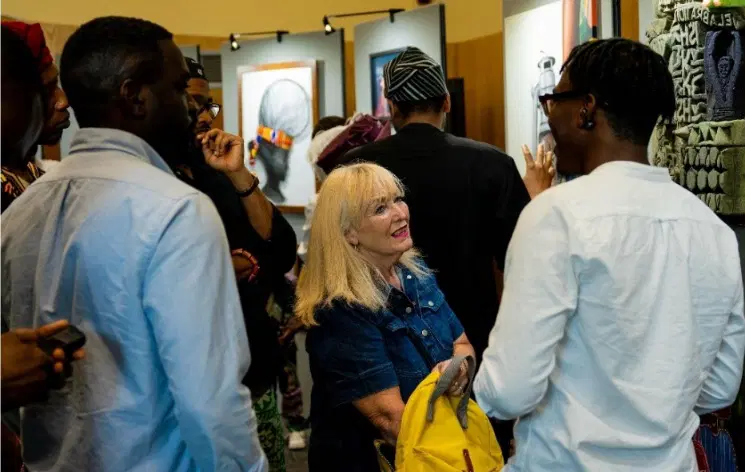
Bradford African Festival of Arts is a statement to the social force of Nigerians in the black world. Drawing support for its third year from African expats, as well as ends of British establishment including the city council, BAFA recognizes that our authentic creativity moves beyond museums and exists in a live industry powered by breathing artists. In devotion to loud glories of an undaunted culture, gangan notes ensue joyful proclamations over the Victorian city. Visitors commingle, and are treated to a series of events: business panels, craft workshops, jazzy afrobeat snacking beside celebrations of fashion and food.
The first week of August in Bradford is a striking image of dignity uniting the global village, enclaving Caribbeans, locals, Pakistanis. Three train hours over in the little lagoses of London, 1-54 Art fair features an even broader circuit of African excellence, with a Mediterranean tinge. “Our children are losing their language,” says BAFA’s director Dr. Kolawole Adeborode, commenting on the Nigerian coloring to his festival, “they are losing the culture and heritage we brought to this country. I thought we needed to establish a platform to preserve that heritage.” Accents of all languages hiss proud over ventilation systems. The heritage, born of artists educated on the continent- some who now practice in the United Kingdom- eastern installations as well find space: Pelumi Oluyemi, Lateefat Tobun, Ayobami Olorunniyi, Darlington Raymond, Indian audiovisual creative Vishwajit Phadte.