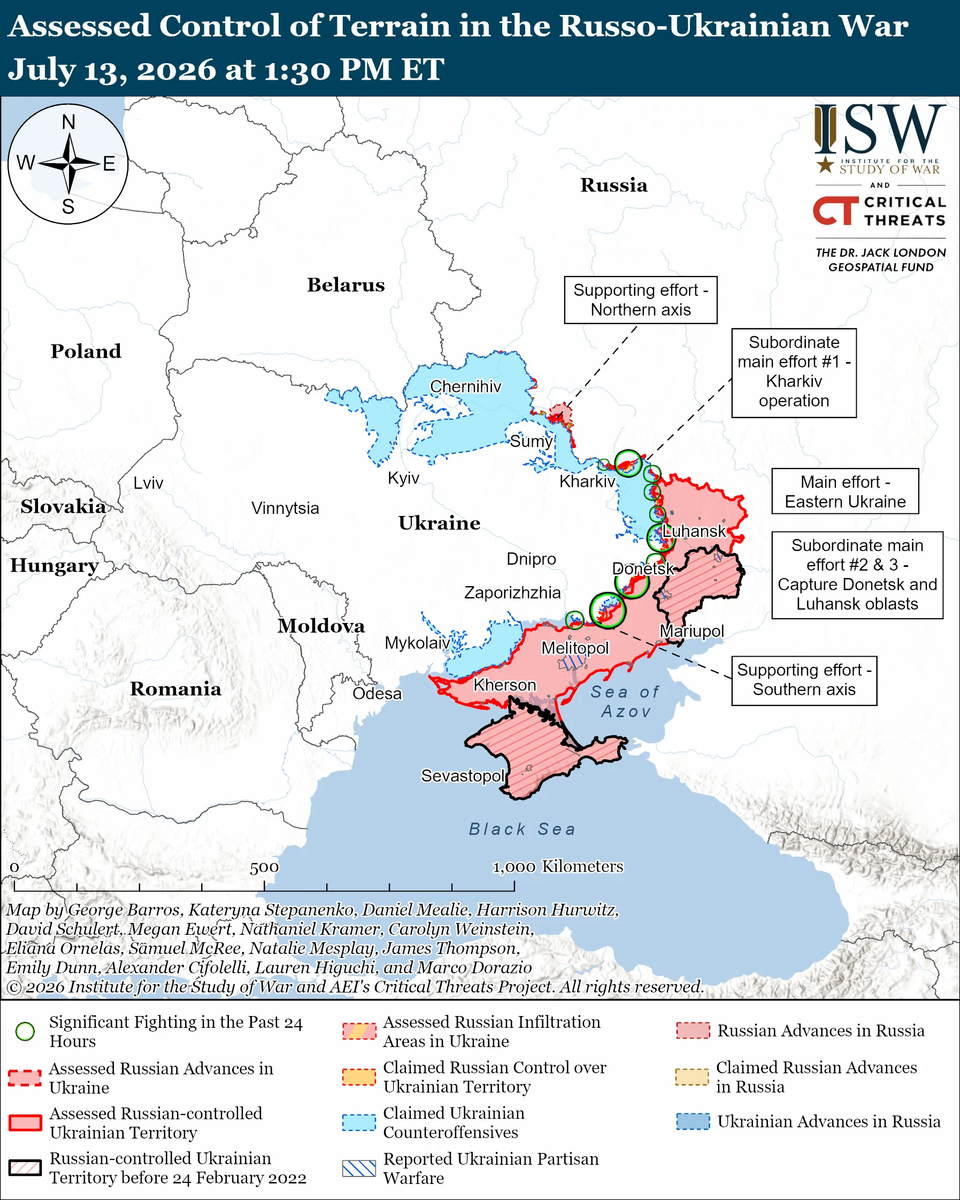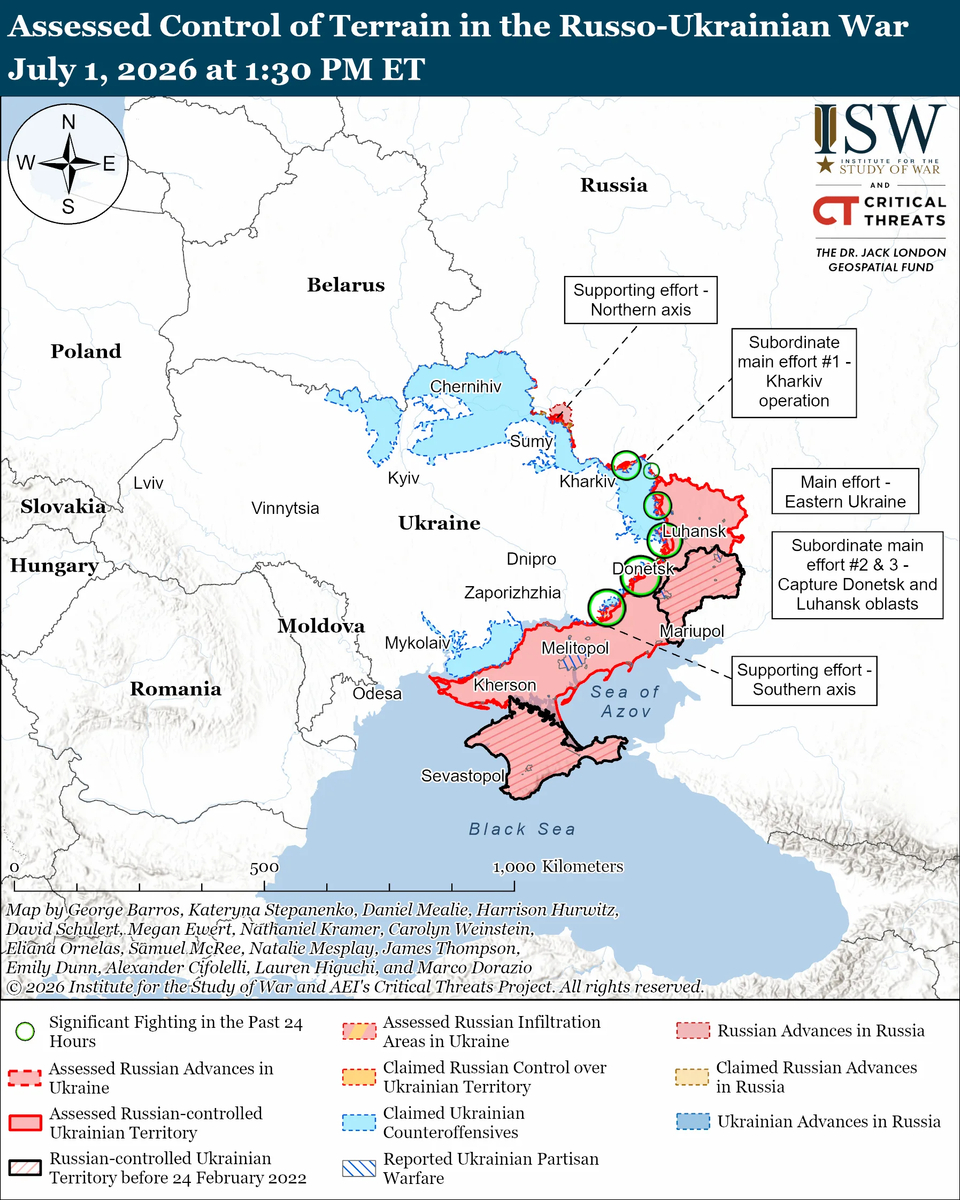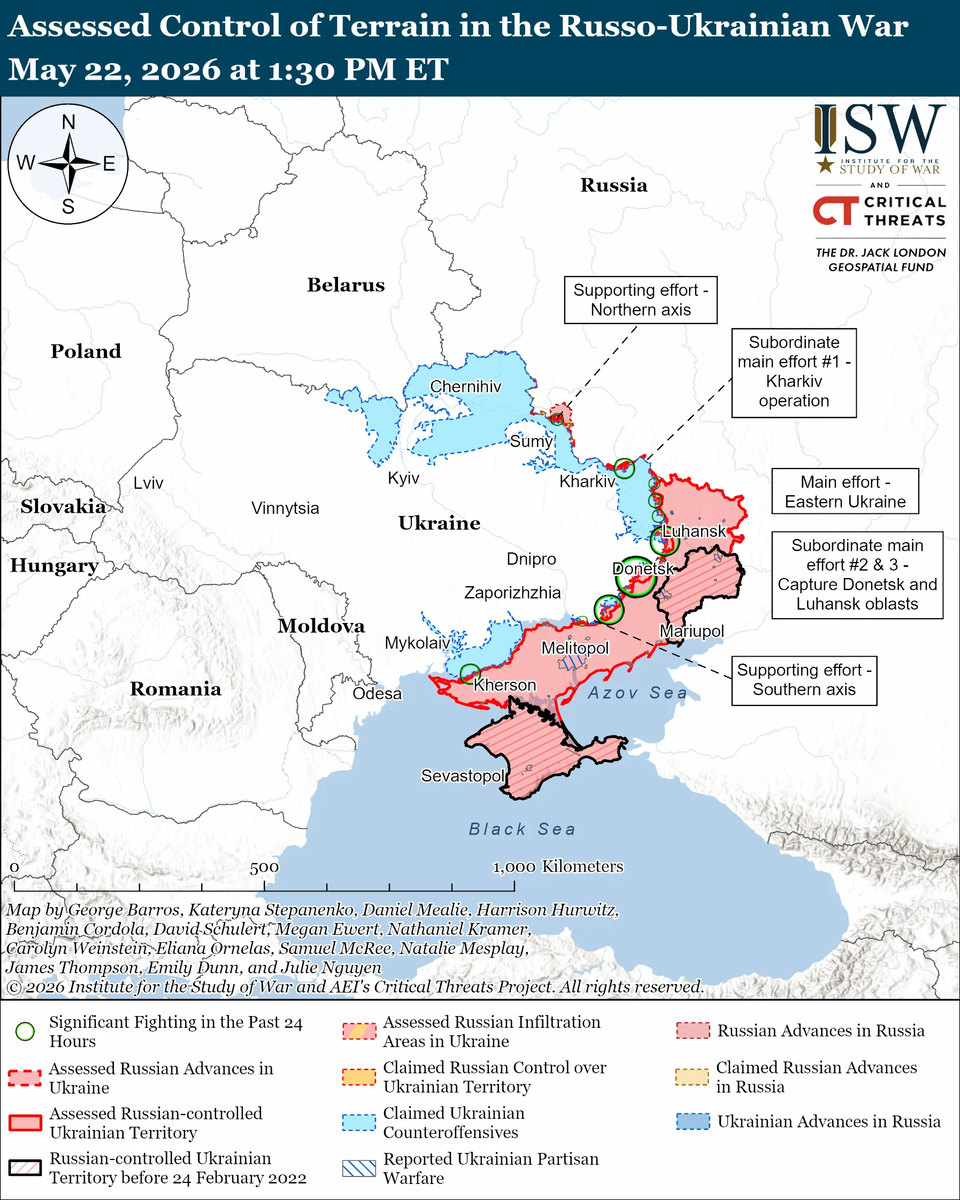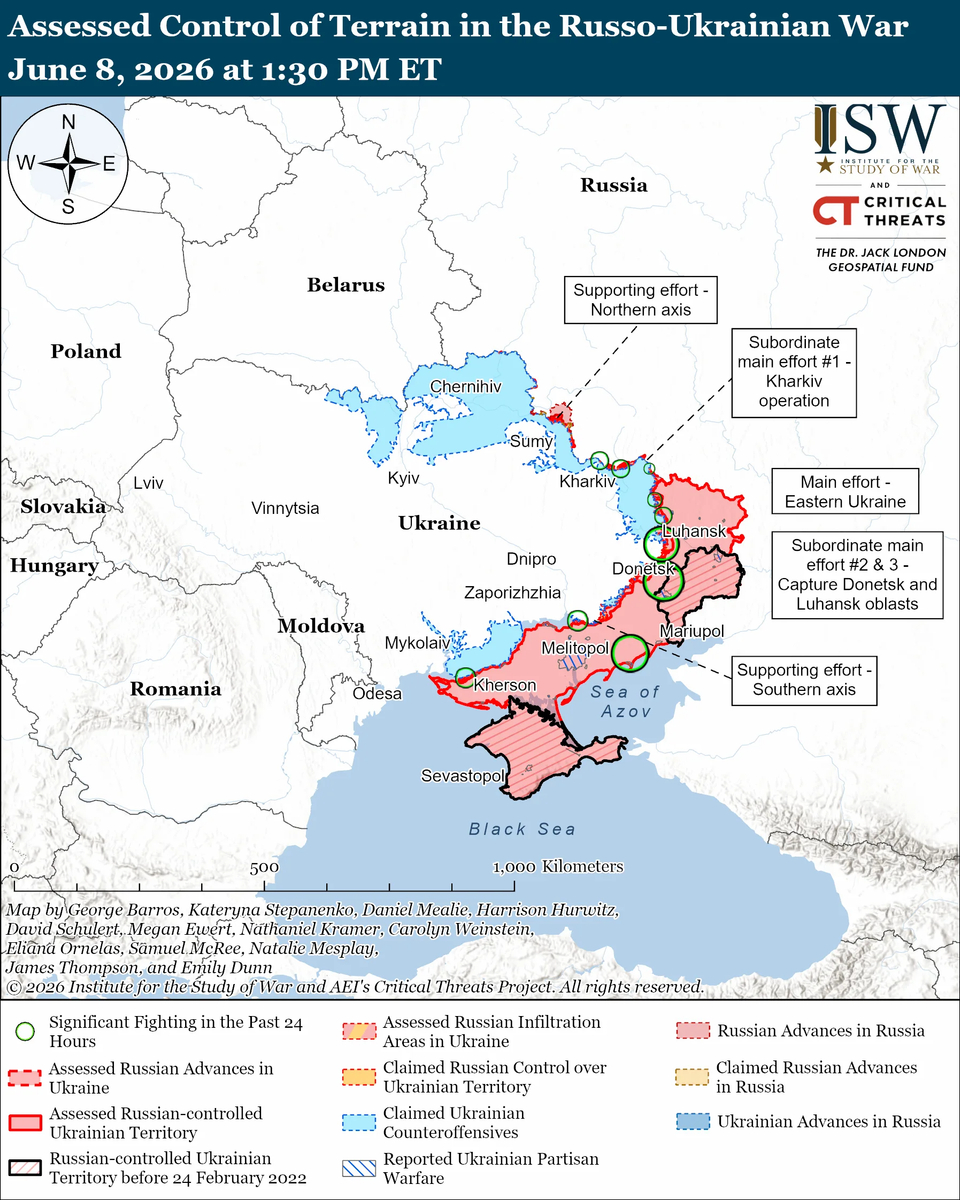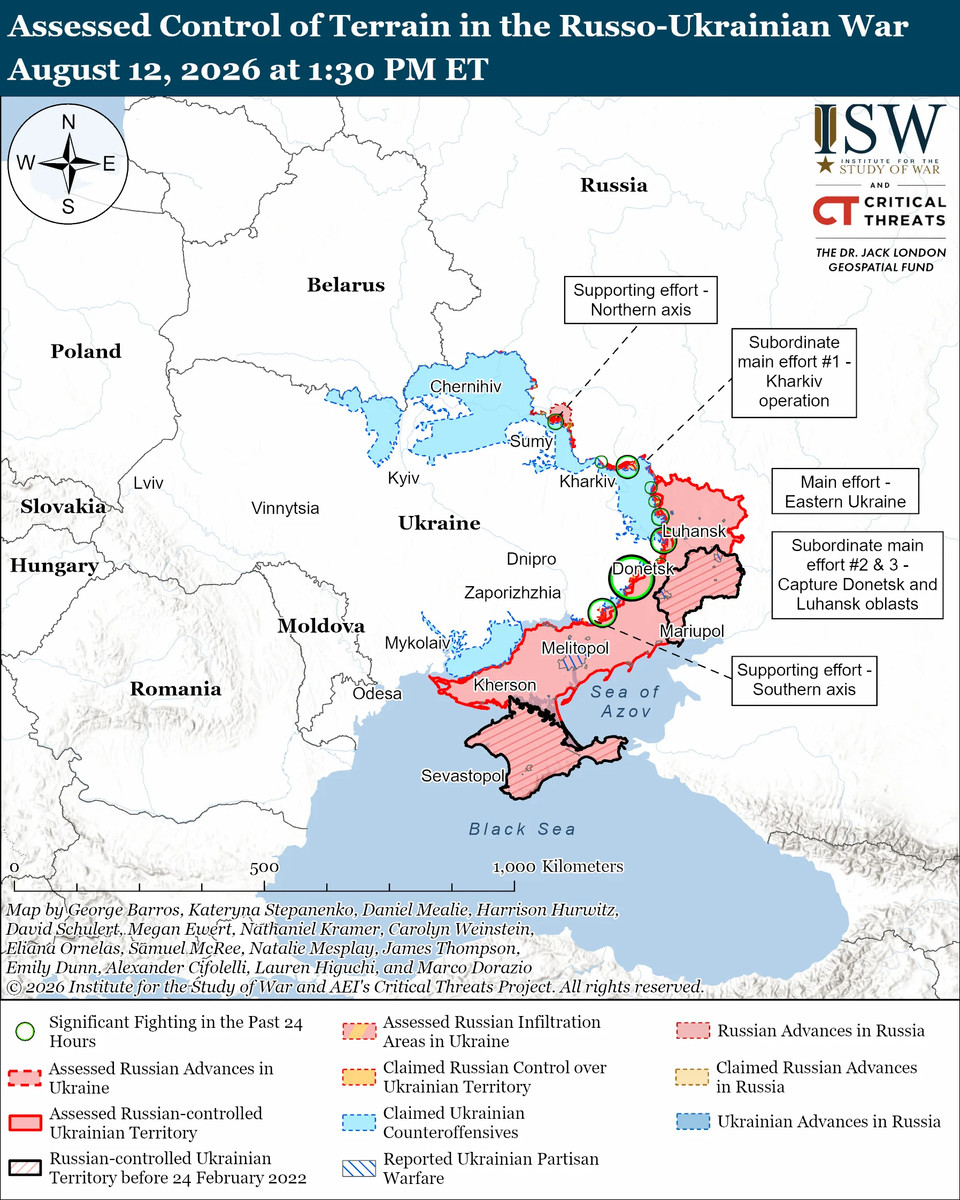
Key Takeaways from the ISW: Ukrainian officials announced on August 12 the results of Ukraine’s Oleksandrivka direction counteroffensive, which took place between January and August 2026. The Oleksandrivka counteroffensive operations showcase Ukraine’s ability to make relatively significant tactical advances and reintroduce limited aspects of mechanized maneuver on localized segments of the frontline. Ukrainian President Volodymyr Zelensky continues to warn that Russia is preparing for large-scale involuntary reserve call-ups after the September 2026 Russian State Duma elections. The Kremlin is likely seeking to deter Japan from adopting a more assertive defensive posture it perceives as unfavorable to Russian interests. Putin is also attempting to deter European Union (EU) seizures of Russian shadow fleet vessels. Russia will likely continue to rely on its use of a relatively small number of jet-powered Geran drones in its nightly strikes against Ukraine until Ukraine can develop sufficient countermeasures and the technological offense-defense race resets. Russia launched one Iskander-M ballistic missile, one Kh-31P anti-radar missile, an unspecified number of Kh-35 cruise missiles, and 138 drones against Ukraine overnight. Ukrainian forces conducted a large strike against Russian naval and grain infrastructure in Novorossiysk, Krasnodar Krai, on the night of August 11 to 12. Ukrainian forces recently advanced in the Kupyansk direction. Russian forces recently advanced in the Kostyantynivka-Druzhkivka tactical area. JOIN US ON TELEGRAMFollow our coverage of the war on the @Kyivpost_official. See the original here.
ISW Russian Offensive Campaign Assessment, August 12, 2026
War in Ukraine - Latest update, key takeaways and map from the Institute for the Study of War on August 12, 2026
229 words~1 min read