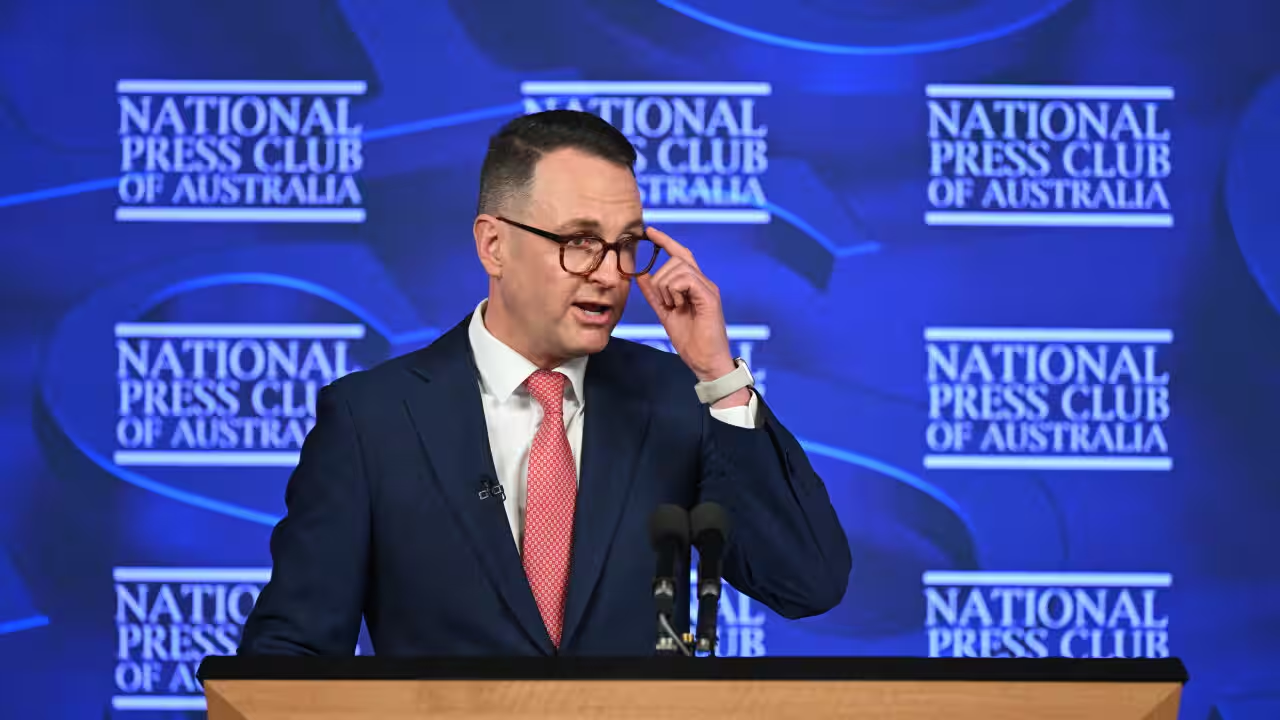
in briefLiberals are this week pushing for a reduced housing code, which could streamline construction at the cost of quality.Opposition housing spokesperson Andrew Bragg conceded that the proposal would come with "trade-offs".The Coalition's plan to boost housing stock will involve "trade-offs", a Liberal frontbencher has said, after suggesting low-income households should accept living in substandard homes.Opposition housing and homelessness spokesperson Andrew Bragg announced on Wednesday that the Opposition would reduce the national housing code from 2,000 pages to 80 if elected.When asked by ABC Radio National on Thursday morning whether his policy means low-income earners should just accept living in substandard housing, he replied: "Yes, definitely."He went on to say that building more homes under a streamlined code would come with "trade-offs"."It's more important to have a house than to not have a house. And so, given the affordability crisis we have in the housing system, we need to just build more houses," he told the ABC.News that makes senseYour trusted source for staying up-to-date with the world around you. Get free daily news updates and analysis, straight to your inbox.Bragg's comments follow remarks made by his Liberal colleague and treasury spokesman Tim Wilson, who suggested in some cases people could put "a jumper on in winter rather than spending huge amounts of money" on improving housing quality.He told ABC RN on Wednesday there should not be a one-size-fits-all policy — such as mandated energy efficiency — for construction."There are some places in the country where you will get cold spells or hot spells for a very small amount of the year, whereas for the rest of the year, it's not necessary," he said."We have a risk that Australians can't afford to rent or to buy their own home by the government's own budget design. We need housing stock that meets different needs in different environmental conditions. Queensland is not the same as Tasmania or Victoria. Western Australia is different again."Proposal does 'nothing to fix' housing crisis, advocate saysAffordable housing advocates told SBS News that stripping back construction regulations is a way for developers to profit from "unliveable" homes."Too many renters are already living in homes that are freezing in winter, stifling in summer, riddled with mould and damp, and expensive to heat and cool," Everybody's Home spokesperson Maiy Azize said in a statement."Older people and people with disability already struggle to find homes they can safely and comfortably live in."Azize added that the government should focus on social housing that is "built to last"."We have a housing crisis because people cannot afford a home. Building more poor-quality homes does nothing to fix that crisis. It simply gives developers another way to profit from it," Azize said.Australian Council of Social Services CEO Dr Cassandra Goldie agreed, adding that construction of social housing should "drastically scale up".She described Bragg's comments as shocking."The changes to the building code proposed by Senator Bragg would simply remove costs from the builder and move them onto the household - locking them into higher power bills for decades, deepening inequality, risking lives, leaving future generations with homes that are expensive to run," she told SBS News.The Housing Industry Association on Wednesday welcomed Senator Bragg's announcement, but argued it was more important to disentangle layers of complexity than target a specific size of the code.Cutting red tapeThe national housing codes set minimum requirements for the safety, health, amenity, accessibility, and sustainability of certain buildings, as detailed in over 2,000 pages.The Coalition's new standards will focus on cost-effective structural, fire safety and health-related building standards.Bragg said reducing the code has been a shifting policy for the Coalition."This was in Angus Taylor's budget reply back in May, and we have committed to getting it to 200 pages, but we actually found a way to get it to less than 100 pages. It tends to be by picking up the New Zealand building code, which is about 80," he explained.Housing Minister Clare O'Neil has dismissed earlier calls to reduce construction standards to 200 pages. Source: AAP / Lukas CochWhile New Zealand's building code appears to be about 80 pages long, the country has other compulsory building requirements on durability and energy efficiency, outlined in separate documents that builders must comply with.Labor announced it would freeze the National Construction Code following its productivity roundtable in mid-2026. Housing Minister Clare O'Neil brushed off calls from the Coalition to cut the construction standards to 200 pages earlier in 2026."I've talked to builders about that, they laugh their heads off. That is absolutely ridiculous," O'Neil told the National Press Club in May.The government is not far off presenting a final plan to the building minister later this year to streamline the code, Treasurer Jim Chalmers told ABC Radio National on Wednesday.Bragg has also called for the creation of a federal pattern book of model homes that could receive automatic approval from the states and territories.— With additional reporting by the Australian Associated Press.For the latest from SBS News, download our app and subscribe to our newsletter.
Low-income Australians should accept substandard homes, Liberal frontbencher says
Another Liberal frontbencher said some Australians could put "a jumper on in winter" instead of stricter housing standards.
832 words~4 min read